Group VII - Free CTLD / Reg Group







 The Reg group of secreted CTLD-containing
proteins has five members in human and seven in mouse: lithostathine-alpha,
lithostathine-beta, and Reg IV in both species; PAP/HIP (pancreatitis-associated
protein/hepatocarcinoma-intestine-pancreas) and PAP IB in human; and PAP1,
PAP2, PAP3 and Reg III-delta in mouse. Each polypeptide consists of a
C-terminal CTLD and a short N-terminal peptide.
Lithostathine-alpha is expressed ubiquitously. PAP IB and mouse
Reg III-delta are expressed predominantly in the pancreas, whereas
lithostathine-beta, Reg IV, PAP/HIP and the mouse PAP proteins are also
expressed in small intestine and some other locations.
The Reg group of secreted CTLD-containing
proteins has five members in human and seven in mouse: lithostathine-alpha,
lithostathine-beta, and Reg IV in both species; PAP/HIP (pancreatitis-associated
protein/hepatocarcinoma-intestine-pancreas) and PAP IB in human; and PAP1,
PAP2, PAP3 and Reg III-delta in mouse. Each polypeptide consists of a
C-terminal CTLD and a short N-terminal peptide.
Lithostathine-alpha is expressed ubiquitously. PAP IB and mouse
Reg III-delta are expressed predominantly in the pancreas, whereas
lithostathine-beta, Reg IV, PAP/HIP and the mouse PAP proteins are also
expressed in small intestine and some other locations.
Lithostathine-alpha and PAP/HIP are growth factors for a variety of cell types, with anti-apoptotic and anti-inflammatory properties. PAP/HIP also binds extracellular matrix components and induces cell adhesion and migration. Expression of these proteins is increased in inflammatory diseases and in liver and gastrointestinal cancers, where it is linked to poor prognosis. In the pancreas, lithostathine-alpha stimulates beta-cell proliferation and controls the growth of calcium carbonate crystals. In the intestine, lithostathine-alpha and PAP/HIP may control the bacterial ecosystem. The N-terminal peptide is readily cleaved from these proteins, causing the CTLD to polymerize into insoluble filaments, which may have a function in the pancreas, but are found in the brain associated with neurodegenerative conditions including Alzheimer’s disease and Creutzfeldt-Jakob Disease (CJD), as a result of abnormal gene expression. Reg IV is upregulated in association with inflammation and transformation and has cell proliferative and anti-apoptotic activities.
The involvement of carbohydrate recognition in the function of Reg proteins has not been established. The CTLDs in these proteins do not have the sequence characteristics associated with calcium or sugar binding. However, PAP/HIP binds lactose in the presence of divalent cations.
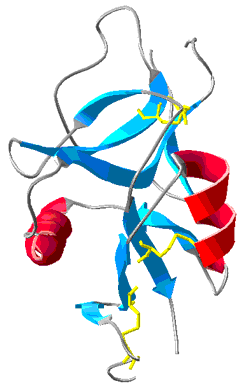
Protein Data Bank structure ID: 1UV0.


