Historical facts and figures
14
14 former members of Imperial staff are Nobel Laureates
Nature
Norman Lockyer, the founder of the journal Nature, taught Astronomical Physics here in the 19th century.
1960s
The Fascia of the Blackett Laboratory Prince Consort Road has the state of knowledge of physics as it was in the 1960s.
3
Otto Beit, Alfred Beit and Julius Wernher, three early 20th Century benefactors all have memorials in Prince Consort Road.
13
Rectors have led our institution since its foundation in 1907.
287
The Queen's Tower is 287 feet tall, clad in Portland stone and topped by a copper covered dome. There are 324 steps from the ground to the base of the dome. The Queen's Tower is all that remains of the Imperial Institute, which was built to mark Queen Victoria's Golden Jubilee in 1887 and was designed by T E Collcutt.
10
The Queen’s Tower belfry contains the Alexandra Peal of bells, the peal consists of 10 bells and is named after Alexandra, the Princess of Wales. The bells were a gift to the Prince of Wales from Mrs Elizabeth M Millar of Melbourne, Australia in 1892. Each bell is separately named after members of the Royal family - Queen Victoria, her three sons, her daughter-in-law Alexandra and her five Wales grandchildren. The bells are now rung on Royal Anniversaries by the Ancient Society of College Youths and on College special occasions, between 13.00 and 14.00.
© 2007 Imperial College London
Science and technology have the power to transform the world. Today’s complex challenges demand new approaches, fresh thinking and scientific innovation. Donate now to support research and education at Imperial.
Where your support can make a differenceGive now
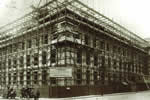
View the key events that have helped to shape the last 100 years at Imperial College.
View timeline