
Preparing for the unknown: The case for agnostic pathogen surveillance
Professor Graham Cooke
Vice-Dean (Research), Faculty of Medicine, Imperial College London
Biosecurity threats are increasing, but if we design early-detection systems based entirely on what we already know, there will be gaps that leave populations vulnerable to the next emerging pathogen.
We can’t be sure what the most important future threats to health will be. Health systems need surveillance platforms that can detect emerging and manmade pathogens to improve both threat detection and accelerate early intervention even without knowing what those threats will be.
Globally, scientists are trying to predict the next pandemic-causing organism. There is work at Imperial College London and institutions around the world to identify viruses that have the potential to jump from animals into humans, such as coronaviruses or Avian influenza.
However, there are many millions of virus species on Earth, most of which have not been described and characterised. There could be other viral animal reservoirs we have yet to discover. To be truly prepared for emerging pathogens, we need to develop and test agnostic systems that can detect unexpected or unknown viruses and bacteria.
Most standard diagnostics are designed to find specific pathogens, usually molecular methods to amplify small amount of genetic material. In contrast, metagenomic tools exist that amplify all the nucleic acid material in a sample, enabling scientists to generate genetic information about the community of organisms that is present. That sample could be a from a patient, such as blood, or it could be water from a wastewater treatment facility.
The technology exists for such systems, and they have been deployed on a small scale with some recently adopted into clinical practice (for example, to detect fever in travellers returning to the UK). There is an opportunity to bring such approaches more widely into clinical practice and build a system that whilst focused on diagnosis, will enable the early detection of new pathogens in human populations.
Ideally, those pathogens would be found before they affect humans. Systems developed for environmental sampling offer a route to do that. Several countries and cities are developing wastewater surveillance infrastructure, offering an opportunity to expand the range of testing: not only for infection but also illicit drugs, prescription medications (particularly antibiotics) and more.
Metagenomic sequencing, or other “agnostic” approaches embedded in such systems have the potential to move us towards an “always on” detection network for new threats.


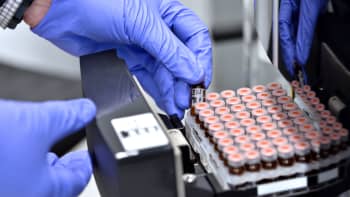
"To be truly prepared for emerging pathogens, we need to develop and test agnostic systems that can detect unexpected or unknown viruses and bacteria."
Professor Graham Cooke, Vice-Dean (Research), Faculty of Medicine, Imperial College London
Environmental detection has already shown its usefulness in the biosecurity context. In 2022, health authorities in England detected the poliovirus in London wastewater, showing that it had been silently spreading in communities1. The UK was declared polio-free in 2003, and the detection triggered an immediate government response.
As technology advances, the costs of metagenomic testing are coming down, but they remain high and are a barrier to the deployment of this technology. Scaling and validating these tools for pathogen detection remains a challenge for agnostic surveillance systems. However, at the same time, biosecurity risks are increasing and the opportunity cost of not preparing and implementing these technologies is also growing.
A network of standardised metagenomic surveillance tools across different geographics could create a real-time surveillance tool that could detect known and unknown threats. We should all be working towards this goal, if we want to be avert – or at the least contain – the next emerging disease outbreak.

Reference
1) Klapsa, D. et al. (2022) 'Sustained detection of type 2 poliovirus in London sewage between February and July, 2022, by enhanced environmental surveillance,' The Lancet
 Built with Shorthand