
The SHE HEALS Gallery
The SHE HEALS Gallery was created by women experiencing homelessness to explore what holistic, trauma-informed healthcare looks like.
The photographs and artworks represent their past experiences and future hopes for healthcare.
















Nashwa
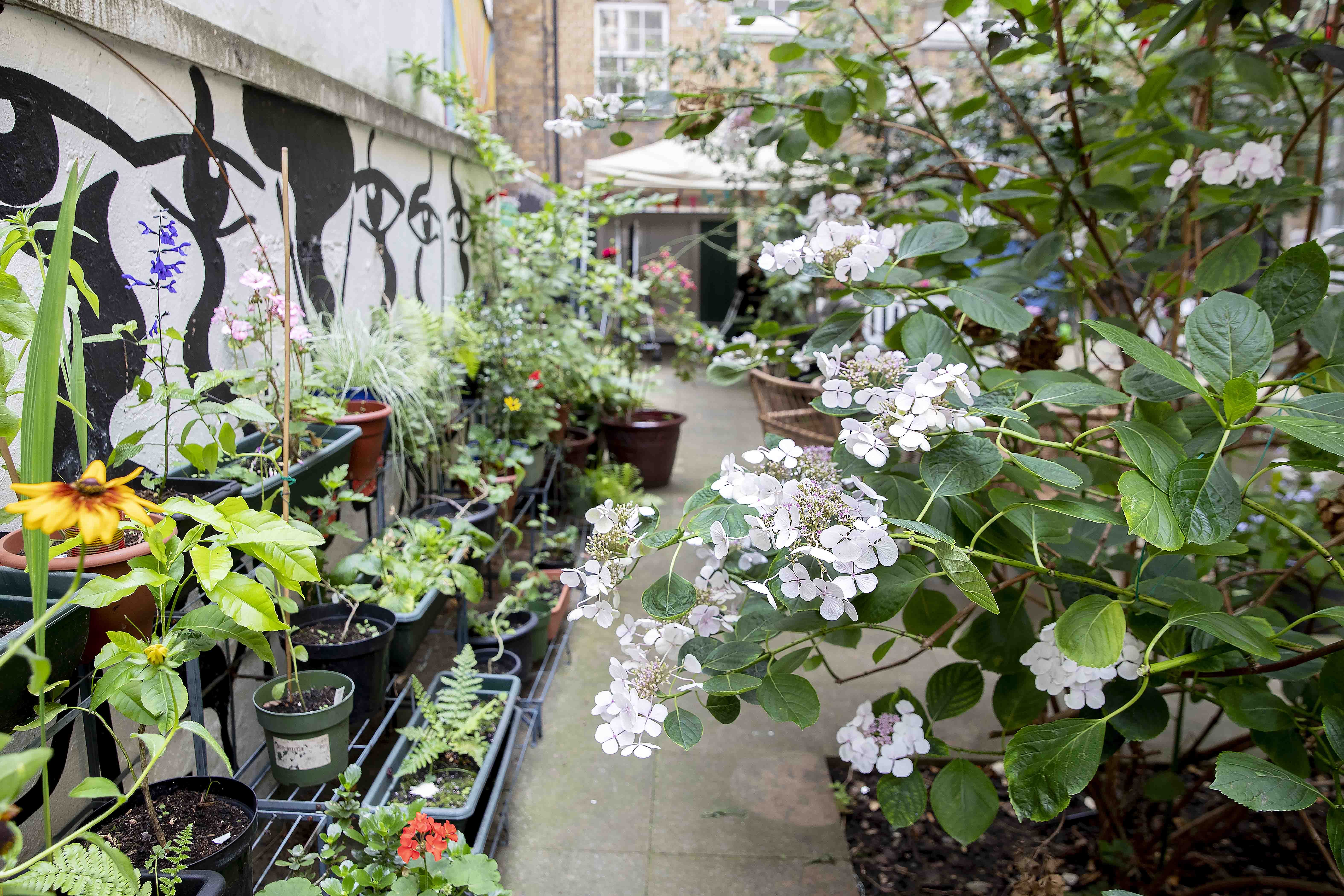
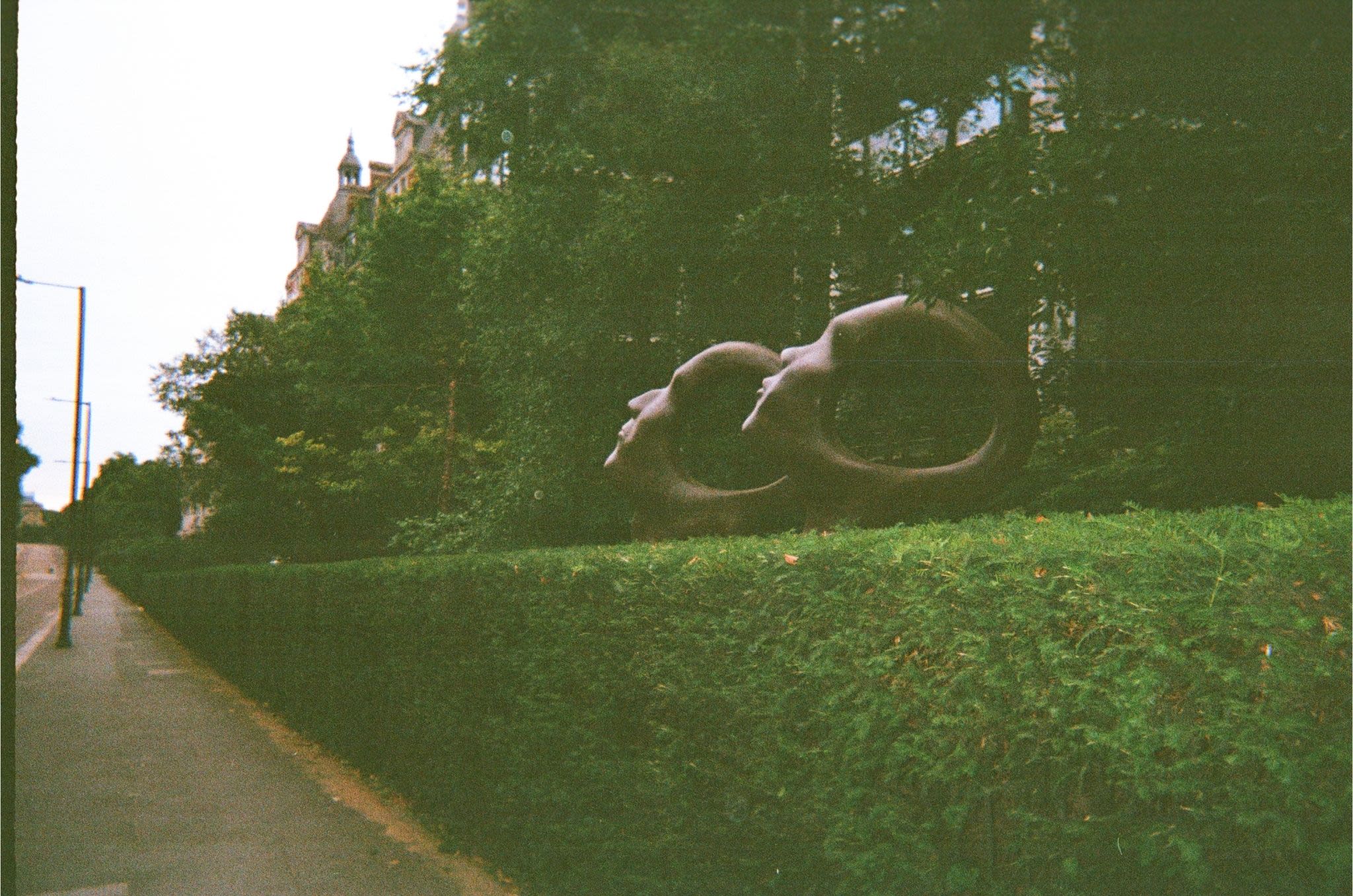
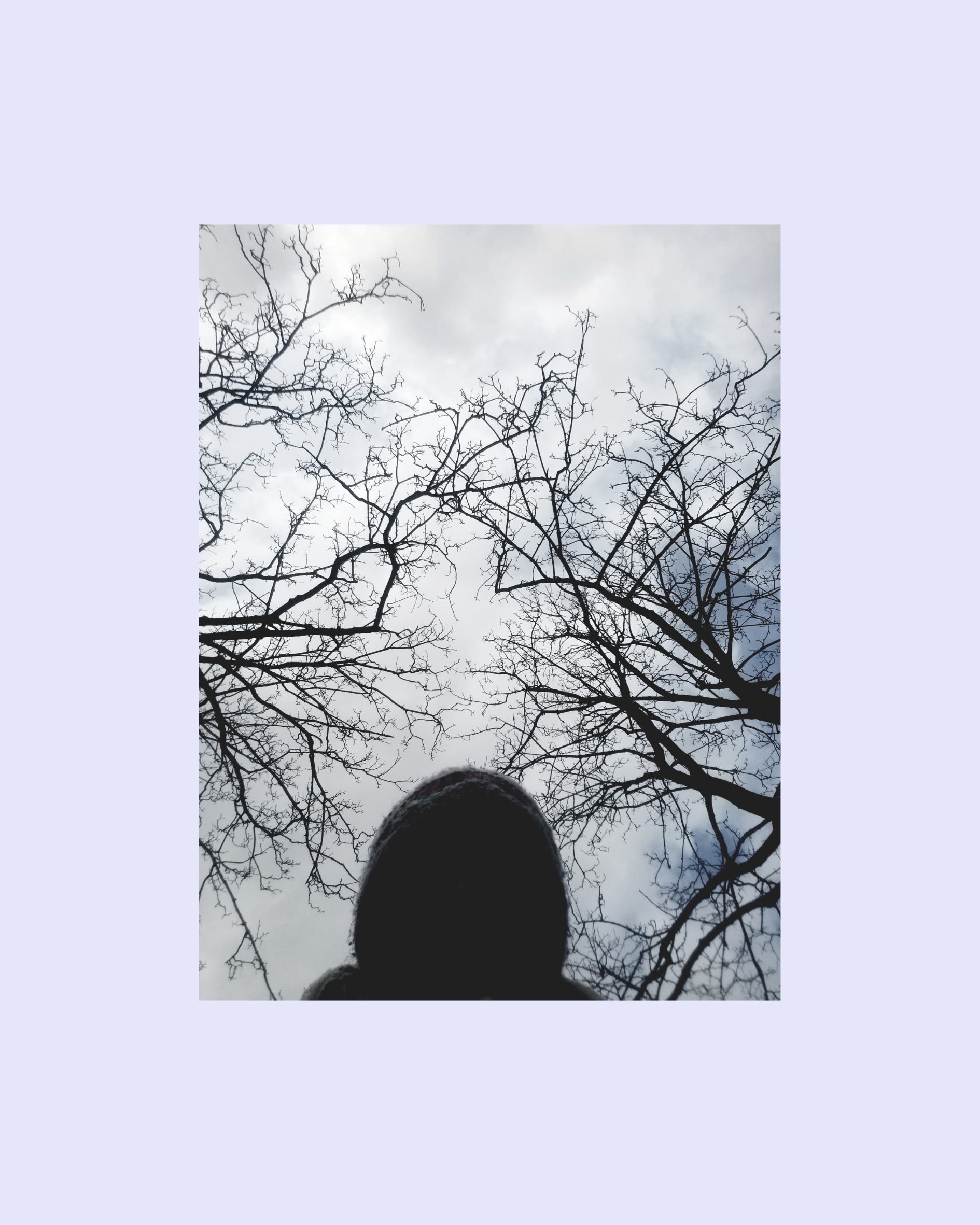
This is the mental health service – a jungle I can’t navigate through. In the back, it might be clear for those who work in the NHS, but for me it’s not clear and might lead to a closed path. For years and years, I’ve had issues with the mental health service, and I don’t think I’ve gotten proper help. I’m in the dark and I don’t know where to go. For me, it feels like I’m going to give up asking for help.
When I see this photo, I have a pain in my chest – it feels hopeless and helpless. I wonder, all these years, no one cared for me to get the help I really needed. Whatever the issue was when it started, it’s gotten bigger and bigger because I never got the help I wanted. I feel so sad, disappointed, and angry as well.
Last week, I went to the hospital for an emergency, and I was surprised they were nice. I couldn’t believe it. The doctor was so kind, and I felt she really cared. I was in a vulnerable situation and suddenly someone cared. I know it should be normal, but when it actually happens, it feels like someone went the extra mile. Because it was such a surprise, it shows you that it’s not the normal thing.
I remember all these small details because I haven’t had this experience before. Because of my physical illness, I have chronic pain, and lights and noise are really difficult for me. The hospital knew all of this, and they gave me space in a room with the lights off. They gave me earplugs because in emergency, it’s so loud.
I think I cried. These things are available in the NHS, but I have never had them before. This was the first time in eight years that someone seriously cared. It makes a difference when people show you they care.

Nashwa
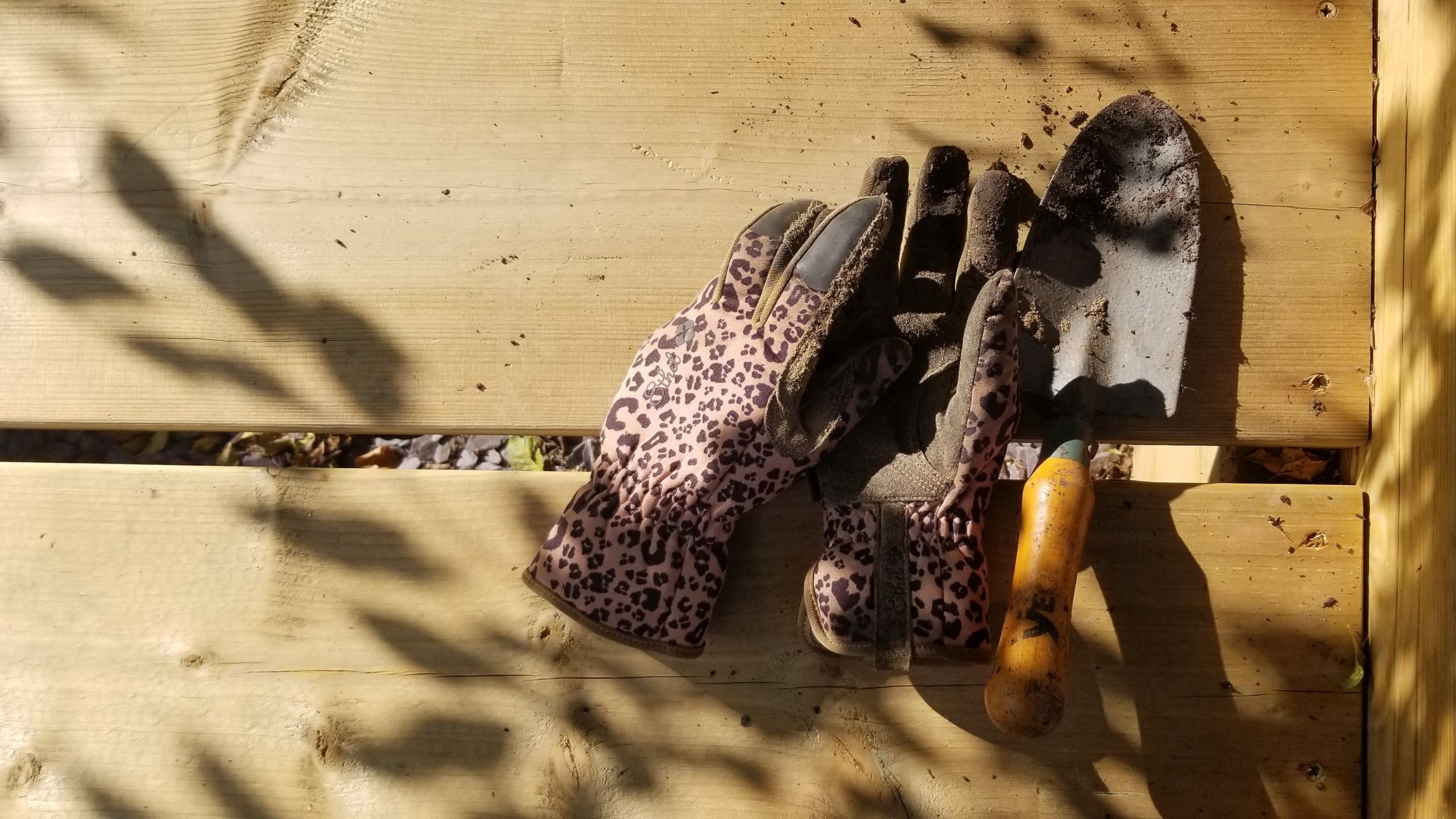
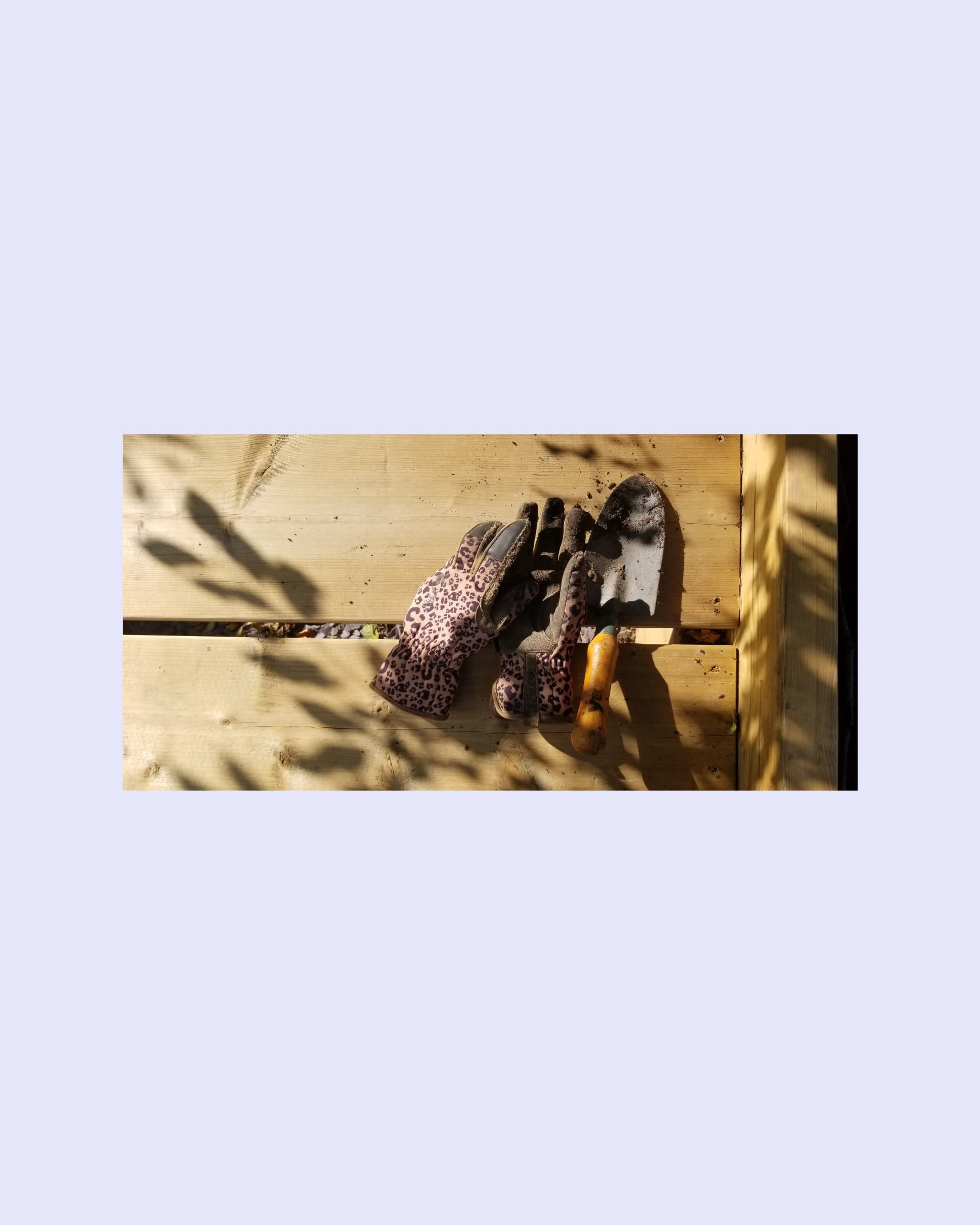
There is a church next to where I stay at the moment, and they have this garden project. They give you a small plant and let you plant it in the church garden. In the photo, the trowel represents how I wish someone in the mental health service actually had the time and the care and the interest to dig through the miles of trauma after years and years.
The shadows look like haunting ghosts, haunting me all the time. I’ve never been in a situation where I’ve felt safe and gotten out of survival mode. I feel really very sad that by neglecting my issues for a long time, not only have I lost years of my life, but I’ve lost opportunities where I can actually make something good with my life. It leads me to isolation, and more and more I become withdrawn from life. I’m a shadow of me. I know what I have at the moment isn’t life. It’s trying to survive day by day.
So the trowel – it represents someone to sit with me and go through everything. And you can’t see the plant, but maybe that represents the hope that if I got proper help, I could plant a new life.

Georgeta
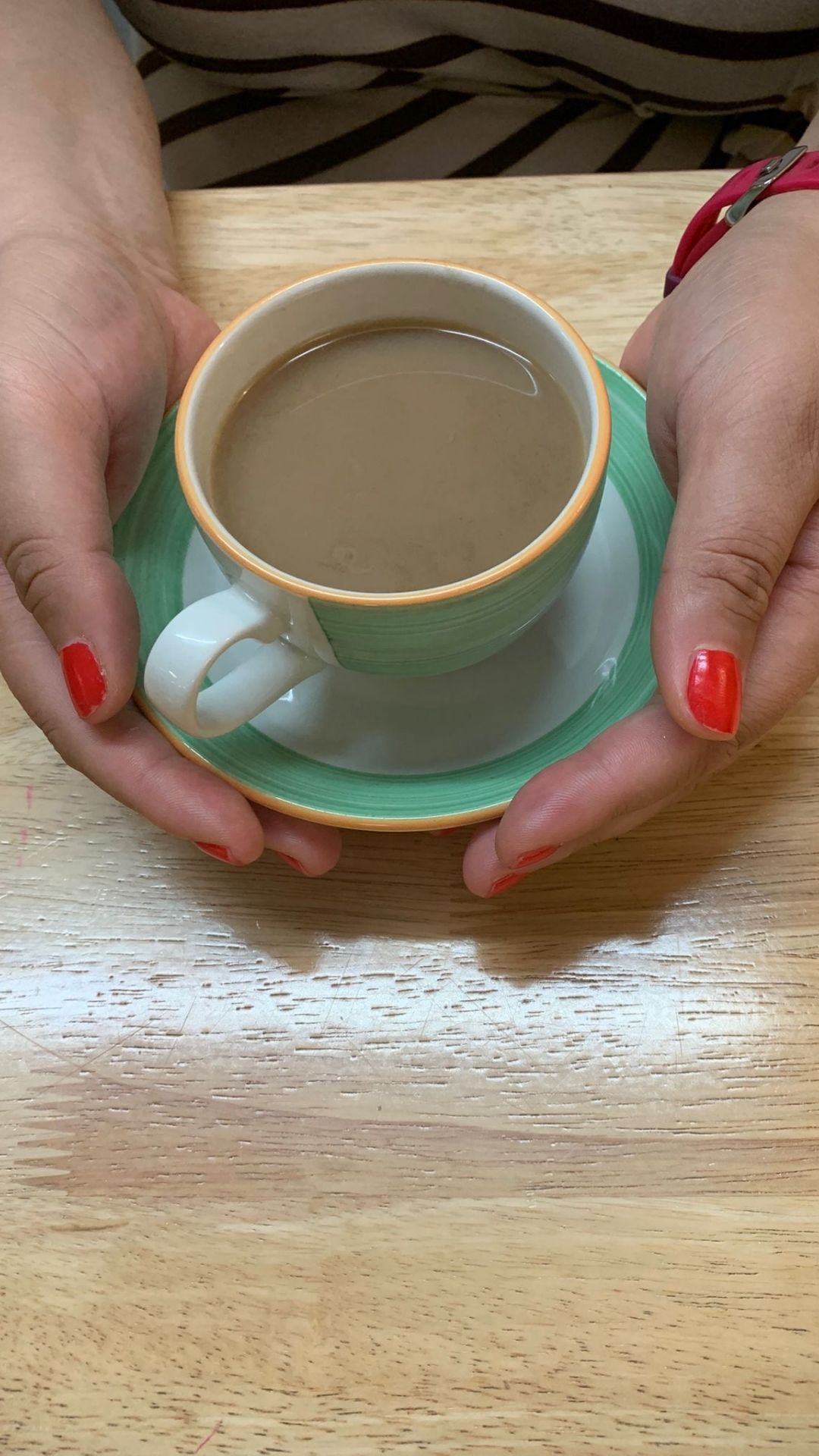
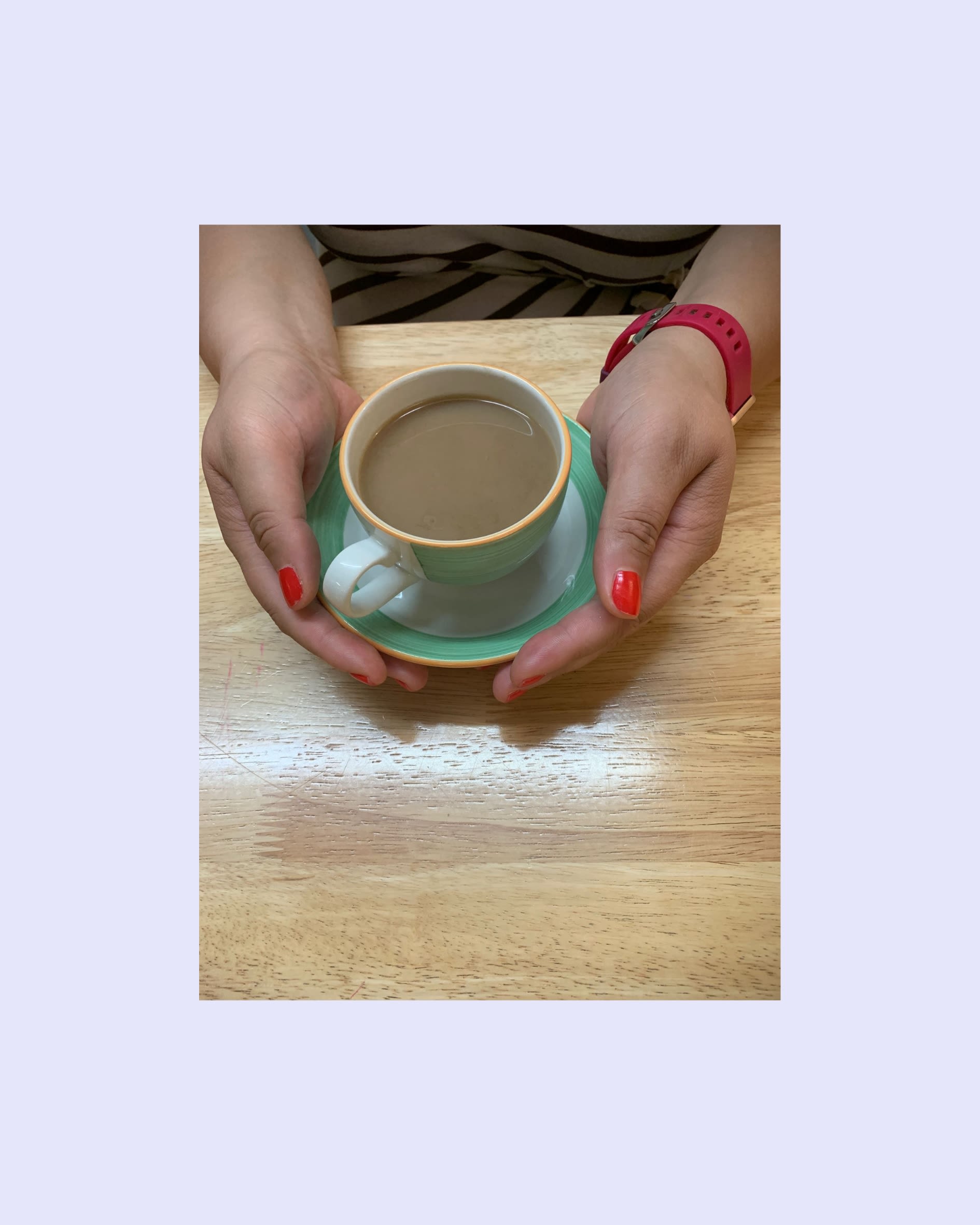
The cup of coffee signifies the way I’ve been taken care of by the healthcare system. It’s warm. It’s held by hands. It’s the way I’ve been held by the healthcare system because I’ve had lots of problems. So they’ve really been taking care of me. They’ve been there when I needed it.
When I see this photo, I feel good. Enthusiastic. I feel taken care of, and I feel like I can trust the system. I feel there are people that are doing lots of hard work, because I worked in healthcare as well and it was really rewarding working with lots of groups of people in need.
I want to tell others that the healthcare system is quite good. It responds to your needs and is there when you need it. I’m in constant communication with my GP and she’s always looking for good ways to solve my problems. It’s the way she talks, a very reassuring tone. She actually communicates with me about my needs and makes referrals for me to go to places where I need to be seen.

Georgeta
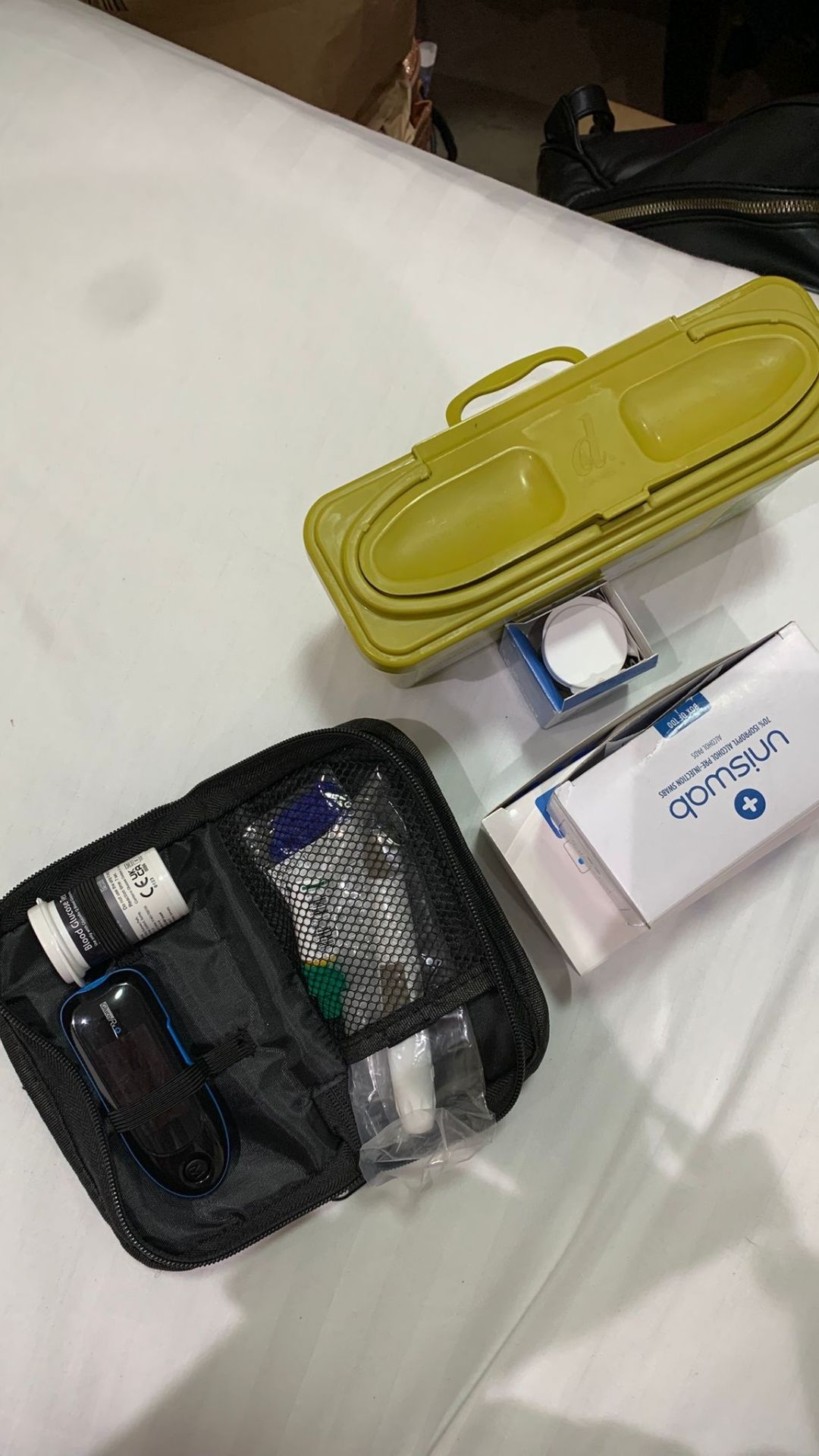
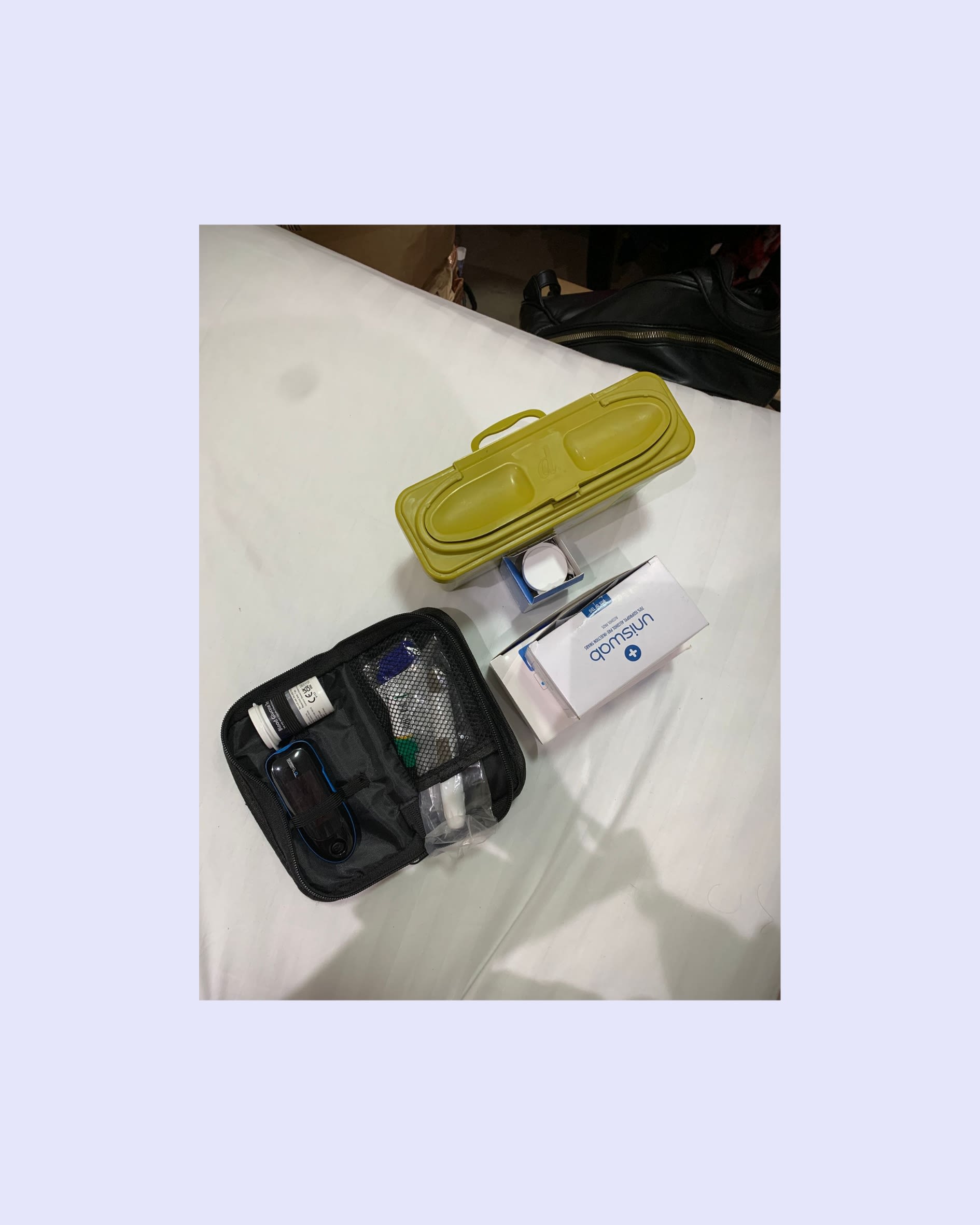
This is my blood glucose monitor. It’s quite personal. Because I’m diabetic, it’s really important for me to monitor the glucose in my blood. It makes me feel secure and it keeps me in control.
At first when I received the blood glucose monitor, I didn’t know how to use it. I had the idea to go to the surgery to have them teach me how to use it. It was a very positive interaction. I was using it wrong, so they actually taught me how to use it. Before, I wasn’t using it properly, so it showed me the same reading all the time and my coach was worried because it can’t be the same reading all the time.
I’m quite happy with the healthcare I’ve received. I talked to my doctor, and they put me on the meal replacement diet. They sent me the soups and shakes, the scale, and the monitor. It was all for free. So, I’m quite happy with it.

Georgeta
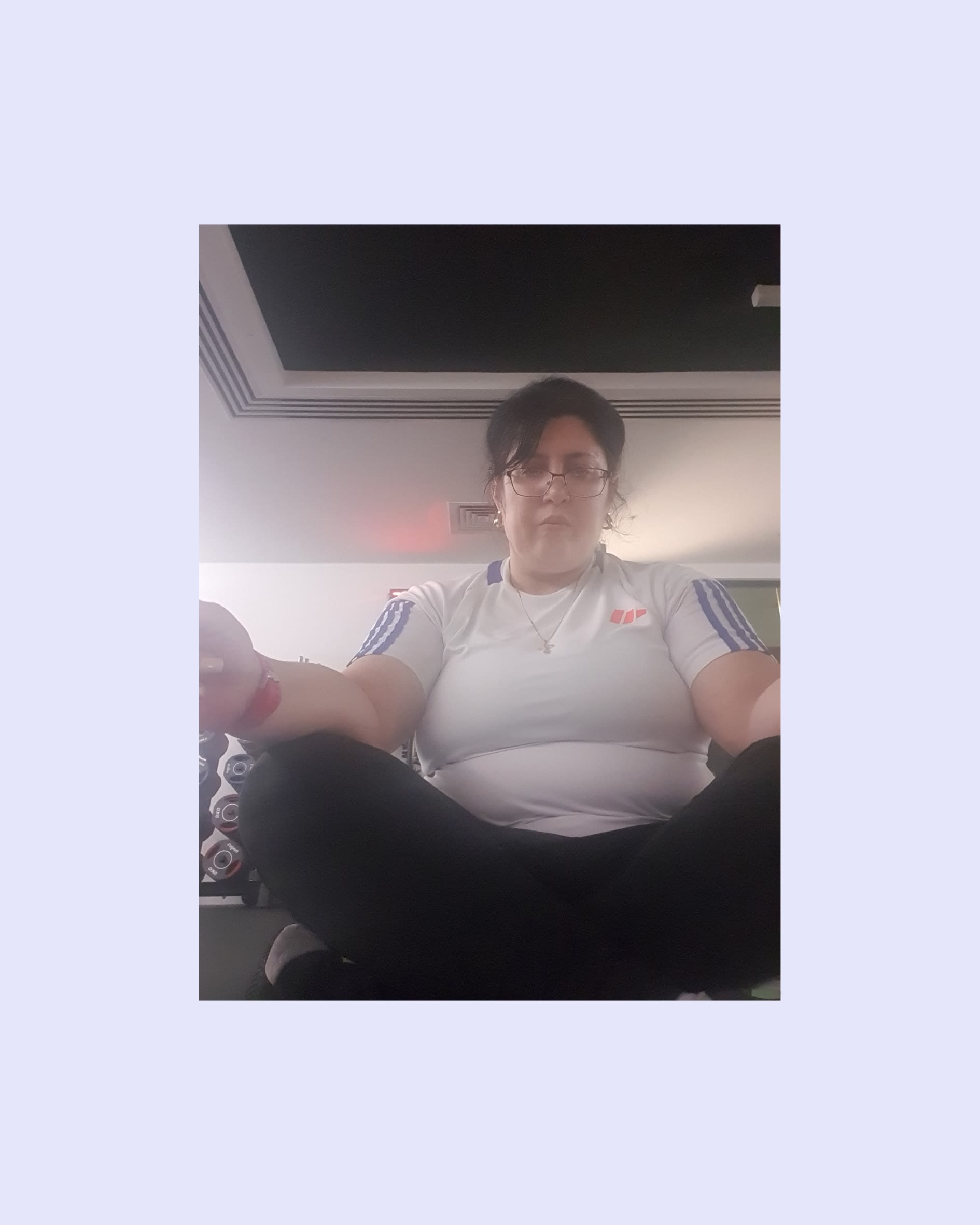
This is a photo of meditation. It’s really important for balancing. It's important for my life. I have a seven-minute meditation which I’m doing every night. It's about losing weight as well, and it helps me picture myself in the desired weight loss position and makes me feel like I’m already there. When I see this photo, I feel relaxed, mindful, and happy. It makes me feel calm. It helps me work towards my goal of losing weight.
Meditation is safe and it’s a good method to use in many different areas, not just losing weight. It's a part of life and can be used every day. And it’s a great method to enhance wellbeing.

Anonymous
My tooth was swelling, and everyone was telling me I had to go to A&E, so I went. When I first went to the hospital... I’m very terrified of hospitals and stay away from hospitals. I only go when I really have to. When I went to A&E, I’d heard the experiences of how they treat people with homelessness, and I read online about the long waits. People offered to go with me, but I decided I just had to go.
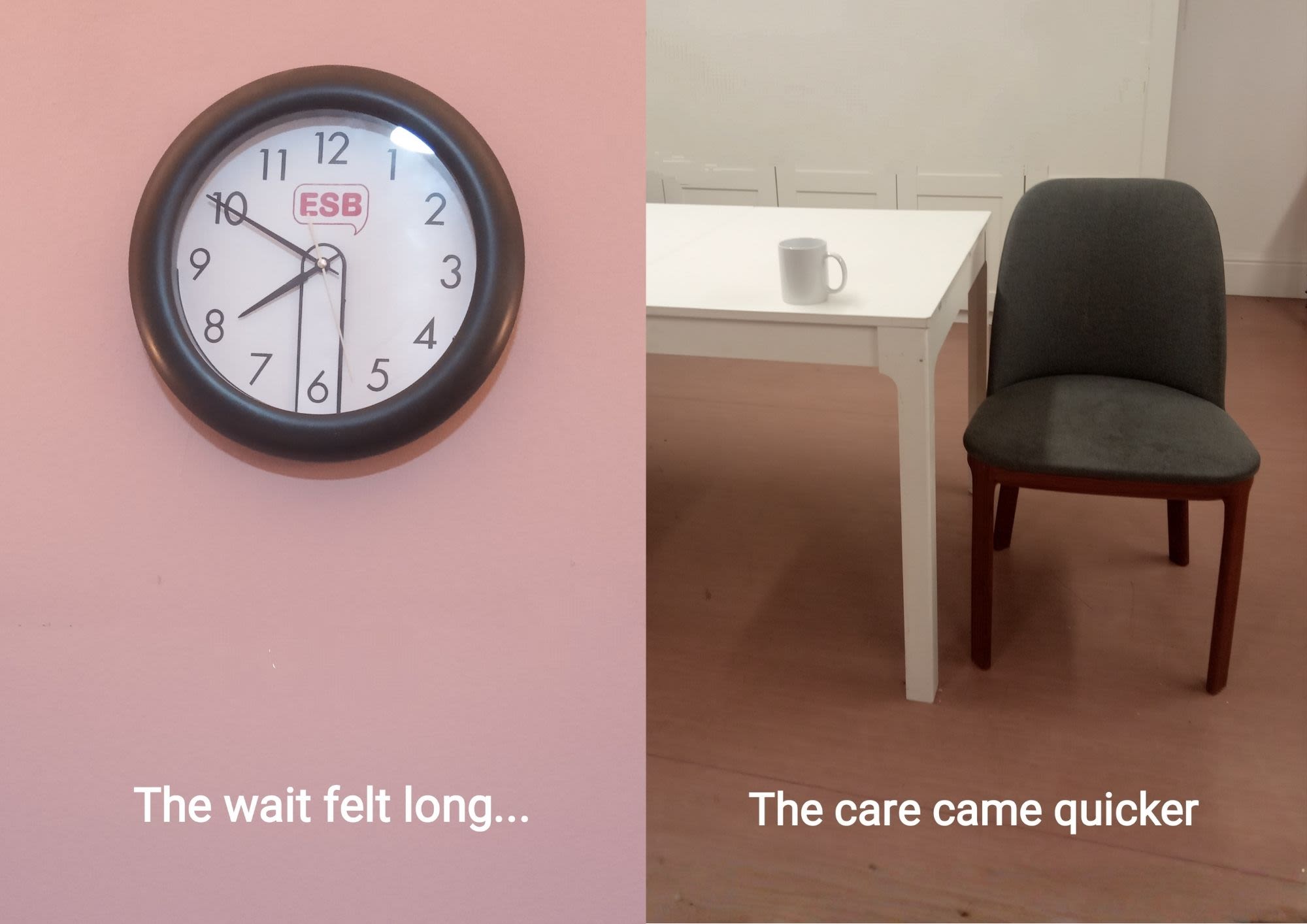
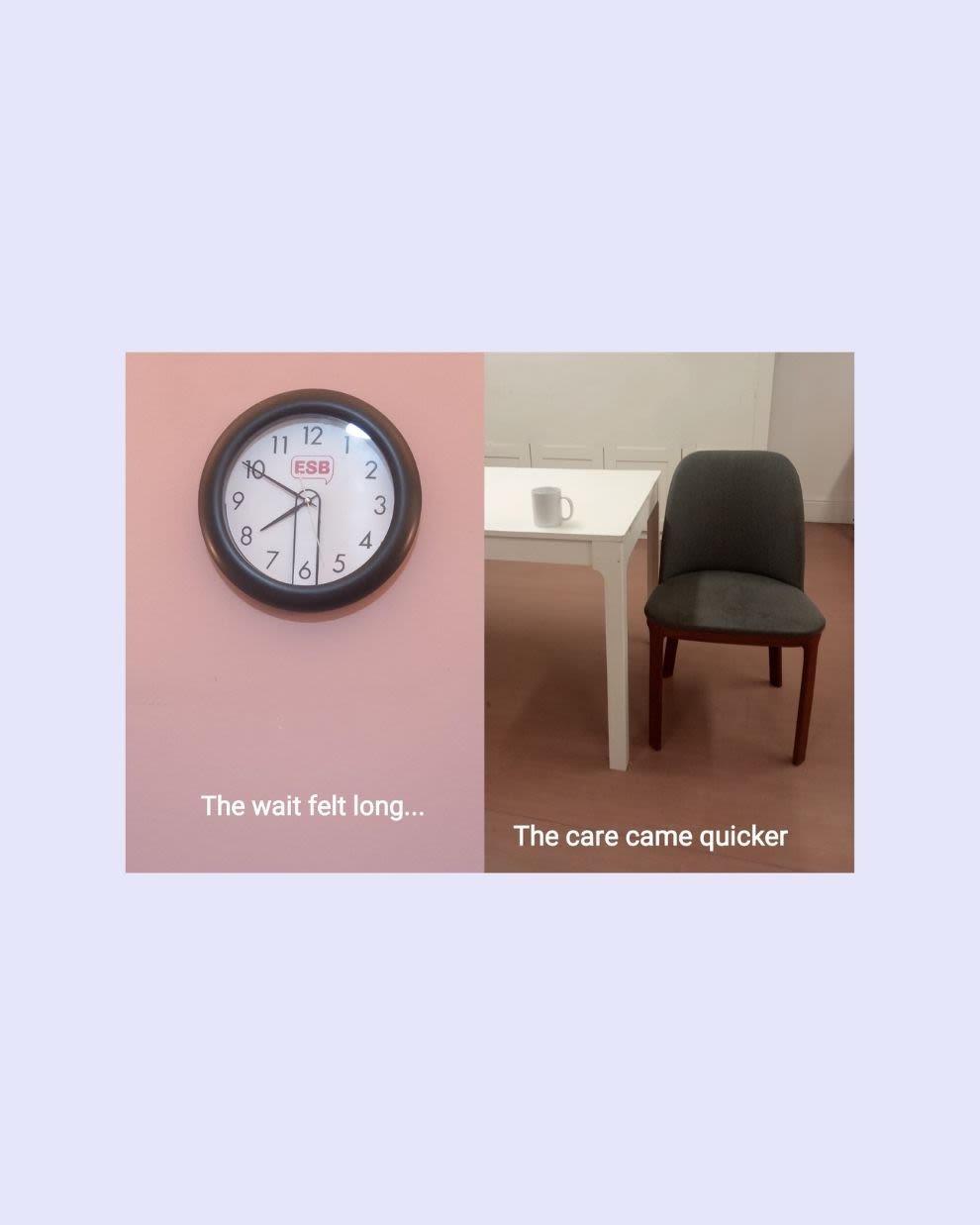
When I went there, I was expecting the wait to be awfully long, so I was anxiously waiting in the waiting room. I was pleasantly surprised when they called me after half an hour. But while I was waiting, the clock represents anxious waiting. Not knowing how long I was going to wait, not knowing what I was going to go through.
And the second photo represents a clean, calm room. It represents the relief when I’m finally seen. It’s not as bad as I thought it would be. And that actually happened quicker that I expected. It was actually more efficient than I expected.
When I see this photo, I feel better about the NHS. It’s that glass half empty, half full feeling. I went in with the half empty feeling, but I actually came out with a half full experience. I did mention that I was homeless, but they still handled things efficiently. I didn’t feel I was treated unfairly because of my homelessness. This doesn’t take away from the fact that there are many negative experiences, but this shows that there are positive experiences as well.

Mariam Sabra
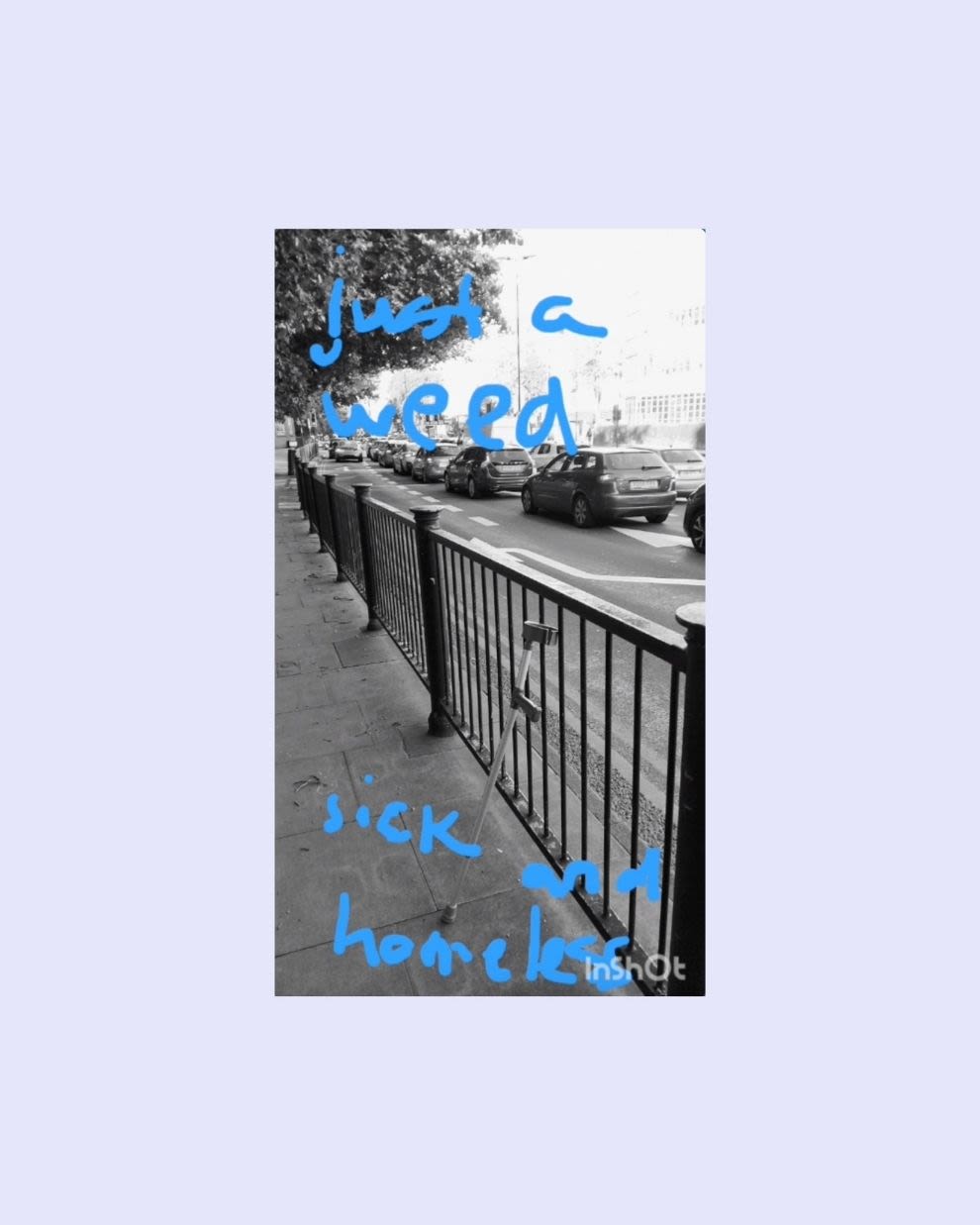
I chose a picture of cars going by because that’s how I pictured my life when I was homeless. I was sick and homeless by the side of the road, with people going by and not noticing you. They’re having a life while you don’t have a life. You feel like you don’t exist. It's not jealousy. It’s thinking that you don’t belong, and you can’t ask for help if things go wrong. So I saw the world in black and white and felt just like a weed on the side of the road.
Before with my family – I was abused by my family, and they weren’t really my family, so I wasn’t treated as family. So at first when I was homeless, I was happy because I was free and I could go to the library. I didn’t realise at first that this still is not life.
My sickness started slow, but it got worse, and I didn’t ask for help. So when I went to the hospital, it felt like I was saved. The nurses took care of me like a child, bathing me, and everyone was extremely kind.
When social care came, I was so surprised. I thought this was emergency care and once I was better, I would go back on the street, but social care came every week. They helped me contact the police and helped me with rehoming to the health bed.
The hospital I was at had a library and they brought the entire trolley of books, so I got to read a lot and relax. And I got to lie down on a bed, which I couldn’t do when I was homeless for more than seven months.

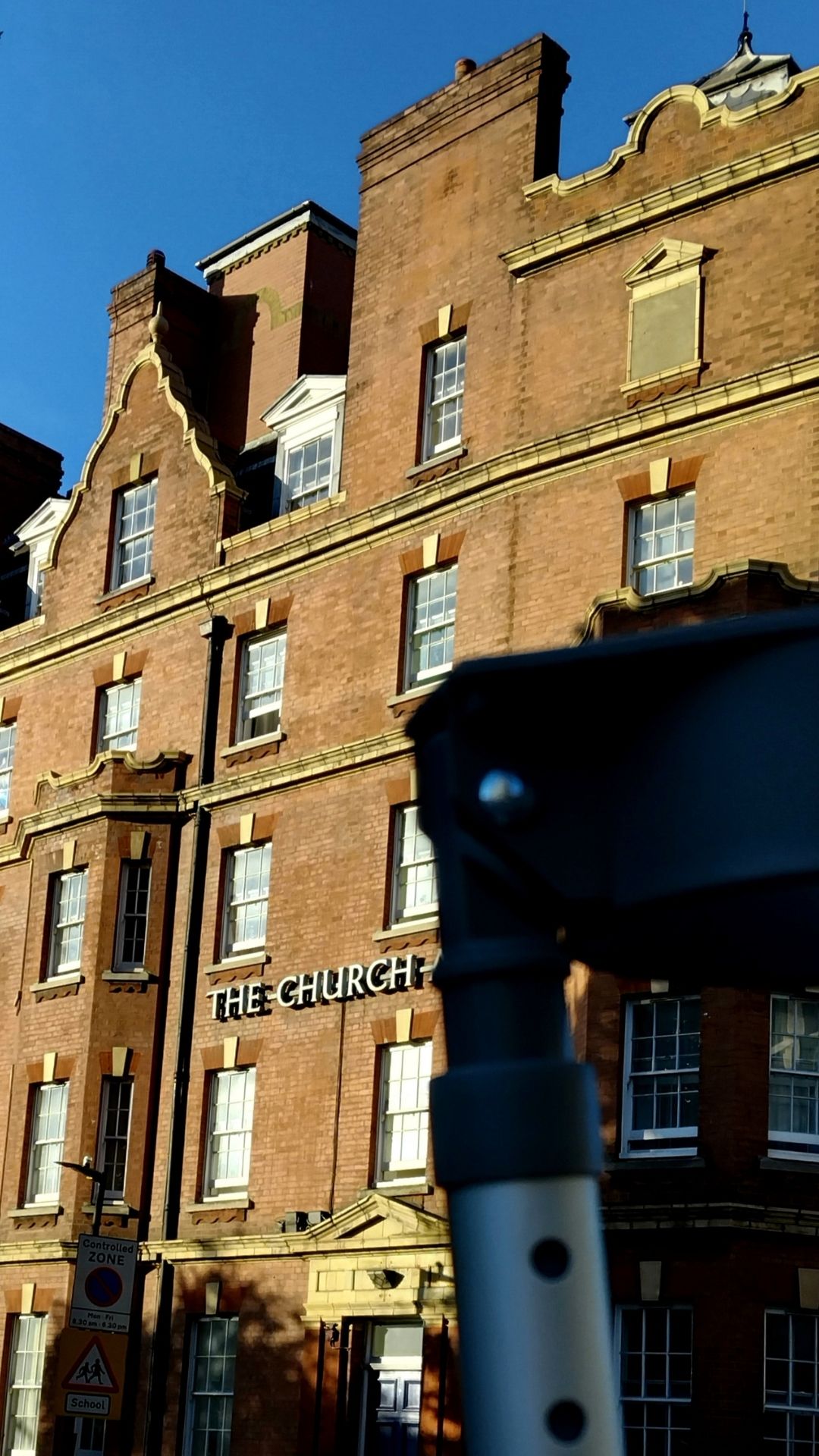
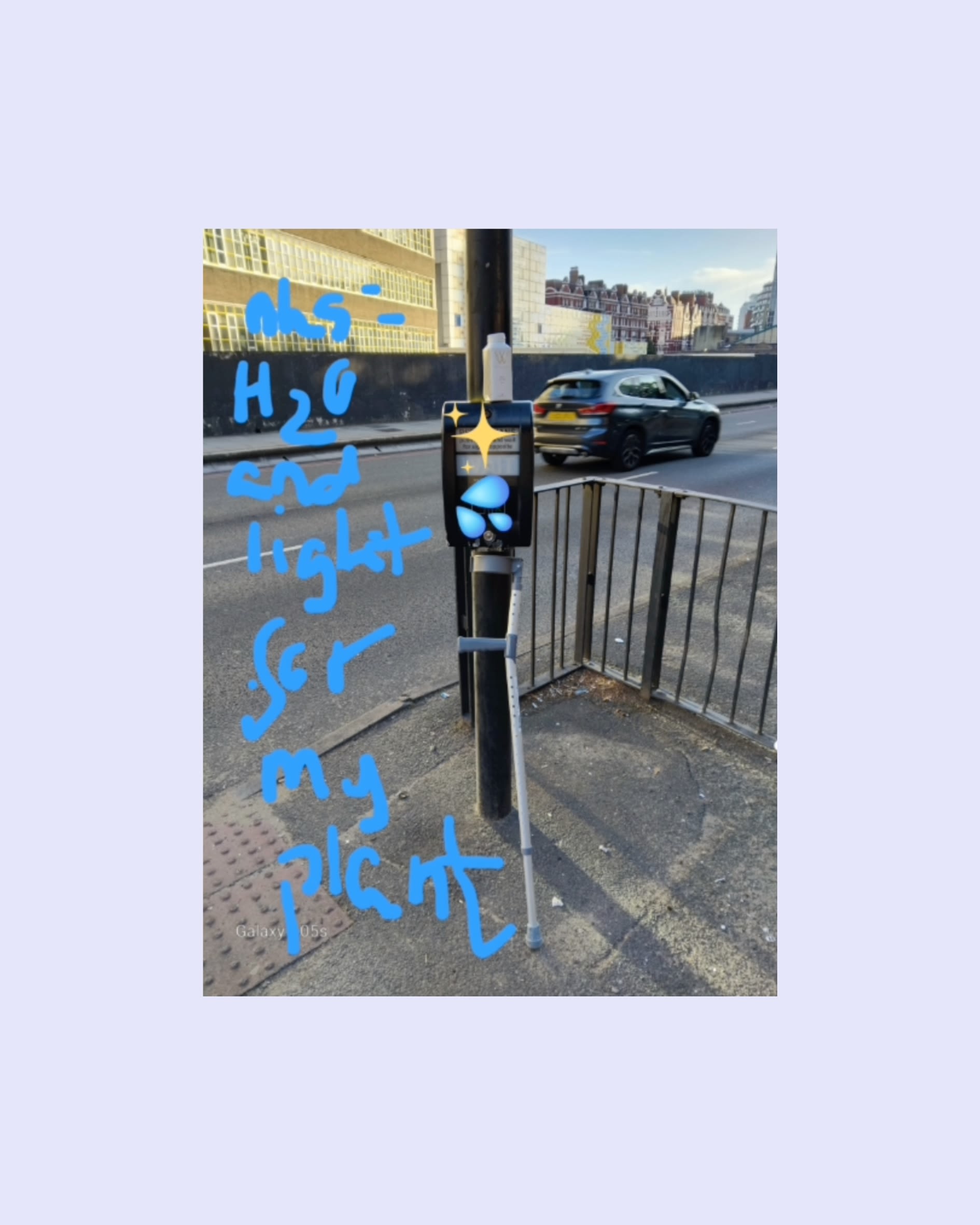
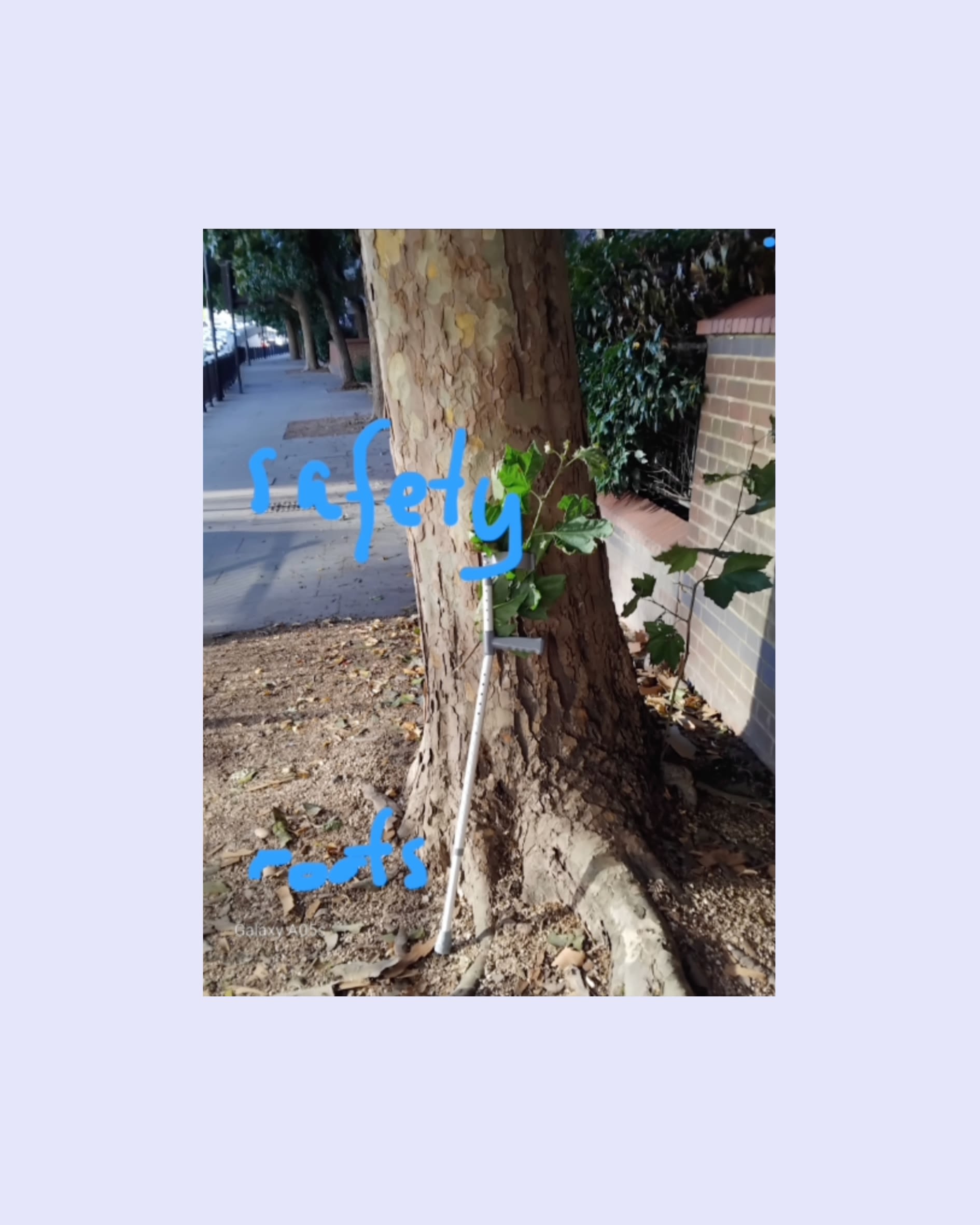
The crutch is a symbol of my sickness and myself. The NHS is water and light for my plant, for me. So it’s everything I needed. And I chose the crosswalk to symbolise when you have to choose to go forward, even when you don’t know what is right. It symbolises life, decisions, and confidence.

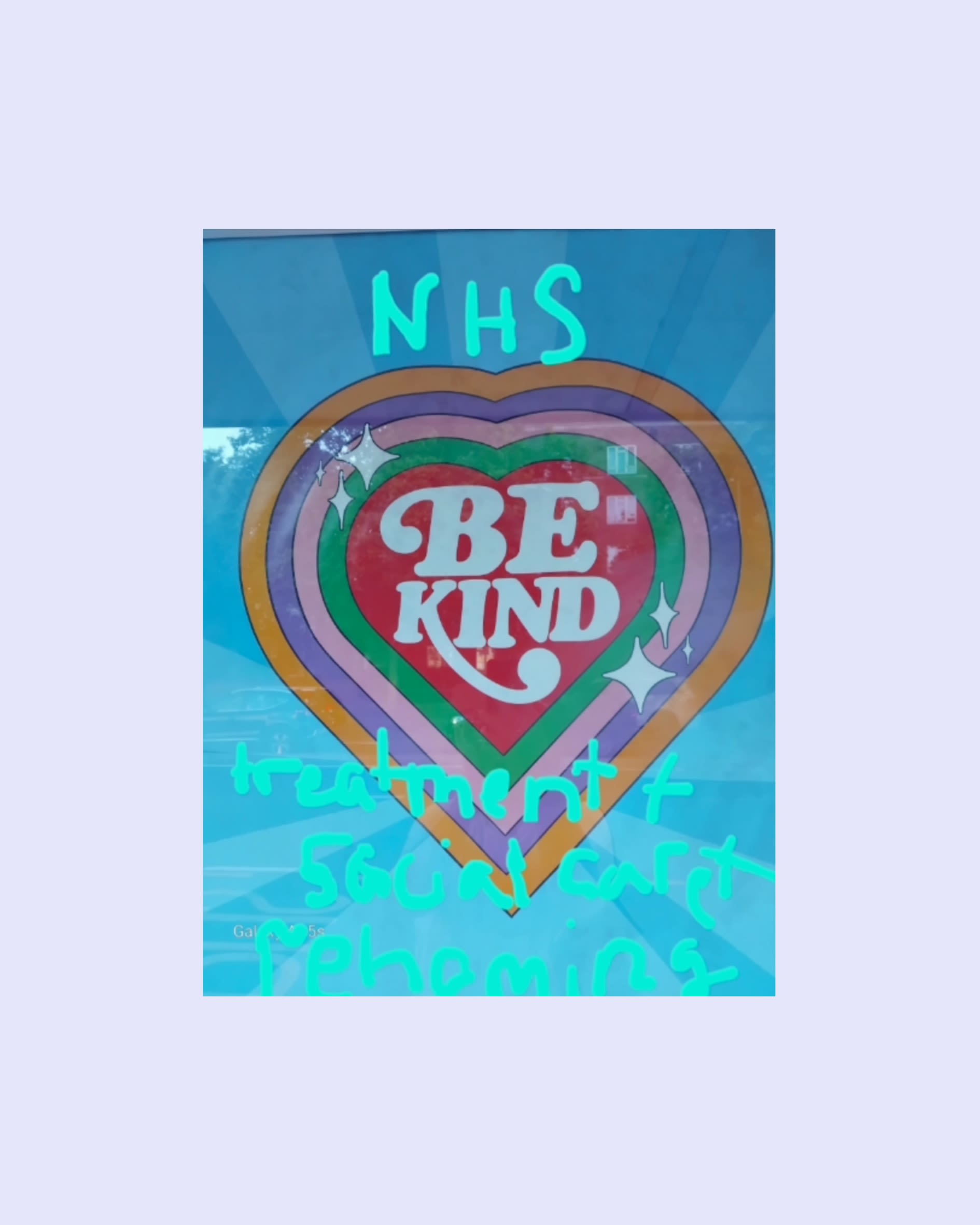
This is something I found on the street: “Be kind.” This is how the NHS was to me. And to be kind to myself. I deserve a life; I deserve to be happy. I deserve to be safe and to have food, clothes, and a home. And now I can ask for help and tell people what I need.

Trees symbolise roots and family. If I don’t have a family and home at the moment, it doesn’t mean I don’t have the right to be safe and have a family and life of my own. So being at the hospital made me feel like I deserve safety and everything else. The green branch symbolises a new life.

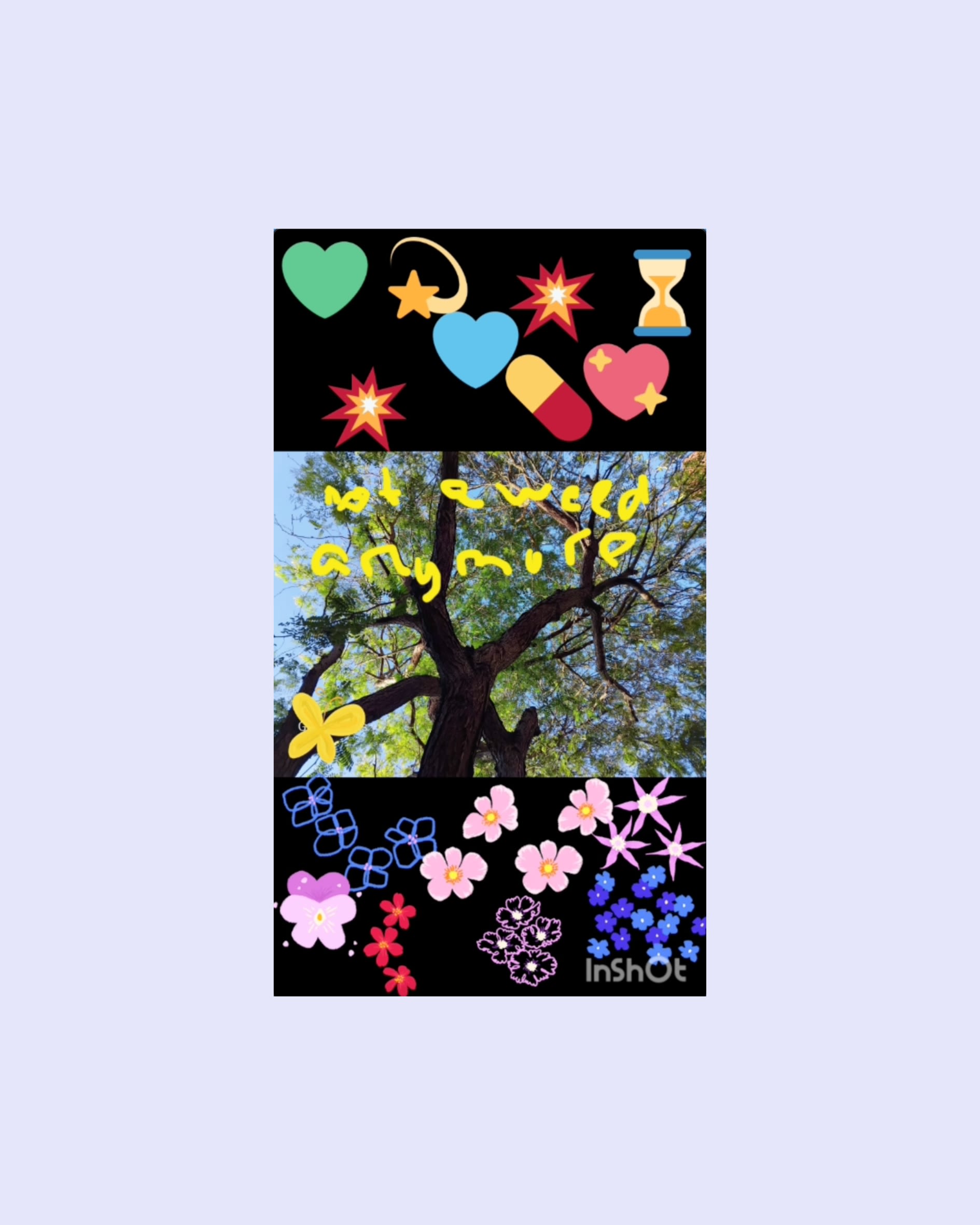
Not a weed anymore; it’s a full-grown tree now in the sunshine. And a butterfly. When I see butterflies, I see hope and happiness. This is the future. It’s where I want to be. I want my life to be full of flowers. In time, I will heal and feel the joy of living. I will have people in my life and have a happy life. This is how I see the future now. I never really had friends. First, I wasn’t allowed, and when I was homeless, I didn’t trust anyone. But now that’s my hope for the future.

Thank you NHS. Because of my time with the NHS, I have all this hope for the future. All these flowers and time and healing and medicine.
My message to others would be to have trust and ask for help. If you don’t knock on the door, the door will never be open for you. So you have to knock. Have courage. You deserve help and you’re just like everyone else.

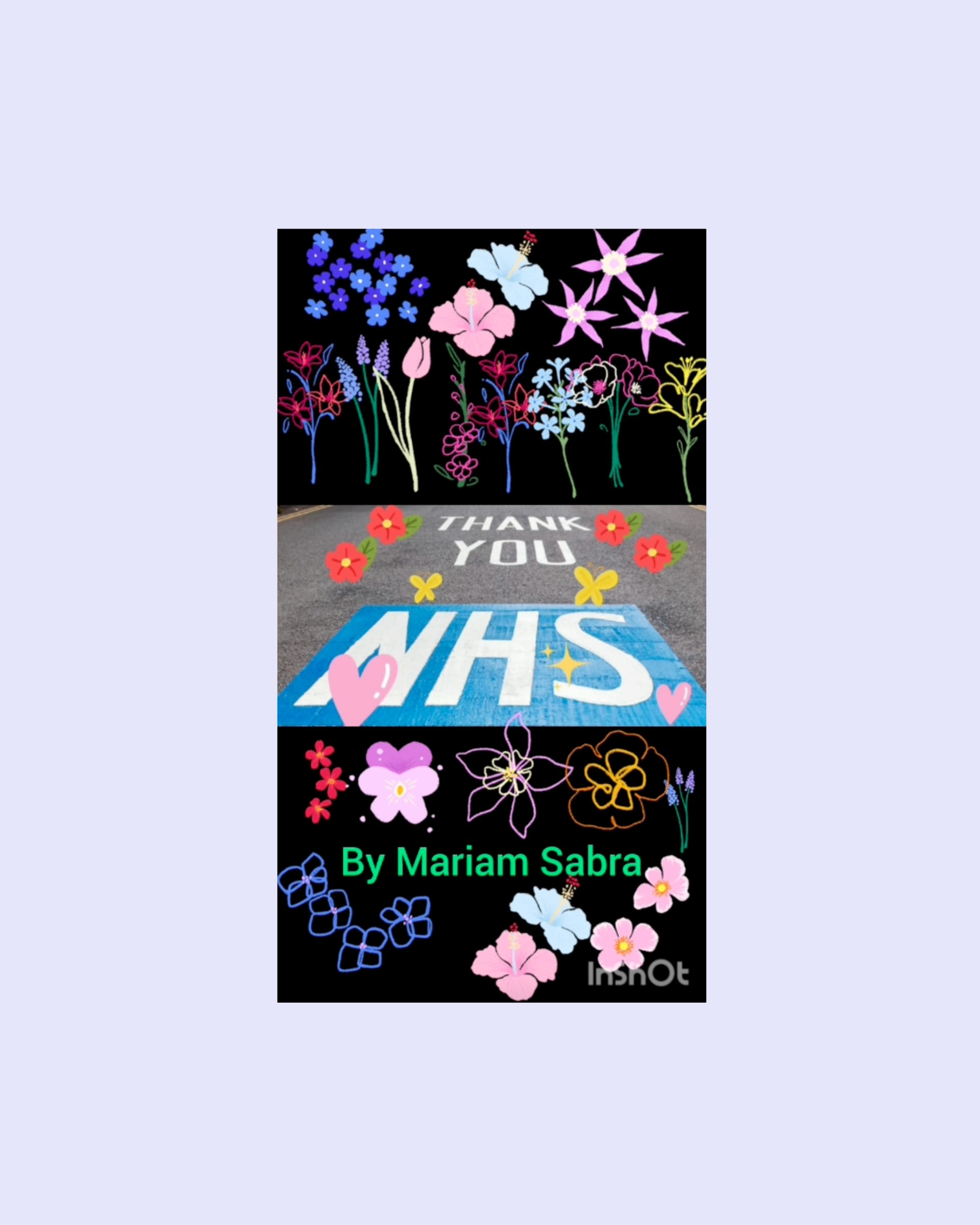
Mariam Sabra
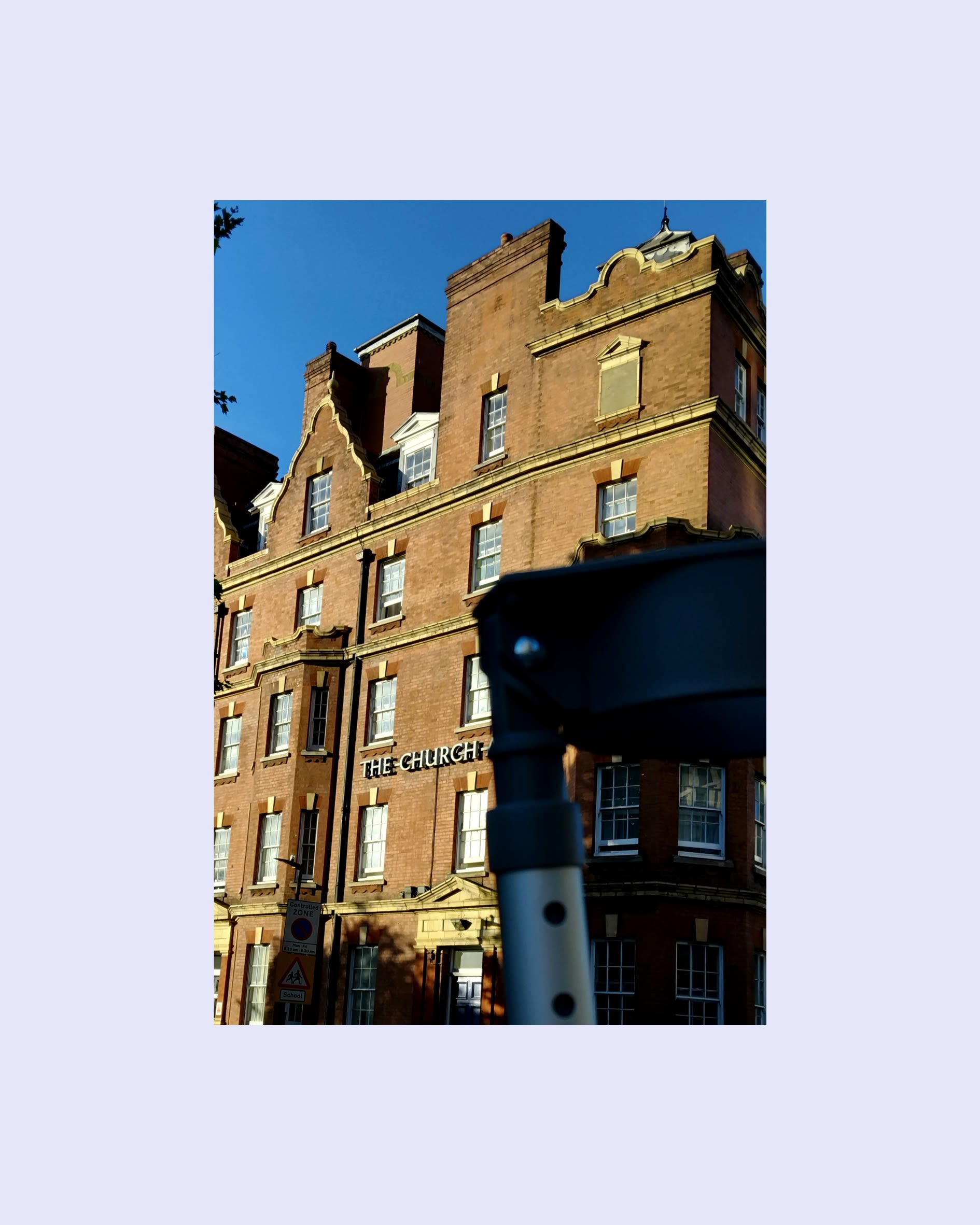
This photo summarises my experience as a homeless woman who almost died because of a very severe infection in my legs, and my experience with the NHS.
While before I felt abandoned by God, and my heart, soul, mind, and spirit were more broken than my body, the time and care I got showed me that God loves me and He saved me from my ordeal and that I deserve everything. So the NHS along with healing my body has played the role of the Church in my life.

Anonymous
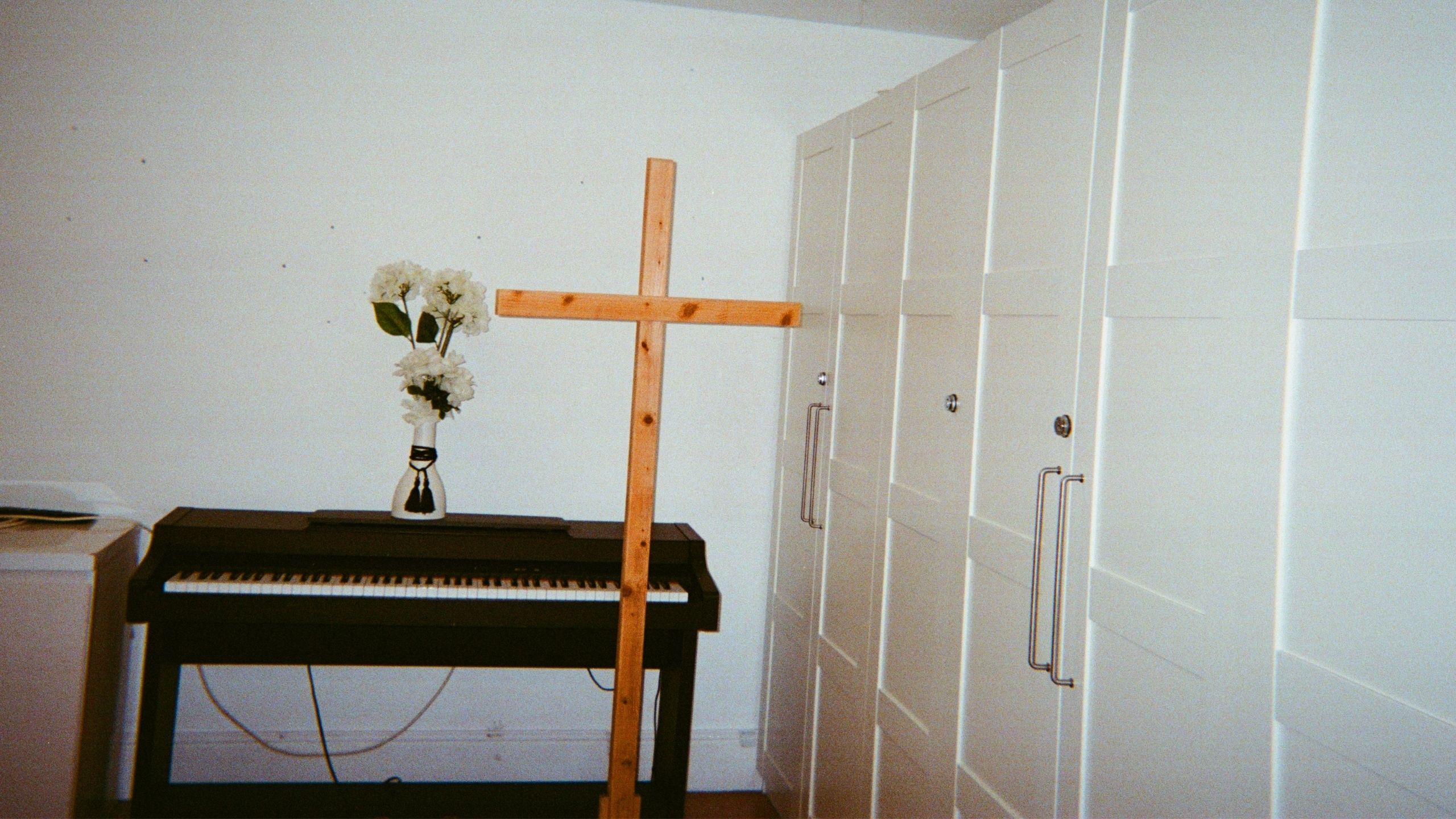
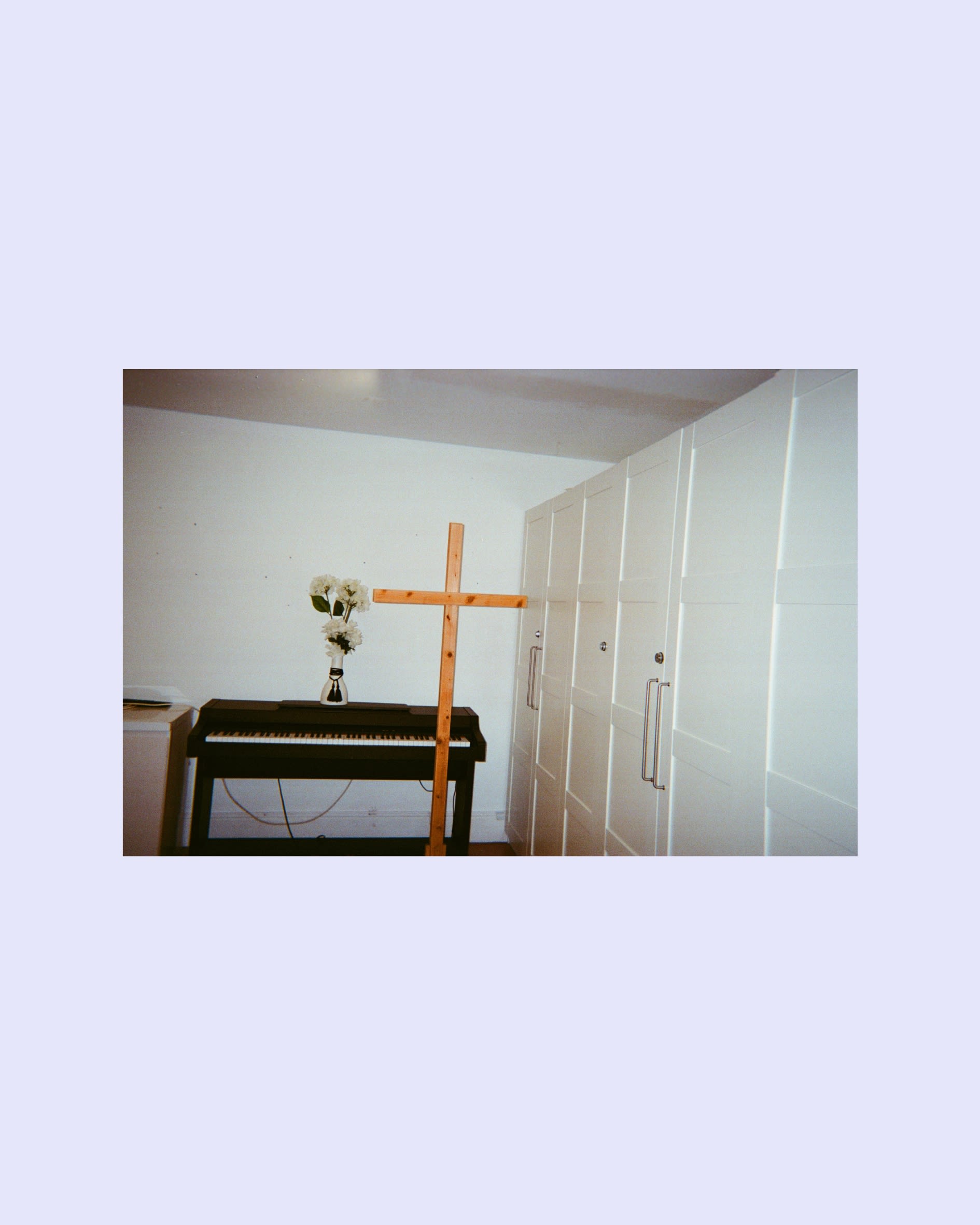
Flowers represent joy. When you’re in the hospital, you need flowers to cheer you up. When you’re lying in bed and can’t do anything, they bring you joy.
Music. When you’re sick, it’s always good to listen to your favourite music. You can concentrate on the music and not your sickness. You can use earphones to listen when you’re in bed and it helps you feel better more quickly.
The cross also gives you hope when you’re sick. You look at the cross and think of God. You pray to Him and He answers your prayers. Even if you’ve done bad things, he will help. He came to bring love and not to judge.
In the hospital, you should always be good to others and never judge anybody. Once, my leg was swollen from walking too much, so they sent me to the hospital. The doctor was so nice. He told me I needed an x-ray the next day. If I left and came back, I would be late for the x-ray the next day. So I asked the doctor if I could just stay in the emergency room overnight. He said it was no problem because I wasn’t disturbing anyone.
Later, two receptionists came for the night shift. I was carrying bags, and they judged me. They noticed I had been there for a long time and told me I had to leave. I fell asleep a little bit and she came and kicked my leg. She was so rude. All because I was carrying bags. Very, very sad. She asked me why I was there, and I said, “I don’t have to tell you that, you’re not my doctor.” She got so angry and called security and he made me leave. So I had to wait outside until the morning and it was so cold.
It’s not even the security’s job to kick people out. They’re supposed to stand there and tell people in a nice polite way to leave if they’re causing trouble like fighting. Say it politely and if they don’t listen, say you’re calling the police and let them deal with it. Because the more you do bad things, the more they will cause problems like throwing things and breaking windows. Because their mind works differently.
The next morning, the same security guy was there and he started to kick me out of the hospital, but the new receptionist was so nice to me and she told him to leave me alone and made sure I was looked after. When I was waiting after my x-ray, they were so nice. They gave me a cup of tea and fish and chips for lunch. And they have me a food bag to take away. Can you believe that? That’s so kind.
The hospital is not bad. There are more nice people, but there are some people you can tell are not there to do their job. They’re there to make trouble for other people. When you intervene, it makes it worse. Don’t go observing what other people are doing because they’re not causing any trouble. It's not your job. Don’t interfere with other people’s business.

Anonymous
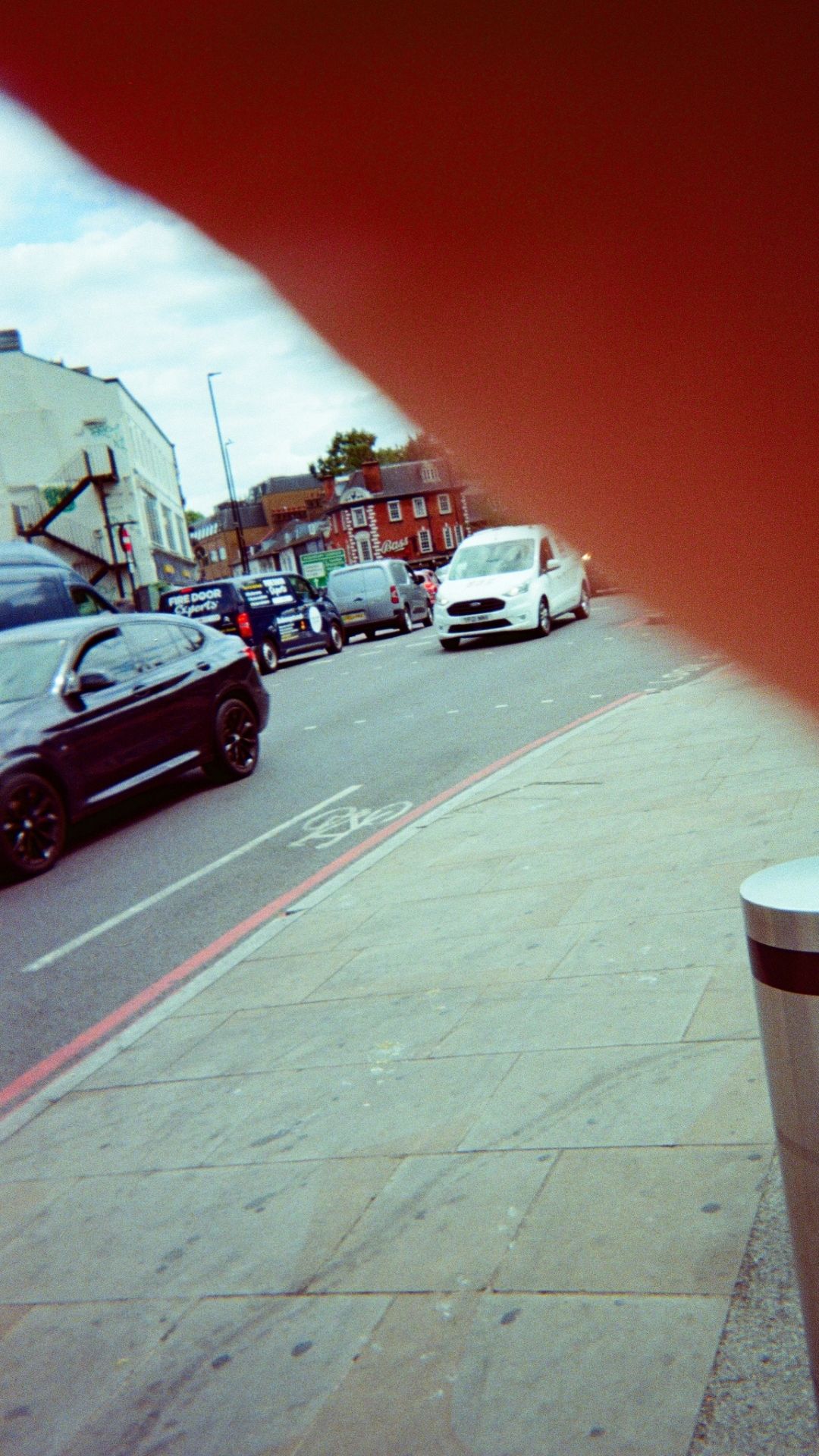
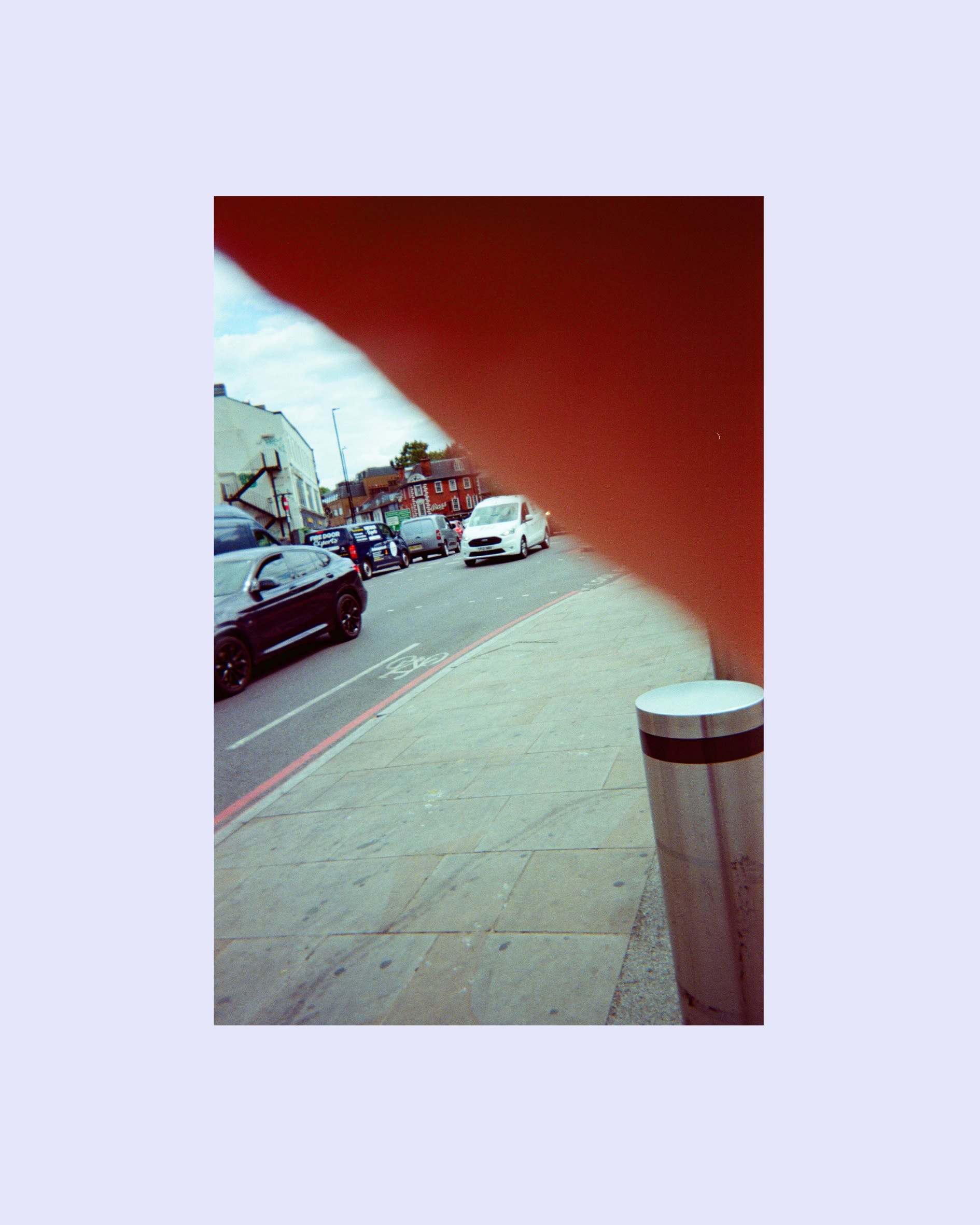
The traffic is stationary, and it can be like that for 20 minutes, 30 minutes, 40 minutes. The lights are very slow at changing and it reminded me of how healthcare works. Waiting in a traffic jam is just like waiting on the phone. You phone up and they ask you what you want, and you tell them which department you need, and they say, “Well that department is busy, please try again later.” And that can get so frustrating.
And when they call you, they say we will ring you at this time so please make sure you’re available, but then they don’t call until thirty minutes later. So that can get really frustrating too. And with the new phones, you can prove they didn’t phone you even when they say they did. So it’s just really frustrating.
In some situations, I’m very patient. But when you’re waiting for a call and they don’t phone on time, I get really impatient. When I tell someone I will call, I call on time because it’s just considerate. Emergencies happen in hospitals, but the receptionist could call you or message you to say an emergency has come up and the consultant will call you later. Just something to let you know.

Anonymous
This is a photo of the water in Holland Park. When I looked at that, I felt comfortable, and I think it helped my wellbeing because I think water is very tranquil. It makes me happy. It makes me relaxed.
My surgery right now are doing a trial where they’ve given me a special number and it puts you to the top of the list, so you only wait five minutes and then you speak to a specialist nurse, not a receptionist. They didn’t make it clear how I was selected or how long the trial period was going to be. Having this special number makes me very happy. If I’m in a lot of pain and I need more painkillers, at least I know I can get through to someone rather than waiting for ages or being put on hold.
I just think the water is so tranquil and that would be helpful for anybody. They should do things like the Germans where they give you a day by the seaside to improve your breathing. I think the NHS should do something like that, but they’d probably just tell you to move to the sea.


Anonymous
In society, people with unhealed wounds and repressed emotions project onto others and attach those who are vulnerable. That’s what I have experienced coming out of the hospital. This represents the lack of consciousness and respect that people have outside of the hospital. People need to be more aware of how their actions impact others.
This also represents patients who expect perfection right here, right now from the NHS. They walk into the hospital with their noses turned up. Hopefully it will change. They have a lack of awareness and empathy for the number of patients that the NHS sees, and they don’t realise how lucky they are to receive this care for free. You don’t get that in other countries.

Anonymous
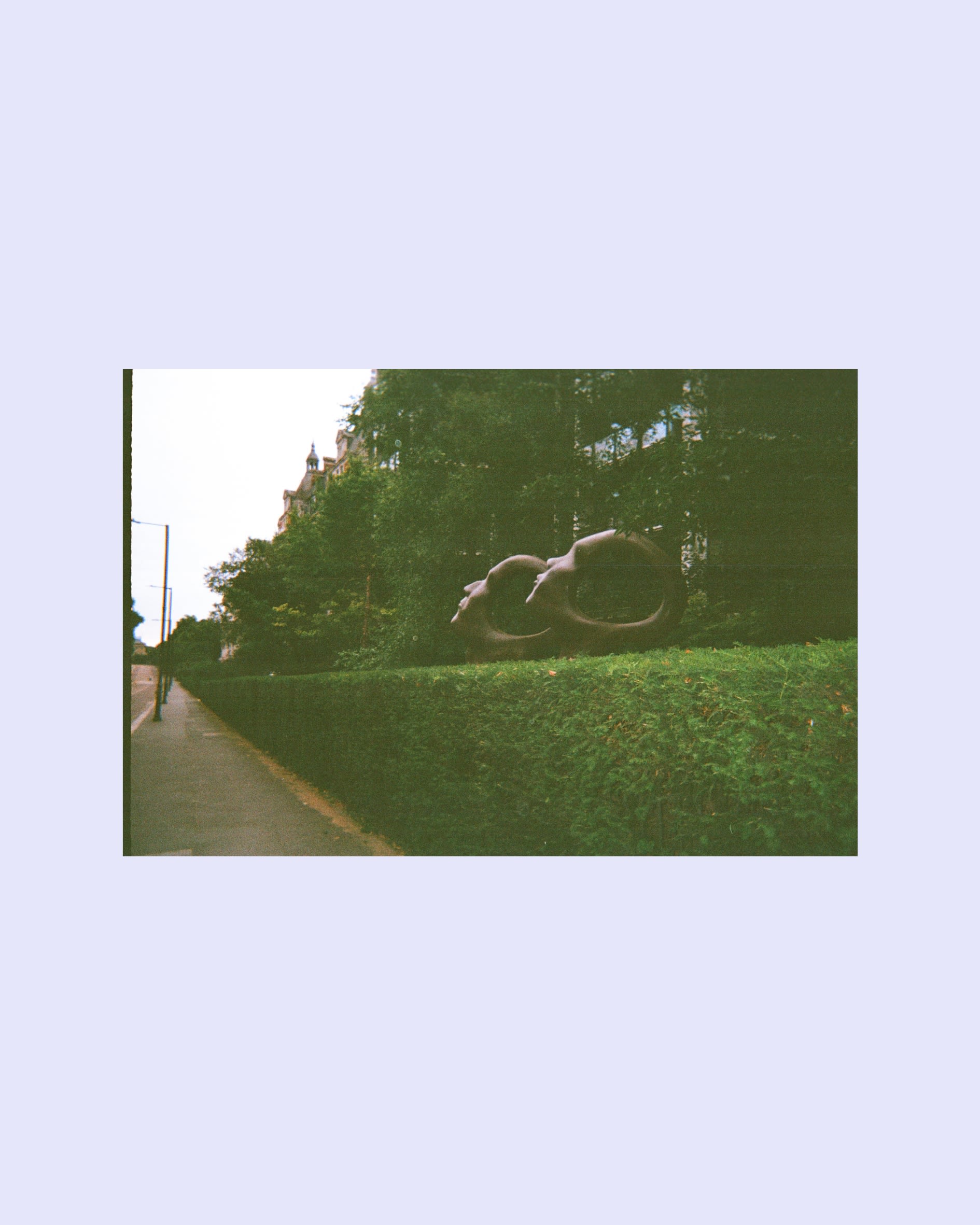
There is so much stigma and negativity about the NHS that people have a lot of self-entitlement built up, unaware of how lucky they are. I really, really felt held and nourished by the NHS staff. I cried when I left. I didn’t want to leave each time I went there for an operation.
This picture represents inner peace, inner joy, feeling nourished. I felt held and nourished by the care of the NHS. I wanted to stay longer so I was sad thinking that I had to leave. Healthy, nourished, silence. It was completely silent, day and night. Going out of the hospital, the chaos, noise, stress – it takes its toll on the mind and the body. That’s why I didn’t want to leave.
Surrendering to uncertainty and unknown and exposing my vulnerability to the health team – doctors, nurses, health care assistants. I didn’t know that I was ill. They put me in a big room overnight with big showers, breakfast, and lots of stockings. I was gobsmacked. And all for free. Are you kidding? I felt insecure and uncertain of what was going to happen, but I feel positive about the care I received.
We are lucky. It’s free. They are overloaded with demands from patients and yet they act with respect and dignity. They provide excellent care with quality.










Anonymous
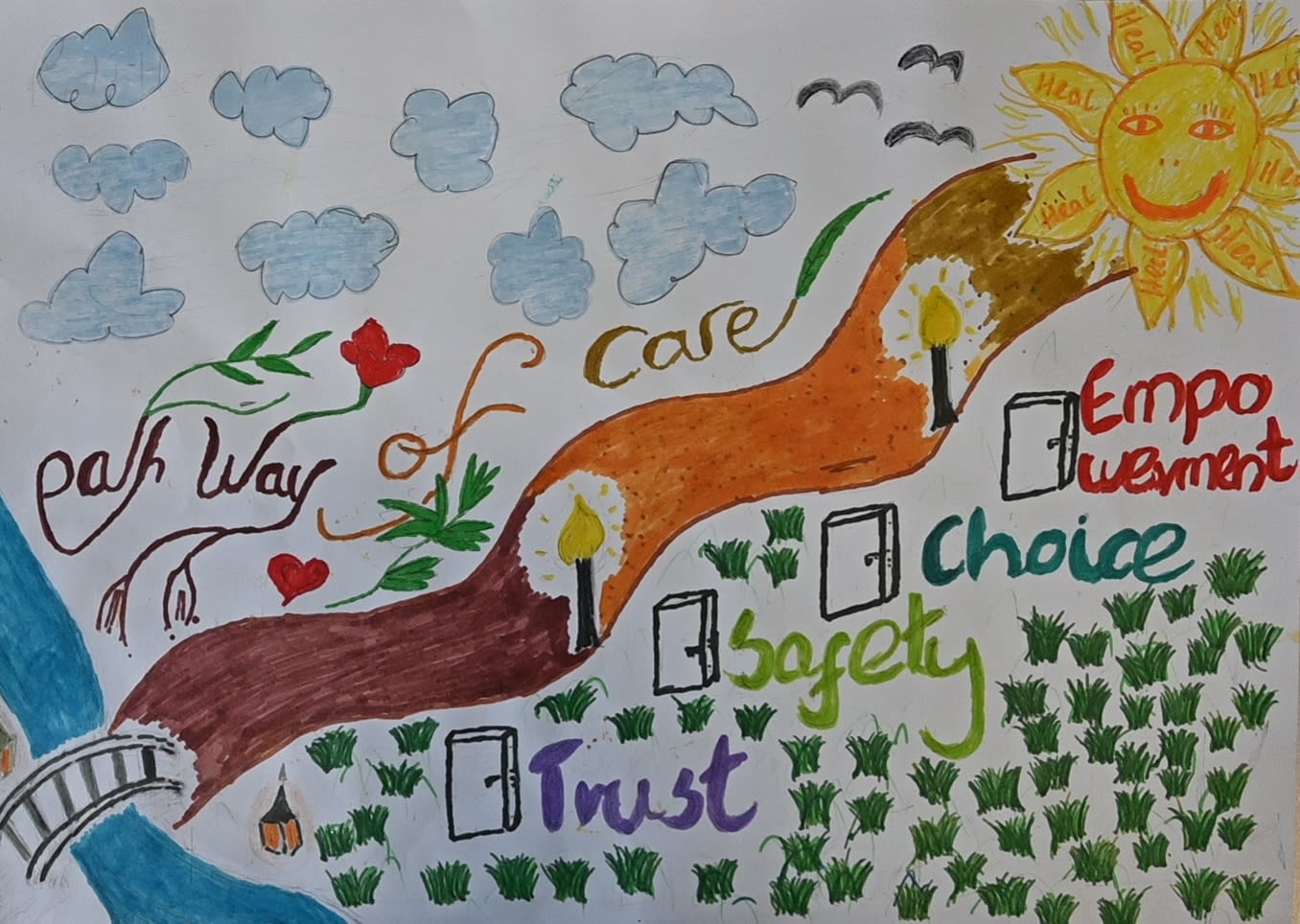
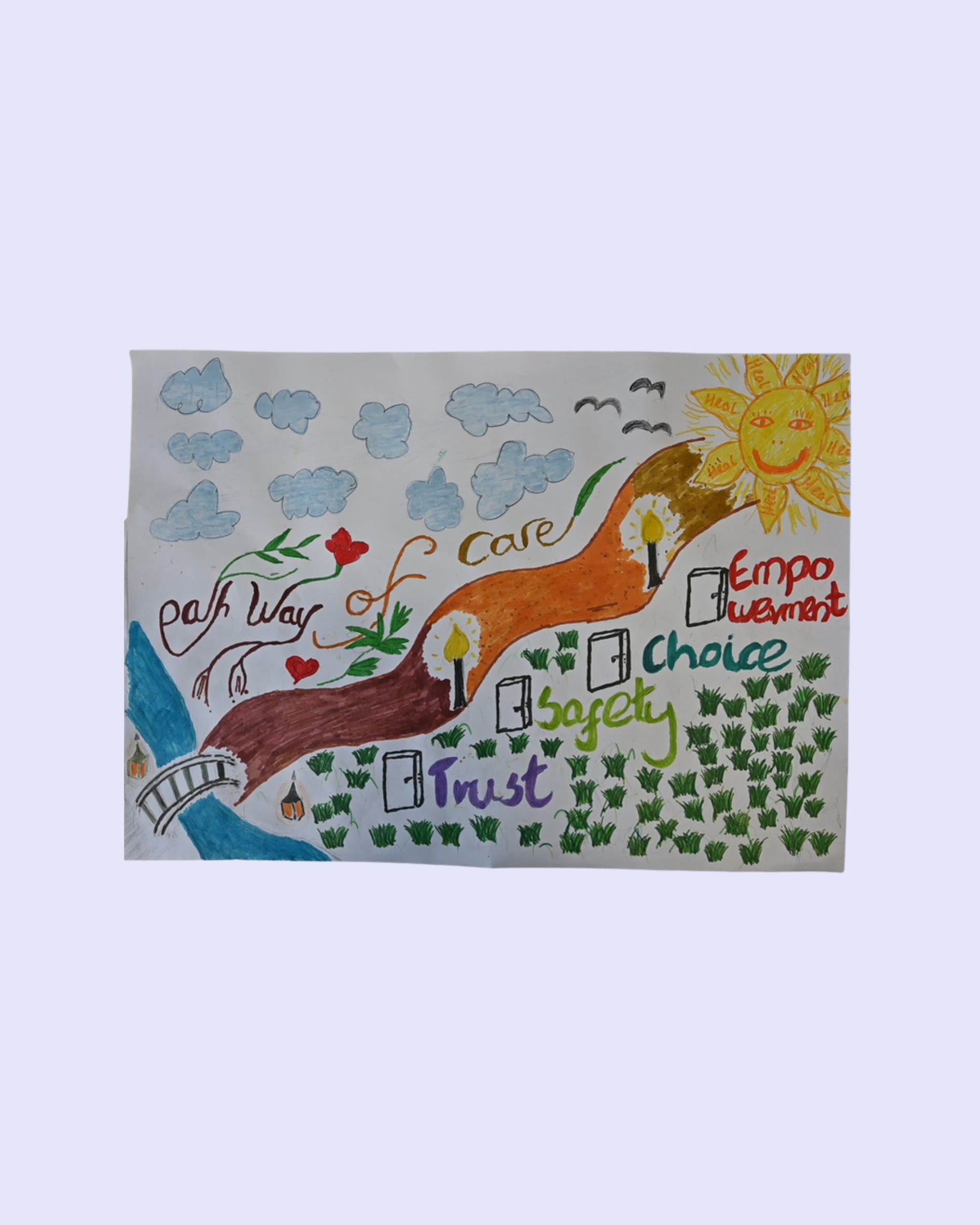
Pathway of Care shows the journey from trauma to healing. The gently winding path represents each woman’s unique journey. It is safe, non-judgemental, and continuous. The bridge indicates trust and connection that must be built to move forward. As the path goes on, we encounter glowing lanterns and lamp posts to offer guidance along the way. The open doors symbolise opportunity and empowerment. The path leads you into the nice, glowing, warm sanctuary that offers you safety and hope. The flowing water represents renewal and ongoing healing, and the grass represents continued health and replenishment. Above, the birds soar freely upward, reminding us that with the right support, women can rise beyond trauma toward empowerment and freedom.
I drew this idea from my personal experience with the healthcare system and the experiences I’ve heard from others through this project, so hopefully it encapsulates solutions to most or all the barriers we experience. It’s somewhat based on my personal experience, which thankfully has been more positive than negative. But mostly from the frustrating journey that most people had to take just to get to the point of healing. That’s what inspired me to include the positive aspect of the journey.
I want others to know that there is hope. There are positive aspects along the way. Try and dwell more on the positive than the negative and acknowledge the open doors as you see them. Don’t feel like you’re stuck, and keep yourself open to opportunities that present themselves. And take note of the guiding lights. It’s easy to get bogged down with our own problems, but it’s important to notice those offering a helping hand along the way. This pathway is hopefully a reminder that healing, growth, and renewal are always possible, and that support does exist to help you move forward.
And for healthcare professionals, just acknowledge the barriers and acknowledge the fact that people do need help and guidance. A little bit more empathy. A lot of it is no empathy, just processes and doing what you need to do. Judging from other people’s experiences, some people are losing hope. A lot of people are frustrated with “you have to try this, you have this waiting time, you have to complete this process, you have to come here on this date and if you can’t make it, oh well.” Offer more choice, and have women involved in the solution if possible. Both in decisions about their own care, and in conversations about how we make healthcare better. By walking alongside women on their journey, professionals can help create not just treatment, but a pathway to lasting healing and empowerment.

Anonymous
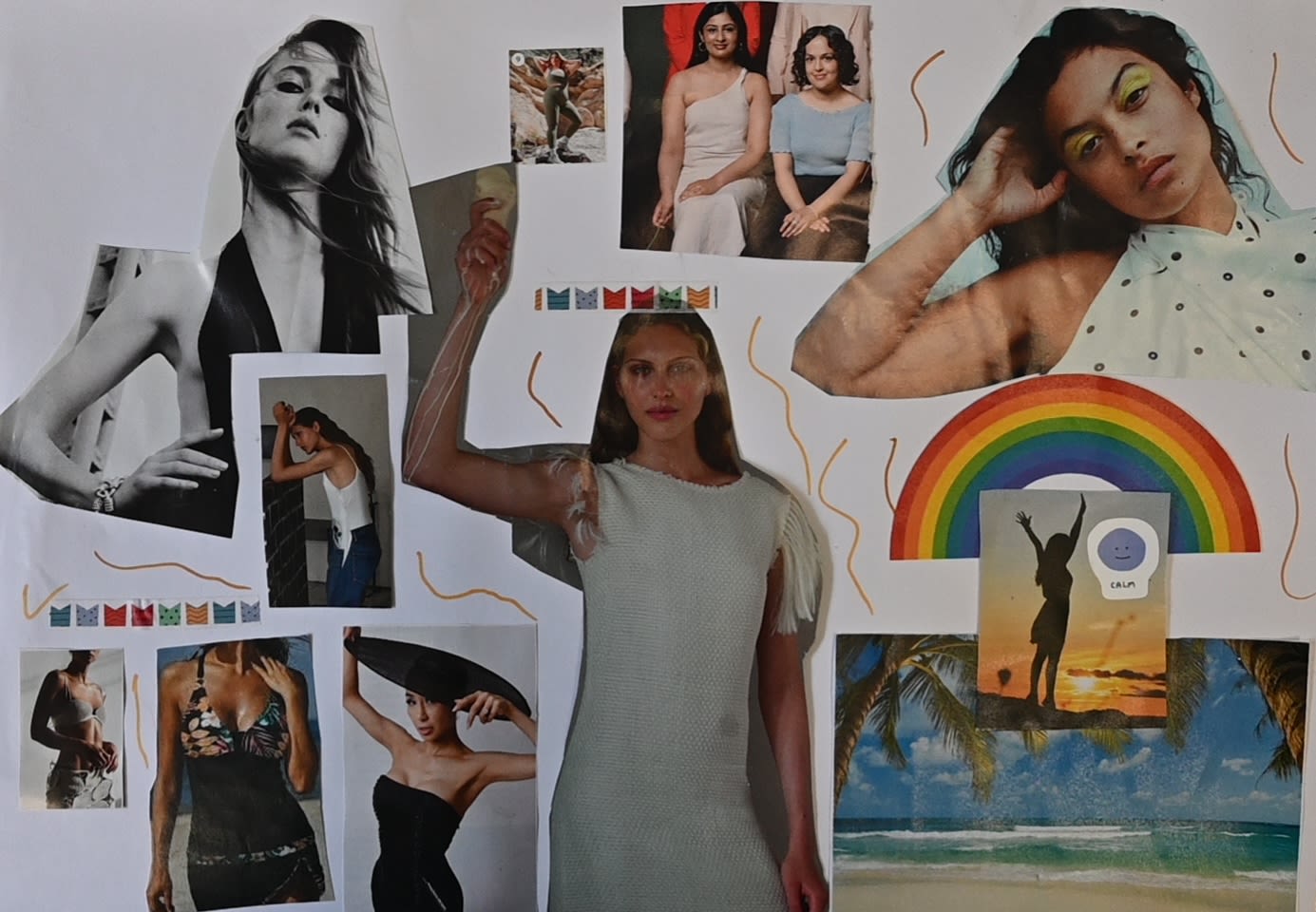
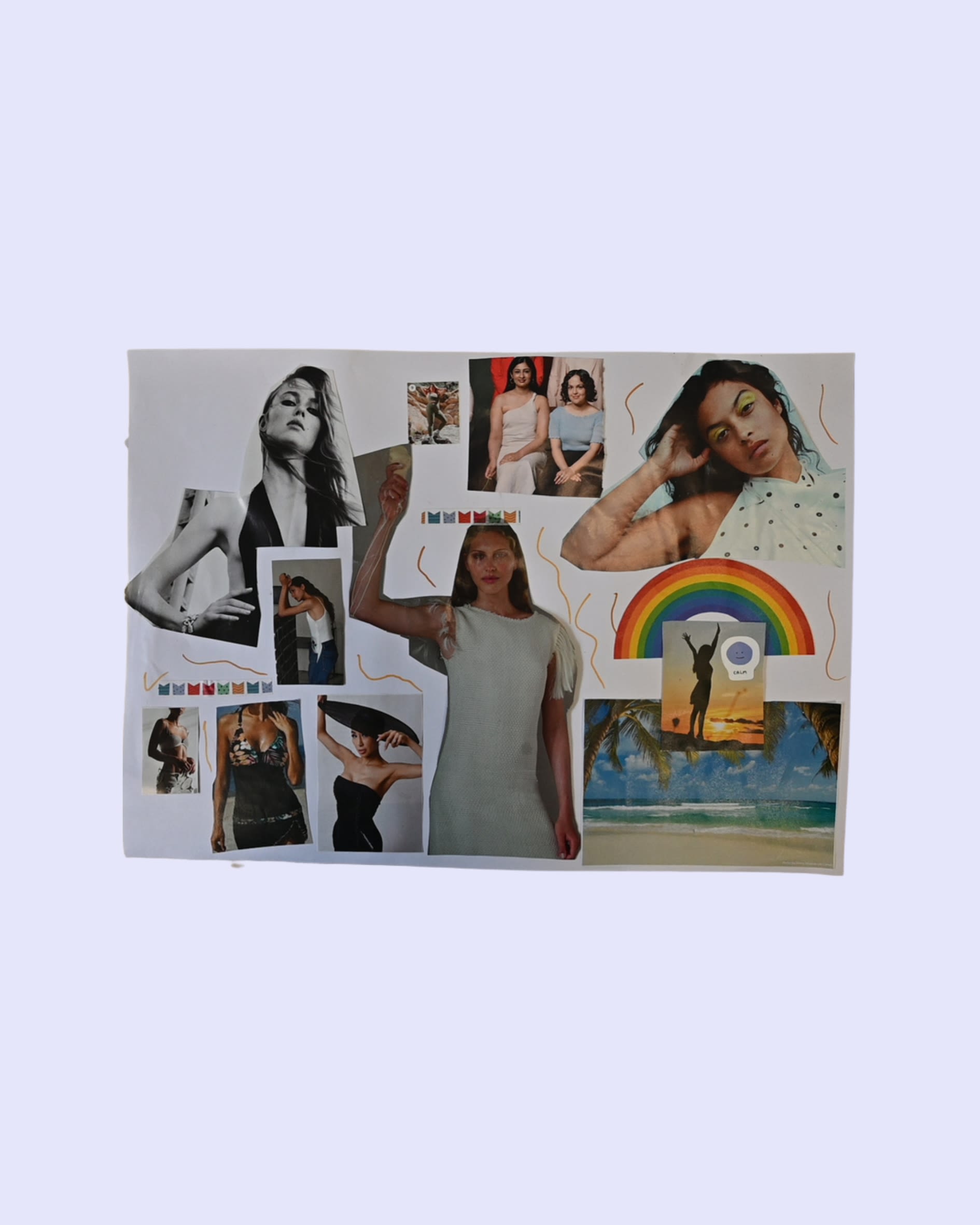
This art shows someone with their own freedom. They’re happy to show their arms, to go swimming and wear a bikini. They're happy to be there. They're not criticised or bullied by others. They’re feeling free on the beach. When I see this, I feel happy. It’s like going back in time to before my operation.
I had surgery previously, and it went wrong. It wasn't noticed for a few years, and the surgeon wouldn’t agree to meet to discuss it. When I got the surgery, the surgeon promised to continue to assess me afterwards, but when I tried to contact him, he refused to look at what was wrong. It took away my hope and left me with no options.
I have nerve damage now, so I’m no longer able to do what I love. The damage was caused by the surgeon’s error, and now I have the stress of living with the consequences of that error. They need to acknowledge the harm done. I can no longer work out at the gym in the same way or wear the same clothes. I have to wear warm clothing even in the heat, and people ask why. Sometimes it’s difficult to hold things because of the tingling in my fingers. I had to do my own research to figure out how to make things better for myself.
I was meant to have a hospital appointment, but they postponed it 10 times. My key worker at Spires helped me make a formal complaint to the hospital for the delays, and I was able to get an appointment. They came to the appointment with me as an advocate and helped to take notes. Staff don’t believe you, so it’s good to have an advocate.
The doctor didn’t believe me when I told them where the cut was, because they said that’s not where the surgeon is supposed to cut. I had to physically show them the scar. I told them I was experiencing lots of pain day to day, but they spent 90% of the appointment telling me I shouldn’t be on benefits and that I needed to go back to work, instead of helping me. I felt overpowered.
When I went in for surgery, the surgery team was shocked by the work of the previous surgeon. I felt blamed for not having raised the alarm earlier, but I had contacted the hospital many times. They discovered that when they checked my files, but they did not apologise. Health staff need to be honest with patients, to give advice and a proper diagnosis. I want others to know not to leave things too late. Make sure you do things in time, and don’t be ashamed to say if you need help.

Esther
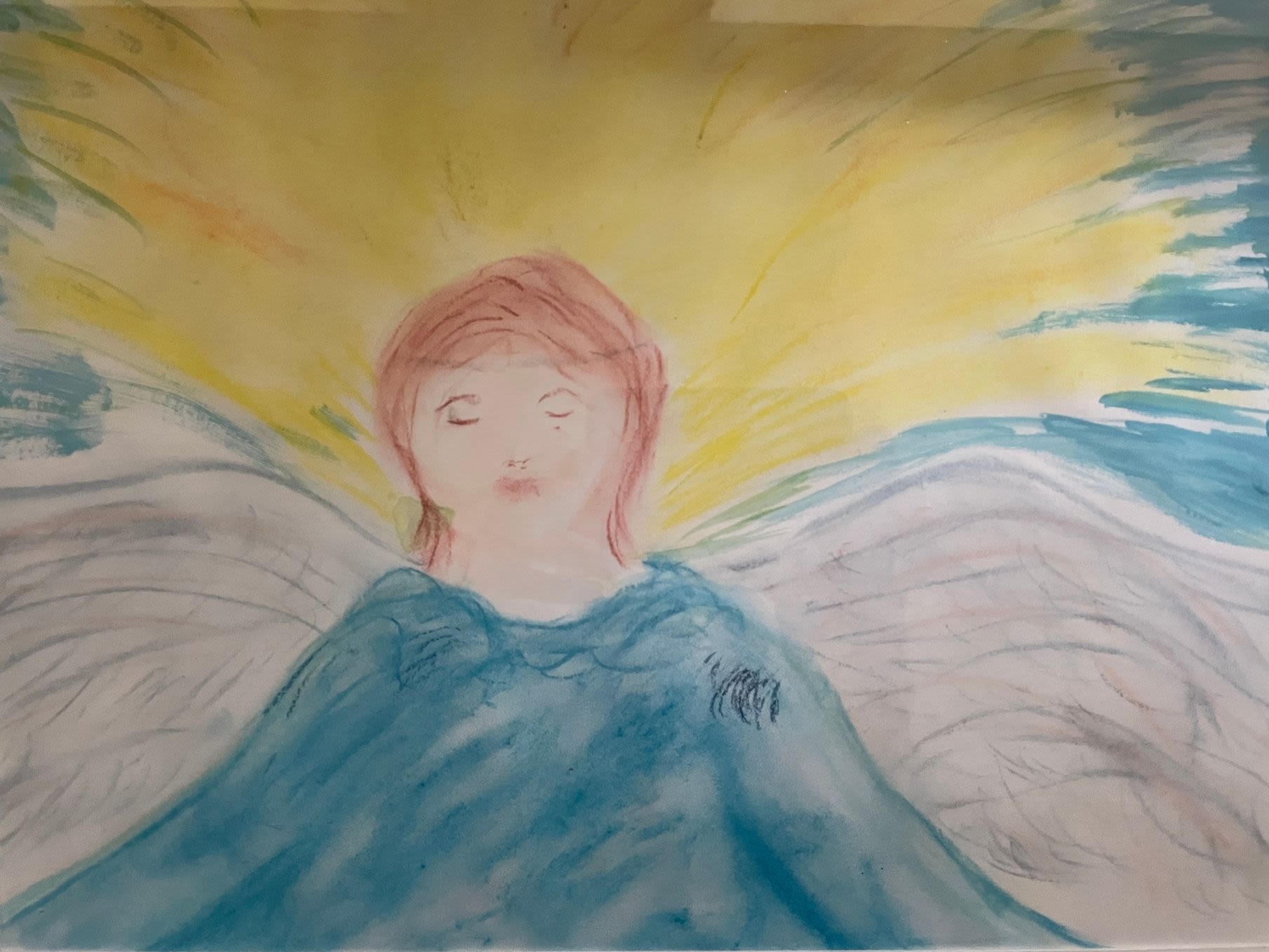
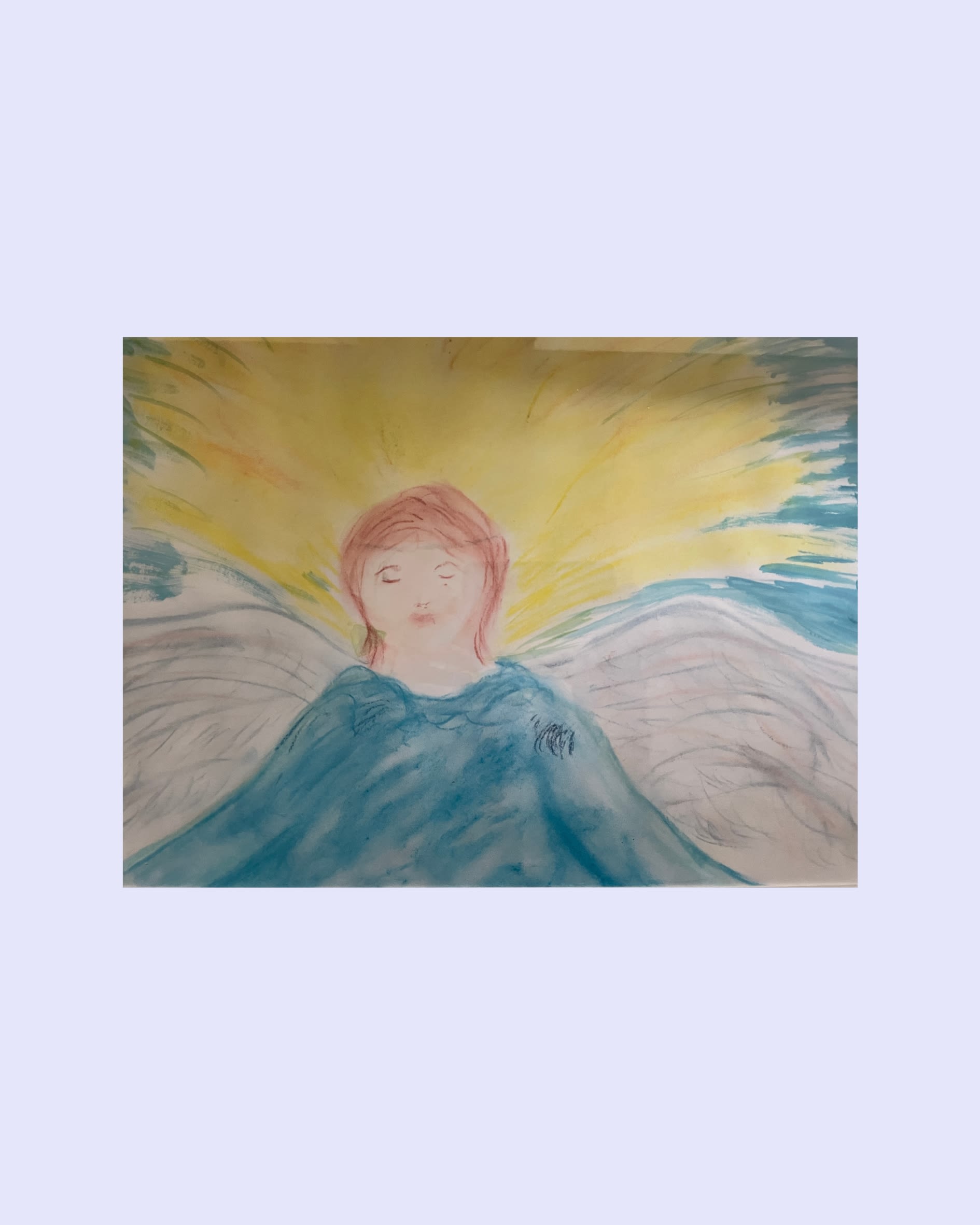
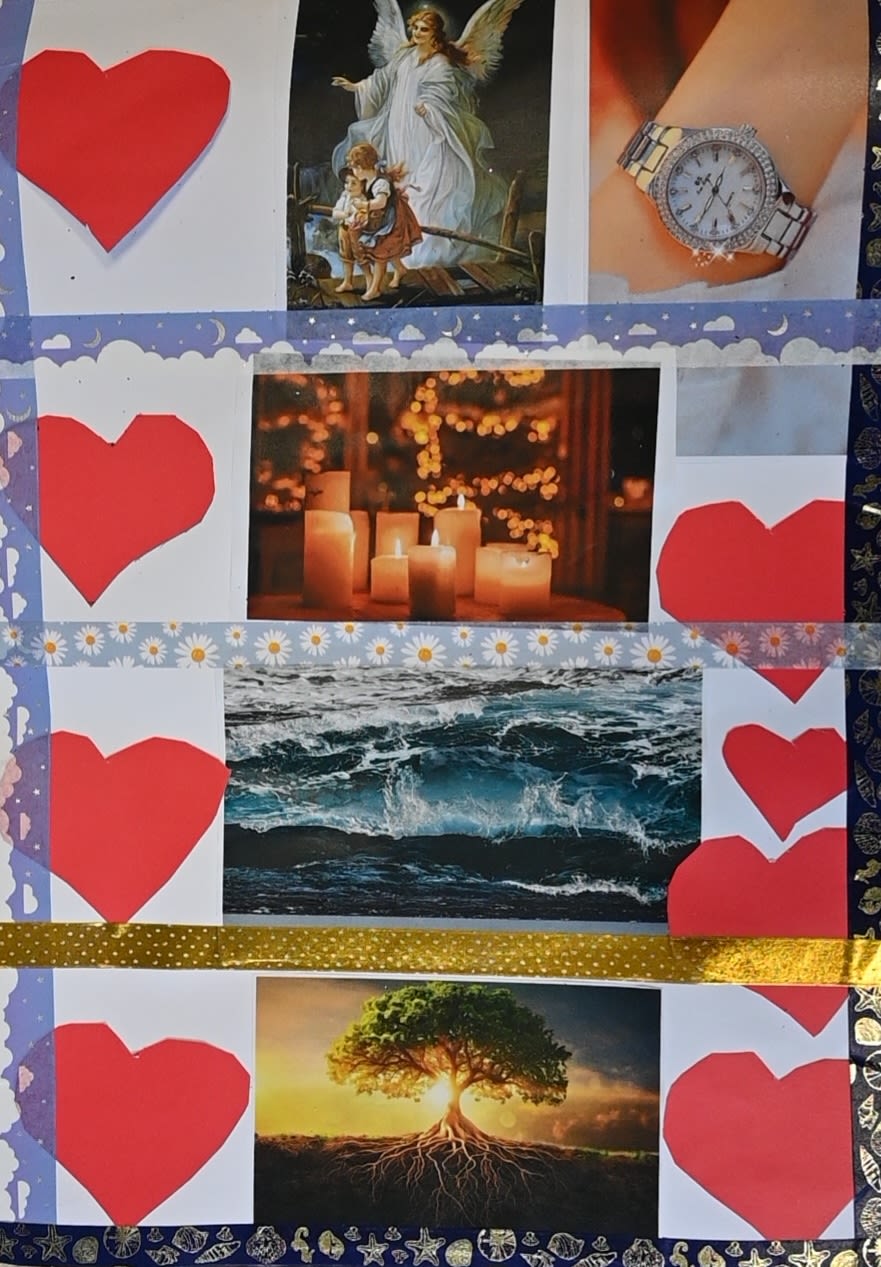
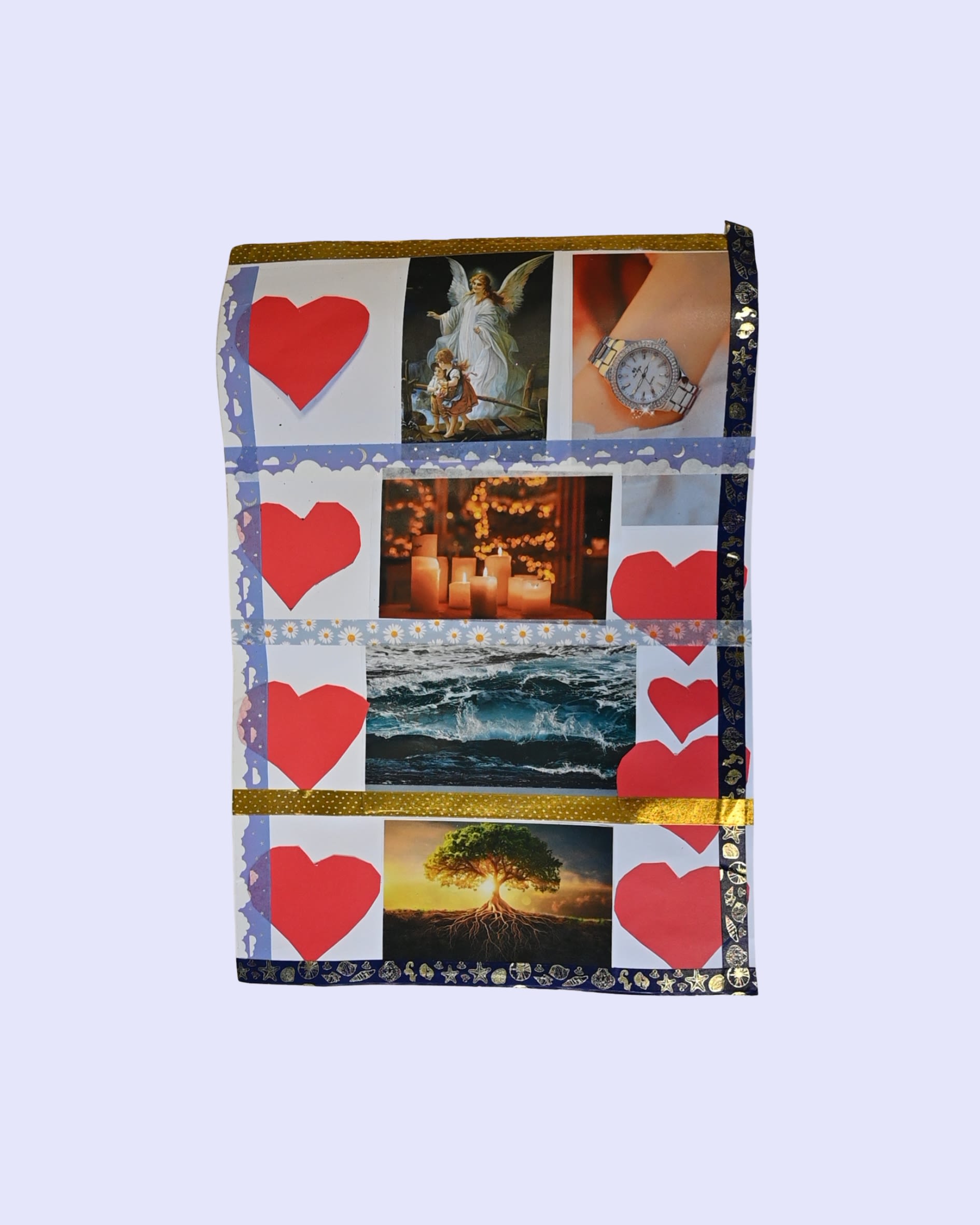
A tree – its leaves, they are growing. Water – the first thing you’re given in hospital to keep you well. Time – it is important to keep on time for doctors. Candle – the love and light of God. Angels – before you go to the operating room, you ask the angels to guide the doctor to do a good operation. All these elements are what you'd want in a good hospital.
The hospital is a tree being planted – you have to nurture it to keep it going. God wants the world to grow with love. We’re going to bring the world down if we don’t share it. We need to stop fighting. People coming to this country are coming for a reason. God does not want people to be treated like evil. We should not try to kick people out. No one country can survive on its own. We are here to love one another.
It’s about spreading love through the hospital. Doctors should treat you well, with love. Sometimes in restaurants, people judge you, they think you can’t pay. We don’t want this to happen in the hospital. Treat people equally. Even if they smell. That kindness, people will carry it with them. God doesn’t care how you are dressed – he looks into your heart.
A homeless person, when they seek help, no one is giving it to them. People lose hope when they are homeless, and they look for ways to enjoy themselves while they can. Smoking, drinking, taking drugs – people weren’t doing this before they were homeless. Be gentle and treat people with respect. You don't know how long they’re going to live.
Sometimes we know what is wrong with us and the reason for it. Doctors need to listen to what we are sharing. They just tell you to go into a machine. People can be harmed if they get the wrong diagnosis.
If someone is shouting, they might have taken drugs – just let them have a quiet space to calm down and give them time to think. People aren’t trying to harm others, and we need to not judge them. Once they are calm, then you can have a conversation with them. If you send security to remove them from the building, they are leaving but they have not gotten what they need.

Anonymous
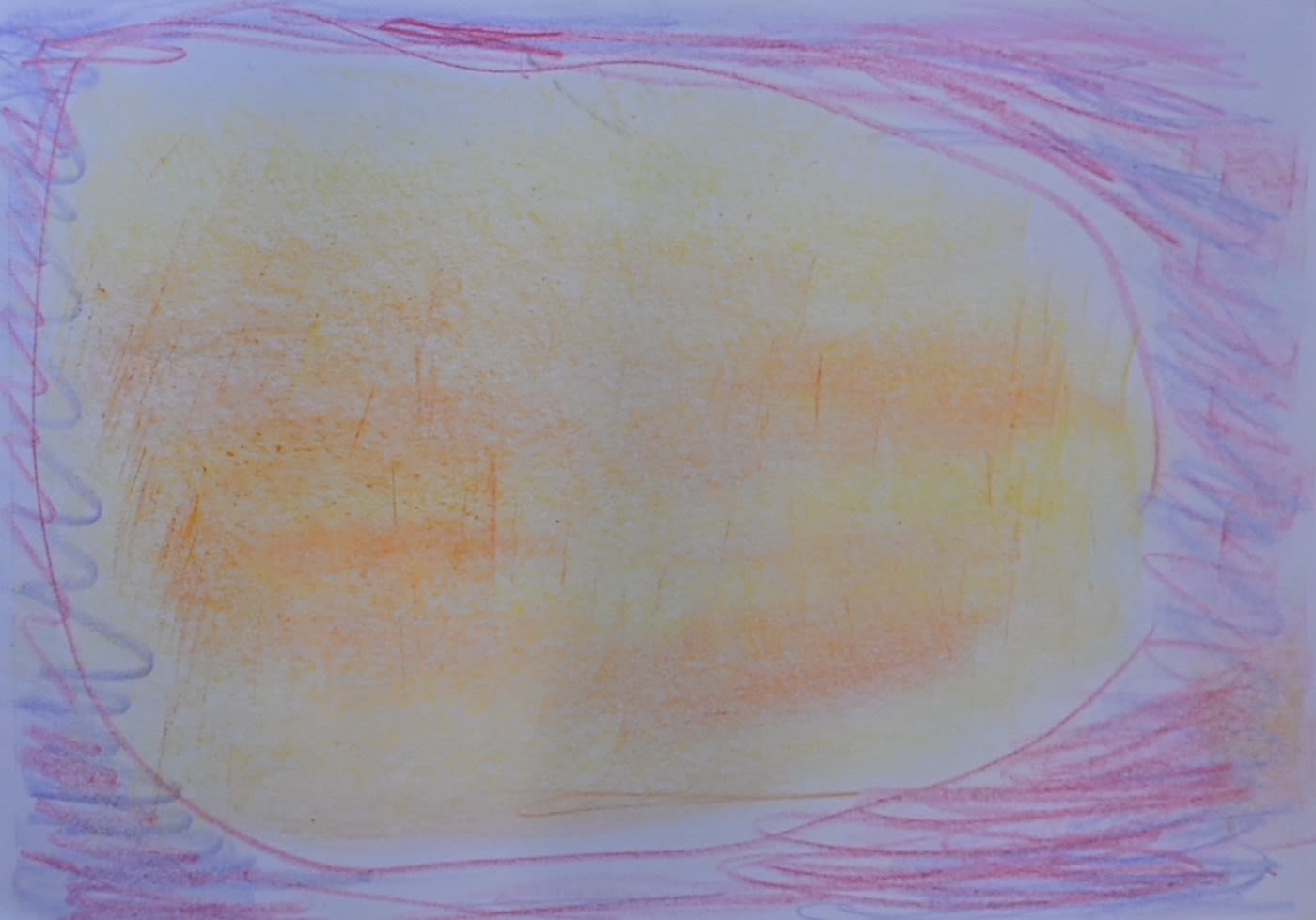
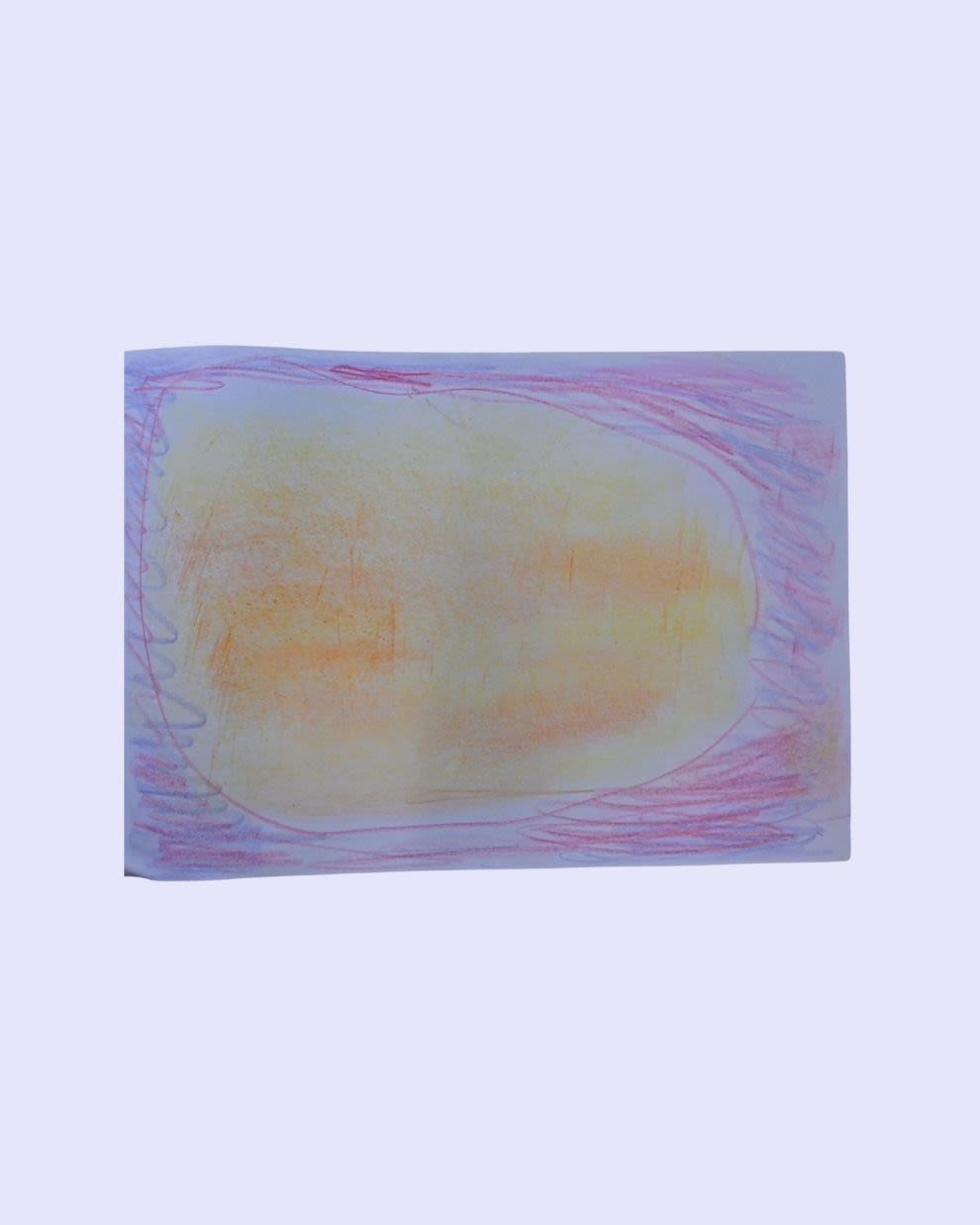
In this drawing, the border represents countries outside the UK. The blue shows so much stress and woundedness. The red is blood and fighting. What’s going on around the UK impacts us, because we are accepting the boats and this puts strain on the NHS.
The inside is the UK. The yellow represents the hope and the healing in the NHS. But the NHS is becoming bigger, and the red represents the rising stress levels. The orange represents holistic and comprehensive care for NHS staff. The hope is that there is more space for them to breathe.
Other countries have bias within their health systems and reject patients based on race, religion, language, and class. The NHS accepts everyone without bias. We are able to show up to the NHS with our wounds and our hopes for acceptance, and those hopes are met. However, because the NHS accepts everyone, including refugees, the number of patients is increasing, the stress on staff is increasing, and staff are leaving the NHS.
My vision for the future is that the NHS gets more funding so that staff levels can increase and the stress on staff can decrease. If you increase the number of patients, you have to increase the funding and trauma-informed care for NHS staff. Staff have their own wounds too, so we need funding to provide therapy for staff. We have trauma-informed approaches and co-production for the homeless. Why not also for NHS staff who are truly suffering?
The NHS helps all of us. Not just the homeless. All of us. But who is helping the NHS? The NHS continues to be traumatised caring for all of us. During COVID, people were clapping for the NHS, but the NHS was suffering. The NHS doesn’t need claps. It needs money. Claps mean nothing without proper funding and support for staff. It’s hypocrisy. So, my hope is that the mayor starts giving the NHS the funding it deserves.

Anonymous
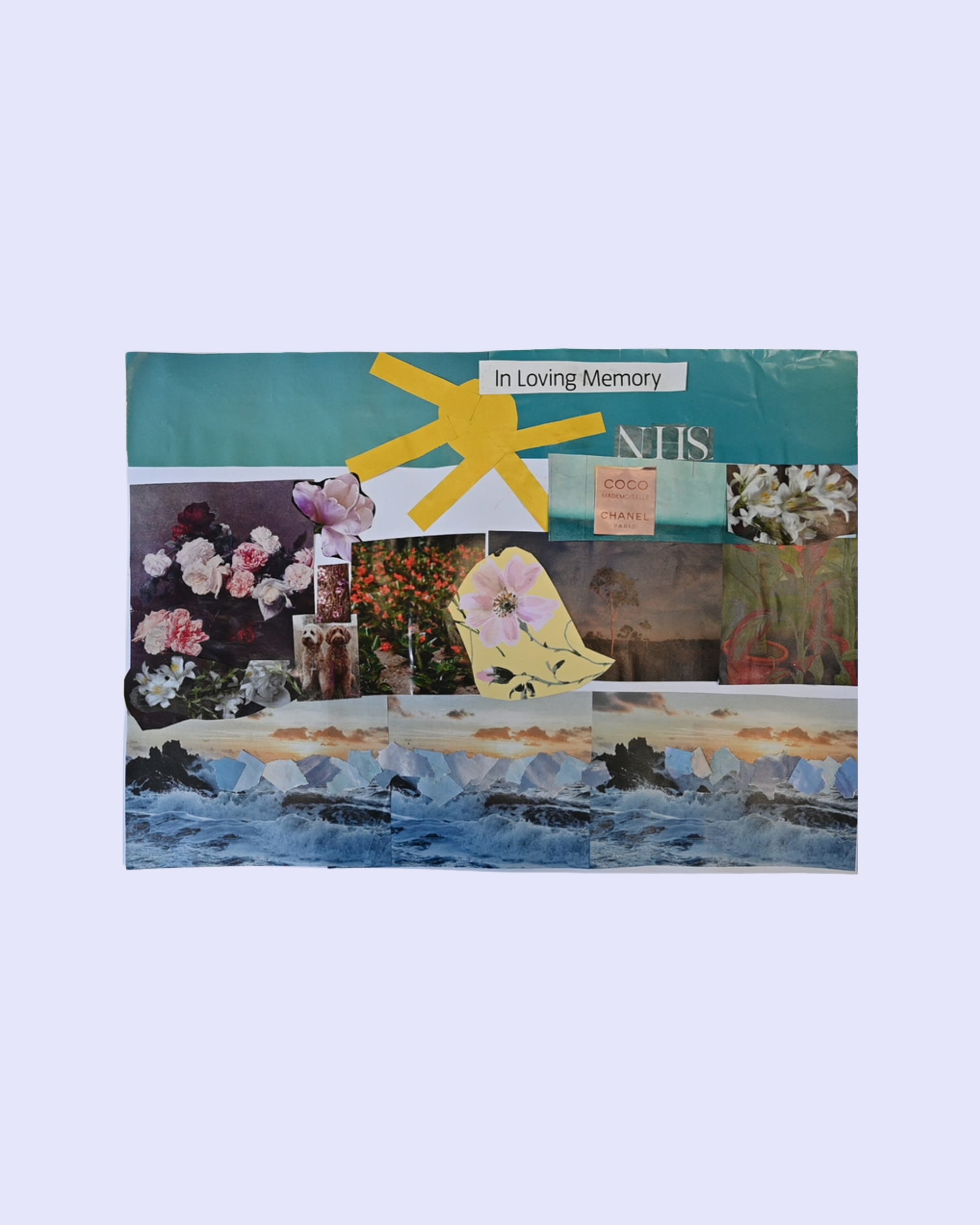
I'm hit and miss right now with the NHS. The tree represents how I feel about the NHS with my diagnosis. In 2015, they diagnosed me with COPD and bronchial asthma. This year, I’ve had about 10 tests, and they’ve said I’ve not got it. So now, I’ve got a letter for my GP to take it off my records. They’re saying the symptoms for COPD and a chest infection are very similar, but to me it’s crazy because they gave me steroid sprays that you’re only meant to take for two months, and I’ve been taking them for five years. You get to the point where you start doubting yourself. The GP just gives you such a flippant answer. I feel as if I’m in limbo. Some of the homeless doctors, they're more caring and more thorough. It was thanks to one of them, they wrote to my doctor about getting the tests. My GP wasn’t bothered. It was, “you’ve had your five minutes, that’s it.”
It makes me feel sad because I just recently lost my friend and that was a bit of a shock. She was meant to get a pacemaker within three months. Six months later, she was dead. It makes you wonder, if she wasn’t homeless, would she have got it? She still had maybe 10, 20 years left. You can’t say if she was living in a flat, if she would have gotten better service, because you don’t know anyone in the same situation. So it’s difficult to prove, but it makes you wonder.
The water and the flowers represent peace and tranquillity. When the NHS gets it right, it’s good. I must say one thing about the hospital – they've got a lovely garden. Every time I walk past the water, I feel calm. When you have green plants in a ward, it helps with the oxygen and the atmosphere. Sometimes the hospitals haven’t got the best smells, so sometimes it’s nice to have plants that are nice smelling to make it feel nicer.
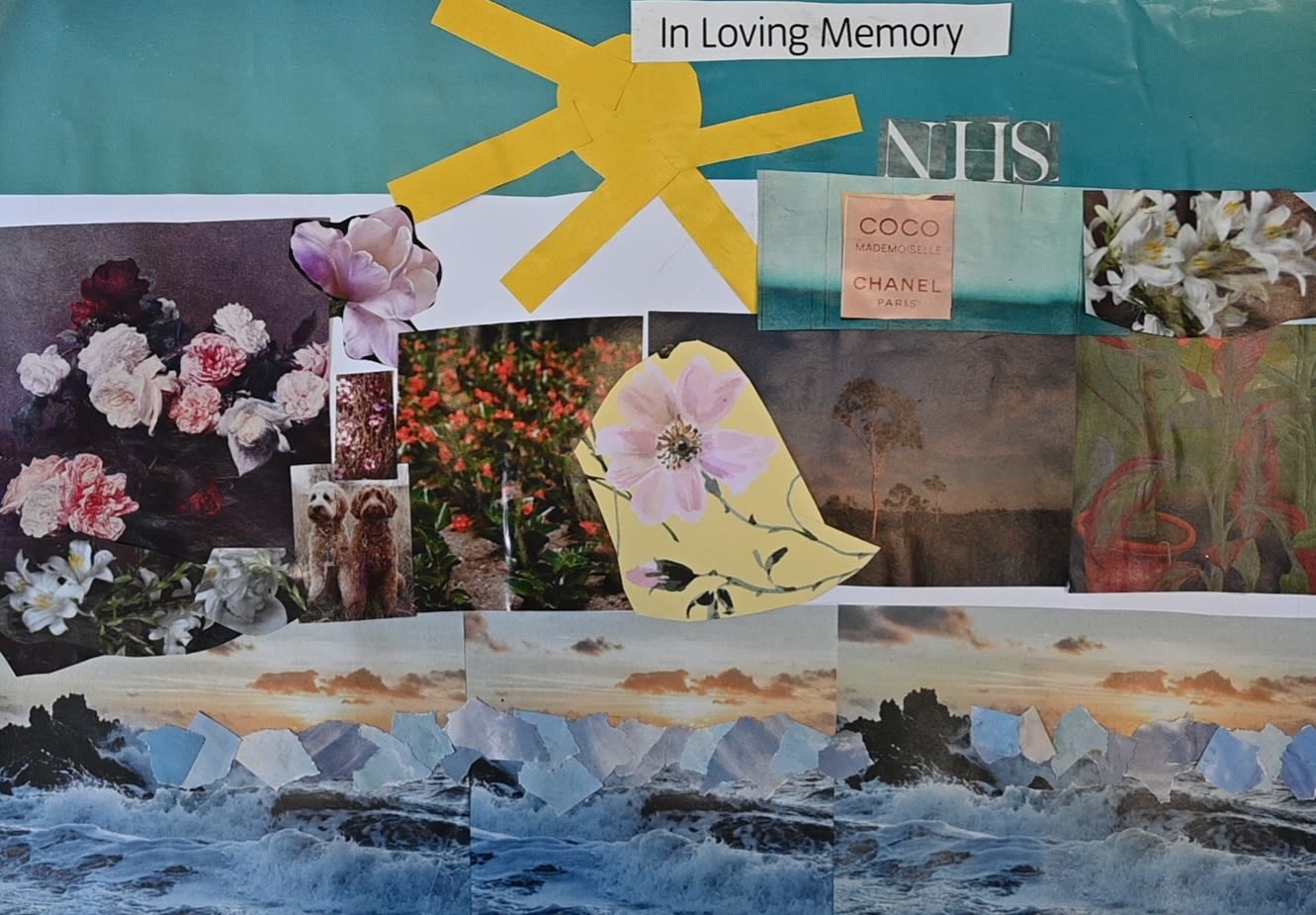
The Coco Chanel reminds me of my mum because every time I visited her in hospital, I would bring her a bottle. She had a hard life, so in the end she deserved to be spoiled. I had a good impression of the hospital because they took good care of my mum before she died, but now after what happened to my friend, I don’t know who to trust.

Nashwa
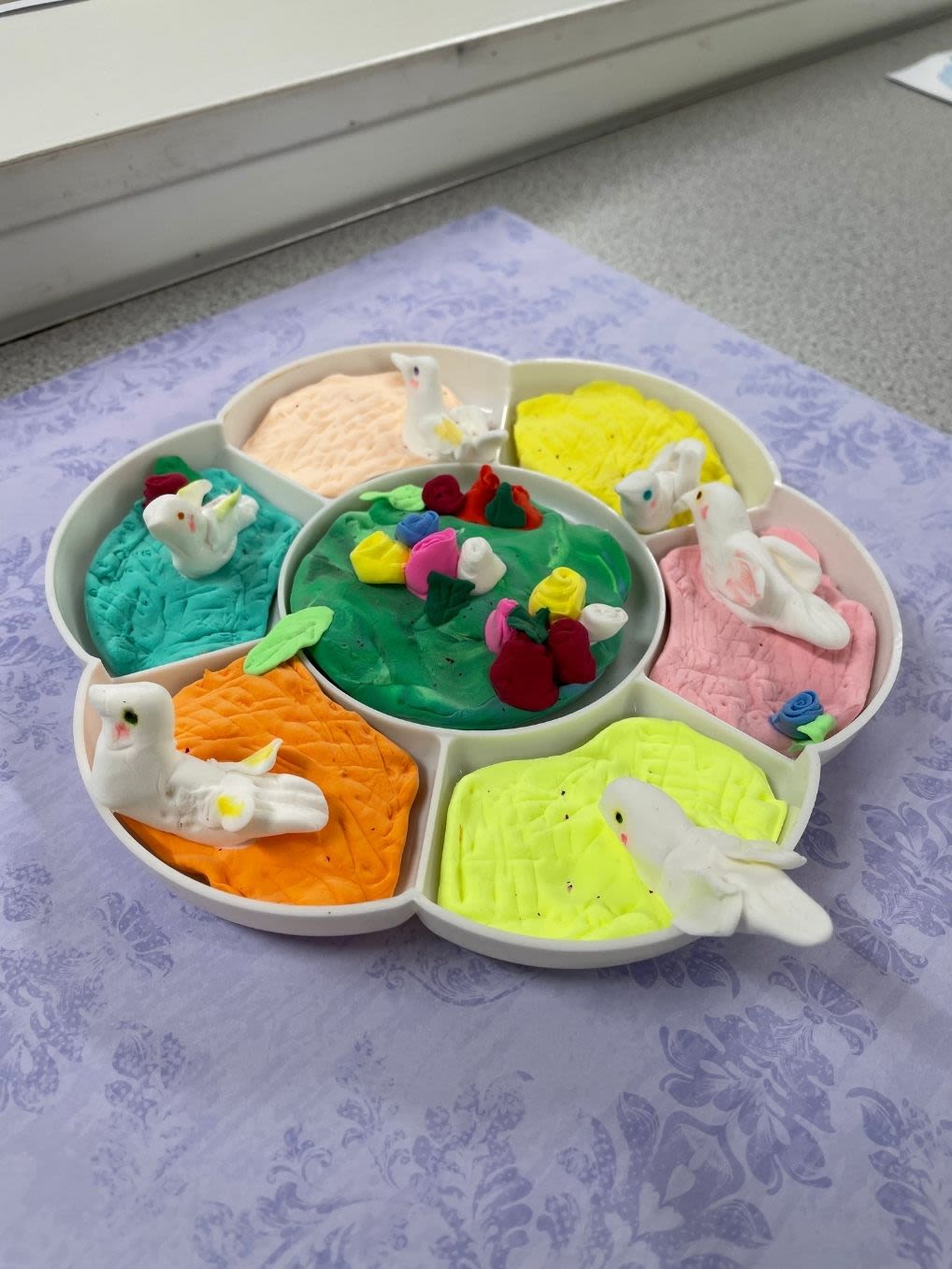
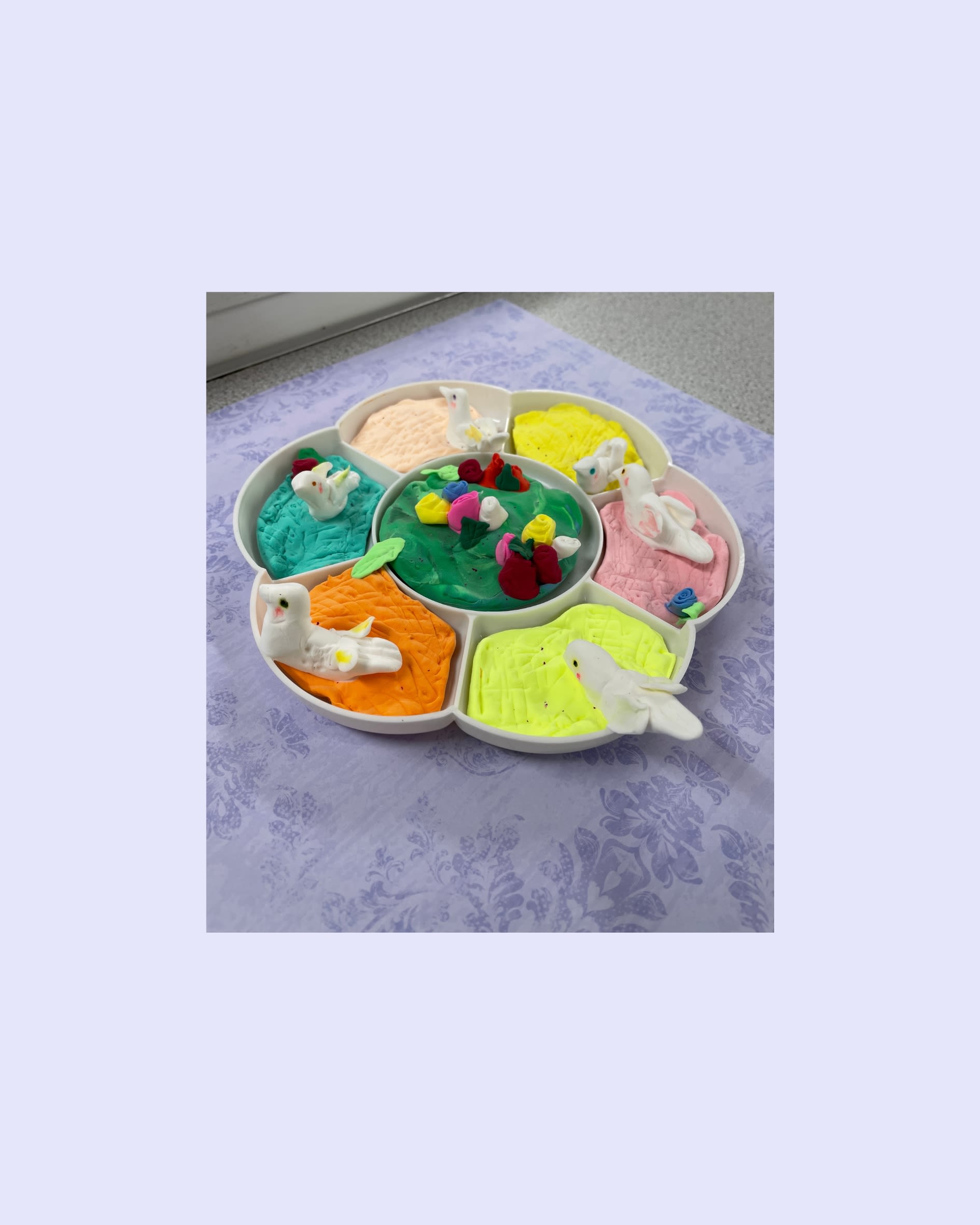
The colours represent that women come from different backgrounds. Despite our visual appearance and skin colour, we are all the same. We are all beautiful. The doves are white – no discrimination. I don’t like when they ask about your ethnicity in healthcare, because I feel like people should be treated the same despite their differences. The whole piece symbolises the NHS, aiming to be a place where all feel safe and respected.
I feel anxiety before I go to the NHS for treatment. There is a fear of not being heard or seen. And the age of the doctor matters too. I was not asked whether I was happy to be seen by a student. This was disrespectful, as the decision was taken away from me. I have compassion and respect for trainees as learners, but you need to include the patient in the decision-making process.
I asked how long the student had practised, because I used to give automatic trust to staff, but I can no longer do that after what I’ve experienced. I felt as if I was treated like a guinea pig, like an object. When I said this to the doctor, she laughed and agreed. She did that to my face. It makes you wonder how they talk about you behind the scenes.
There is a perception in the NHS that women complain more about pain and healthcare. Maybe we are just better at expressing ourselves. We talk about our feelings. This should be recognised as a good thing, not as a “complaint”. Women may also worry more about how their health impacts the people they care about. Across history, countries, and cultures, women have always been treated poorly simply for being women. Inequality persists, and this shows up in healthcare too.
Treat people with equality, respect, and kindness. I can tell from someone’s body language and tone of voice if they want to end an appointment. Kindness means listening, making eye contact. You can make the 10 minutes you get with a patient valuable. You don’t need an hour to be kind. You can deliver the exact same message in a more caring way very easily. I recognise that staff are human, and they get tired, but you should still do your best. I’m not asking for special treatment – just for the standard. Treating people with equality should be the standard.

Harjinder
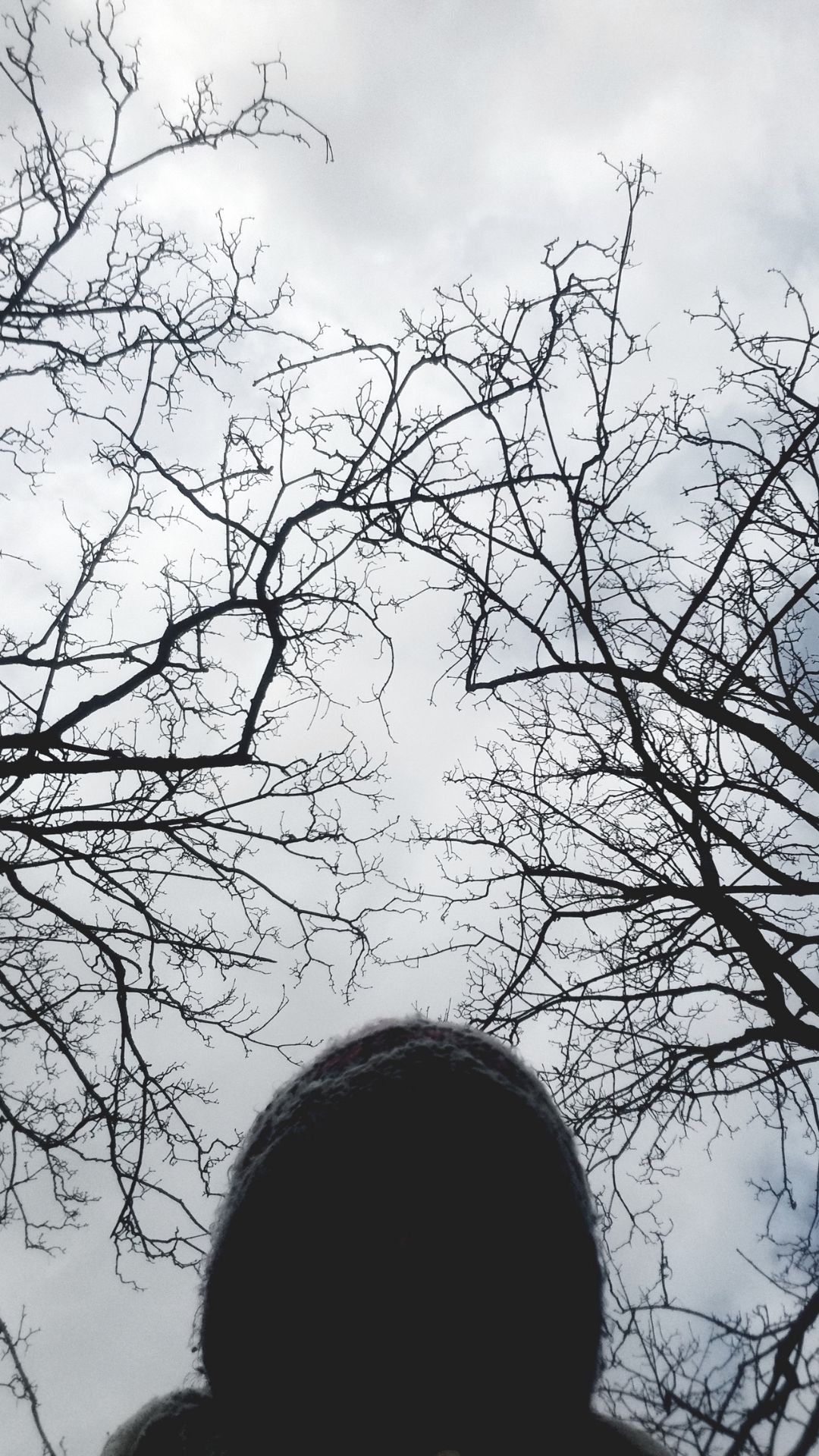
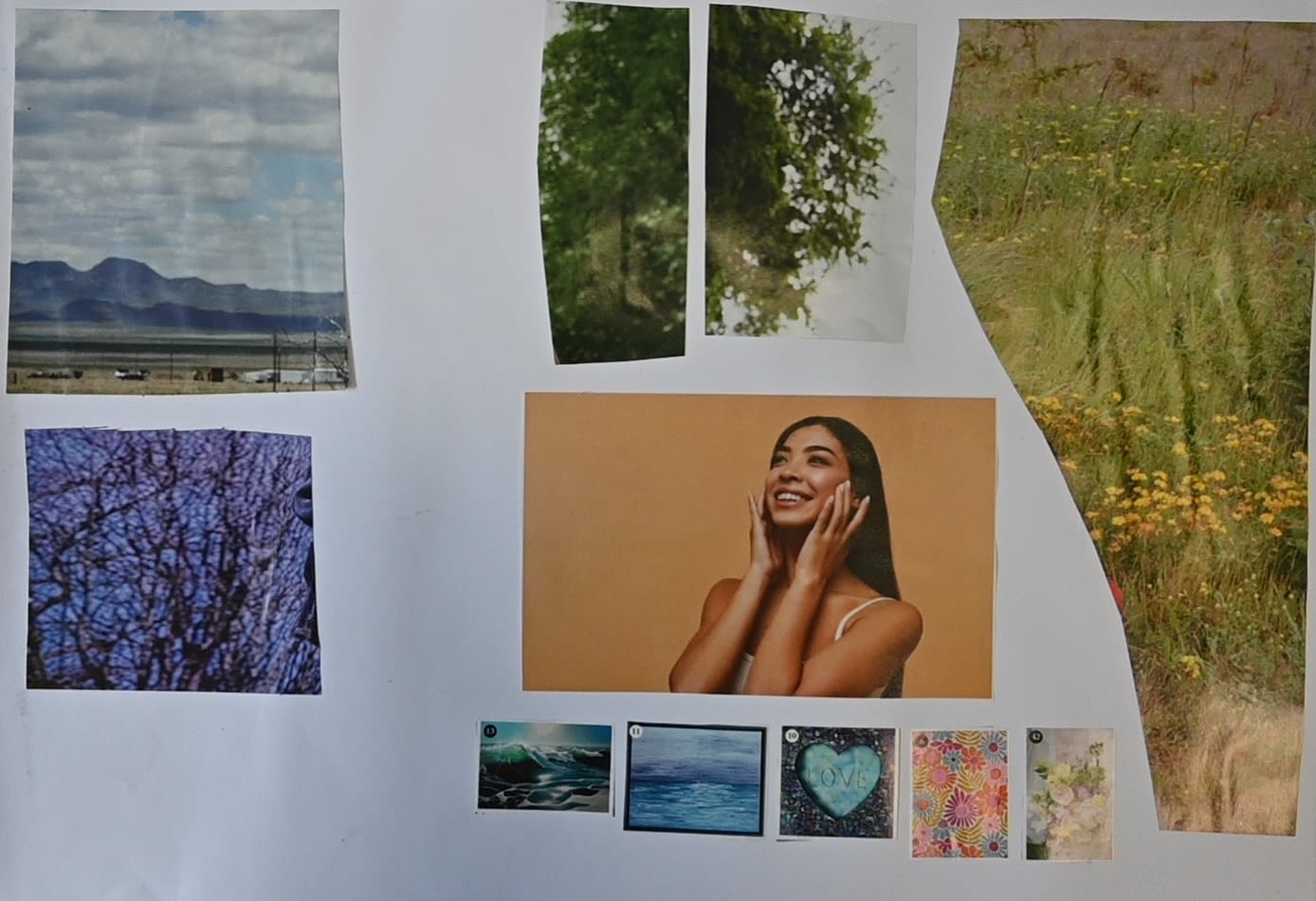
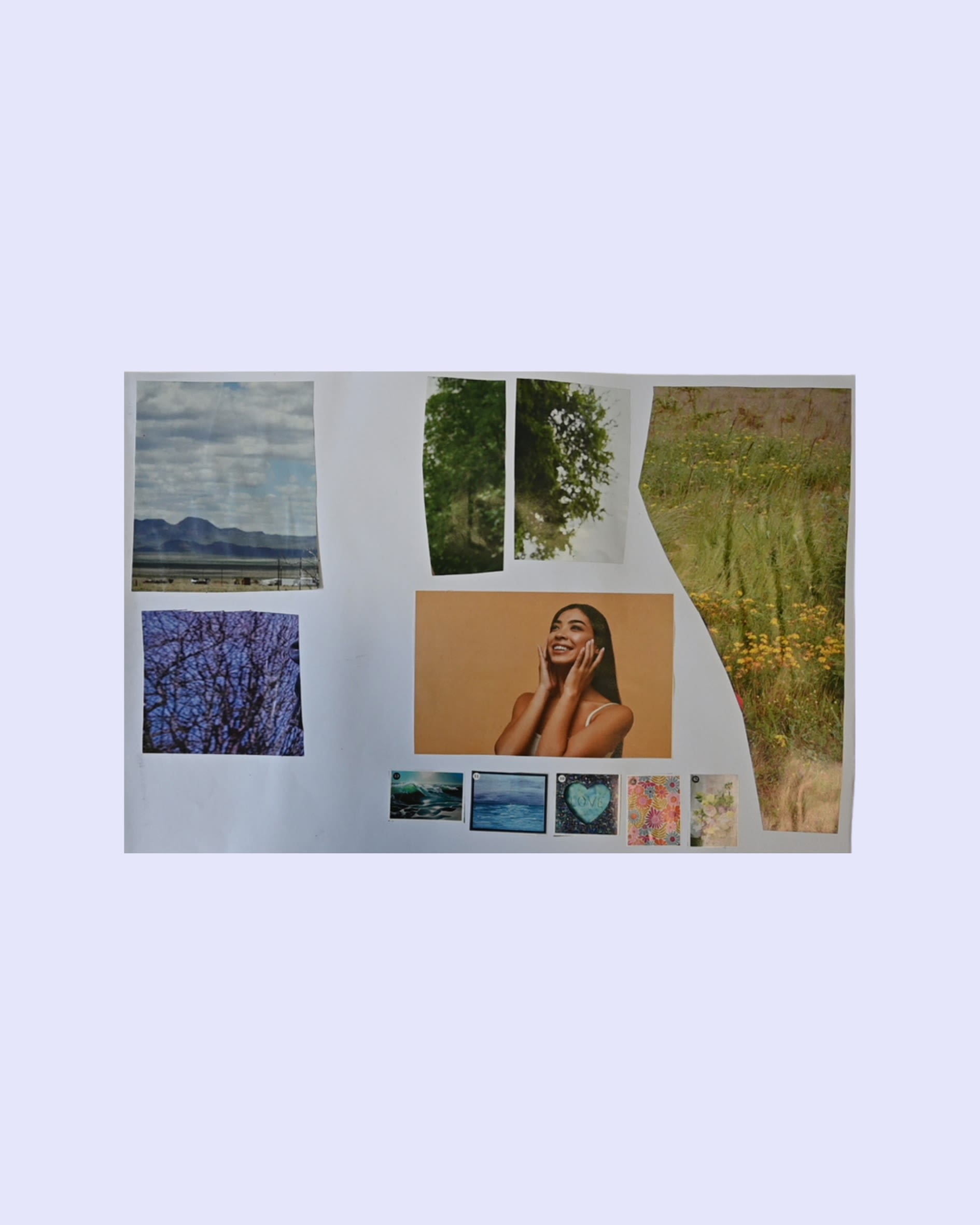
The sky represents the past – being lonely and being all by yourself. The tree represents not knowing how to go about the health system and hospitals and different doctors. Going in different directions. You get confused sometimes and don’t know where to turn for help. That’s what it can be like in the NHS.
Sometimes I don't always know what healthcare professionals are doing or saying. They keep changing things and I get lost in it. So it’s important that they’re experienced and knowing what they’re doing to improve the health service. Medicine is always growing and changing, so maybe it’s not always their fault that they don’t know something or don’t have cures, but that’s what it can be like dealing with them. You don’t always know where you are with them. They’re always experimenting on patients, and you don’t know if you can trust them. People lose their lives. So they could reassure you and put you at ease. Make you feel like they do know what they’re doing.
I want others to know that at first, it can be lonely and confusing, but you pull through this and get better with your health and get back to normal. You start to get to know the health system and become more able to do things for yourself. Getting to appointments and talking to doctors. So, life becomes happier, you become a healthier person. You address your problems, and your life gets back to normal. You feel like you’ve achieved something by learning to understand the health system better. The woman represents someone in the future who is happy and healthy, her life is back to normal, and she can do things for herself.

Video Gallery
Check out the video version of the gallery to hear the stories behind the art - some in the women's own voices, some voiced by others.
This gallery was created by service users at the Marylebone Project as part of the SHE HEALS study conducted by the Marylebone Project, the Institute of Global Health Innovation at Imperial College London, and Central London Healthcare.
Please do not use, borrow, or display any photographs or artworks from this gallery outside of the context of the SHE HEALS study.
The SHE HEALS study was funded by the NIHR Programme Development Grants (PDG) Developing Innovative, Inclusive, and Diverse Public Partnerships Scheme (NIHR207101). The views expressed are those of the authors and not necessarily of the NIHR or the Department of Health and Social Care.
To learn more about the SHE HEALS study, please visit our webpage: https://www.imperial.ac.uk/global-health-innovation/what-we-do/involve/she-heals/
If you have any questions about this project, please contact Jodie Chan at j.chan@imperial.ac.uk.
 Built with Shorthand