
From clinic to community
Two PERC fellows on listening, trust and changing practice
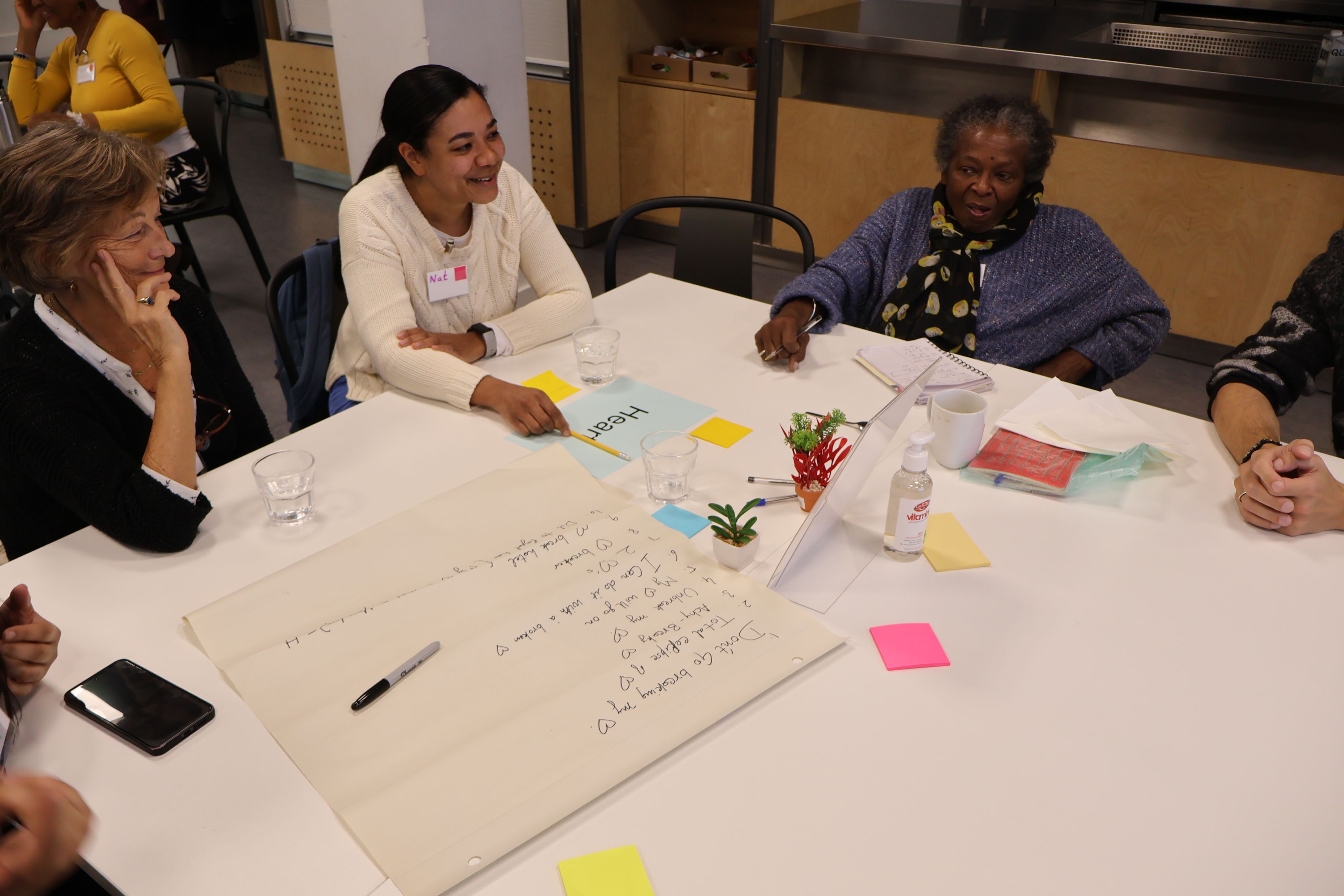

Two Imperial clinicians, Carmen Simpson and Annie Aloysius, reflect on how a six‑month, part‑time secondment with the Patient Experience Research Centre (PERC) helped them move from ad‑hoc consultation to meaningful co‑production, and how those lessons are now shaping care and research across their teams.
The PERC Fellowship Scheme is a six‑month, fixed‑term secondment of one day a week or equivalent funded by the NIHR Imperial Biomedical Research Centre (BRC). PERC is a multidisciplinary team comprising mixed methods’ researchers, anthropologists and public involvement practitioners which undertakes participatory research, research on research and provides advice, support and training on public involvement in research.
PERC’s vision is to bring communities and professionals together to improve health research and our mission is to advocate, promote and support participatory approaches to improve health research.
The spark
For Carmen Simpson, a team‑lead physiotherapist in trauma and orthopaedics, curiosity sparked her application: she wanted to understand how research really works and what genuine public involvement looks like in practice, while using her communication skills to bridge conversations between patients, the public and researchers. PERC offered a place to ‘learn by doing’ alongside specialists who support Public Involvement, Engagement and Participation (PPIEP) and who also research people’s experience of taking part in research.

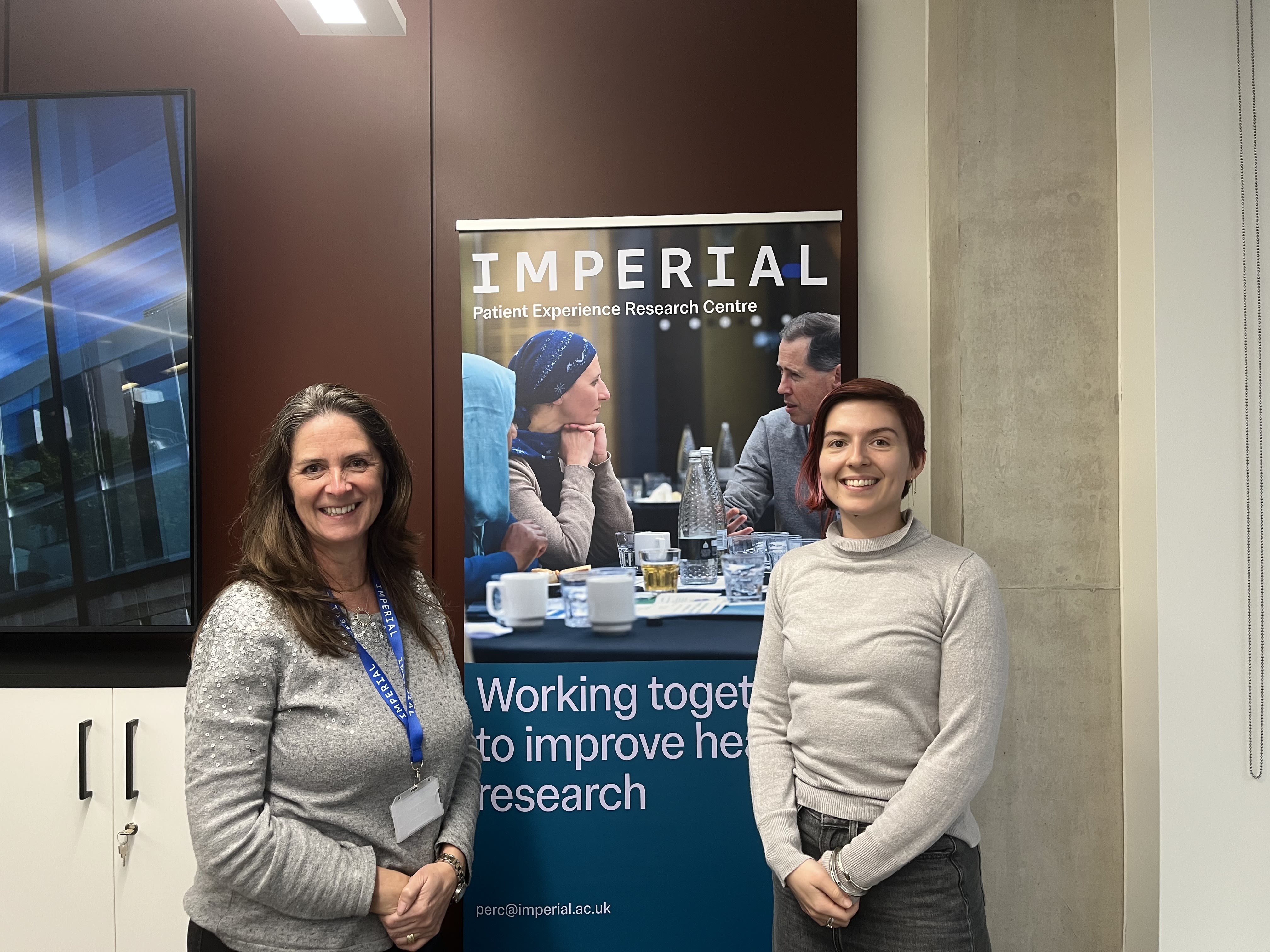
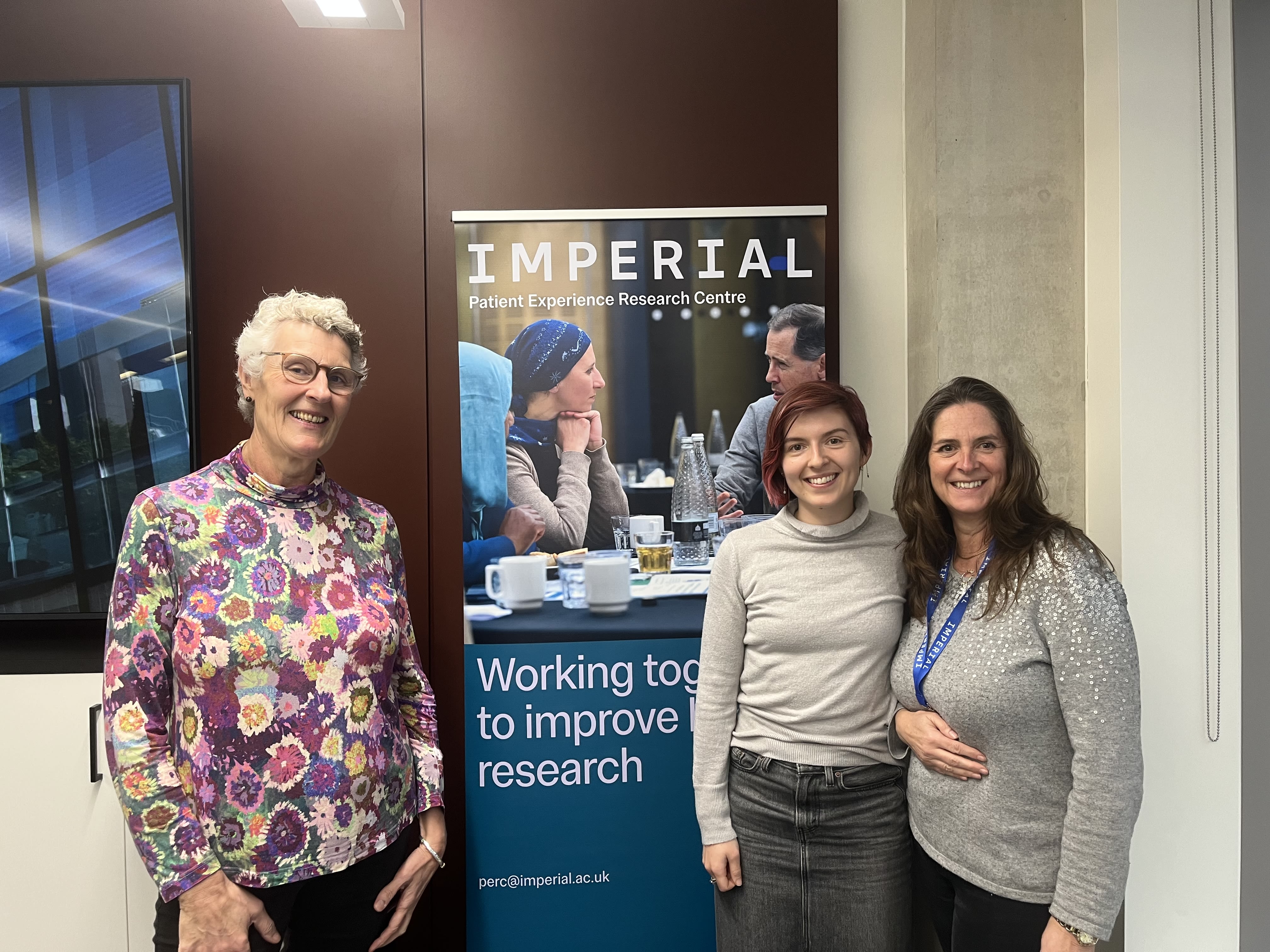
Annie (left) and Carmen (right) at their last day of their fellowship with Imperial's Patient Experience Research Centre (PERC)
Annie (left) and Carmen (right) at their last day of their fellowship with Imperial's Patient Experience Research Centre (PERC)
For Annie Aloysius, Clinical Lead Speech and Language Therapist in Neonatology, the fellowship was a chance to explore the clinical academic pathway after three decades in the NHS, building on years of quality improvement work and user participation. She wanted to deepen her skills in PPIEP, expand her networks across pregnancy and prematurity, and see how co‑design can be embedded from the outset of research and service development.
Why the PERC Fellowship
The PERC Fellowship scheme is designed to upskill Imperial clinical and research staff in participatory approaches and public involvement in health-related research, through training, shadowing and supervised opportunities to deliver public involvement in research support, collaborate with people and communities, and evaluate and share impact. In parallel, PERC fellows get experience and expand their skillset on participatory and qualitative research as well as mixed-method research approaches.
As a core facility of the Imperial BRC covering Imperial and Imperial College Healthcare NHS Trust, PERC provides advice, resources and training that researchers can apply across translational health research. For both fellows, that mix of hands‑on learning, mentorship and community focus was precisely what they needed to learn about moving from consultation to co-creation.





The work: from questions to co‑creation
Building relationships and spotting opportunities
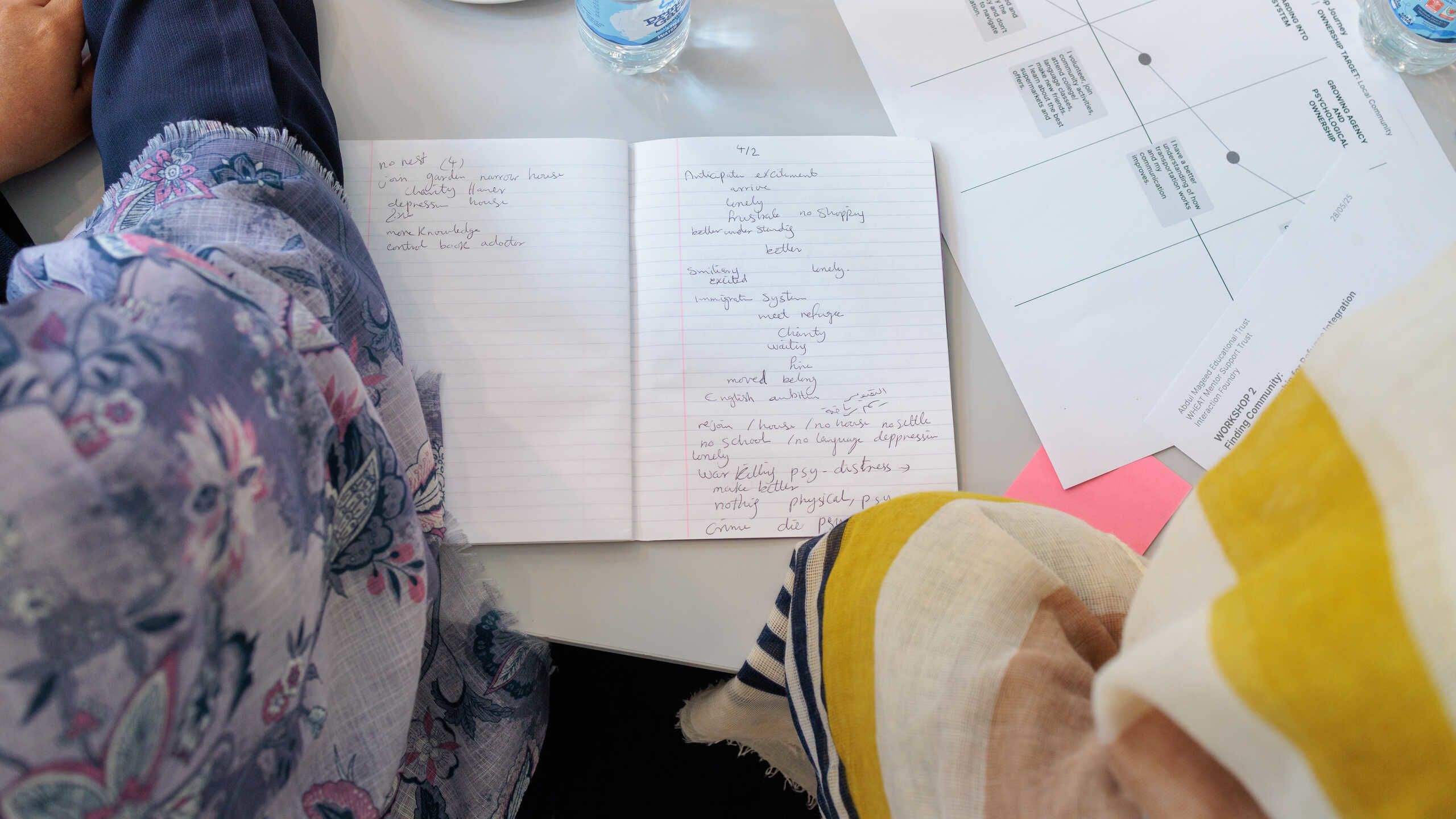
Immersed in PERC’s weekly rhythm, Carmen joined team meetings, BRC research Theme interactions and public involvement advice sessions; quickly progressing to offering practical advice to peers in her own discipline. The exposure helped her see what “good” looks like: involving people early, clarifying the decisions public partners will shape, and creating safe, purposeful spaces for dialogue. Annie, meanwhile, met experts across BRC Themes relevant to neonatology and prematurity, engaged with BRC Community Partners, and began to map who to involve (parents, carers and community organisations) at each stage of her emerging research ideas.
Making involvement visible and useful
Carmen developed visual resources that show where and how to involve the public across different types of research, plus a step‑by‑step flow diagram researchers can follow to guide their public involvement plans. She also interviewed researchers to improve PERC’s online advice request process and began shaping ways to meaningfully capture the outcomes of public involvement, leading to closing the loop between activity and impact. Annie designed the building blocks for a patient advisory group in her specialty and drafted the practical artefacts that bring co‑production to life, including workshop plans, invitations, privacy notices and costings, so that listening events would be easy to run and easy to join.
Learning, then leading
Both fellows took up PERC’s training offers and on‑the‑job coaching which covered public involvement training, qualitative research methods and how to advise research teams on their patient and public involvement plans. They drew on PERC’s online Public Involvement Resource Hub to extend their learning, tailor materials and develop accessible tools to co‑create public‑facing content with Community Partners. This combination of structured learning and supervised delivery mirrors the fellowship’s promise which involves capacity and confidence that grows through doing.
Taking health and research conversations into the community
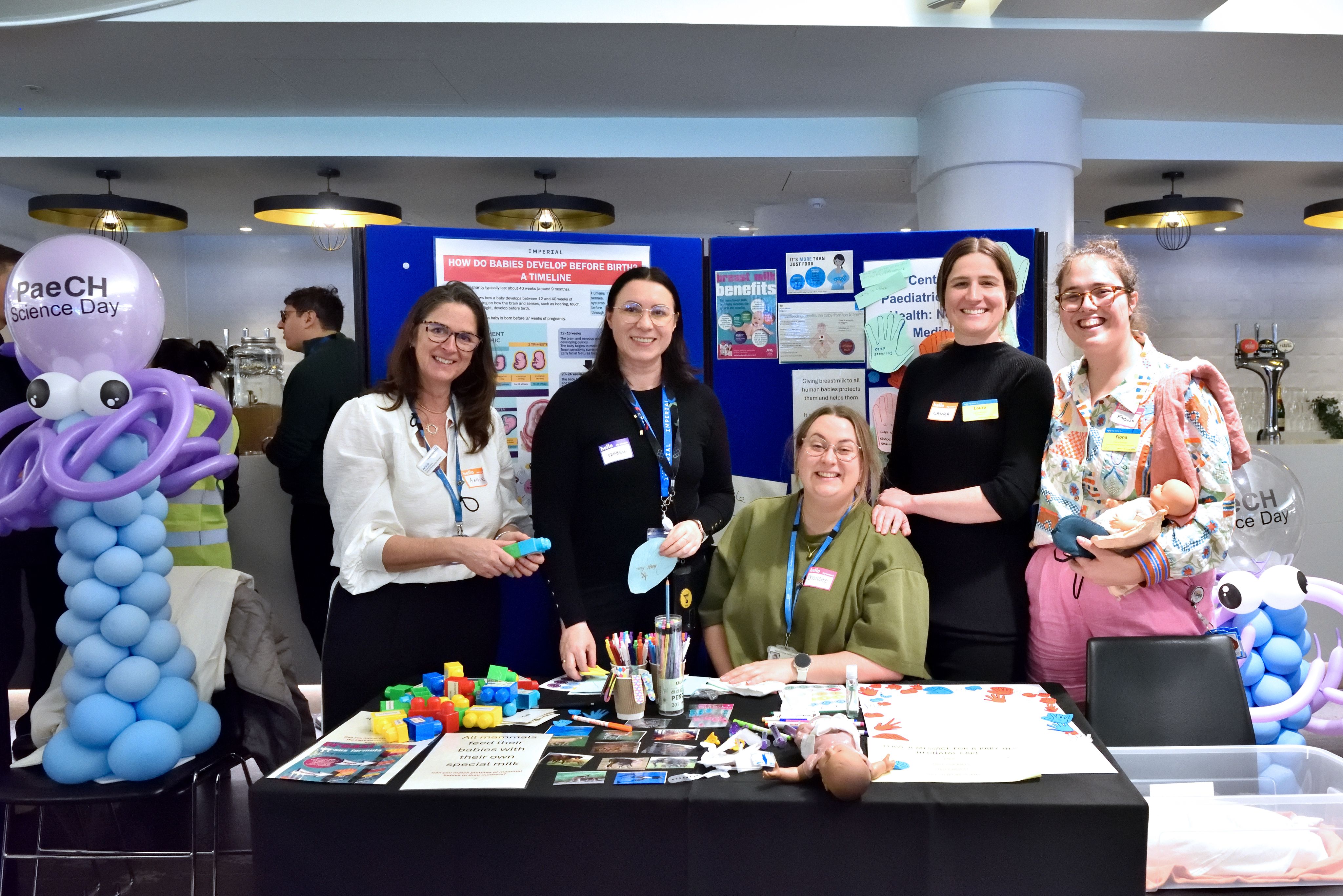
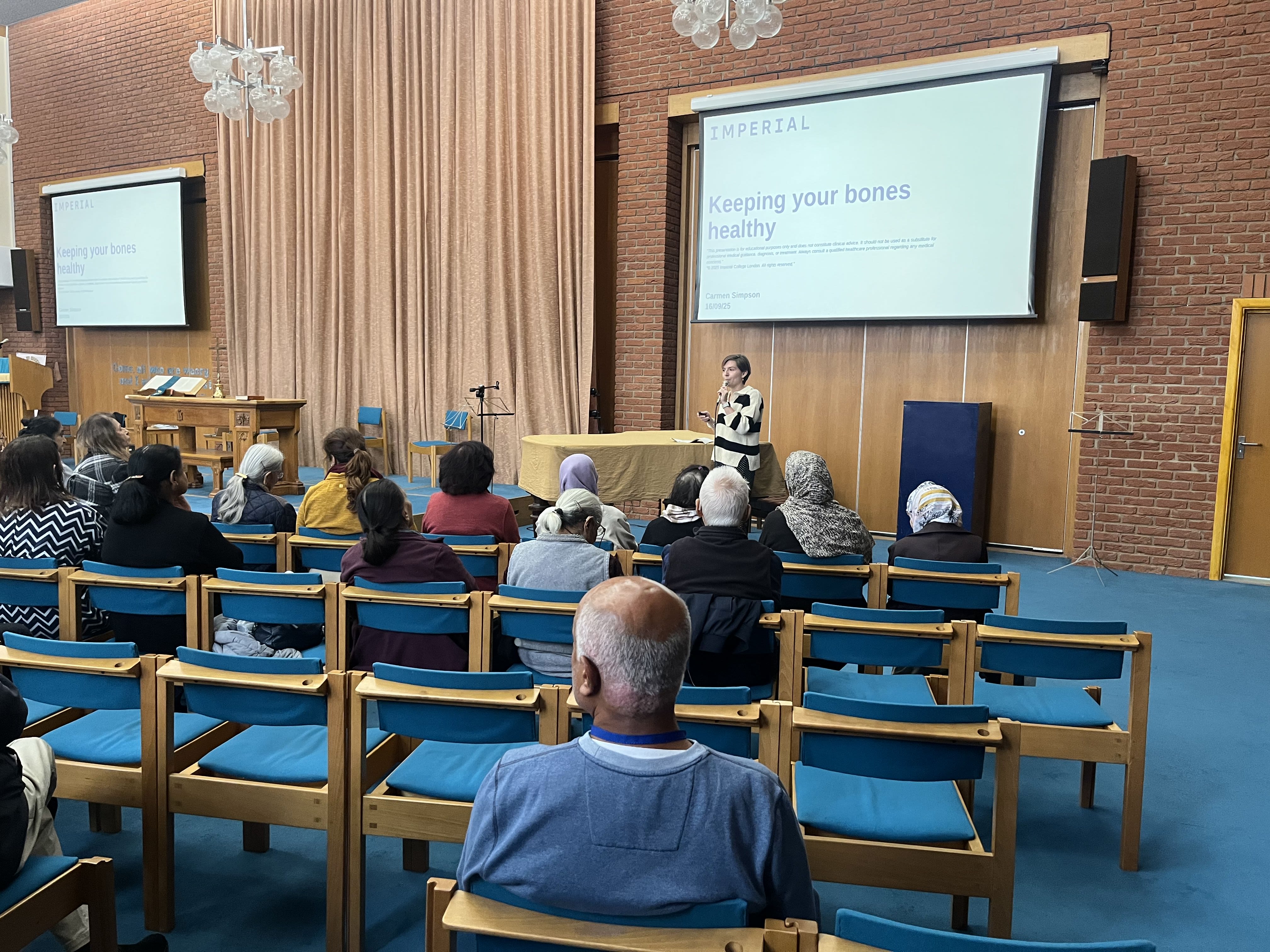
Carmen co‑delivered and then led community sessions on bone health, spending longer listening, answering questions and sharing prevention tips than is possible in a busy hospital clinic. She wrote up reflections to inform future engagement and help PERC colleagues adapt their own sessions. Annie joined Community Partner meetings, from maternity care task‑and‑finish groups to parents’ advisory sessions, observing how relationships are nurtured and how community advocates and healthcare users can sit at the centre of meaningful research design and output in areas such as neonatal care and vaccine confidence.
Impact in practice
Confidence and capability
The structured mix of training, shadowing and supervised practice helped both fellows move from ‘knowing’ to ‘doing’. They contributed from planning public involvement, facilitating discussions to evaluating change with greater confidence, aligned to how PERC promotes meaningful public involvement in research and qualitative work for researchers.
Better questions, clearer materials
Bringing patients, carers and community partners into the research process early, sharpened research questions and improved public‑facing content, with plainer language and clearer feedback loops.
Culture and teams
Carmen took her learning back to her physiotherapy team by educating her journal club on qualitative research and public involvement good practice, exploring how patients and the public could review exercise prescriptions for clarity and tone, and encouraging colleagues to seek patient input when reviewing service pathways. These are exactly the kinds of outcomes the fellowship aims to catalyse: practical, durable changes that make research and care more relevant to people’s needs.
The fellowship has allowed me to connect with community groups that I would not have known about prior to this opportunity. It has also enabled me to share my knowledge and expertise with them, which has given me a sense of pride in my profession.
Networks for the long term
Annie built relationships with various community groups and research teams, helping to shape a patient advisory approach that can support her future research projects. She left with a clearer map of who to involve, when, and how as well as contacts that lower the barrier to doing PPIE well in a busy NHS context. PERC’s model explicitly encourages fellows to collaborate with key stakeholders and to keep learning with previous fellows, extending the fellowship’s benefits beyond the six‑month placement.
"Go for it. It’s a great, friendly welcoming team with such a breadth of knowledge, skills and opportunities to share to give you an excellent experience of the range and importance of PPIE work."
Advice for applicants
- Learn by doing: embrace supervised delivery and confidence grows in the room.
- Build relationships early: use PERC’s networks and shadowing routes to reach people you don’t usually hear from; relationships take time and care.
- Close the loop: plan to evaluate and share the impact of your involvement and work - PERC encourages and supports this through practical tools.
- Bring your team along: treat the secondment as a catalyst for culture change in your group so involvement continues after your six months.

What’s next
Both fellows are taking their learning forward by embedding public involvement approaches in their services, continuing collaborations with public partners and PERC colleagues, and sharing practical tools that their teams can reuse.
The fellowship is intentionally designed to build capacity and confidence to involve the public in research across Imperial’s translational landscape and to keep those links active after the secondment ends.
PERC’s multidisciplinary team anchors the fellowship experience, offering day‑to‑day supervision and connections to researchers and public partners across Imperial and the Trust. The scheme’s design prioritises shadowing, supervised delivery and collaboration with stakeholders, including activities that promote equality, diversity and inclusion and engagement with communities underserved in research so that fellows not only learn the ‘what’ but also the ‘how’ of building trust, reciprocal community relationships and sharing power in the research process.
Our 2026 PERC Fellowship Scheme is now open!
The PERC Fellowship Scheme is supported by the NIHR Imperial Biomedical Research Centre (BRC).


 Built with Shorthand