For our second 'In the Spotlight' interview, we're chatting with Elfy Chiang – a scientific illustrator passionate about creating fun and engaging visuals that make science easier to understand and connect with!
Elfy worked with Linda and Louisa at the very start of Invisible Warrior, creating an animation of Louisa's story that would be shared at Schools visits and Public Engagement events like Imperial Lates and the Great Exhibition Road Festival.
Elfy, tell us a bit about you and what inspired you to become a scientific illustrator?
I’ve always been interested in both science and art. I studied Biological Sciences at university but realised that a career in research wasn’t for me. That said, I still wanted a career where I could stay connected to science, so I found a job at a research institute after graduating and started taking evening courses in design.
I was inspired by the illustrations and animations in our biochemistry and molecular biology textbooks. They made abstract ideas, like molecules and the mechanisms of DNA, much easier to understand.
I’ve always been a visual learner. Growing up, I loved watching science programmes for children and nature documentaries on TV, as well as flipping through magazines like National Geographic. I often found myself learning a lot outside the classroom through these visuals. At university, I was inspired by the illustrations and animations in our biochemistry and molecular biology textbooks. They made abstract ideas, like molecules and the mechanisms of DNA, much easier to understand. This was when I first realised that a career in visualising science was possible.
In my first job at the research institute after university, I volunteered to make diagrams for the scientists I worked with, to put what I was learning at the evening design school into practice. Before long, I started getting commissions and really enjoyed it.
I then enrolled in the MSc in Science Communication at Imperial College London, where I explored different ways of communicating science and how to tailor it to different audiences. After graduating, I continued working freelance in graphic design for science and gradually developed it into my career as a scientific illustrator.
Since then, I've created many diagrams for scientists for academic publications, worked with pharmaceutical companies on creating content for patients, and on projects like Invisible Warrior, creating visuals to communicate science to broader audiences, both young and old.
How did you first hear about the Invisible Warrior project? What made you want to be involved?
Linda, who leads the project within Imperial, sent an email to the PSCI-COM mailing list calling for contributors to help share Louisa’s story. At the time, she was open to ideas for how to tell the story, and I had been looking for opportunities to create more animations. So, I replied and suggested turning Louisa’s story into an animation.
I thought it would be a nice way to bring her story to life and help it reach a wider audience, including young people, while also raising awareness of Sickle Cell. Linda and Louisa both loved the idea, and that’s how everything started.
When you heard Louisa’s story for the first time, what impact did this have on you?
I thought it was very brave of Louisa to share something so personal and openly talk about her experience. It made me think about how living with a genetically inherited chronic disease can affect someone not only physically, but also mentally, which is often overlooked, sometimes even by patients themselves. It also made me reflect on my own experience with internal pain. The closest comparison I can make is period cramps, and I realised that I’ve always focused on managing the physical discomfort without really thinking about its impact on my mood and wellbeing. Hearing Louisa’s story has made me more aware of the importance of looking after our mental wellbeing when we’re unwell.
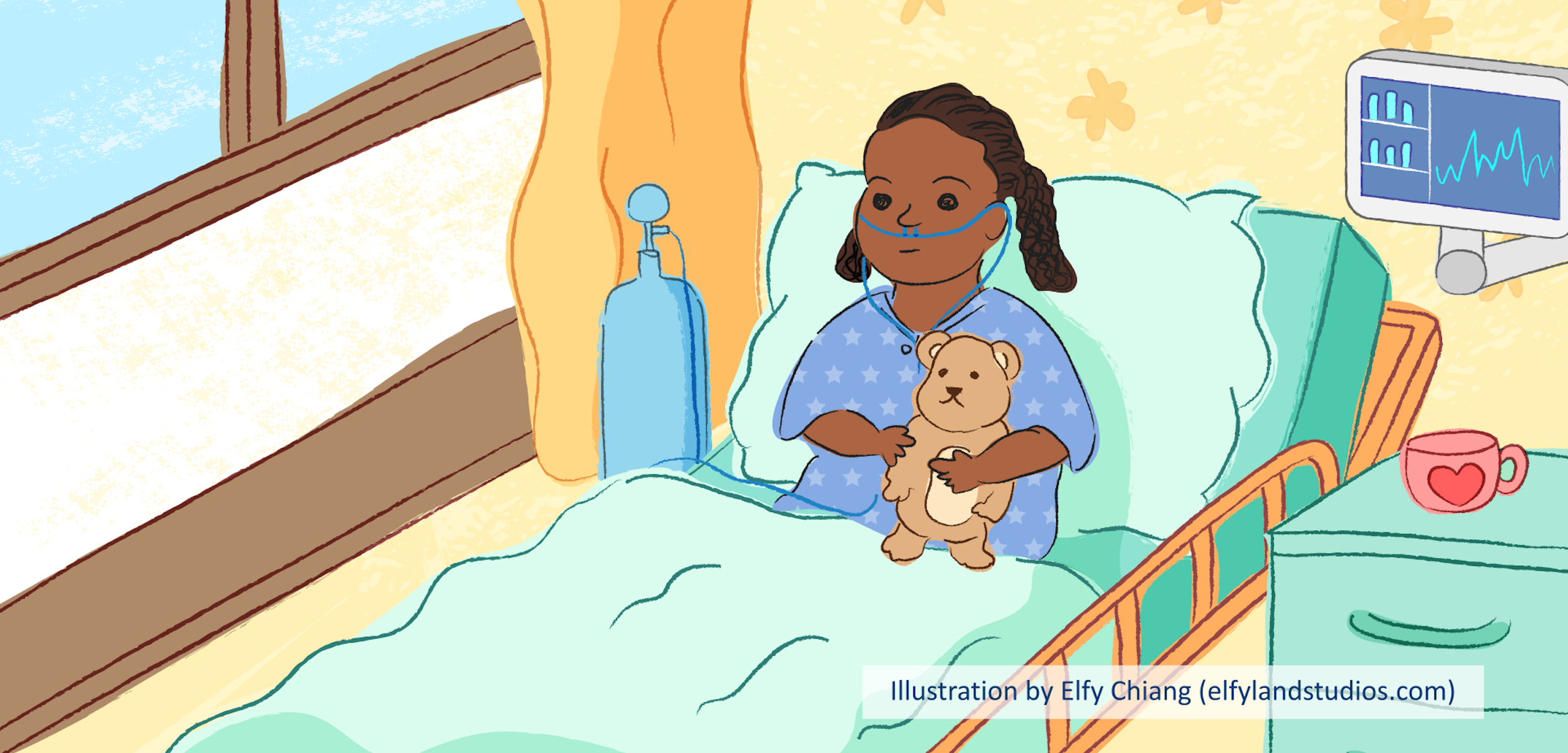
The other thing that really struck me was the amount of pain and unpredictability that people living with Sickle Cell must endure and manage, not just for a short period but throughout their whole lives. Because the pain isn’t always visible to other people, I can imagine that it makes the condition even harder to live with and for others to understand.
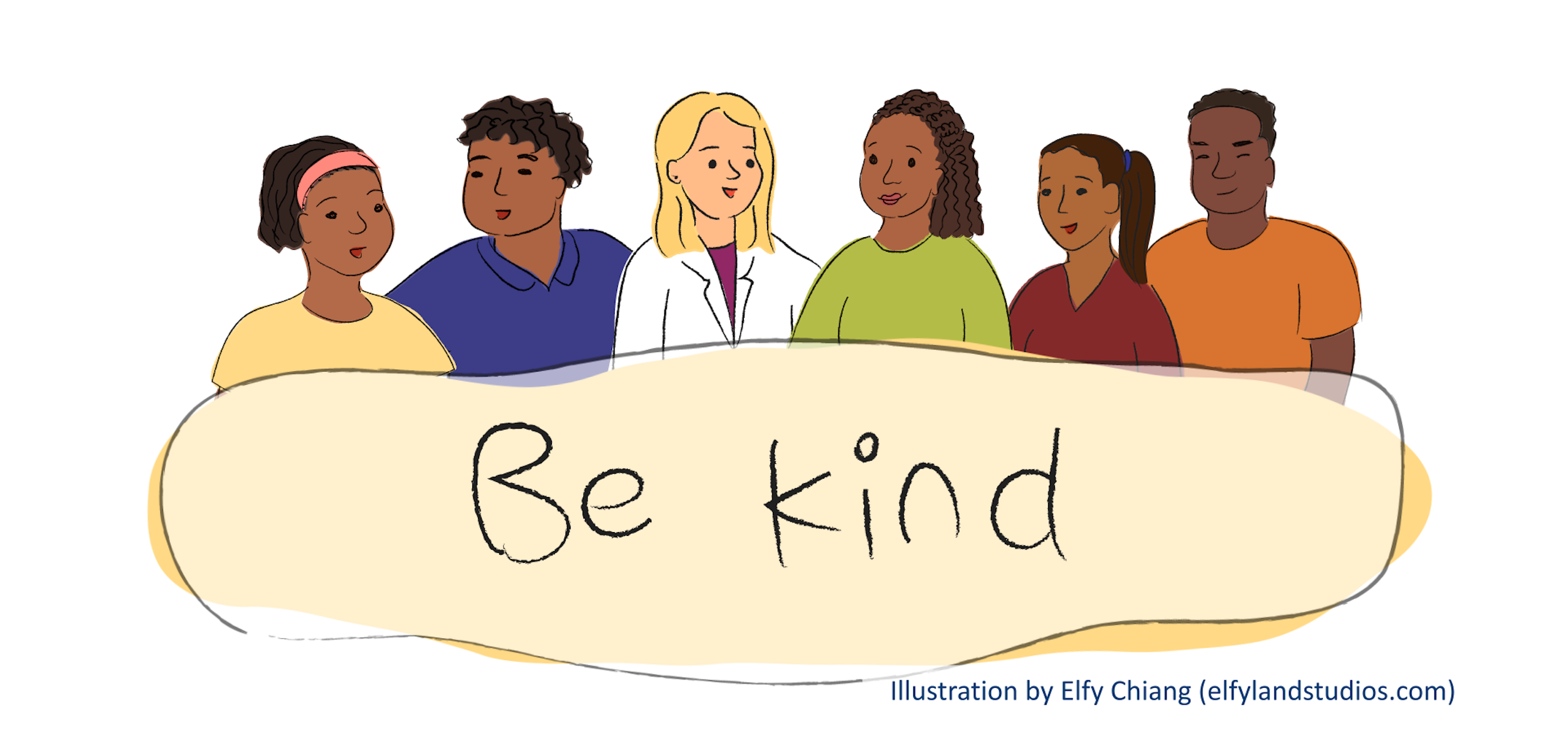
I think that really highlights how far a little kindness and empathy can go. We don’t always know what someone else might be going through, even when there are no visible signs that they are struggling.
What was the process of creating the video for Invisible Warrior like?
The project took place in the middle of the COVID-19 pandemic, so there was a lot of distance involved. I was in Taiwan, while Louisa and Linda were in the UK. We never met in person until a couple of years later, after we had finished the video and I had moved to the UK! At the time, everything was done online. We arranged video calls and chatted about the plans and ideas for the animation.
Linda had a recording of the talk Louisa gave to medical students at Imperial College London. We transcribed it and edited it into a shorter version for Louisa to record as the narration for the video. So, the voice you hear in the animation is Louisa herself!
That narration became my script for the animation. I illustrated some key scenes and put them together into a storyboard for Louisa and Linda to review. Once they were happy with the storyboard, I animated each scene and then brought them together into the final video.
Why do you think it can be so helpful to have graphics and visuals alongside scientific information/data?
[Visuals can] help break down language barriers and make scientific information more accessible to a wider audience.
I’m a strong believer in the saying that “a picture speaks a thousand words”. Especially as a science graduate, I know that many of the concepts and ideas we learn can be quite abstract or simply not visible to the human eye. Visuals can make these ideas much easier to understand and communicate.
They can also be adapted for different audiences through the choice of art style, colour, format, and level of detail. If visuals can help people who already work in science understand and communicate complex ideas, they can be an even more powerful tool for reaching people outside the scientific community. They can also help break down language barriers and make scientific information more accessible to a wider audience.
The animated video has been shared many times over Invisible Warriors 5 year history, and likely watched by thousands – were you aware of how widely it might be shared and the impact it could have?
I was aware that the video was being shown at school visits and events like the Great Exhibition Road Festival. In fact, I joined some of the first virtual school visits when they started, so I got to see the pupils’ reactions firsthand!
It was really interesting to see how excited they were to watch an animation, and at the same time how much of the content they took in and how many thoughtful questions they came up with afterwards. The video seemed to spark their curiosity about Sickle Cell, and they were particularly keen to learn about the science behind it, such as what causes the disease and whether there is a cure.
I think having Louisa’s real story and personal experiences at the heart of the video helps bring out their empathy and makes them want to learn more. It made me wonder whether simply presenting the scientific facts about Sickle Cell would have the same impact. It really showed me how powerful storytelling can be as a way of communicating science, especially when you want to connect with audiences who may not have any prior knowledge of the subject.
Have you made other graphics/illustrations for the Invisible Warrior project?
Invisible Warrior has grown from that one animation into school visits, festival activities, and many other forms of public engagement. Since then, I’ve helped design a quiz that was used at the Great Exhibition Road Festival, often as an ice breaker to help visitors engage in the topic and test their knowledge about Sickle Cell.
I’ve also helped develop a range of materials for the Great Exhibition Road Festival, including a small colouring-book version of the animation that visitors can take home, as well as stickers and note cards where visitors could leave messages for people living with Sickle Cell.
It’s been really nice to see the original animation evolve into different formats and become something that people can interact with in different ways.
What are some other projects you have been involved in, do you have a particular one you’re proud of that you’d like to share?
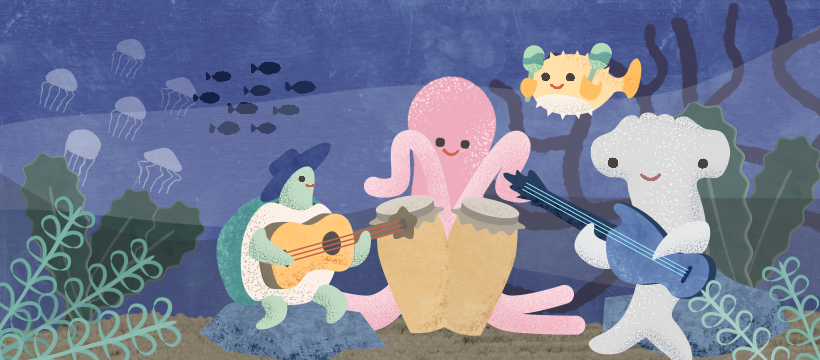
I’m particularly proud of the music animation I made for my friends’ band. It was the first animation I made at this scale, so it was also a great learning experience for me. They wrote a song called Everything Shall Pass, which was inspired by my friend’s experience of battling anxiety.
For the animation, I took inspiration from the song title and the idea that difficult times, like storms, will eventually pass. I created a character flying a small plane who finds himself caught in a storm, but realises that the storm doesn’t last forever and there is light beyond it.
I really enjoyed working on this project because I had the freedom to tell an emotional story visually and interpret the meaning of the song in my own way.
Our #IntheSpotlight interview series celebrates Invisible Warrior turning five in 2026, highlighting the people who have made the project possible over the years.
Learn more about Invisible Warrior
Visit our main webpage.