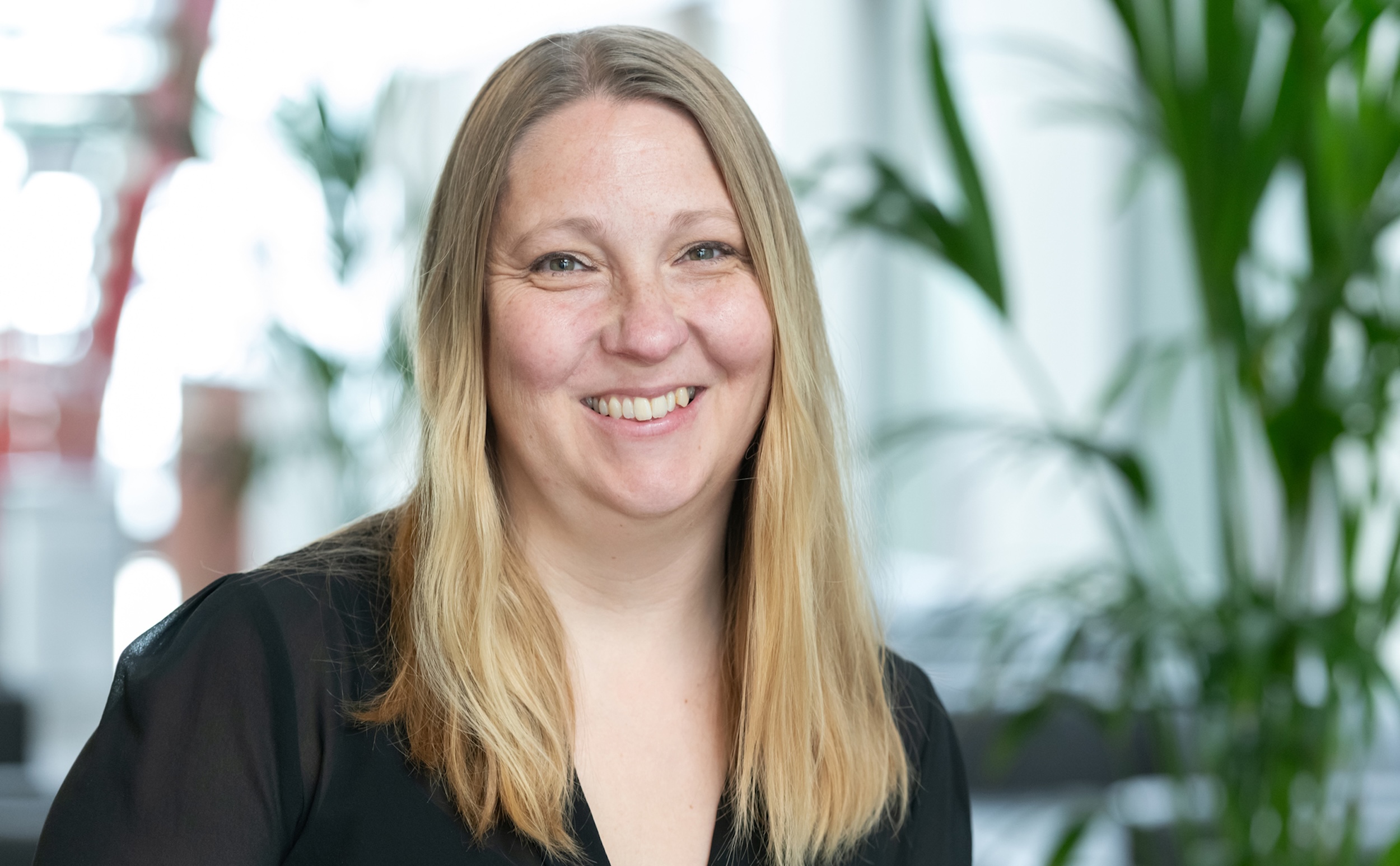
As part of our ‘In the Spotlight’ interview series, we caught up with Dr Josefin Ahnström!
Josefin is an Associate Professor in Haematology at Imperial College London's Centre for Haematology. Josefin has been doing different types of blood research for over 20 years and teaches both medical and biochemical students at Imperial.
One of the key aspects of the Invisible Warrior project is running workshops in local schools, which Josefin is an integral part of. So far, the team has delivered sessions for over 1,000 pupils!
How did you first get involved in the Invisible Warrior project?
I first got involved about five years ago, when Linda [van Keimpema] reached out to me. Linda and I had worked together in teaching, and she knew that I had been doing school visits for quite a few years.
One of the things I'm really passionate about is breaking stereotypes of what a scientist looks like and who a scientist may be. Partly because when I grew up, I didn't know that I could be a scientist. I didn't think it was for me. I had an image of what a scientist looked like and they didn't look like I did.
So, Linda knew my interest and she reached out to me to ask if I wanted to be involved, which I of course was delighted to be.
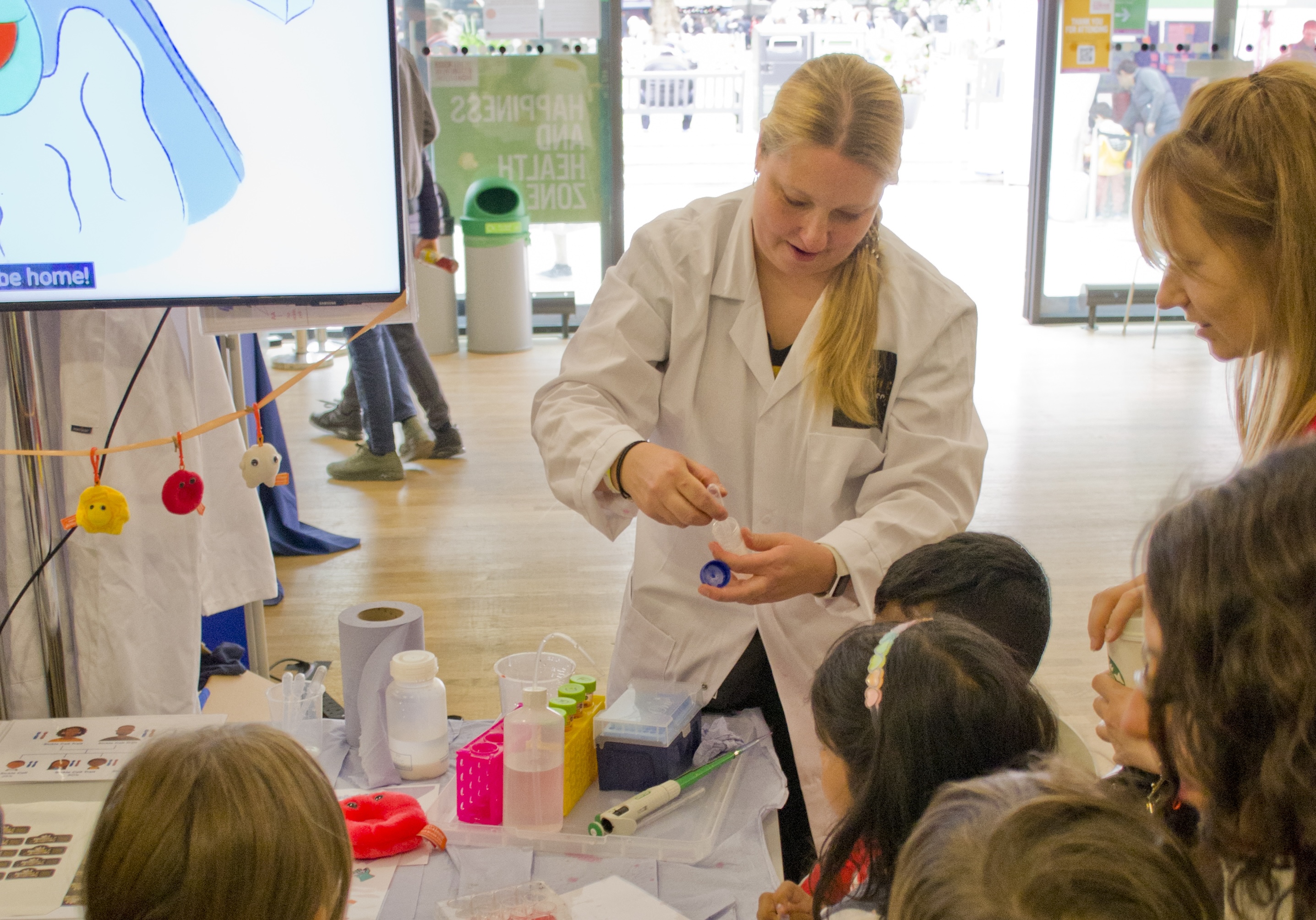 Josefin giving a demonstration at the 2026 Great Exhibition Road Festival.
Can you tell us about the first school visit for the Invisible Warrior project that you remember?
Our first school visit was at some point in the early autumn of 2021, where we visited a year six class. In the session, we talked about what Sickle Cell is, because a lot of students don't know about it. I spoke about what it's like to work as a scientist, and Louisa was there to tell her story.
Like all of us in the Invisible Warrior team, the students became very emotional when Louisa shared her story and had a lot of different questions about it. The students engaged incredibly well - they had so many questions for all of us!
They wanted to ask Louisa a lot of questions about her journey, about the choices she made in her life. They also asked me about working as and being a scientist. During the questions, it went from being very emotional to also a bit funny. I remember one boy asked me how much a scientist earns. Which, you know, is not a bad question, because it's all part of deciding what you want to do in the future. We were all amazed about how mature these year six students were.
Why do you think it's important to bring a project like Invisible Warrior into schools?
There's a lot of different aspects of this project that feel so important to me.
I really want to emphasise and show [young girls] this is a career path that is open to them. You can be a mother and a scientist [...] You don't need to choose.
As a female scientist, I really want to emphasize and show young students, young girls, that this is a career path that is open to them. You can be a mother and a scientist. You can do both of those things. You don't need to choose.
But also, there's so many students and so much of society that don't know anything about Sickle Cell. For them to hear and listen to Louisa's story, they will understand the full impact of the disease. And because Sickle Cell is a disease that mainly affects people of colour and is often underfunded and underinvestigated.
To start conversations about Sickle Cell is really important to me, and something I'm glad that we can bring to school visits, but also to general society.
How have the schools' visits evolved over the past five years of Invisible Warrior?
Well, in the beginning we visited a lot of year six classes, which we still do. But we're also now visiting a lot of secondary schools. And we are not only talking about Sickle Cell and discussing the importance of increasing knowledge and understanding of Sickle Cell, the impact it has on people.
We have also brought in other individuals to the team, such as clinicians, that can speak about their own journeys of, for example, being a student in London to becoming a consultant at a world leading hospital. So, we are trying to inspire students about the different career paths that are available to them as well, as increasing their excitement about science and understanding diseases.

Josefin (on the right) with other members of the Invisible Warrior team: Linda van Keimpema, Christina Crossette-Thambiah, Louisa Thompson, Ronnie Oyewole.
Invisible Warrior has achieved a lot in its first five years. Looking to the future, what is something you hope the project will achieve in the next five years?
I hope that we will reach many more students, teaching them about Sickle Cell to achieve better awareness and understanding of the disease. The more awareness there is, the more understanding there will be of those suffering from the disease and in the longer term, more research and treatment options available.
I am also proud of everything we have achieved in inspiring young people in pursuing careers in STEM subjects, in research as well as medicine. If we can inspire even one or two more students, in particular young women from ethnic minority backgrounds, to think bigger than they have before in the aspirations they have for their future, my mission has been achieved.
Our #IntheSpotlight interview series celebrates Invisible Warrior turning five in 2026, highlighting the people who have made the project possible over the years.
Learn more about Invisible Warrior
Visit our main webpage.