Imperial researchers create party balloon designed to disappear
/prod01/channel_4/imperial-news/media/images/landscape-3000X2000/Julia-compressed.jpg)
Researchers at Imperial College London have developed a new balloon material designed to break down quickly after use, offering a more environmentally responsible alternative for celebrations and events.
The innovation, led by the Department of Chemical Engineering’s Professor Jason Hallett, was inspired by concerns over the environmental impact of discarded balloons, and makes use of a modified latex material that retains the performance of a standard balloon whilst degrading a lot quicker once disposed of. The material is also easier to inflate than conventional balloons. The Imperial team - known as Bioloon - developed the new material to address this challenge without compromising usability. 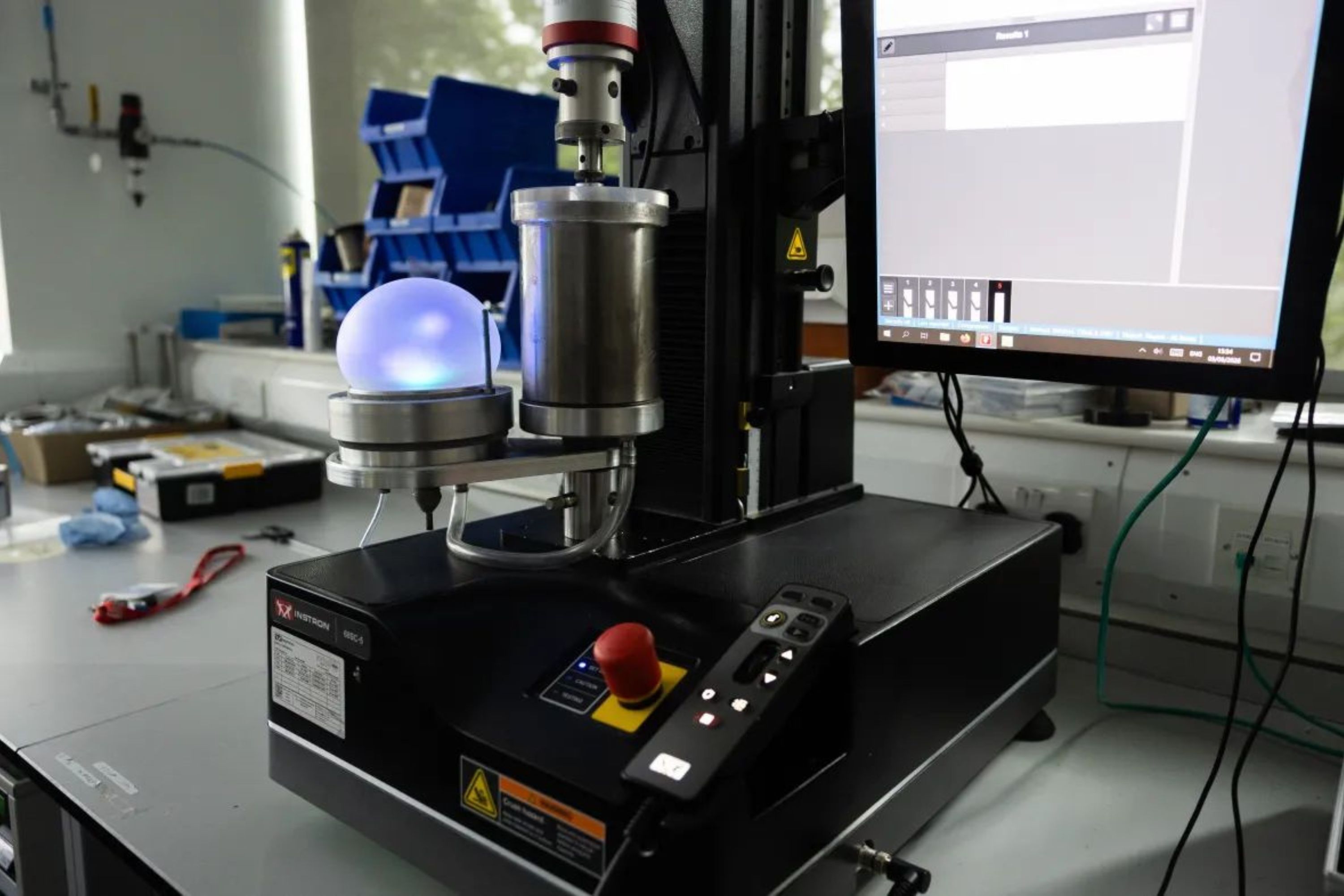 Although today's balloons are often marked as biodegradable, this is often not the case. Most balloons are made from natural rubber, but they are treated with a process called sulphur vulcanisation to make them strong and stretchy. While this gives balloons the properties they need, it also makes them very difficult to break down naturally and requires harmful chemicals that can leak into the environment.
Instead of creating a completely new material, Bioloon improved the existing one. Their method linked the polymer chains together without using harmful additives. The result is a material that performs like a regular balloon. It can be inflated multiple times and is suitable for standard balloon manufacturing, while being more environmentally friendly.
Jules Cumming, Department of Chemical Engineering PhD student leading on the research, said: “It was a challenging but interesting problem we faced, particularly given the potential for real world impact. I am grateful for the support I have received throughout my PhD at Imperial and thrilled to see the results we have achieved so far. We are very excited about the continuous research being carried out which will enable us to improve the sustainability impact of elastomeric materials.”
The PhD research is also supervised by Professor Maria Charalambides, Department of Mechanical Engineering, and Professor Koon-Yang Lee, Department of Aeronautics, who are also co-inventors of the patent.
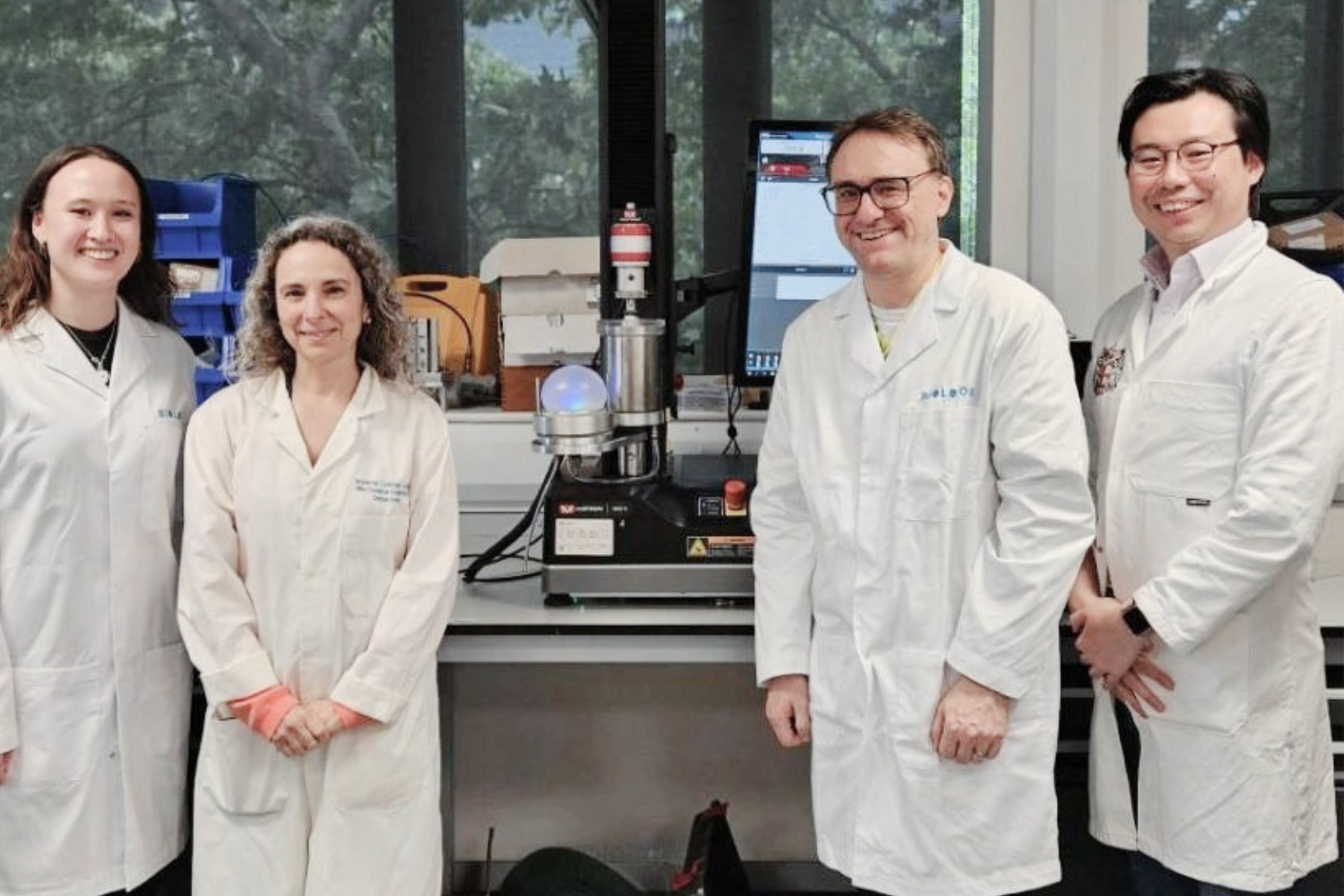
Professor Jason Hallett, academic research lead, said: “We were approached by an events company that identified a real environmental challenge and asked whether we could develop a more sustainable balloon. It was a fascinating project to work on, bringing together fundamental materials science with a practical application. We hope the result will encourage a shift towards more environmentally responsible materials across the industry."
The research demonstrates how science can help reduce everyday sources of pollution by improving familiar products rather than replacing them entirely.
The team hopes the new material could provide manufacturers with a practical route towards more sustainable balloons for parties, celebrations and events.
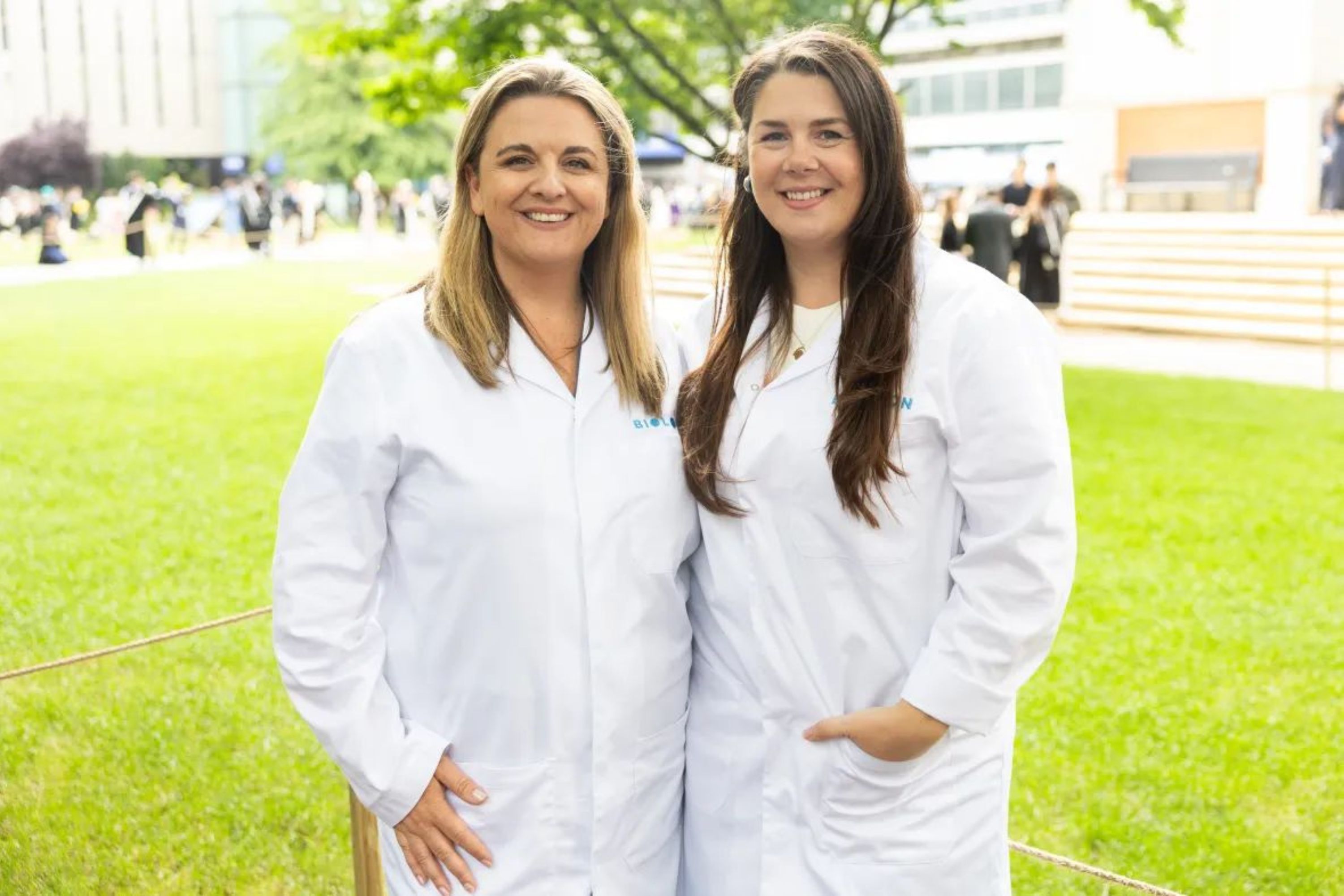
The research was carried out by Juliana Cumming, whose PhD at Imperial has been partly funded by Charlotte Melia and her party business co-founder Christie Molgaard. The trio anticipate Bioloon will have these innovative balloons on the market within a year.
On the decision to venture into this area as a party business co-founder, Charlotte Melia said: "Every celebration leaves something behind, and for balloons that has meant micro-plastic which outlives the party by decades. We have created a latex that behaves exactly like the balloon people love, then returns quietly to the earth as biomass. Balloons are where we begin, but the same breakthrough can take single-use latex out of the waste stream across the everyday products we all rely on."
ChemEng Enterprise-a rich history, an exciting present, a bright future
Translating scientific discovery and research results into applied solutions is not easy, but the Department of Chemical Engineering has a rich track record of translating its innovative research into successful deep-tech companies, including Process Systems Enterprise, the top exit from Imperial in the last 20 years (and one of the top 10 exits from any UK university in the last decade).
To further harness the value and potential of our world-leading research, Chemical Engineering launched in 2019 a strategic initiative, ChemEng Enterprise, unique within Imperial’s departments, to locally support students and staff in developing their entrepreneurship skills, talent,expertise and business formation.
We are extremely proud to have some highly innovative start-ups emanate from the Department, including DyeRecycle, Lixea, p.Happi and more.
Find out more: ChemEng Enterprise.
Image ©: The Times

Article text (excluding photos or graphics) © Imperial College London.
Photos and graphics subject to third party copyright used with permission or © Imperial College London.
Article people, mentions and related links
Navta Hussain
Faculty of Engineering