Department of Materials professionals recognised by IOM3
/prod01/channel_4/imperial-news/media/news-images/3000X2000-main-article-images/3000-X-2000-News-article-images-6.jpg)
Dr Eleonora D’Elia and Dr Gwilherm Kerherve from Imperial’s Department of Materials have been recognised by the Institute of Materials, Minerals & Mining (IOM3) for their contributions to outreach and technical innovation.
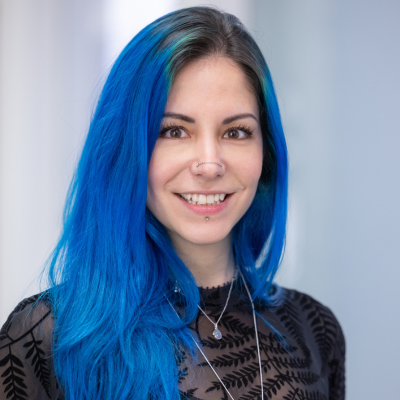 Dr Eleonora D’Elia, Senior Teaching Fellow in the Department of Materials, received the Robert Perrin Award for Contribution to Outreach, recognising her work to widen participation and introduce more young people to Materials Science.
As the Department’s Outreach Lead, Dr D’Elia coordinates school visits, summer schools and public engagement activities, reaching more than 10,000 students, teachers and members of the public each year. Her work focuses on helping students who may not have considered university or engineering to see these opportunities as something that could be for them.
During her time leading outreach, applications to Materials Science grew from around 400 to more than 1,200, while the proportion of women joining the course increased from around 25 per cent to more than 40 per cent. Dr D’Elia said the changes reflected the work of many people across the Department, adding: “The biggest reward isn't the numbers – it's when a student comes up after a talk and says, ‘I didn't even know Materials Science existed, but now I definitely want to study it!’ Those interactions are why I do what I do.”
The biggest reward isn't the numbers – it's when a student comes up after a talk and says, ‘I didn't even know Materials Science existed, but now I definitely want to study it!’ Those interactions are why I do what I do. Dr Eleonora D’Elia Senior Teaching Fellow, Department of Materials at Imperial
One of her key initiatives is Imperial’s residential Materials Summer School, which gives students the opportunity to spend a week at Imperial, meet researchers, carry out experiments and experience university life.
Dr D’Elia also supports students once they arrive at Imperial as Tutor for Women in the Department. “Inspiring someone to choose engineering is wonderful - but helping them feel that they belong once they're here is just as important,” she said.
Reflecting on receiving the award, Dr D’Elia said: “It's a huge honour to receive the Robert Perrin Award. My job is a weird one: I spend a lot of my time introducing people to a subject they've never heard of, using geckos that stick to walls, butterflies that aren't really blue and spiders that inspire new materials. If those stories can help a young person – especially someone who never thought university was for them – see themselves as an engineer, then I've done exactly what I set out to do.”
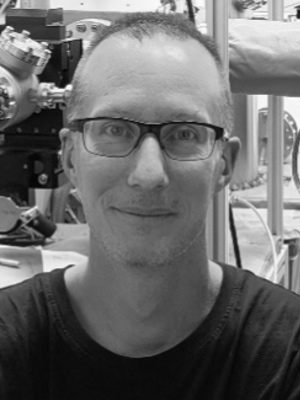 Dr Gwilherm Kerherve, Research Facility Manager in the Department of Materials, also received an IOM3 award, the Henry Royce Institute Award for Innovation by a Technical Professional, for his creation and development of KherveFitting, an open-source software platform for X-ray photoelectron spectroscopy (XPS) analysis.
XPS is widely used to study the chemistry of material surfaces, but analysing the resulting data can be challenging and time-consuming. KherveFitting was developed to make this process easier for students and researchers, while providing the tools needed for rigorous analysis.
The software is freely available and has become an international resource, with around 900–1,000 downloads each month from researchers in approximately 60 countries. By making XPS analysis more accessible, KherveFitting supports researchers and students who may otherwise have limited access to specialist software.
Seeing a free, open-source tool adopted that widely has been the most rewarding part of the project, and I am grateful to the Henry Royce Institute and IOM3 for recognising it. Dr Gwilherm Kerherve Research Facility Manager, Department of Materials at Imperial
He said: “I am delighted to receive this award. KherveFitting started as a way to make XPS peak fitting easier for the students and researchers I train, and it is now used in around sixty countries with roughly 900–1,000 downloads a month. Seeing a free, open-source tool adopted that widely has been the most rewarding part of the project, and I am grateful to the Henry Royce Institute and IOM3 for recognising it.”
Article text (excluding photos or graphics) © Imperial College London.
Photos and graphics subject to third party copyright used with permission or © Imperial College London.
Article people, mentions and related links
Sanjana Kakar
Faculty of Engineering
