
Health

In an early-stage trial, sevuparin, which mitigates the processes that lead to severe malaria, was shown to be well tolerated and a dose was established for further testing in children with severe malaria.
Malaria infection, caused by the Plasmodium parasite species, leads to an estimated 610,000 annual global deaths from malaria, some 95 percent (approximately 580,000 deaths) occurring in African children.
Severe malaria is one of the main causes of children being admitted to hospital in sub-Saharan Africa, and outcomes are poor. Current World Health Organization (WHO) recommended treatment for severe malaria involves at least three doses of intravenous artesunate followed by artemisinin-based combination therapy. Whilst this drug combination remains fully effective, seven to eight of every hundred children admitted to hospital with severe malaria die, with most of these deaths occurring on the day of admission. Clinical trials investigating the safety and efficacy of supportive treatments that could fill existing gaps in the treatment of severe malaria, such as this research, could transform treatment outcomes.
It is crucial to generate evidence for a supportive treatment that will save lives, so our study tested the dose and safety of the drug sevuparin on children to treat malaria. Professor Kath Maitland Centre of African Research and Engagement
The mechanisms that underpin severe malaria include adhesion of red blood cells that are infected with Plasmodium falciparum malaria parasites to small blood vessels throughout the body (called sequestration). This results in poor circulation and a build-up of body acids (called lactate acidosis), ultimately leading to multi-organ failure and death. Drugs that can prevent or reverse these processes could therefore improve survival in children admitted to hospital with severe malaria.
Sevuparin, a heparin-like drug developed by Modus Therapeutics (Stockholm, Sweden) has been shown in earlier clinical studies to act on these processes, but first of all the optimal dose and safety of the drug needed to be established in a clinical trial in children.
Researchers found that, when partnered with intravenous artesunate, sevuparin was safe and well tolerated in an early-stage trial, published in Nature Communications. The trial also established the optimal dose to be taken forward in future trials testing its efficacy in multiples sites in Africa.
Professor Kath Maitland, Director of the Centre of African Research and Engagement, Imperial College London, said: “In Sub-Saharan Africa, malaria deaths are of a devastating scale with most children dying on the day of admission to hospital. We face an unacceptable mortality of children with severe malaria. It is crucial to generate evidence for a supportive treatment that will save lives, so our study tested the dose and safety of the drug sevuparin on children to treat malaria.”
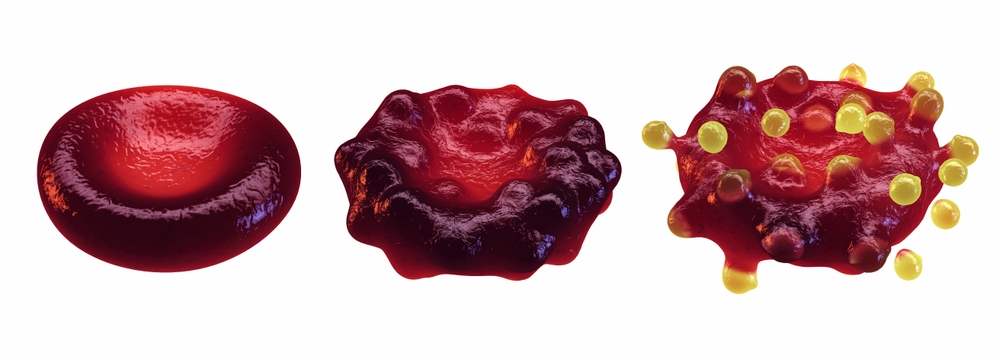
The parasite Plasmodium falciparum is often associated with the most severe cases of malaria. P. falciparum is the deadliest malaria parasite and the most prevalent on the African continent. The parasite infects red blood cells, which then cluster together with uninfected red blood cells and causes clumping together of red blood cells, blocking the flow and sequestering in vital organs. It is this mechanism that makes P. falciparum malaria so deadly.
Preventing or reversing the binding of the parasite to the cells and causing sequestration would treat the infection. Previous studies of supportive treatments have been very few, showed no benefit or were stopped early for harm.
While vaccines show promise for uncomplicated malaria, their effect on severe malaria and mortality is not yet fully understood, so new supportive treatments remain needed.
Sevuparin, the drug tested in this trial, is designed to target the processes behind severe malaria. In this trial, coagulation-related effects were limited to laboratory changes without clinical bleeding. The study investigated if sevuparin would improve blood flow by reversing existing and preventing further parasite sequestration and associated poor outcomes in African children hospitalised with severe malaria.
The trial tested the safety of sevuparin among 23 children in Kenya and Zambia. Among the children, with a median age of 35 months, 10 had an unrousable coma. Through the trial, the children received escalating doses via infusion, to identify the maximum tolerated dose of sevuparin for children in hospital with severe malaria. This Phase Ib Study shows that sevuparin was safe and well tolerated given alongside artesunate, and confirms a paediatric dose. The research team is now looking to test its efficacy in children in other countries.
Dr Elizabeth George, Principal Research Fellow at the UCL Innovative Clinical Trials Unit added “By using an efficient trial design called the “continual reassessment method” we were able to work out the best of five different doses to use in future in just 20 children. This shows the benefits of using innovative trial designs at all stages of clinical research.”
Professor Kath Maitland added: “Clinical trials investigating the safety and efficacy of supportive treatments could fill existing gaps in the severe malaria treatment algorithm and substantially improve outcomes.”
Dr Mike Chaponda, National Health Research & Training Institute Zambia and study author, said: “In Northern Zambia where this trial was conducted, we see many children admitted to hospital with severe malaria and mortality remains high. There has been no true breakthrough in supportive treatments which directly tackle the underlying disease process. We are very encouraged by the early results of this trial as we see the possibility of improving outcomes in children with severe malaria.”
This study was funded by Wellcome. ModusTherapeutics donated sevuparin for its investigation in the trial.
‘Sevuparin in children with severe malaria: A phase I safety and dose finding trial’, published in Nature Communications
Article text (excluding photos or graphics) © Imperial College London.
Photos and graphics subject to third party copyright used with permission or © Imperial College London.
Centres
