Can our sleep reveal clues to brain health and longevity? Q&A with Dr Abidemi Otaiku
by Eliza Kania
/prod01/channel_4/imperial-news/media/news-images/3000X2000-main-article-images/Abidemi_Sleep.jpg)
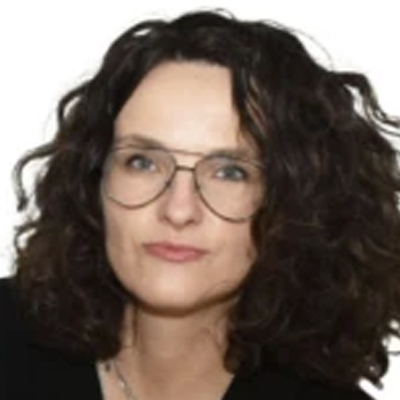
“My research suggests that certain types of brainwaves and dreams may reflect or influence the health of our brains, the speed at which our bodies age, and how long we will live,” said Dr Abidemi Otaiku (Department of Brain Sciences and UK Dementia Research Institute Care Research & Technology, and Guarantors of Brain 2025 Fellow).
Dr Otaiku has recently been named a touchNEUROLOGY Future Leader 2026. This title is awarded by the scientific community to researchers shaping the future of neurology.
We speak to Dr Otaiku about nightmares as early markers of dementia and Parkinson's disease, his work developing an EEG-based screening tool, and how philosophy shapes his approach to patient care.
If you were to briefly describe your research to non-expert audiences, what would you say?
My research looks at what happens in our brains during sleep, and whether it can influence our long-term health. In particular, I focus on electrical activity in the sleeping brain (brainwaves), which scientists can measure directly, and dream characteristics such as nightmares which people can report when they wake up. My research suggests that certain types of brainwaves and dreams may reflect or influence the health of our brains, the speed at which our bodies age, and how long we will live.
You've mentioned that researchers are starting to explore whether changes in dream recall itself might predict the onset of neurological disease. Could you tell us more about this?
About 25 years ago, a study in Sweden investigated whether a wide range of self-reported experiences – including difficulty remembering names, depressive symptoms and sleep characteristics – could predict which older adults in the general population would eventually develop dementia. Unexpectedly, the frequency of remembered dreams emerged as one of the strongest predictors of future Alzheimer's disease and other types of dementia. People who recalled fewer dreams had a higher risk of developing dementia over the following nine years.
Last year, a study carried out in Spain reported the same pattern: lower dream recall was associated with a greater risk of dementia during the next decade and was also linked to genetic variants known to increase the risk of Alzheimer's disease.
I think asking about dreaming, particularly nightmare frequency, could eventually become part of a broader early screening approach alongside other established early symptoms, such as loss of smell, depression and apathy. Dr Abidemi Otaiku Department of Brain Sciences | Imperial College London
Although these findings are intriguing, both studies involved relatively small samples. Larger studies in more diverse populations will therefore be needed to confirm whether reduced dream recall is indeed a reliable early marker of neurodegenerative disease.
Your articles for The Conversation [1, 2, 3] on nightmares as early predictors of dementia and Parkinson’s disease were read by over 2 million people. What specifically about these findings resonated most with readers?
I think the finding that nightmares may predict serious brain diseases resonated with readers primarily because almost everyone has experienced nightmares themselves. Linking nightmares – a seemingly non-physical mental experience – to serious neurological conditions such as dementia and Parkinson's disease is both counterintuitive and somewhat eerie. I think that combination naturally sparked curiosity and captured people's attention.
How early in the disease course might these changes emerge, and do you see potential for this to become a practical screening tool in primary care?
These changes may emerge years – or possibly even decades – before the core symptoms of neurodegenerative diseases appear, such as memory loss in dementia or tremor and stiffness in Parkinson's disease.
I think asking about dreaming, particularly nightmare frequency, could eventually become part of a broader early screening approach alongside other established early symptoms, such as loss of smell, depression and apathy. Used together, these markers could help identify people at increased risk while there is still a window of opportunity for early interventions.
Your previous research showed that the link between nightmares and dementia risk was much stronger in men than in women. What's your leading hypothesis for why this difference exists?
In my study, I found that men who experienced weekly nightmares were around four times as likely to develop dementia compared to men who reported no bad dreams. In women, by contrast, the increase in risk was only around 41%.
It remains unclear why this sex difference should exist. One possibility is that the nightmares linked to dementia are specifically those that first develop later in life - and some studies suggest that men may be more predisposed to experiencing this type of late-onset nightmare. Though this hypothesis is speculative, and further research is needed to better understand the biological mechanisms that may underlie these differences.
Most prior research on disturbing dreams and brain health was conducted in predominantly White, North American populations. Do you feel we can already speak of a universal link across populations, or is further replication with harmonised methods still needed?
While some studies, including several of my own, have included participants from outside North America, it is true that most research has been conducted in the US. Replication in more diverse populations is therefore essential.
However, recent studies have begun to do exactly this. Building on my earlier work connecting nightmares to dementia in three separate US cohorts, a new study was published within the past few months which used a dataset spanning six countries from three continents, including Asia, South America and Europe. In this international study, nightmares were again found to be a significant predictor of future dementia. Strikingly, the same sex-specific pattern that I found in my own study - where nightmares were more strongly associated with dementia in men than in women - was also replicated.
You've written that neurology lets you bridge philosophical questions – consciousness, free will – with clinical medicine. Has working with patients changed how you think about those philosophical questions, or does philosophy shape how you approach patients?
I would say both.
Seeing patients with disorders such as sleepwalking, where people perform complex behaviours without conscious awareness, and functional movement disorders, where people remain conscious yet lose voluntary control over their movements, has deepened my understanding of the neurological basis of free will - or, more specifically, what many neuroscientists call our “sense of agency”. These conditions provide striking real-world examples that conscious awareness and voluntary control, which I had previously assumed went hand in hand, can in fact come apart.
In my study, I found that men who experienced weekly nightmares were around four times as likely to develop dementia compared to men who reported no bad dreams. Dr Abidemi Otaiku Department of Brain Sciences | Imperial College London
At the same time, my interest in the philosophy of mind makes me especially curious about the phenomenology of patients' subjective mental experiences. For example, when I see patients with hallucinations, particularly those that occur during the transition into or out of sleep (i.e., hypnagogic and hypnopompic hallucinations), I try to ask them exactly what they see or hear rather than simply recording that hallucinations occurred. This has allowed me to notice recurring patterns across patients and makes me curious as to what in the brain could underlie such similar perceptual experiences across different people. That curiosity often develops directly into new research questions that I can investigate scientifically.
As an NHS Clinical Entrepreneur, what project or tool are you currently developing, and how does it draw on your research into sleep?
I am currently developing an electroencephalography (EEG)-based tool that uses brainwave activity during sleep to predict who in the general population is likely to develop dementia, and how soon.
This project was motivated by my previous research showing that sleep EEG can predict future Parkinson's disease many years before diagnosis. My work thus far suggests that sleep EEG could be highly informative for predicting dementia, too.
Ultimately, I hope this technology could become a practical screening tool within the NHS, helping identify people at increased risk years or decades before they develop symptoms.
Given that science communication played a real part in your own decision to pursue neurology, what advice would you give early-career researchers who want to reach a wider audience but worry about oversimplifying complex findings?
Presenting scientific findings accurately while making them accessible to non-specialists is undeniably challenging. But I don't think anyone is better placed to do this than the researchers who conducted the work themselves.
Therefore, I don't think we should let the fear of oversimplifying prevent us from communicating our research. Instead, we should embrace the challenge of explaining our findings in a way that is scientifically accurate, engaging and easy to understand. In my experience, this process can be genuinely rewarding - and also very fun.
What are your research plans going forward?
Most of my research to date has focused on establishing that sleep and dreams may help predict our long-term health. I now plan to understand why this may be the case to get a deeper mechanistic understanding. So that will involve me using new tools from functional neuroimaging through to molecular biology.
In parallel, I am using artificial intelligence to develop a novel screening tool that can be used to accurately identify who in the general population is at greatest risk of developing serious age-related diseases, such as dementia, years or even decades before symptoms emerge. Ultimately, I hope this work will help us detect and prevent diseases like dementia far earlier than we currently can.
References
[1 ] A. Otaiku, Parkinson's disease: bad dreams could be an early warning sign – new study. The Conversation.
[2] A. Otaiku, Nightmares are a good predictor of future dementia – new study. The Conversation.
[3] A. Otaiku, Bad dreams in children linked to a higher risk of dementia and Parkinson's disease in adulthood – new study. The Conversation.
Article text (excluding photos or graphics) © Imperial College London.
Photos and graphics subject to third party copyright used with permission or © Imperial College London.
Article people, mentions and related links
Eliza Kania
Faculty of Medicine