Study suggests conventional cystic fibrosis tests may miss lung disease progression
/prod01/channel_4/imperial-news/media/news-images/3000X2000-main-article-images/110226_DG_ICL_NHLI_004-(1).jpg)
Researchers at Imperial have shown that advanced breathing tests and oxygen-enhanced MRI can detect subtle changes in lung health that are not captured by conventional monitoring methods, highlighting the need for more sensitive tools to assess cystic fibrosis lung disease in the era of highly effective modulator therapies.
The study, published in Thorax and led by researchers at Imperial's National Heart and Lung Institute (NHLI), assessed two techniques: oxygen-enhanced MRI and multiple breath washout with Short extension (MBWShX), an enhanced version of a lung function test developed by NHLI researcher Dr Christopher Short. The researchers found that both methods were able to detect changes in lung disease over an 18-month period that were not identified using conventional measures including spirometry and standard lung clearance index.
Cystic fibrosis is a genetic condition that causes thick, sticky mucus to build up in the lungs, leading to recurrent infections and progressive lung damage. In recent years, highly effective CFTR modulator therapies have transformed outcomes for many people with cystic fibrosis, improving lung health, reducing hospital admissions and enabling many patients to live longer, healthier lives. However, as disease becomes milder and progresses more slowly, assessing lung health using traditional monitoring tools becomes increasingly challenging.
The study followed 46 people with cystic fibrosis aged between six and 55 years. Participants underwent regular assessments using conventional lung function tests alongside oxygen-enhanced MRI and MBWShX. While standard measures remained largely stable throughout the study, the more sensitive techniques identified deterioration in lung function and ventilation over time.
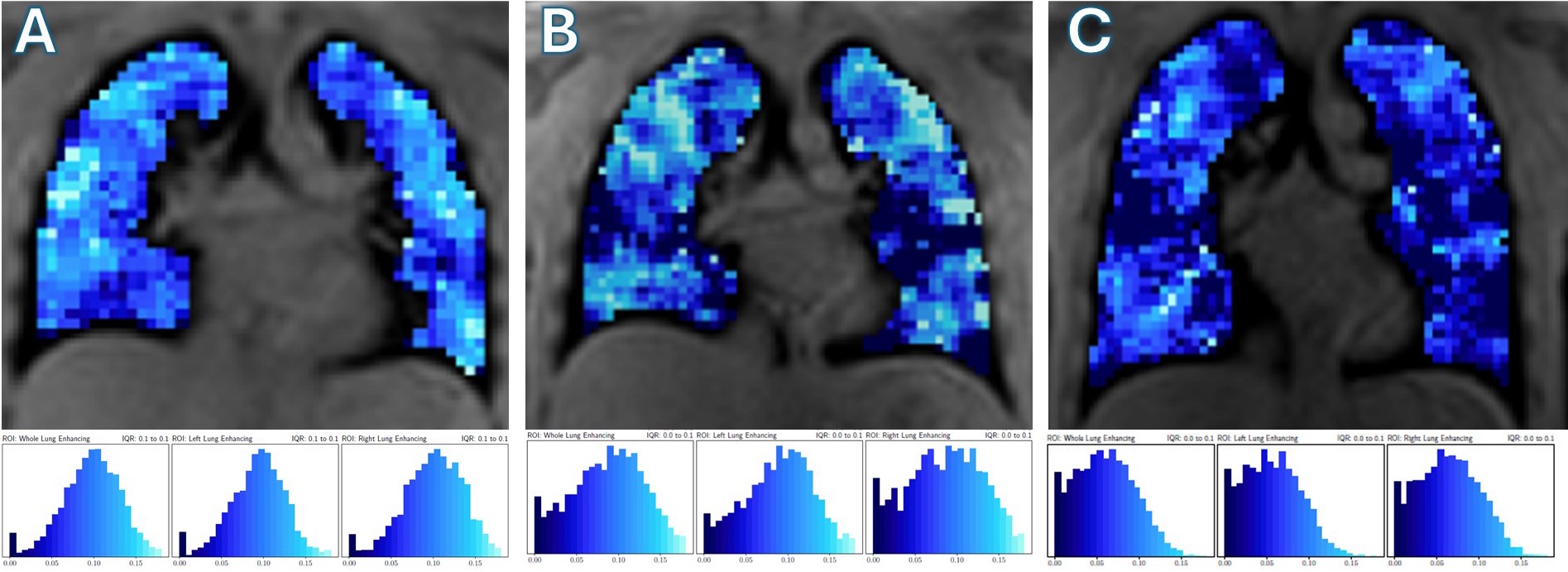
MBWShX builds on the established multiple breath washout test by measuring how well oxygen reaches different parts of the lung, particularly small or poorly ventilated regions that may be missed by routine tests. Oxygen-enhanced MRI provides complementary information by showing where ventilation abnormalities occur within the lungs, providing a detailed picture of regional lung function. Unlike hyperpolarised gas MRI, the technique uses medical oxygen and can be performed on standard MRI scanners already available in many hospitals.
Dr Christopher Short, Lead author and Honorary Research Associate at Imperial’s NHLI said, “CFTR modulators have had a transformative impact on the lives of people with cystic fibrosis. As patients become healthier, it becomes increasingly important that our monitoring tools are sensitive enough to detect subtle changes in lung disease. Our findings suggest that oxygen-enhanced MRI and MBWShX may provide additional information beyond conventional tests and could help us better understand what is happening in the lungs over time.”
The researchers found that changes detected by oxygen-enhanced MRI were greater than the normal variation observed in healthy volunteers, suggesting the techniques were identifying genuine changes in lung health rather than measurement variability. Greater progression was also associated with chronic Pseudomonas aeruginosa infection and pulmonary exacerbations, both recognised markers of poorer outcomes in cystic fibrosis.
The team now plans to validate the techniques in larger multicentre studies. They hope that, in future, oxygen-enhanced MRI and MBWShX could complement existing approaches to monitoring cystic fibrosis lung disease and help clinicians detect subtle changes in lung health more sensitively.
The study was funded by the Cystic Fibrosis Foundation, Cystic Fibrosis Trust and Cystic Fibrosis Ireland, and supported by the NIHR Imperial Biomedical Research Centre, a translational research partnership between Imperial College London and Imperial College Healthcare NHS Trust, and the Royal Brompton Clinical Research Facility.
Article text (excluding photos or graphics) © Imperial College London.
Photos and graphics subject to third party copyright used with permission or © Imperial College London.
Article people, mentions and related links
Emily Medcalf
Faculty of Medicine
