Can you predict the UK’s next wheat disease outbreak?
by Emily Govan
/prod01/channel_4/imperial-news/media/news-images/3000X2000-main-article-images/SPHERE-PPL-contest-3.jpg)
A new AI forecasting competition aims to improve prediction of major wheat diseases and support agricultural decision-making.
Using AI to tackle agricultural challenges
Researchers from the Department of Life Sciences, Dr Will Pearse and Dr Alex Rabeau, have launched a new forecasting competition that aims to improve prediction of two of the most damaging diseases affecting UK wheat crops.
The SPHERE-PPL Forecasting Contest, developed in collaboration with independent agricultural and environmental consultancy ADAS and the Department for Environment, Food and Rural Affairs (DEFRA), challenges participants to build models capable of forecasting the incidence and severity of Septoria tritici blotch and yellow rust across UK regions during the 2026 growing season.SPHERE-PPL is an initiative established to advance the application of AI forecasting to environmental and health challenges. A key part of the programme is the development of open forecasting contests that bring together researchers and data scientists to tackle real-world problems using data-driven approaches.
Why forecasting wheat disease matters
"As food security becomes an increasingly important issue, models that help us better predict crop threats have the potential to deliver huge utility and real-world impact." Alex Rabeau
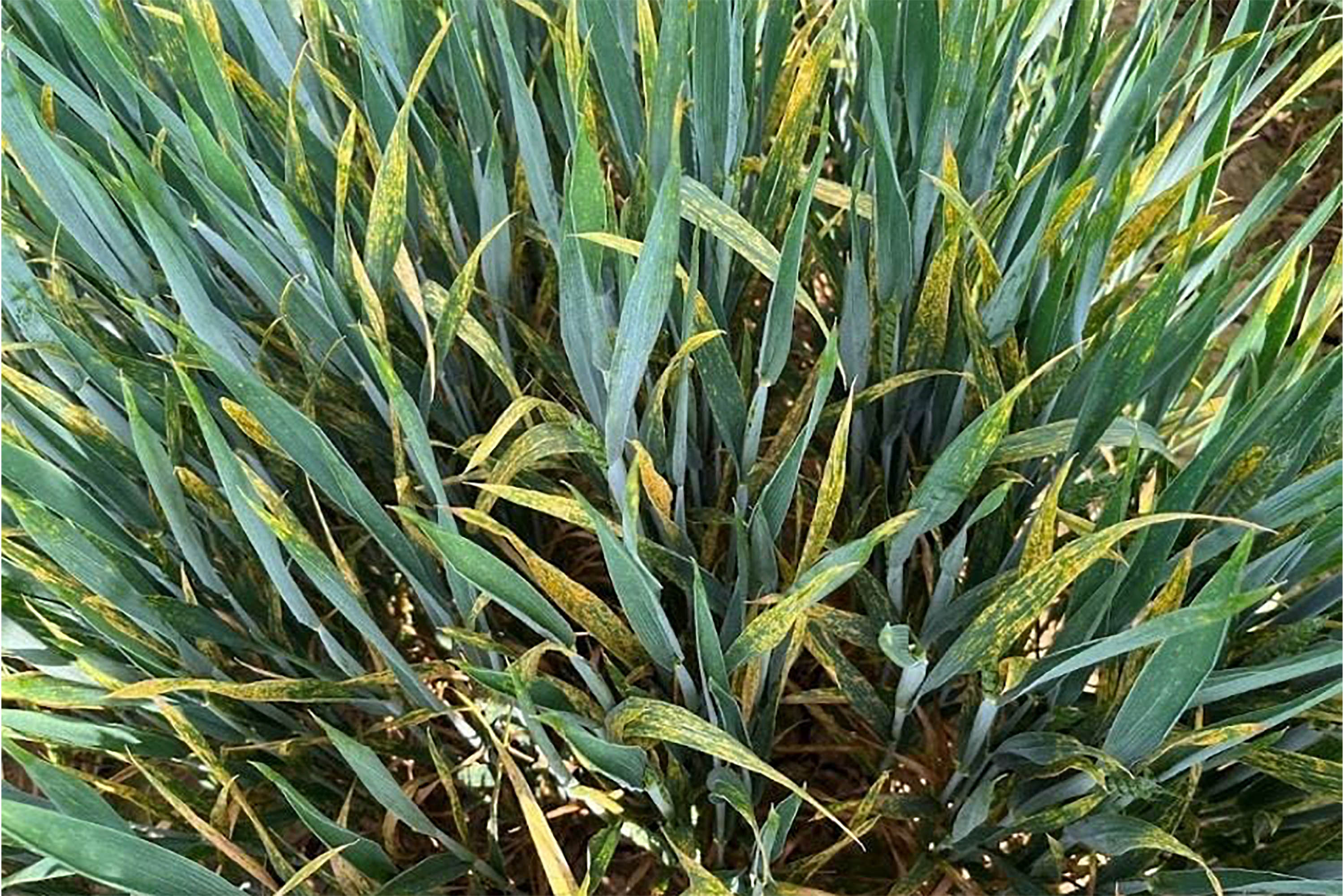
Septoria tritici blotch, caused by Zymoseptoria tritici, and yellow rust, caused by Puccinia striiformis, are among the most significant diseases affecting UK wheat production.
Both diseases reduce green leaf area, limiting photosynthesis and ultimately lowering crop yield and quality. In severe outbreaks, yield losses can reach 50% in susceptible untreated crops.
Together, these diseases are estimated to cost the agricultural sector more than £250 million each year through crop losses and fungicide expenditure.
Improving forecasts could help farmers, agronomists and policymakers anticipate outbreaks earlier and make more informed, pre-emptive management decisions before significant damage occurs.
Harnessing 50 years of crop disease data
At the heart of the competition is the Pest and Disease Survey dataset provided by ADAS and DEFRA.
Spanning more than 50 years of UK crop pest and disease observations, the dataset represents a uniquely rich resource for forecasting research. Participants will use the data alongside additional environmental and agricultural datasets, including COPERNICUS climate data, DEFRA pesticide usage data and LUH2 land-use information. Competitors are also encouraged to incorporate external datasets to improve predictive performance.
Despite advances in crop protection and disease monitoring, accurate forecasting remains a major scientific challenge. Disease development is shaped by complex interactions between weather, agronomy, pathogen biology and regional environmental conditions, making robust prediction increasingly important in the context of climate variability and evolving fungicide resistance.
The organisers hope participants will use these resources to develop more accurate and robust forecasting approaches that advance understanding of crop disease dynamics and improve prediction of future outbreaks.
An open challenge for researchers and data scientists
The contest is open to anyone with a background in data science, statistics or machine learning and an interest in agricultural applications.
The Imperial branch of the SPHERE-PPL project has led the organisation of the contest, including stakeholder engagement, development of contest materials and preparation for launch. ADAS and DEFRA provided the Pest and Disease Survey dataset, while all partners contributed to the design of the competition.
 Participants will develop reproducible forecasting models and compete for awards recognising the most accurate predictions of Septoria tritici blotch and yellow rust, as well as the most insightful accompanying report. Winning teams will be invited to present their work at the next SPHERE-PPL Annual Meeting, with travel costs covered.
Ultimately, organisers hope the competition will identify forecasting approaches capable of delivering more accurate and robust predictions of wheat disease across UK regions, helping to support agricultural decision-making and food security.
Alex Rabeau said: ‘We’re at an important moment where the growing availability of comprehensive, long-term datasets is intersecting with rapid advances in AI and machine learning. Together, this creates new opportunities to tackle longstanding environmental and agricultural challenges. As food security becomes an increasingly important issue, models that help us better predict crop threats have the potential to deliver huge utility and real-world impact.’
The SPHERE-PPL Forecasting Contest launches on 6 June 2026. Full competition details, datasets and submission instructions are available via the SPHERE-PPL repository.
Article text (excluding photos or graphics) © Imperial College London.
Photos and graphics subject to third party copyright used with permission or © Imperial College London.
Article people, mentions and related links
Emily Govan
Faculty of Natural Sciences