Lettuce and tobacco plants engineered to produce muscle protein for meat alternatives
by Emily Govan
/prod01/channel_4/imperial-news/media/news-images/3000X2000-main-article-images/lettuce_Greenhouse-seeds-E.jpg)
Researchers have inserted the gene for myoglobin into plant chloroplasts using a 'gene gun', demonstrating a potential new route to producing ingredients for plant-based meat products.
Myoglobin is a protein abundant in animal muscle that gives meat its characteristic colour and flavour. Researchers from Imperial’s Department of Life Sciences, the Bezos Centre for Sustainable Protein and plant biotechnology startup Kyomei have demonstrated that plants can be used to produce the protein in their chloroplasts, the structures responsible for photosynthesis.
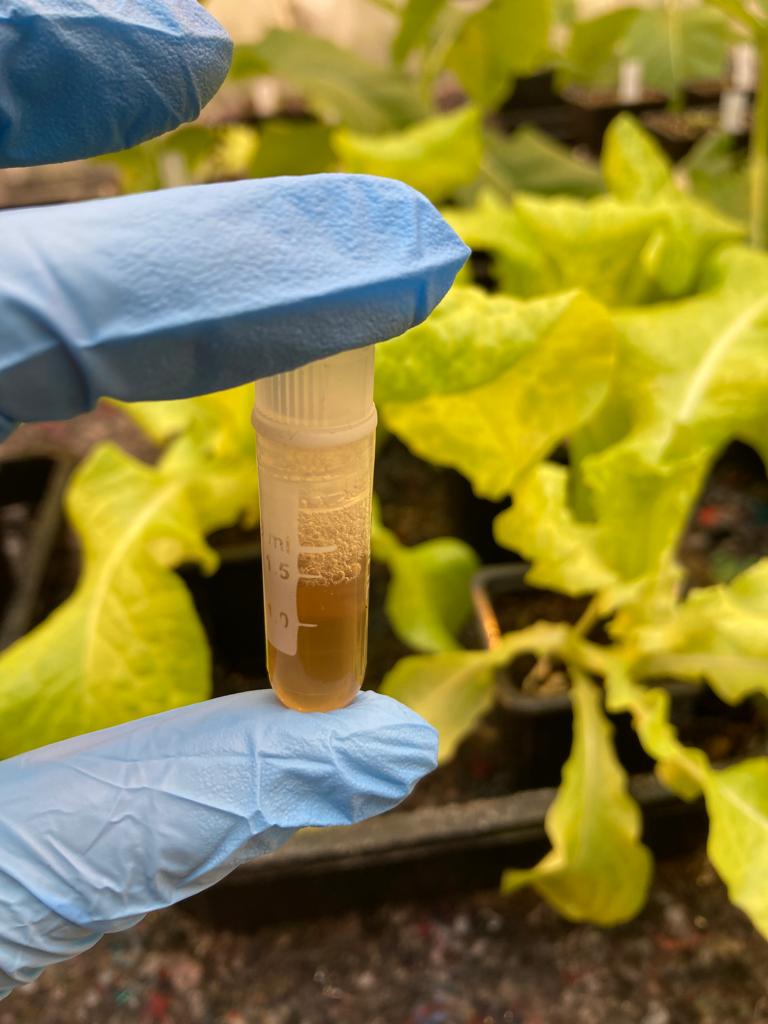
The findings, published in Frontiers in Plant Science, demonstrate the potential for crops to become scalable production platforms for ingredients used in plant-based meat products, potentially reducing the water use and greenhouse gas emissions associated with livestock farming.
Livestock farming requires large areas of land to produce animal feed, uses substantial amounts of freshwater and contributes to greenhouse gas emissions through methane and nitrous oxide. There are also concerns around animal welfare. The global market for meat alternatives is currently worth between €6.7 billion and €8.1 billion per year and is projected to grow by 8.1% to 12.3% annually over the next decade.
One established approach to producing proteins for meat alternatives uses microbial engineering, where genes encoding animal proteins are inserted into bacteria or yeast for production in bioreactors. The new study demonstrates a promising plant-based alternative.
Dr Alexia Groff, whose PhD research in Imperial’s Department of Life Sciences was supported by an EPSRC industry-funded studentship in collaboration with Kyomei, said: ‘Here we show that plants can be engineered to produce the animal protein myoglobin (Mb) in their chloroplasts, the energy factories for photosynthesis. This could provide a more sustainable way to produce an important ingredient for plant-based meat products.’
Engineering plants to produce myoglobin
"Demonstrating stable myoglobin production in plant chloroplasts, including in an edible crop, raises the possibility of using plants as scalable, low-input production platforms alongside microbial fermentation" Professor Rodrigo Ledesma-Amaro Director of the Bezos Centre for Sustainable Protein
Myoglobin is an important component of the heart and skeletal muscle of vertebrates. It is rich in iron, giving meat its metallic and umami flavour, while the oxygen bound to it gives meat its characteristic red colour.
Dr Groff and her colleagues first cloned the genes for pig and cattle myoglobin. They then used a so-called 'gene gun' to deliver copies of the genes into the chloroplasts of tobacco and lettuce seedlings grown in the laboratory. Tests confirmed that some seedlings had integrated the genes into the small circular chloroplast genome. The plants were then grown to adulthood, flowered and set seed, with their offspring inheriting the transgene.
The researchers also engineered the plants by inserting the gene into the nuclear genome for comparison and introduced it into the chloroplast of the unicellular alga Chlamydomonas reinhardtii.
Dr Groff said: ‘Due to their bacterial ancestry and their high number of copies per cell, chloroplasts are generally much better at making large amounts of protein than the cell nucleus. Here, we used tobacco because it is the best model plant for developing this technology, and lettuce because it is an edible crop that could eventually be used for food ingredient production.’
Measurements using liquid chromatography-mass spectrometry showed that chloroplast-engineered tobacco produced approximately 800 mg of myoglobin per kilogram of dry weight, while lettuce produced approximately 810 mg per kilogram of dry weight. This was at least three times higher than plants engineered through the nuclear genome. By comparison, real meat contains between 8.1 and 11.2 mg of myoglobin per gram of dry weight.
The authors noted that despite this, plant cultivation is far more resource efficient than livestock production; consequently, plant-derived Mb could achieve protein yields per hectare that rival, or even potentially exceed those of animal agriculture, while also benefiting from substantially lower water use and greenhouse gas emissions.
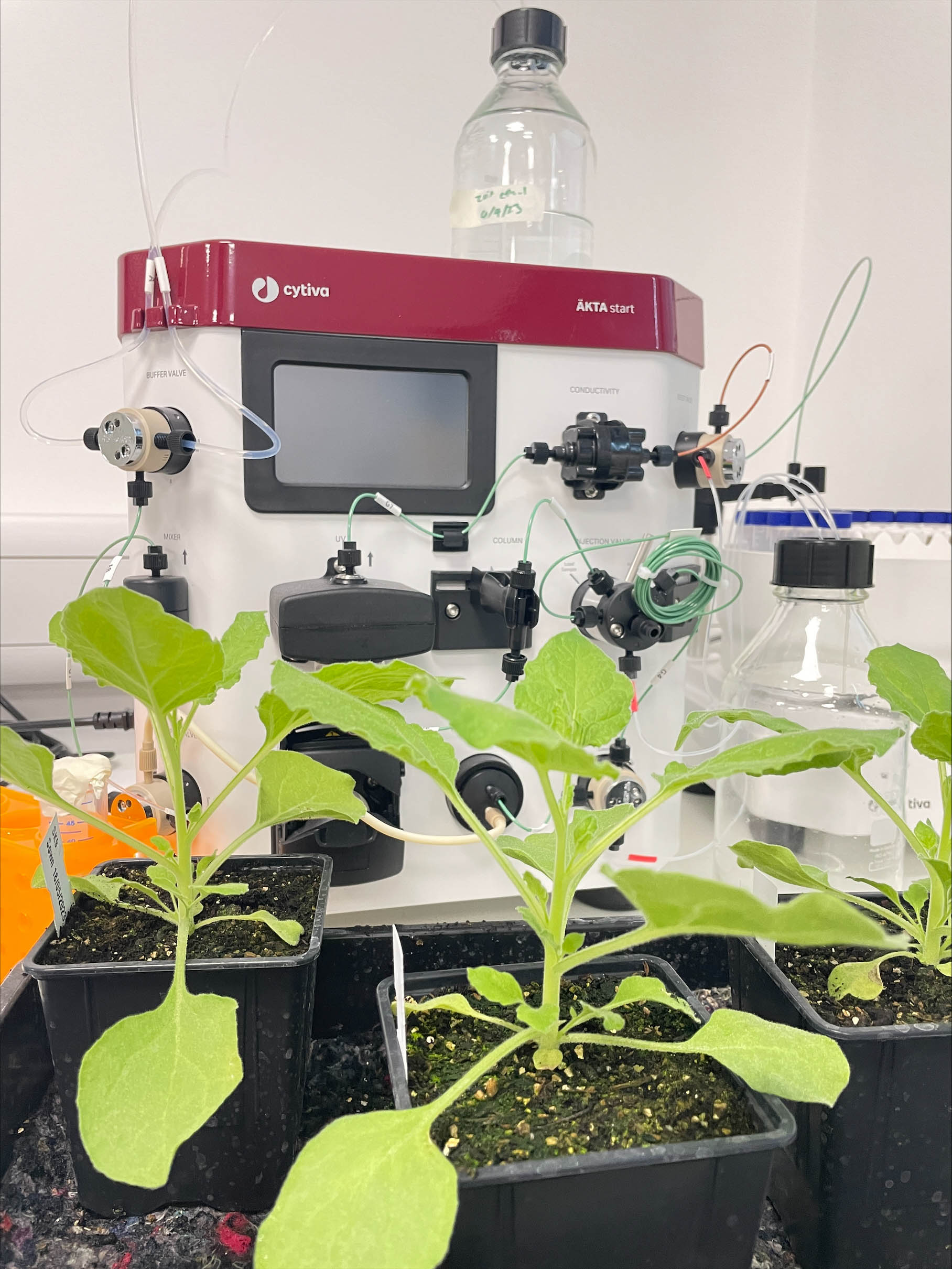
Professor Rodrigo Ledesma-Amaro is Academic Lead in Engineering Biology for Sustainability at Imperial and Director of the Bezos Centre for Sustainable Protein, which supports research, policy engagement and innovation aimed at developing nutritious and tasty foods with a low environmental impact.
He said: 'This an important advance on earlier plant and algal research. Demonstrating stable myoglobin production in plant chloroplasts, including in an edible crop, raises the possibility of using plants as scalable, low-input production platforms alongside microbial fermentation.
This work is a promising proof of concept, and I am looking forward to follow-on work studying functionality, how these ingredients can be integrated into our food system, and how the production technology scales.
In the longer term, this could diversify how and where these ingredients are produced. Its wider potential will depend on improving haem incorporation so myoglobin can deliver the colour, flavour and cooking properties expected in meat alternatives. Further research must confirm food functionality and safety, field performance, processing requirements, and clear economic and environmental benefits at scale.'
Planting a seed for future production
The new findings could provide the foundation for future commercial production of plant-derived myoglobin.
Dr Groff said: ‘The myoglobin could be extracted from leaves and purified using industrial protein purification methods. Since it is identical to animal myoglobin, it could then be added as an ingredient to plant-based meat products to improve their colour, flavour and nutritional value’.
Co-author Dr Kyoko Morimoto, Chief Scientific Officer at Kyomei, said: ‘We hope that edible lettuce, modified to express myoglobin, could also one day serve as a heme-iron-enriched biofortified food, depending on legislative approval’.
The team say further work will be needed to optimise the technology and demonstrate its performance at commercial scale, but the study provides an important proof of principle that plants can be used to produce animal proteins for food applications.
Article text (excluding photos or graphics) © Imperial College London.
Photos and graphics subject to third party copyright used with permission or © Imperial College London.
Article people, mentions and related links
Emily Govan
Faculty of Natural Sciences