Nature-based interventions improve carbon capture in young woodlands
by Emily Govan
/prod01/channel_4/imperial-news/media/news-images/3000X2000-main-article-images/26-05-Drone-Science-Trees-Blocks-CDEFGH-Photo-Credit-Paul-Box.jpg)
Researchers have shown that two nature-based approaches can help newly planted woodlands establish more successfully and increase the amount of carbon they capture during their first years of growth.
Applying crushed basalt rock or beneficial soil microbes to newly planted woodlands can increase early tree growth and carbon storage, according to a new study led by the Department of Life Sciences.
The research, published in Communications Sustainability, found that enhanced rock weathering increased aboveground carbon stored in young native woodland by up to 27% after four years. A second approach, enriching soils with beneficial microorganisms from established forests, improved early tree growth and tended to increase aboveground biomass by around 13% over the same period.
The findings come from the Glandwr Forest Carbon Study, the largest field experiment to investigate how enhanced rock weathering and soil microbiome enrichment influence woodland establishment. The study spans 72 research plots across 11.5 hectares of Welsh hillside and is monitoring more than 25,600 trees in both native broadleaf woodland and commercial conifer plantations.
The first few years after planting are critical for woodland establishment, when young trees are particularly vulnerable to poor soil conditions and environmental stress. The researchers investigated whether improving soil chemistry or introducing beneficial microbial communities could help trees establish more successfully and increase the amount of carbon they capture as they grow.
"Healthy new woodlands are essential for biodiversity, climate mitigation and resilient landscapes. Our findings show that relatively simple, nature-based interventions can improve tree establishment and increase the carbon uptake of new woodlands during their earliest years." Dr Bonnie Waring Senior author
Enhanced rock weathering involves applying crushed basalt, a silicate rock, to the soil. As the rock gradually breaks down, it releases minerals and raises soil pH, which can increase the availability of nutrients such as nitrogen and phosphorus and promote tree growth. The researchers found this treatment significantly increased aboveground carbon storage in native woodland plots during the first four years after planting.
The second intervention involved enriching soils with microorganisms collected from nearby established woodland. These naturally occurring fungi and microbes help trees access nutrients and develop healthy root systems. The greatest benefits were seen during the first year after planting, particularly for oak and spruce. After four years, broadleaf woodland plots receiving microbial enrichment tended to store around 13% more aboveground carbon than untreated plots, although variability across the site meant this difference was not statistically significant.
The researchers also tested whether combining both interventions would produce additional benefits. While no combined effect was observed during the first four years, they say continued monitoring will reveal whether these treatments influence forest development over longer timescales, including carbon stored below ground.
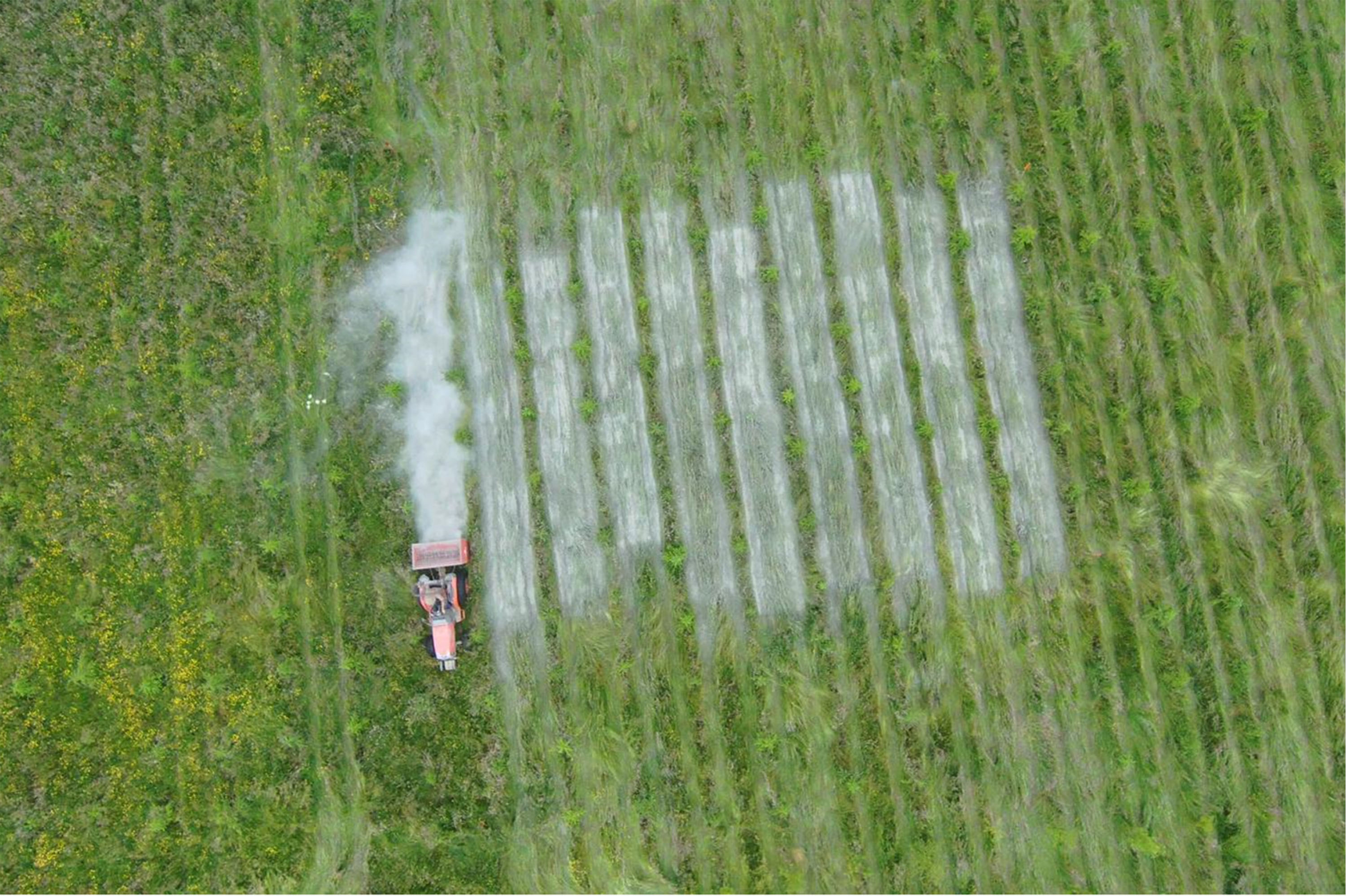
Basalt application in June 2023
Dr Bonnie Waring, senior author, said: ‘Healthy new woodlands are essential for biodiversity, climate mitigation and resilient landscapes. Our findings show that relatively simple, nature-based interventions can improve tree establishment and increase the carbon uptake of new woodlands during their earliest years. Continued monitoring will help us understand how these treatments influence forest development as the woodland matures.’
The project is a collaboration between Imperial, The Carbon Community, the Royal Botanic Gardens, Kew and the University of Sheffield. More than 200 volunteers have also contributed to the research by collecting annual measurements from approximately 6,400 individually monitored trees as part of the project's ‘Big Tree Measure’, creating one of the largest citizen science datasets on woodland establishment.
The findings could help improve the success of future woodland creation projects by increasing tree growth and carbon uptake during the critical establishment phase. The researchers stress that longer-term monitoring is needed to understand how these early gains translate into mature forests and how the interventions affect soil microbial communities and carbon stored below ground. They also hope similar large-scale field trials will be established across a wider range of soils, climates and tree species to build a stronger evidence base for woodland restoration and climate mitigation.
Article text (excluding photos or graphics) © Imperial College London.
Photos and graphics subject to third party copyright used with permission or © Imperial College London.
Article people, mentions and related links
Emily Govan
Faculty of Natural Sciences