New Director sets out vision for Imperial’s Georgina Mace Centre
by Emily Govan
/prod01/channel_4/imperial-news/media/news-images/3000X2000-main-article-images/Topaza-pella.jpg)
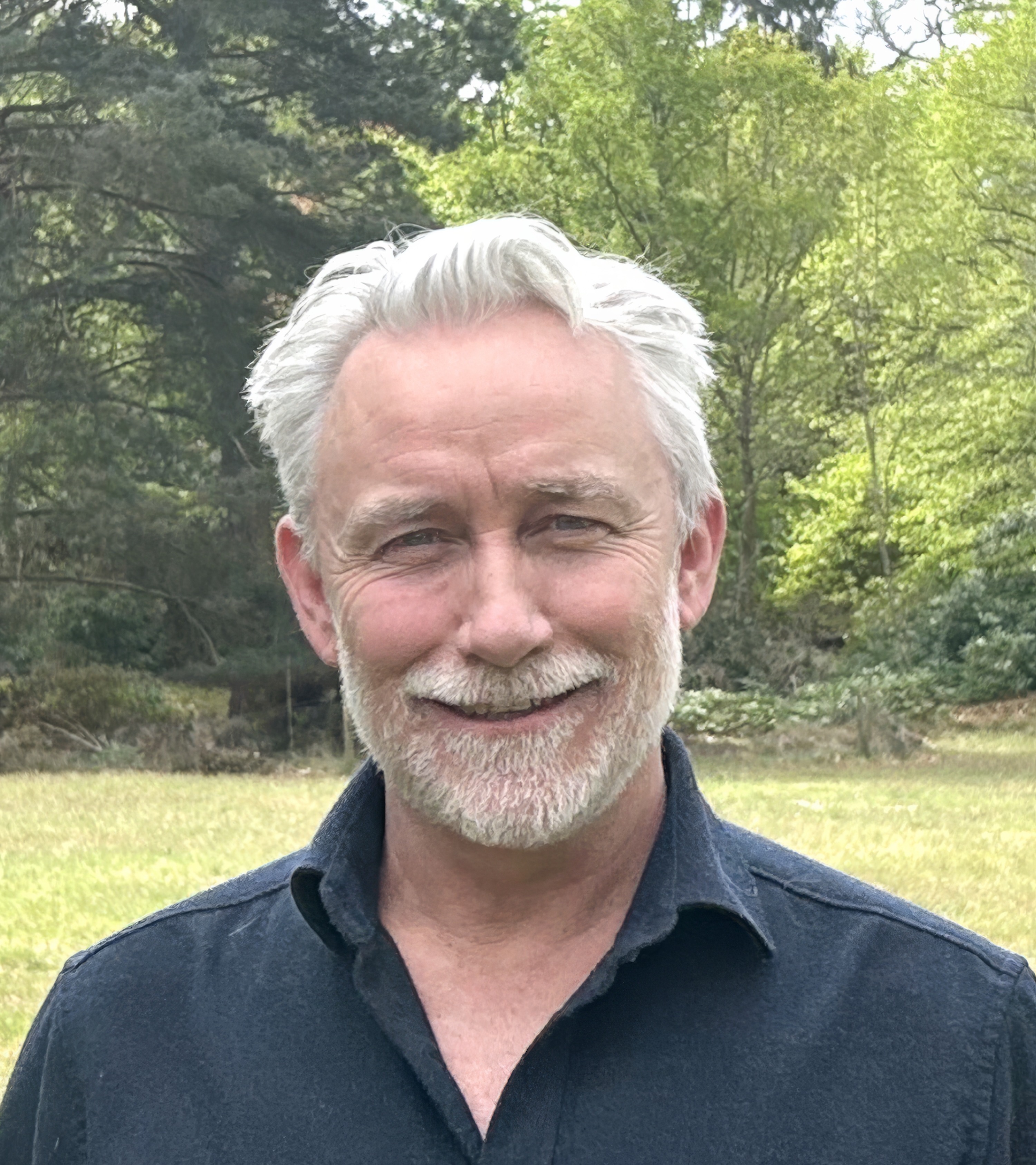
Professor Joe Tobias, the new Director of Imperial’s Georgina Mace Centre for the Living Planet, discusses the Centre’s next chapter, the legacy of Georgina Mace, and how science and emerging technologies can help tackle the biodiversity and climate crises.
 Joe, what attracted you to becoming the Georgina Mace Centre for the Living Planet's new Director?
Like so many people who knew her, I have huge respect for Georgina Mace and the positive impact of her work. Georgina showed that rigorous science, communicated clearly, could change how the world values and defends nature. She built the tools and frameworks that are still the main architecture for environmental policy, allowing governments and economies to take action on biodiversity. The chance to lead a Centre that carries her name, and to help take her mission to its next stage, was impossible to turn down.
There is no doubting the value of her mission, or its urgency. On one hand, the environmental challenges facing humanity are growing more severe, and the need for action has never been more pressing. On the other, there is real excitement about powerful new technologies that can help us meet those challenges. Imperial is exceptionally well placed to turn that potential into progress – to catalyse and lead the collaborative research needed to develop the right solutions and, just as importantly, to get them implemented, at home and internationally.
Professor Vincent Savolainen and Professor Mat Fisher have led the Georgina Mace Centre superbly over the past five years and leave it on a strong footing, so this feels like a wonderful opportunity to build on solid foundations.
What excites you most about the opportunity to lead the Centre at this stage, and what is your vision for the coming years?
What excites me is that we are positioned at a rare intersection – Imperial is a hotbed of world-class biodiversity science, renowned for excellence in engineering, mathematics and artificial intelligence, right next door to London's great natural history institutions, including the Zoological Society of London, Natural History Museum and the Royal Botanical Gardens, Kew. Very few places can offer these strengths in combination.
My vision is to capitalise on those strengths and refocus the Centre on the full breadth of Georgina's ambition. The Centre should be a focal point – a place that brings researchers and institutions together to advance biodiversity and climate science in ways that shape policy and benefit society. In practice, that means strengthening collaborative research networks across London and beyond, with a core mission of developing the next generation of tools and innovations needed to tackle the climate and biodiversity crises together.
What can you bring to this challenge?
I bring a deep commitment to building a nature-positive and sustainable planet, and some hard-won perspective on what it takes to get there. I spent ten years outside academia – working for environmental NGOs and as a biodiversity consultant for multinational corporations – so I understand the wider landscape in which the science and technology has to land, including policy pressures and commercial realities. My own research focuses on building the bioinformatic tools to understand, monitor and predict how biodiversity loss affects ecosystems, so I'm energised by the challenge of refining these approaches and putting them to work on real-world problems.
Given the importance of building partnerships, the main thing I hope to bring is the ability to connect people. My role as Director is to help create the conditions in which brilliant researchers, across Imperial and far beyond it, can do their best work together, and to make sure that their work reaches the people and decisions it needs to influence.
What do you see as the biggest challenges facing our living planet, and how can research help address them?
The most important thing to understand is that the two great crises of our time – climate breakdown and the collapse of biodiversity – are not separate problems. They are one deeply interlinked problem, each accelerating the other, and we cannot hope to solve either in isolation. For too long they have been studied, funded and governed in separate silos, and that separation has held us back.
Research helps in two ways. First, it gives us clarity: the rigorous evidence to see how these systems actually interact, and to cut through the noise to what really matters. Second, it gives us the practical tools, metrics and technologies that turn understanding into action – better ways to monitor ecosystems, to predict how they will respond, and to guide the decisions of governments, businesses and society at large. The challenge is enormous, but it is fundamentally solvable, so long as research attention can be focused on the right targets.
Georgina's era gave us the means to measure the loss of nature with real precision. She built the quantitative tools that made that evidence credible: the IUCN Red List criteria, the Living Planet Index, the frameworks connecting biodiversity to human wellbeing. I want this next phase to be about building the tools to reverse the process – combining global data, monitoring technologies and predictive modelling to understand not just what is being lost, but how to restore it, and how to make that restoration affordable and accountable. I want the Centre to be where biodiversity science meets the technology to act on it.
How do you hope the Centre will work with researchers, policymakers, communities, and partners to create positive change?
No single discipline, and no single institution, can address a challenge on this scale – so building partnerships is the key. Within Imperial, I want the Centre to be a hub that connects biodiversity science with engineering, computing, medicine, public health and economics. Beyond Imperial, we have a real opportunity to formalise closer partnerships with the Natural History Museum, Kew, the Zoological Society of London and others, so that our analytical and technological strengths complement their collections, monitoring and expertise. Running through all of it must be a commitment that our science reaches the people who make decisions – that it feeds directly into policy and practice, in the tradition Georgina set. Positive change happens when rigorous evidence feeds into the mechanisms that guide political decisions and corporate governance.
What gives you hope for the future of our planet?
There is plenty of room for hope. Nature is astonishingly resilient when we give it the chance to recover – so often we see ecosystems rebounding in ways that outpace our expectations, if we simply relieve the pressure. What gives me hope on top of that is how fast relevant technologies are advancing: the tools now becoming available, from robotics and AI-powered biodiversity monitoring to global-scale ecosystem data, would have seemed like science fiction only a decade ago, and they are transforming what's possible.
Ultimately, the main source of hope is people – the extraordinary energy and dedication of the younger researchers coming into this field, who refuse to accept that decline is inevitable. Georgina believed that extinction and ecological collapse are not our unavoidable fate, but a choice – and that with the right knowledge and the right tools, we can choose differently. I share that conviction, and building the evidence base and the technological toolkit needed to guide and implement those choices is exactly what this Centre is for.
Article text (excluding photos or graphics) © Imperial College London.
Photos and graphics subject to third party copyright used with permission or © Imperial College London.
Article people, mentions and related links
Emily Govan
Faculty of Natural Sciences