New study finds birds in warmer climates more vulnerable to forest loss
by Emily Govan
/prod01/channel_4/imperial-news/media/news-images/3000X2000-main-article-images/Green-throated-Carib_panting_Virgin-Islands-NP_StJohn_USVI.JPG)
A global study of more than 2,200 bird species finds that populations living closer to their upper thermal limits are more vulnerable to forest loss, highlighting the importance of considering climate when protecting biodiversity.
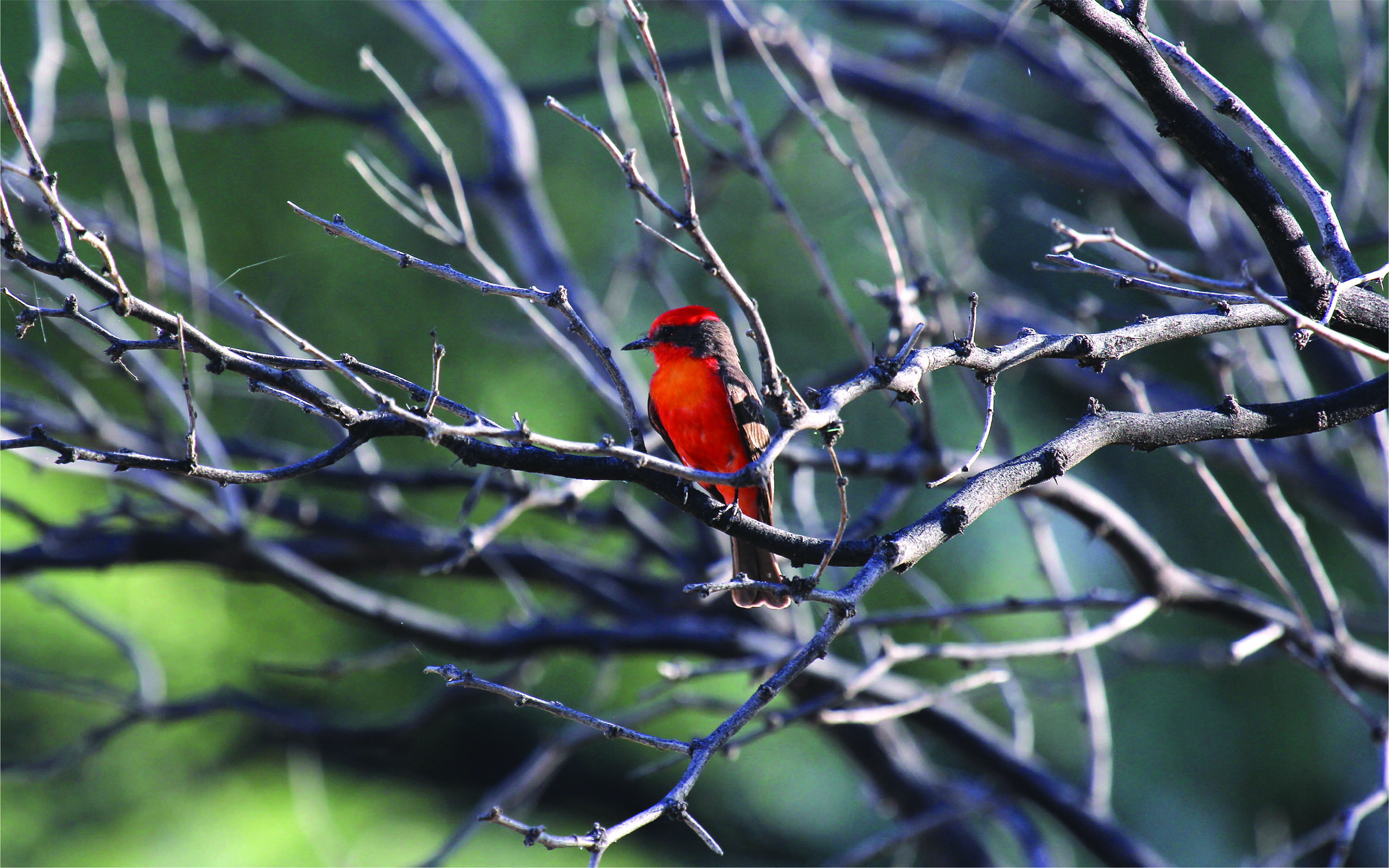
Forests provide birds with more than a place to live, they can also offer a vital refuge from rising temperatures, according to new research from Department of Life Sciences researchers.
"As the climate warms, bird responses to forest loss may continue to change, with populations becoming increasingly reliant on forests for their cooling effects." Natasha Granville PhD student
The study, published today in Nature Ecology and Evolution , analysed data from 2,262 bird species across 7,326 sites worldwide to investigate why birds respond differently to changes in forest cover. The researchers found that populations living in warmer environments tend to be more negatively affected by forest loss. This is because clearing forests can make local conditions hotter, bringing birds closer to the upper temperatures they can tolerate.
Lead author, PhD student Natasha Granville, said: ‘Our findings help explain why not all birds respond to forest loss in the same way. Populations living in warmer environments, closer to their species' upper thermal limits, are particularly vulnerable because forest loss makes local climates even hotter. This highlights how even populations of the same species can respond differently.
As the climate warms, bird responses to forest loss may continue to change, with populations becoming increasingly reliant on forests for their cooling effects.’
A species with different responses
One example is the red-crowned tanager (Habia rubica), a species found across much of Central and South America. In northern parts of its range, the red-crowned tanager is considered an indicator of forest health. However, in the southern parts of its range, it can commonly be found in very small forest fragments and degraded forests. The researchers say this provides a clear example of how populations of the same species can respond differently to habitat loss depending on the climate in which they live.
Populations in tropical regions also tend to live closer to their species' upper thermal tolerance limits, while populations in temperate regions tend to be further from these limits. This may help explain the well-documented pattern of tropical bird populations being more vulnerable to deforestation than those in temperate regions.
Forest loss can make environments hotter
The researchers used mechanistic microclimate models to investigate how forest cover affects local temperatures. They found that, on average, highly deforested locations were 4°C hotter than highly forested locations.
Forests can therefore act as a thermal buffer, helping to protect species from high temperatures. When this cover is removed, the resulting increase in local temperature can be particularly harmful to populations already living close to their upper thermal limits.
Professor Cris Banks-Leite said: ‘Deforestation is the main driver of biodiversity loss, but we can no longer evaluate deforestation in a vacuum. Forests don’t just provide a home for these species, they are also vital thermal refuges. When we clear them in warm regions, we aren't just taking away trees, we are creating an environmental furnace that pushes species beyond what their bodies can tolerate. To protect global biodiversity, conservation models must account for how climate change and land clearing interact.’
Implications for a warming world
The findings suggest that climate change could alter how bird populations respond to forest loss in the future. As temperatures rise, populations are likely to move closer to their upper thermal limits. This means that a population's previous response to deforestation may not accurately predict how it responds to forest loss under a warmer climate.
The researchers suggest that increasing temperatures could make deforestation an even greater risk for populations already living close to their upper thermal limits, potentially increasing their risk of local extinction.
Considering how close populations are to their species’ upper thermal limits could help identify areas where birds are most vulnerable to deforestation and where protecting and restoring forests could deliver the greatest benefits for bird conservation.
Article text (excluding photos or graphics) © Imperial College London.
Photos and graphics subject to third party copyright used with permission or © Imperial College London.
Article people, mentions and related links
Emily Govan
Faculty of Natural Sciences