Winners of Life Sciences photography competition announced
by Emily Govan
/prod01/channel_4/imperial-news/media/news-images/3000X2000-main-article-images/Last-minute-packing-jpg.jpg)
We are delighted to report the winners of the Department of Life Sciences 2026 photography competition. The competition brought together photographs from across the department, showcasing the breadth of research taking place and the beauty found within the scientific process.
Last Minute Packing
A striking image of sperm development in the malaria mosquito Anopheles gambiae has won first prize. ‘Last Minute Packing’, captured by Research Associate Matteo Vitale, of Target Malaria, reveals the dramatic transformation that takes place as mosquito sperm develop.
"It's an incredible pleasure for me to have this recognition. It’s an amazing opportunity for researchers to showcase their work beyond scientific manuscripts and share the visual side of their research with a much wider audience." Matteo Vitale Research Associate
Developing sperm cells undergo a remarkable reorganisation of their DNA. Early-stage cells package their genomes using histones, proteins that provide the standard scaffold for DNA in most cells. As the sperm mature, these proteins are replaced by protamines, which compress the DNA much more tightly. The result is the characteristic needle-like shape of the mature sperm nuclei.
This process is important for sperm function, allowing the paternal genetic material to be tightly protected and packaged for delivery during fertilisation. Understanding how sperm develop in Anopheles gambiae is also relevant to research into new approaches for malaria vector control, including genetic technologies designed to reduce populations of disease-transmitting female mosquitoes.
Matteo Vitale said: ‘It's an incredible pleasure for me to have this recognition. It’s an amazing opportunity for researchers to showcase their work beyond scientific manuscripts and share the visual side of their research with a much wider audience.’
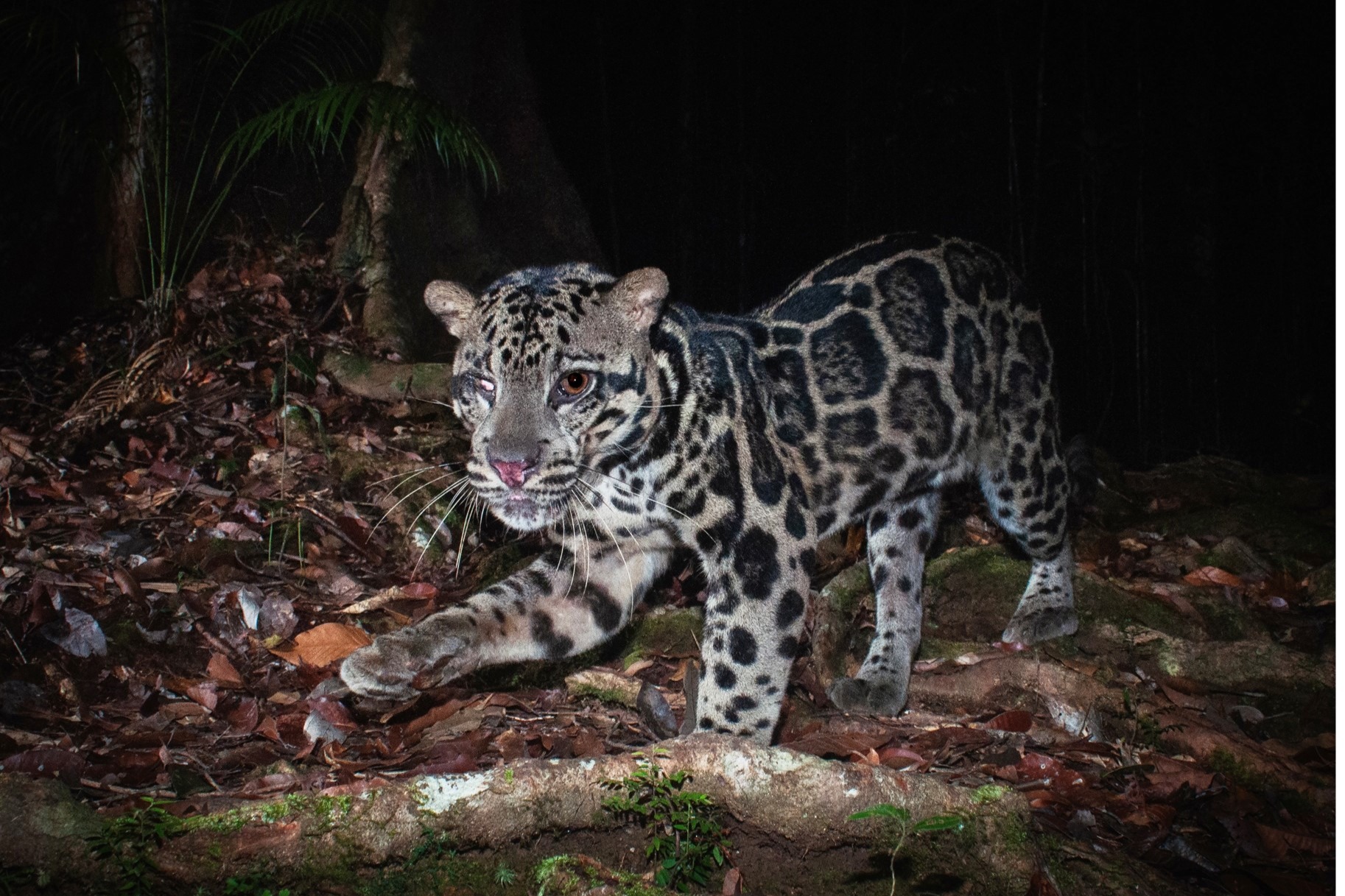
Clouded Leopard
The competition’s second prize was awarded to Research Postgraduate Tijmen de Lorm for ‘Clouded Leopard’, a striking photograph of a Sunda clouded leopard (Neofelis diardi) captured by a remote camera in the forests of Malaysian Borneo.
The photograph forms part of research monitoring elusive wildlife and investigating how species respond to changes in land use. The male leopard photographed has permanent damage to its right eye, offering an unexpected glimpse into the challenges faced by wildlife living in this rapidly changing environment.
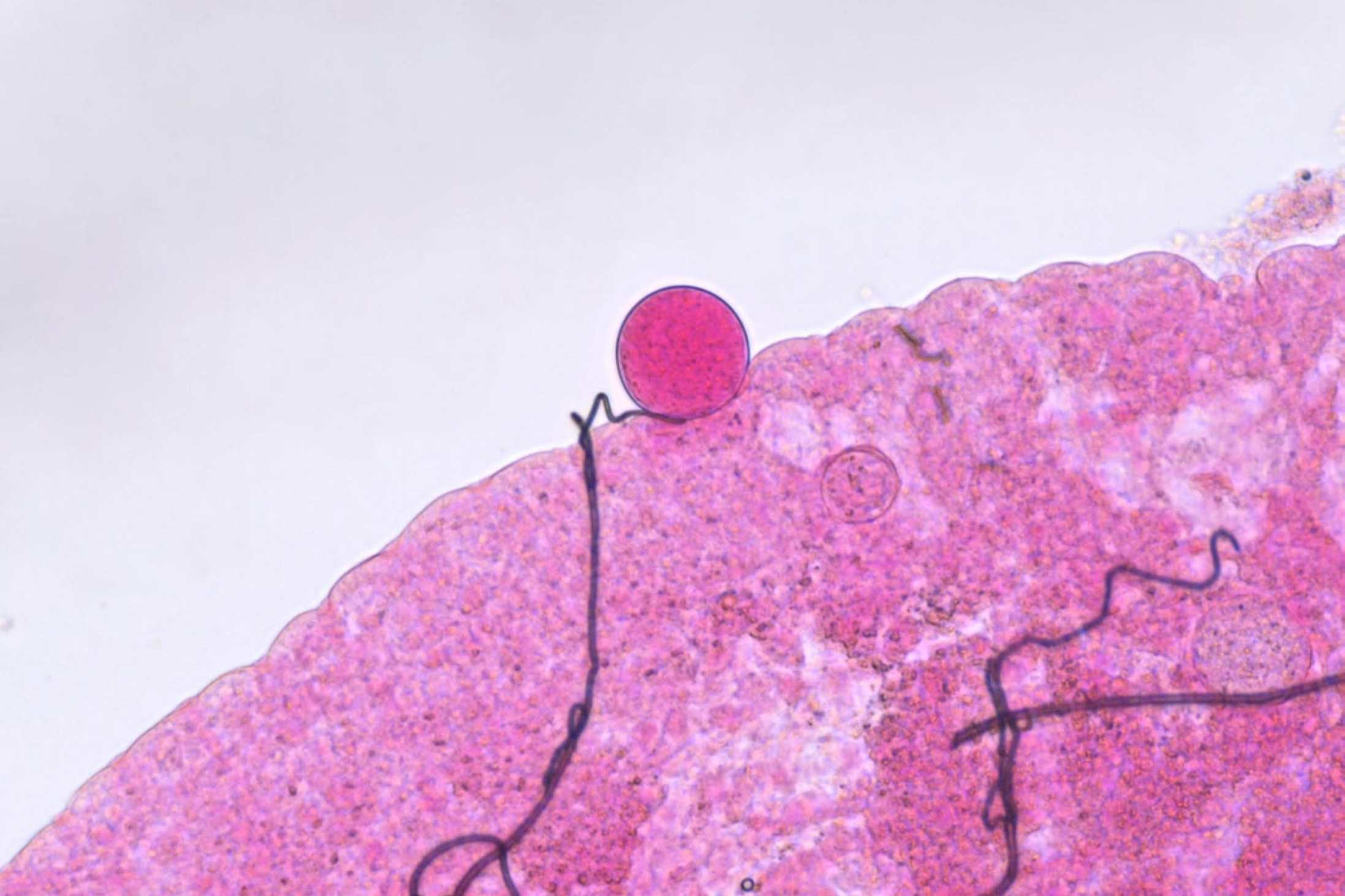
A Deadly Passenger
Third prize was awarded to Research Associate Lison Laroche for ‘A Deadly Passenger’. The image shows a mature Plasmodium falciparum oocyst attached to the midgut of a female Anopheles gambiae mosquito, eight days after the mosquito took an infectious blood meal.
The oocyst is a critical stage in the malaria parasite’s life cycle. Hidden within the mosquito, it produces thousands of sporozoites which will eventually migrate to the mosquito’s salivary glands, ready to infect another person when the mosquito feeds again. Laroche’s research investigates how the mosquito and parasite interact during this stage, with the aim of understanding how parasite development might be disrupted before malaria can be transmitted.
The competition attracted a strong and varied range of high-quality entries, highlighting the diversity of research taking place across the department and the many different ways researchers observe, document and communicate their work.
Congratulations to Matteo Vitale, Tijmen de Lorm and Lison Laroche on their winning entries, and a huge thank you to everyone who took part in making the competition such a success.
Article text (excluding photos or graphics) © Imperial College London.
Photos and graphics subject to third party copyright used with permission or © Imperial College London.
Article people, mentions and related links
Emily Govan
Faculty of Natural Sciences