Two new academics join Imperial’s Department of Physics

The Department welcomes Dr Shota Komatsu and Dr Qian Yang, whose research spans quantum gravity, theoretical physics, nanomaterials and nanoscale transport.
Dr Shota Komatsu, Associate Professor of Theoretical Physics
Tell us a little bit about your background
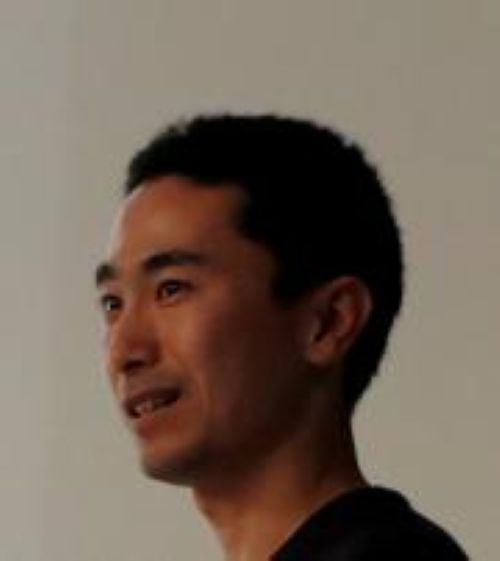 I grew up in Tokyo in Japan, and received my PhD from the University of Tokyo. Subsequently I held postdoctoral positions at the Perimeter Institute for Theoretical Physics in Waterloo, Canada and the Institute for Advanced Study in Princeton. I then joined CERN in Switzerland as a staff member in the Department of Theoretical Physics before moving to Imperial College London. My research focuses primarily on quantum field theory, quantum gravity, string theory, and theoretical high-energy physics. I also sometimes work on related problems in cosmology, statistical mechanics, condensed matter physics and mathematical physics, with particular interest in connections between these areas and broader fundamental questions in quantum field theory and quantum gravity.
What does your research focus on?
I identify primarily as a researcher in string theory, although my work often takes me into related areas such as quantum field theory, cosmology, and condensed matter physics. My overarching goal is to understand quantum gravity: the framework that should reconcile general relativity and quantum mechanics, and that is essential for addressing fundamental questions such as the beginning of the universe and the interior of black holes. String theory provides a concrete framework in which quantum mechanics and gravity coexist, but much remains to be understood about the theory itself and about how it can address these fundamental questions.
A significant portion of my past research has therefore focused on developing tools in string theory and quantum field theory that may help us make progress toward this goal. In particular, I have studied special settings in which string theory and quantum gravity become solvable. Remarkably, these settings are closely connected to solvable quantum systems known as integrable spin chains, which also arise in condensed matter physics. This connection led me to study integrable spin chains in their own right and, more recently, solvable time-dependent quantum systems, including non-Hermitian systems and Landau–Zener transitions. I am also broadly interested in fundamental aspects of quantum field theory, including quantum field theory in cosmological settings.
What attracted you to Imperial?
What I enjoy most about theoretical physics is the opportunity to become a “different person” with each project—to change subjects, methods, and styles of research. In that sense, my motto is to avoid developing a fixed research style. I therefore look forward to meeting new people, encountering new ideas, and exploring new areas of research at Imperial.
Dr Qian Yang, Royal Society University Research Fellow
Tell us a little bit about your background
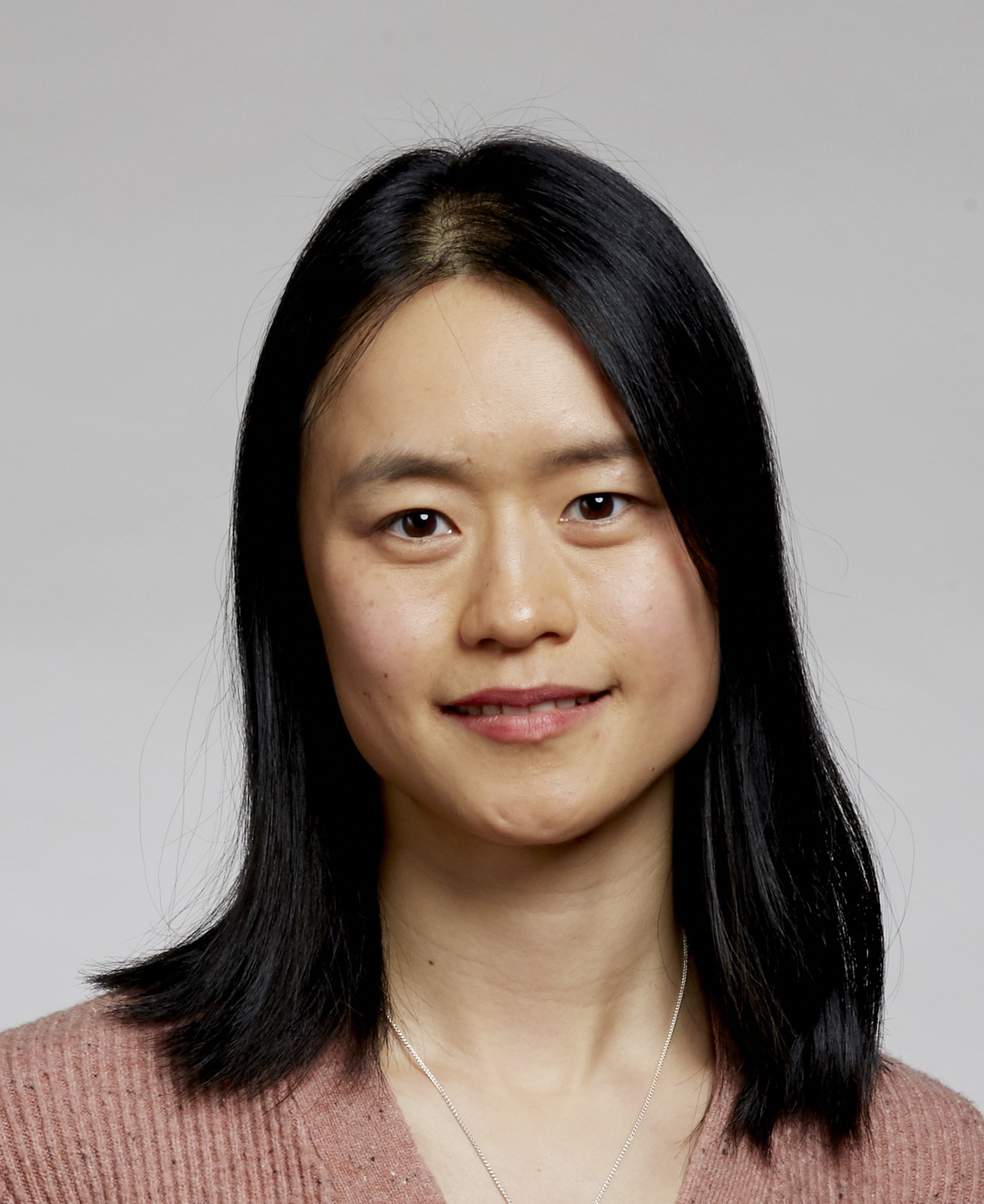 I am a Royal Society University Research Fellow and recently joined the Department of Physics at Imperial College London. I obtained my PhD in Materials Science in 2018, before holding a Leverhulme Early Career Fellowship from 2019 and being awarded a Royal Society University Research Fellowship in 2022. My research spans two-dimensional materials, nanofluidics and nanoscale transport, with a particular focus on understanding how water and ions behave when confined within spaces only a few atoms or molecules high. Alongside research, I am passionate about supporting early-career researchers and building collaborative research communities through career-development activities and themed scientific symposia. I previously served as an Academic Theme Lead at the Graphene Engineering Innovation Centre, where I supported the translation of graphene and other two-dimensional materials from fundamental research towards industrial applications.
What does your research focus on?
I study nanomaterials, particularly two-dimensional materials such as graphene and their heterostructures made by stacking different atomically thin crystals together. A major focus of my research is building tiny channels from these materials to investigate what happens to water and ions when they are confined within spaces sometimes only a single atom or molecule high.
At these dimensions, liquids can behave very differently from our everyday experience: surfaces become dominant, classic physical descriptions may break down, and unexpected transport phenomena can emerge. We combine nanoscale device fabrication with microscopy, spectroscopy, and electrical measurements to uncover the physics governing fluids under extreme confinement.
Understanding these processes can help us address fundamental questions about matter at the nanoscale, while also informing technologies for clean water, molecular separation, energy harvesting, sensing and ionic devices. We are increasingly combining these experiments with automation and artificial intelligence to explore complex experimental spaces and accelerate the discovery of new nanoscale phenomena.
What attracted you to Imperial?
I was particularly attracted to Imperial by its strength in fundamental physics and its highly interdisciplinary environment, with close connections across materials science, engineering and artificial intelligence. My research naturally sits at the interface of these fields, making Imperial an exciting place to develop new collaborations and explore research directions that cross traditional disciplinary boundaries.
I am especially looking forward to establishing my research group and laboratory at Imperial, working with students and colleagues across the College, and developing new approaches to studying nanoscale fluid and ion transport. I am also excited about translating fundamental discoveries from my research into technologies that can ultimately have an impact on our society.
Article text (excluding photos or graphics) © Imperial College London.
Photos and graphics subject to third party copyright used with permission or © Imperial College London.
Article people, mentions and related links
Eleanor Barrand
Faculty of Natural Sciences