New ‘no-code’ tool enables Imperial researchers to transform data into immersive visual experiences at the Data Observatory
by Gemma Ralton

Researchers across Imperial can now create immersive, large-scale visualisation projects in the Data Observatory without needing coding or specialist technical skills, thanks to a new tool launched by Data Science Imperial.
Vizzy Studio, developed by Data Science Imperial, marks the beginning of a new era for the Data Observatory. Designed to make immersive data visualisation genuinely accessible to researchers across every discipline, Vizzy opens up a powerful new platform - one that requires no coding or specialist technical skills to use.
In practical terms, Vizzy works like a presentation design tool built for the extraordinary scale of the Observatory. Vizzy's drag-and-drop interface lets researchers bring together data visualisations, images, video and animation, preview their work in a web browser, and present it across 64 displays in a 313-degree surround environment with more than 130 million pixels.
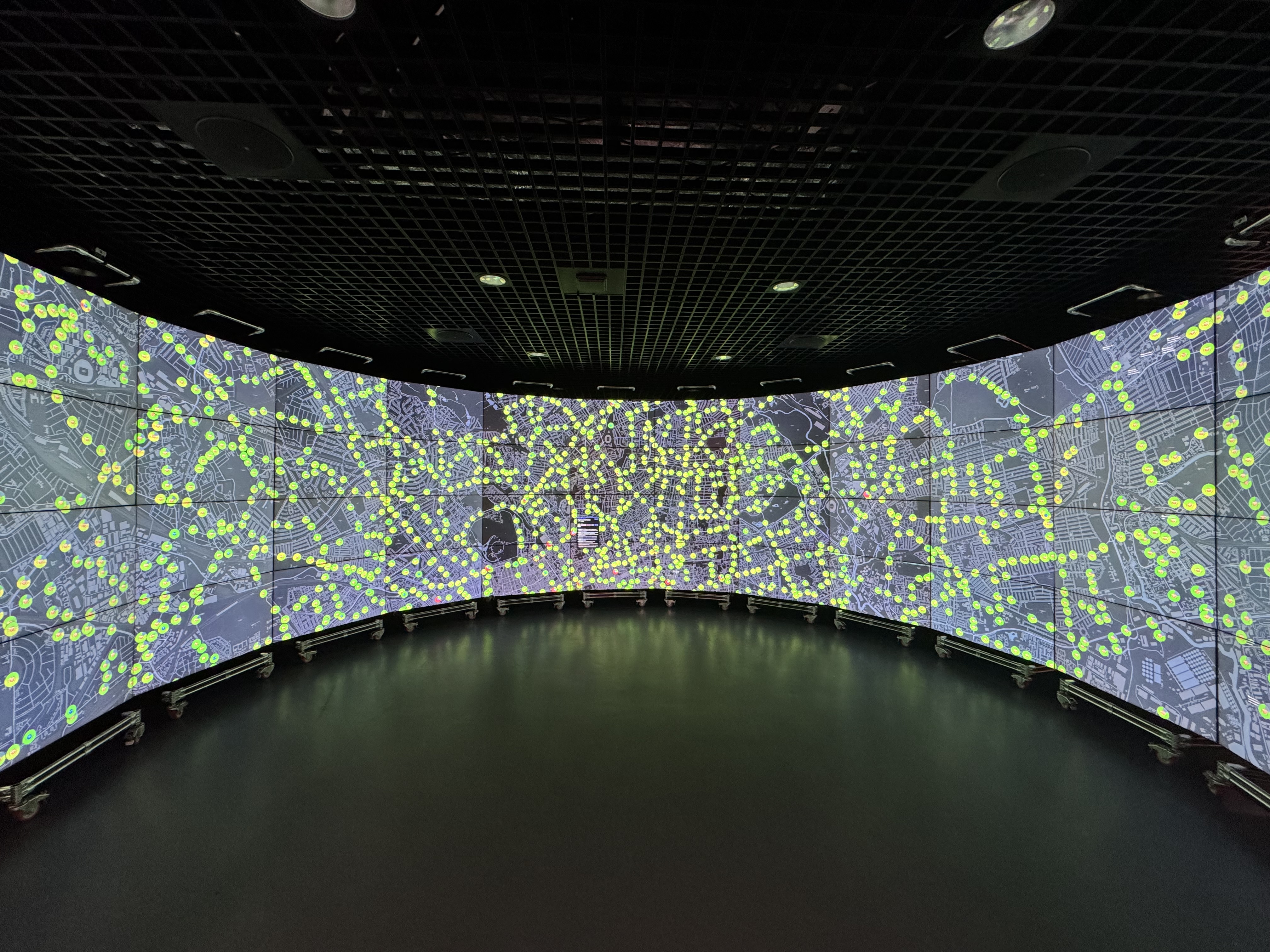
Previously, creating large-scale interactive visualisations often required programming expertise and support from technical teams. Vizzy Studio makes the process more accessible, allowing researchers to develop many demonstrations themselves.
Multiple collaborators can work together in real time, and presentations can be controlled from a tablet or mobile device. For more complex projects such as interactive simulations, live data feeds or bespoke applications, Vizzy Studio is complemented by a Developer Playground, which provides the flexibility to work with modern web technologies and advanced visualisation libraries. Find out more about creating content for the Data Observatory.
As Dr Ovidiu Serban, Research Fellow in Intelligent Data Processing and Curation, explains:
"The goal is simple: make the 90 per cent easy, so we can spend our time making the other 10 per cent extraordinary."
Help shape the Data Observatory's 2027 programme
The Data Observatory team is inviting researchers to put forward ideas for three flagship projects to be developed into bespoke immersive demonstrations in 2027.
We are looking for established research projects with mature datasets, robust findings and a compelling story to share. Selected projects will be developed by a dedicated team of interns recruited through the Data for Humanity programme, working with researchers to translate their work into interactive visual experiences.
"We want the Data Observatory to be a place where Imperial's most ambitious research can be experienced and explored. Our 2027 flagship programme is an opportunity for researchers to bring forward projects that could benefit from this approach, and we'd love to hear their ideas." - Kate Heyworth, Data Observatory Team Leader
Project ideas can also be submitted through our simple online submission portal: Observatory 2027- Flagship Project Call
Article text (excluding photos or graphics) © Imperial College London.
Photos and graphics subject to third party copyright used with permission or © Imperial College London.
Article people, mentions and related links
Gemma Ralton
Faculty of Engineering
