Discussing Long Covid symptoms through illustration
By line: A Research Café case study by Emily Cooper
Story editor: Lizzie Blunt - MSc Science Communication work placement student
Public Health Research · Patient & Public Involvement · Children & Young People
Emily and Zaira's Project
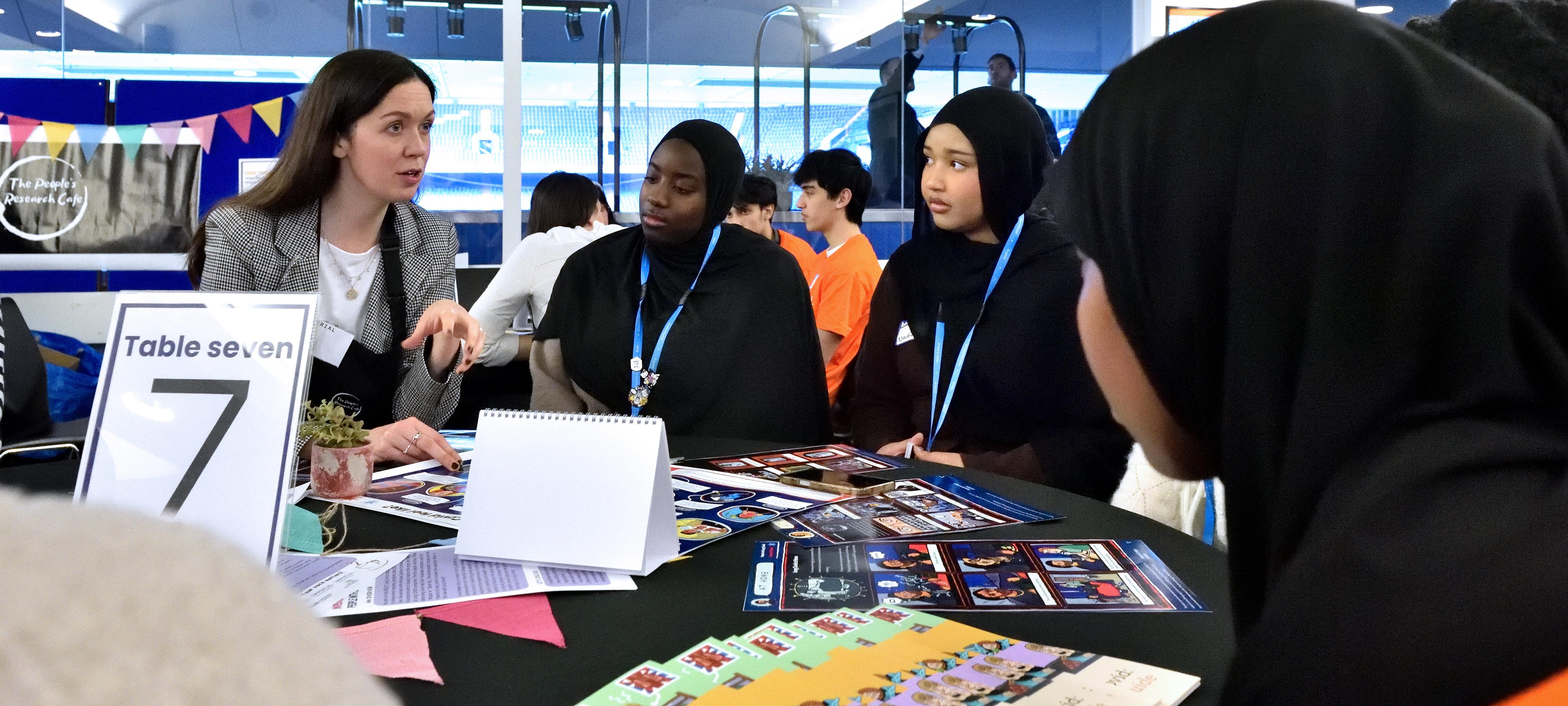
As part of the REACT Long Covid study and a wider Covid Made Long project, Emily and her team aimed to capture the range and impact of Long Covid symptoms, using experiences shared by people with the condition, through illustration. Working with Monique Jackson, they produced two posters: ‘What does Long Covid feel like?’ and ‘What is life like with Long Covid?’ with an aim to improve the social support and care available to young people.
To explore how Covid is impacting young people’s lives, Emily and her team collaborated with Zaira Clarke from the London School of Hygiene and Tropical Medicine as part of a Covid Made Long project. Aiming to capture the range and impact of Long Covid symptoms, they worked with Monique Jackson to develop illustrations, using experiences shared by people with the condition. These included a graphic series, glossary, and guide for young people on the topic of Long Covid.
Why Emily and Zaira were at the Research Café
Having produced these materials, the Research Café gave Emily the opportunity to talk to young people about the posters and get their advice on the relevance of the materials, and how to disseminate them.
What did Emily and Zaira ask the public?
Emily and Zaira asked the visitors on their table three questions:
- Would these resources be useful if someone that you know (a friend, sibling, classmate) was affected by Long Covid or an ongoing illness?
- How could we encourage people that don’t have LC, or don’t know much about it, to engage with these resources and learn more?
- Which social media platforms would you like to see the materials on, and what do you think a good social media post about this project would look like?
What Emily heard
- Lack of Long Covid awareness
Touching on the activity itself, Emily found one of the challenges that emerged among the year 8 group was the lack of awareness and prior knowledge of long covid, which prompted a more flexible approach when talking about the content. She felt that, in hindsight, a more practical or hands on activity would have benefitted this group more.
- Experiences of the pandemic
By comparison, discussions with the group of young people (who in this case were trainee nurses) revealed that the illustrations focused on loss of self and social life were particularly resonant. This group also included personal reflections about their pandemic experience in the discussion, such as not recognising themselves in videos from before, and that they spend much more time online.
- How to share the materials
As part of a more practical discussion, both groups provided insights on sharing the posters.
The Year 8 group felt that the resources could be useful around school, in places such as the medical room, reception area, and library. They fed back to Emily that they didn’t use social media much, but those who did described how they were more likely to trust information on the Imperial website, rather than on social media like TikTok.
In the young adults (trainee nurses) group, they also discussed social media and said that more static slides on TikTok would be more attention grabbing, as most content on the platform is video based. This was a noticeable contrast to Emily and the research group’s understanding of TikTok, so was helpful advice. This group also suggested materials could be placed in waiting rooms in clinical settings.
Impact
Following these table discussions, Emily incorporated some of their feedback into her project and will now adapt the social media items from Instagram to TikTok. In response to providing the posters for distribution in medial settings, she noted that the researchers would contact more hospitals, post-covid settings, and GPs to provide resources in waiting rooms.
In this case, the perspective of young people was key not for the development of the resources, but how they would be best received and shared.
Read our blog
All postsContact us
PERC Director and Co-Founder
Prof. Helen Ward
h.ward@imperial.ac.uk
For enquiries about public involvement in research and research more generally, please email:
publicinvolvement@imperial.ac.uk