Improving the understanding of ovarian cysts in young people and understanding the priorities of the affected community
By line: A Research Café case study by Tom Bourne and Nina Cooper
Story editor: Lizzie Blunt - MSc Science Communication work placement student
Public Health Research · Patient & Public Involvement · Children & Young People
“This was useful because it meant we could think not just about the research itself, but also about how we talk about it and what matters most to the people it affects”
Tom and Nina's project
Ovarian cysts are quite common in girls and young women, and while most of them are harmless and go away without treatment, some can grow and cause pain or need treatment. Ultrasound scans are usually used to look at ovarian cysts; however, research on how these cysts behave in children and teenagers is limited. This makes it difficult to know which cysts can be monitored and which may need treatment. To target this gap, their study looks at how ovarian cysts in children and young people appear on scans and how they change over time.
Why Nina was at the Research Café
“It was important to hear directly from young people and parents, as their views are very relevant to this area of research”
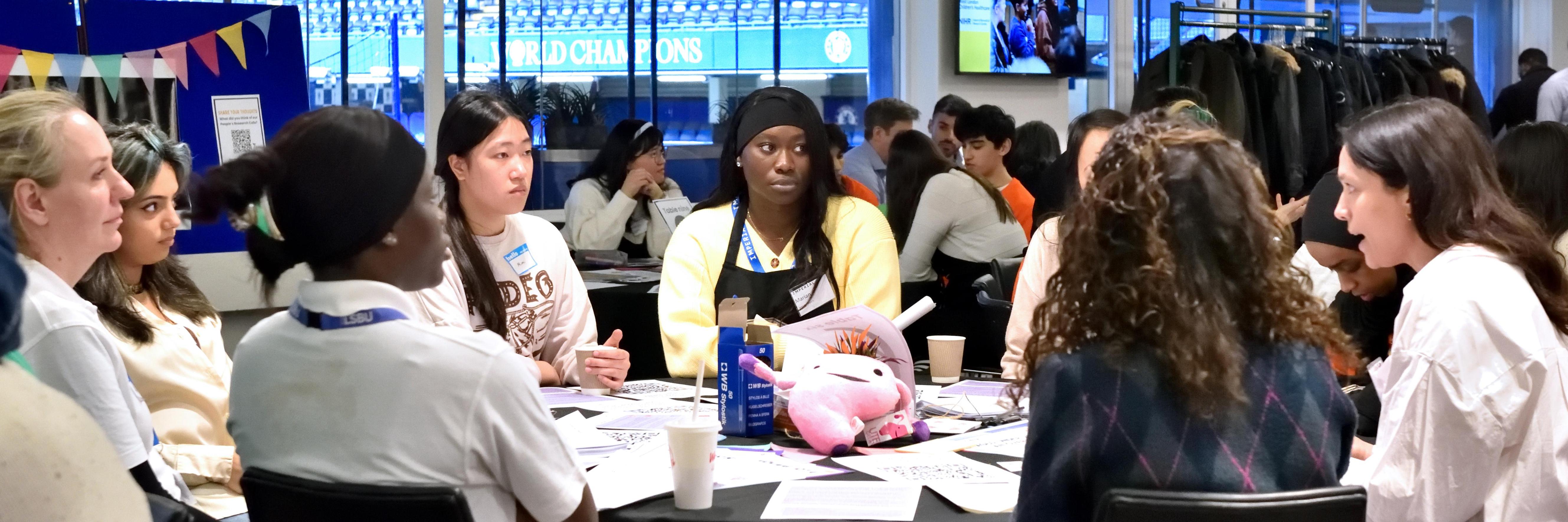
By bringing this project to the Research Café, the team wanted to hear directly from young people and parents about their priorities and better understand their perspectives when it comes to young people’s gynaecological health. Research looking at how young people and families actually feel about ovarian cysts and ultrasound investigations is lacking, and this event gave Nina the chance to explore this and with a broader scope of periods, pelvic pain and anatomy.
What did she ask the public?
Nina prompted discussion with young people and parents with the following questions:
- What should be the priorities for research in young people’s gynaecological health?
- What do you think is “normal” in relation to periods and pelvic pain?
- What affects how acceptable different ultrasound scans feel?
Visitors were invited to share their thoughts and views through discussion and through anonymous questionnaires either on paper on via QR code, which had been adapted for three different groups: year 8 students, parents or guardians, and those aged over 18.
What Nina heard
The overarching theme emerging from conversations with visitors was that they consider women’s health to be a very important topic, and within this several topics came up....
- Better education around women’s anatomy, and what is considered normal
One of the frequent themes of discussion was the need for better education around women’s anatomy. Young women at Tom’s table spoke about not knowing much about their anatomy, and uncertainty around what should be considered normal or abnormal periods and pelvic pain, for example. This suggests the awareness around basic menstrual and reproductive health is still an issue that needs tackling.
- Research priorities
The priorities that came up in discussion were more general, mentioning conditions such as endometriosis and polycystic ovary syndrome, but also painful periods.
- Explaining ultrasounds
When discussing ultrasounds, young adults said that when they are clearly explained, and recommended by a clinician, they were open to them, especially if they gave quicker and more accurate results. Parents, on the other hand, expressed more caution around internal scans, particularly for younger or sexually inactive adolescents. As part of this theme, the key points from participants were that reassurance, clear explanations, and the option of a female clinician were important for ultrasound processes.
Impact
“For the team, the event was a good reminder of how valuable public involvement is alongside an ongoing research project”
The Research Café helped Nina and the team think about how ovarian cysts and women’s health topics were explained and reminded them of the importance of simple language. Hearing different perspectives gave them ideas for improving future discussions and information materials and considering the use of more educational materials in engagement activities. Ultimately, the importance of reassurance and trust for scans, as well as clear explanations were key points to be considered when explaining and offering these scans.
Read our blog
All postsContact us
PERC Director and Co-Founder
Prof. Helen Ward
h.ward@imperial.ac.uk
For enquiries about public involvement in research and research more generally, please email:
publicinvolvement@imperial.ac.uk