Imperial’s White City Campus is now home to The Sound of Us, the first student conceived sculptural public artwork for the campus.
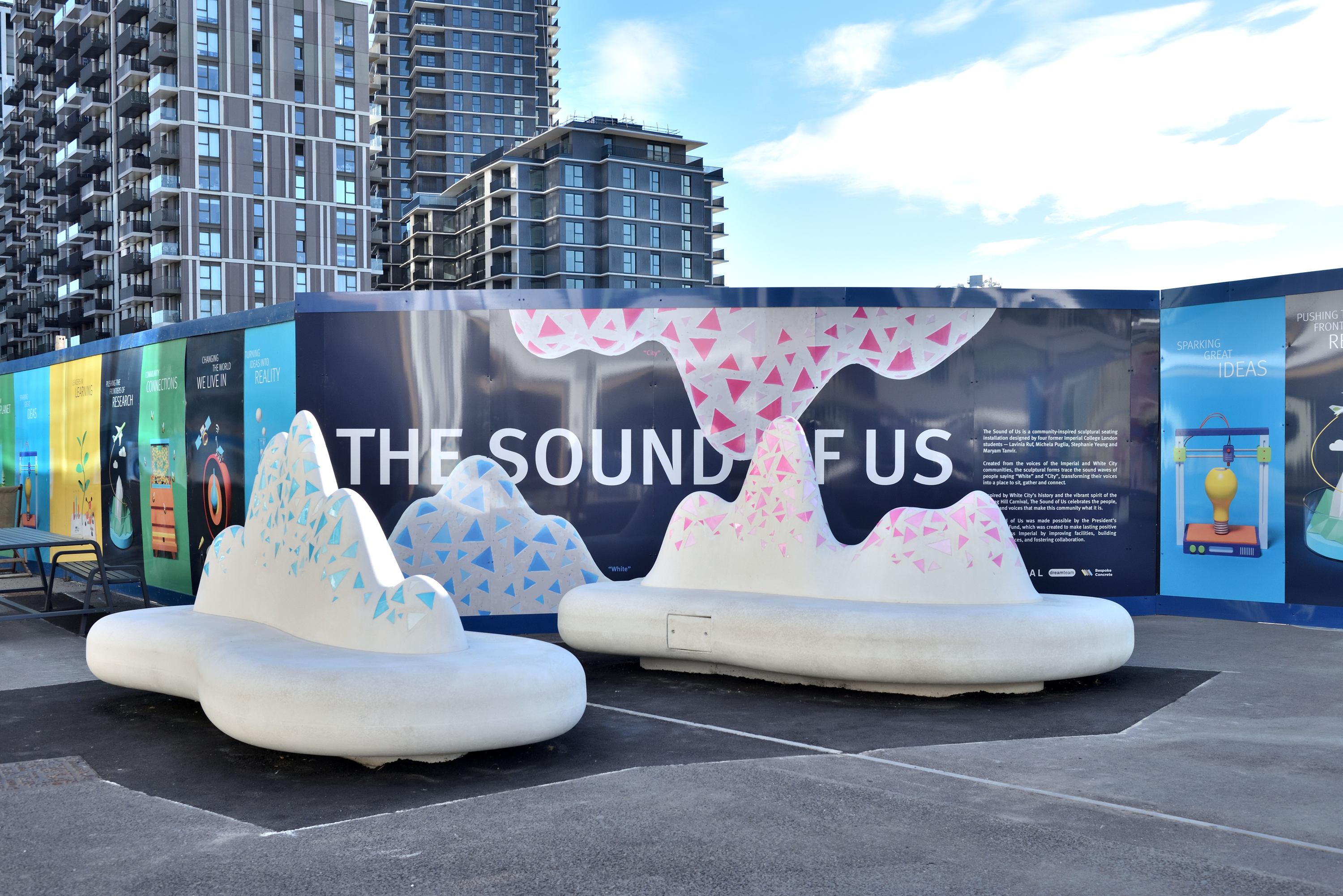
Our students have turned the voices of this place into everyday infrastructure. It shows Imperial at its best: a student idea, supported every step of the way by staff, partners and the President’s Community Fund, becoming a permanent place for people to meet and talk. Professor Nick Munro Visiting Professor at Imperial
Designed by four Imperial students and delivered with support from the President’s Community Fund, the work has moved from an idea at a hackathon to a permanent place to sit, meet and to see art and science in conversation.
The artwork is born out of Imperial Dreamteam’s When Science and Art collide: White City Sculpture Challenge, which launched in 2022 and, invited students to reimagine public space at White City.
From 150 entries, which included an interactive lightshow and a reflective figure designed to represent the community, an independent judging panel of art experts selected The Sound of Us as the winning concept.
The judges were impressed with the team’s creation of a sculpture that brought together the diverse communities of White City and which would act as a reminder of White City’s deep-rooted history.
Name, Historical and Modern Inspiration
The story and name behind The Sound of Us has multiple facets that aim to represent both the White City and Imperial College communities. The white concrete of the seating is a nod to the origins of White City: the area started off as a 200-acre complex with 25 white stucco-covered, Venetian-style palaces and halls constructed for the 1908 Franco-British exhibition that was held there. It is from this architecture that the area’s name originated.
The tiling and lighting of the sculpture are inspired by the vibrant colours of the Notting Hill Carnival that holds a special place in the hearts of the White City community, representing unity and community. By merging these two historic influences in the design, the sculpture serves as a celebration of the area’s transition from its initial colonial past to the incredibly culturally rich and diverse location that it is today.
How the Sound of Us was made
The process started with the artistic team capturing field recordings of local people saying “White” and “City.” Layered together, these sounds created distinctive waveforms that informed 3D modelling, ergonomic studies and tooling for casting. The benches were then cast in a high performance mineral mix and hand finished to achieve a smooth, tactile surface that will stand up to daily use.
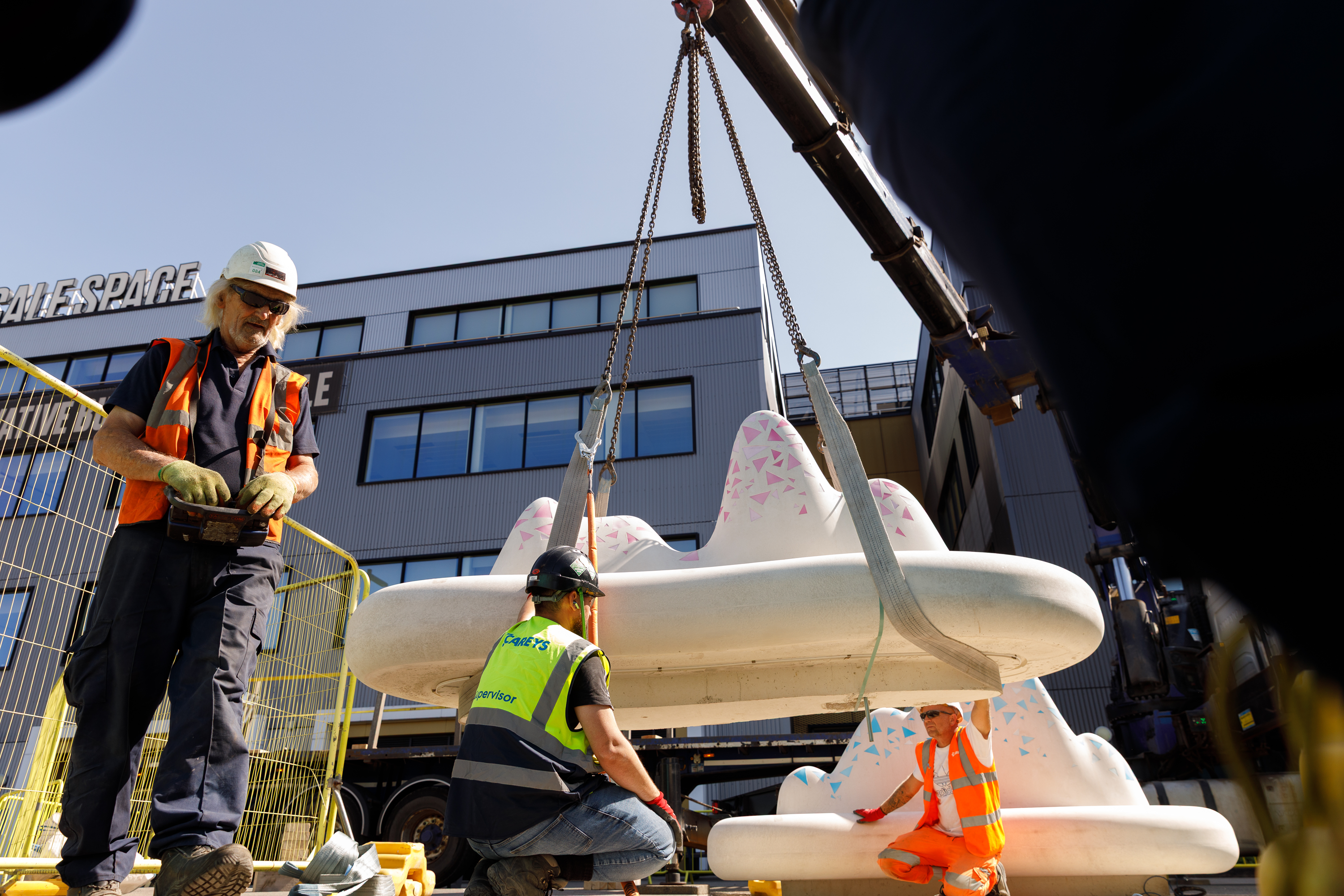
The Sound of Us at White City
The Sound of Us fixes student creativity into the fabric of campus life, demonstrating how art and science can productively collide, turning data and design research into a welcoming piece of public infrastructure. It also celebrates the many voices of White City; high‑quality, inclusive works embedded in everyday routes that animate the public realm, support wellbeing and belonging, and make research and creativity visible.
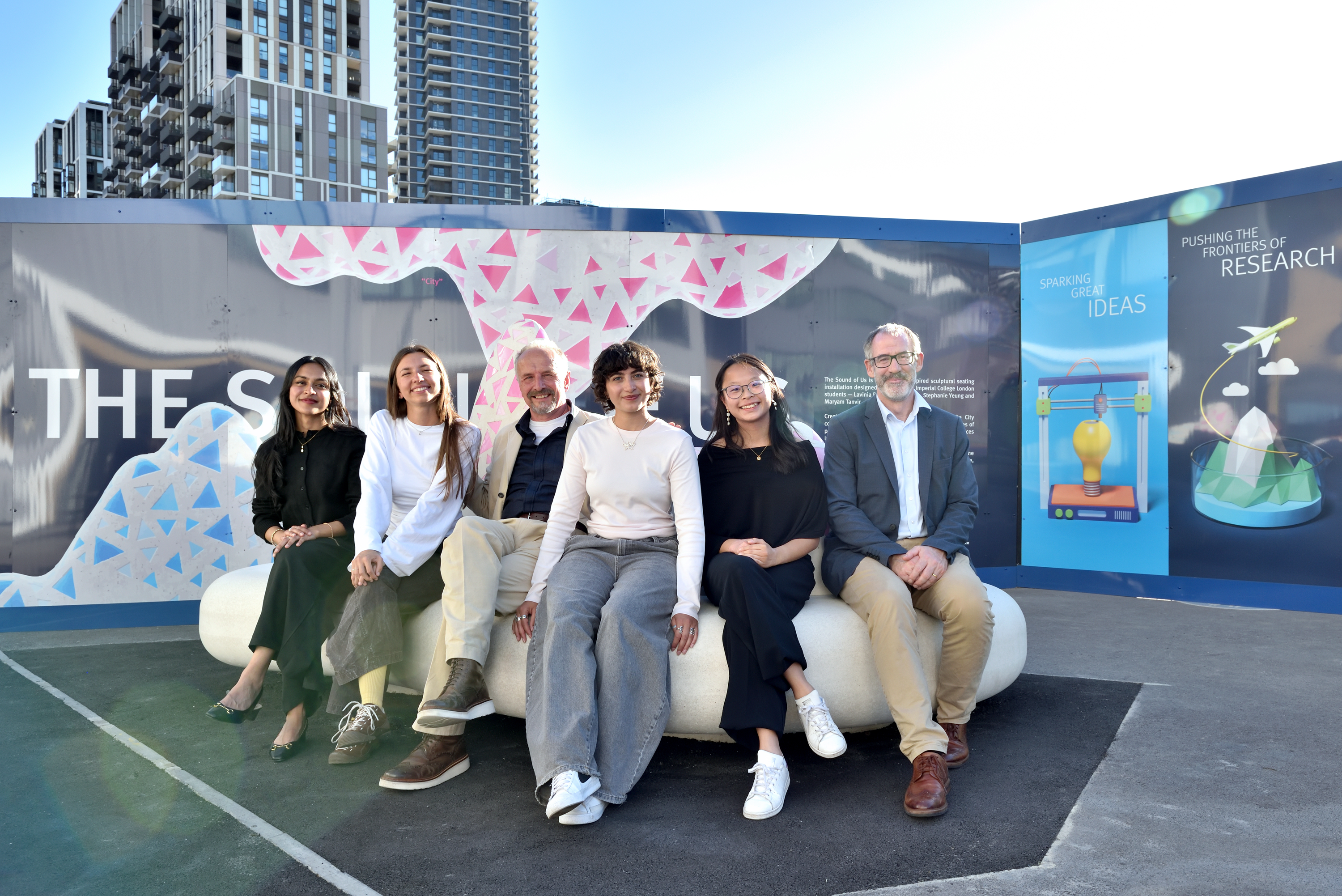
The people behind the project
Conceived by Imperial students Lavinia Bocaniala, Maryam Tanvir, Michela Puglia and Stephanie Yeung, initiated through Dreamteam and guided by Visiting Professor and designer Nick Munro. The project was supported by the President’s Community Fund and delivered with campus teams, academic advisors and specialist suppliers whose expertise ensured safety, durability and build quality.
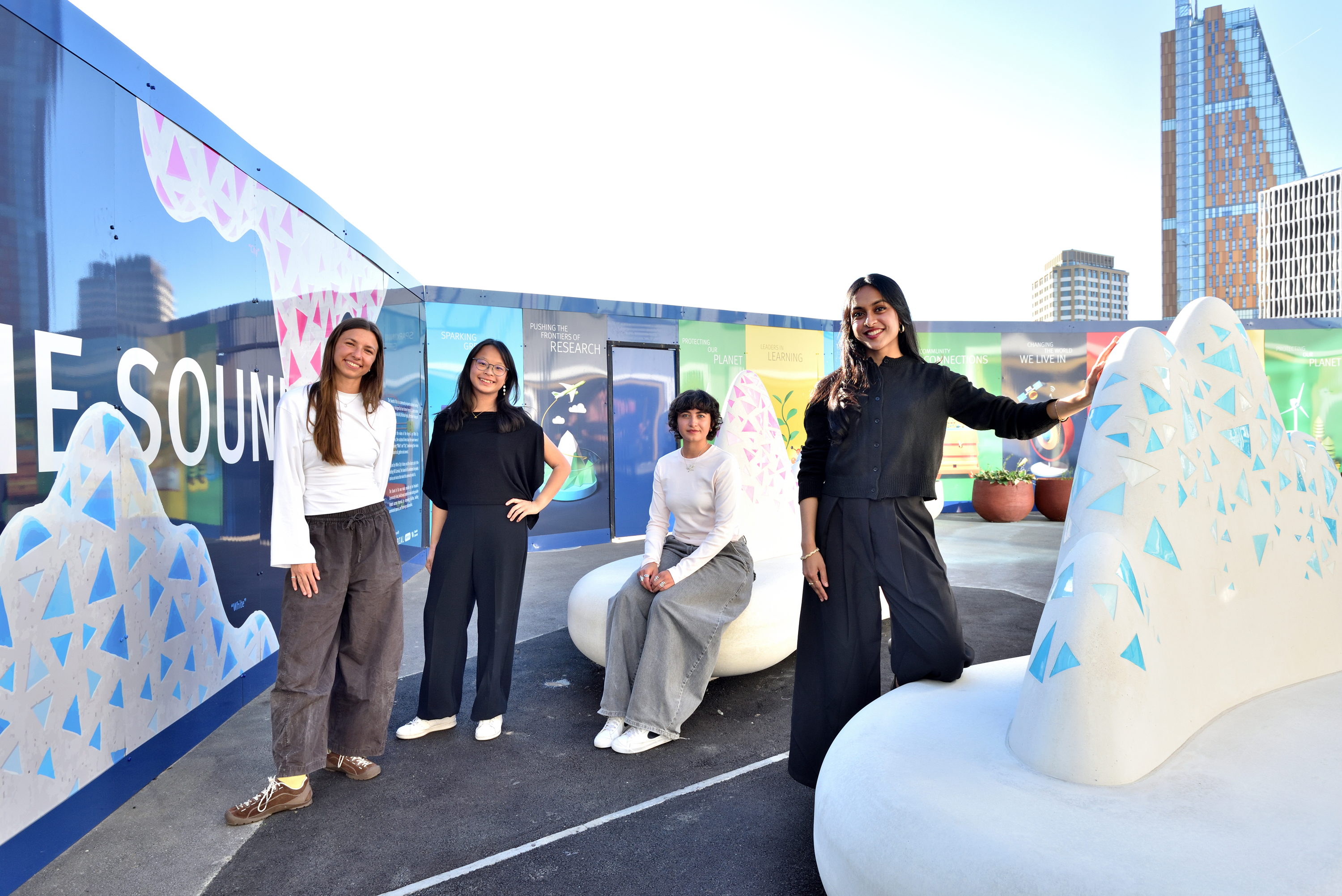
Lavinia studied Design Engineering at the Dyson School at Imperial, and worked on this project as one of the co-leaders and designers. Now based in Berlin, she works as an artist and spatial designer, with a practice spanning painting and sculptural installations using raw and natural materials.
Michela Puglia studied Design Engineering at the Dyson School at Imperial and worked on this project as one of the co-leaders and designers. Currently based in Zurich, working within Innovation at On Running, she is a multidisciplinary Design Engineer passionate about blending engineering and creative design to deliver practical and impactful solutions within the fashion and footwear industries.
Maryam studied Biomedical Engineering (MEng) at Imperial College London, and worked on this project as one of the designers and founding team members. She is currently based in London, working in MedTech start-ups as an engineer and research scientist, with a focus on wearable devices and women’s health.
Stephanie studied Biomedical Engineering (MEng) at Imperial College London, and worked on this project as one of the designers and founding team members. Based in London, she has since returned to Imperial as a staff member and is passionate about delivering impactful projects and programmes.
Further reading
When science and art collide – origins of the 2022 student challenge: https://www.imperial.ac.uk/news/233796/when-science-art-collide/
President's Community Fund - support for the project: https://www.imperial.ac.uk/about/leadership-and-strategy/president/presidents-funds/presidents-community-fund/