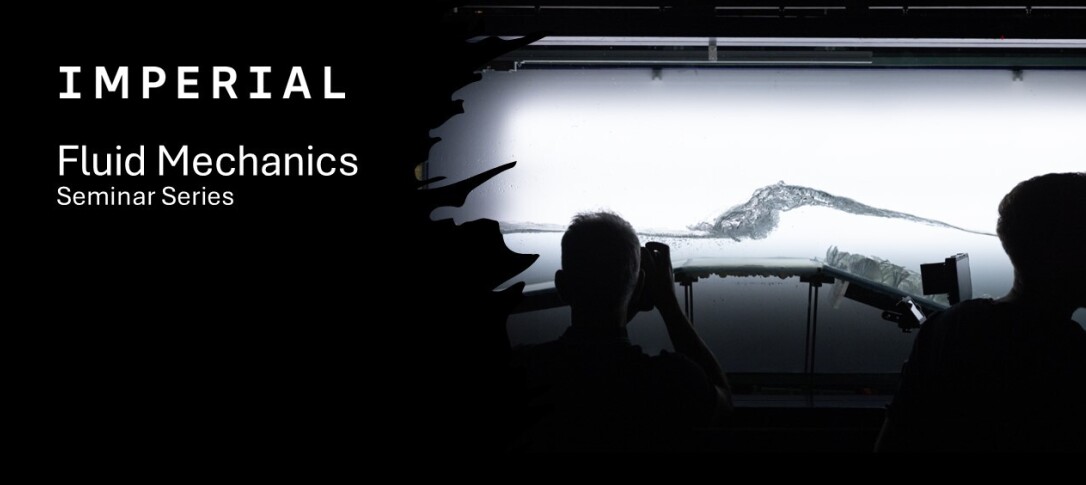
Abstract: Air-sea interaction plays a key role in exchanges of momentum, energy, gases and chemicals across the interface between the oceans and the atmosphere. Current models often rely on parameterizations that occur at spatial and temporal scales difficult to observe in the open ocean. Advanced flow visualization techniques, such as Particle Image Velocimetry (PIV), are a powerful tool to resolve small-scale dynamics with high-fidelity and high-resolution measurements, enabling the quantitative analysis of turbulence, wave kinematics, and momentum exchange across the interface. In this seminar, we will explore the fundamentals of air-sea interaction processes and provide an overview of PIV as an experimental tool. I will then present recent laboratory results obtained under controlled conditions, focusing on two representative problems: the evolution of shoaling waves – with and without wind forcing – and the early stages of wind-wave generation. These measurements reveal how wind modifies wave-induced velocity fields, alters near-surface shear, and affects energy transfer pathways. Time-resolved PIV allows us to quantify flow structures that are otherwise hidden, such as wave-coherent motions and the coupled air-sea vorticity. If time allows, preliminary observations related to breaking waves will also be shown. The seminar aims to provide an accessible yet rigorous perspective on how advanced optical diagnostics can be applied in the context of air–sea interaction.
 Bio: Dr. Fabio Addona is a Research Fellow at the University of Parma (Italy), where he has been working since 2023. He obtained his Ph.D. in Fluid Mechanics in 2019 through a cotutelle program between the University of Parma and the University of Granada (Spain). He has held postdoctoral positions at the University of Bologna (2019–2021) and the University of Delaware (USA, 2021–2023). His research focuses on air–sea interaction processes and environmental fluid mechanics, with extensive expertise in advanced experimental techniques, including Laser Doppler Anemometry (LDA) and Particle Image Velocimetry (PIV) – both 2D and stereo (2D–3C) configurations. His work aims to improve the understanding of fluid flow dynamics across interfaces and within complex environmental systems.