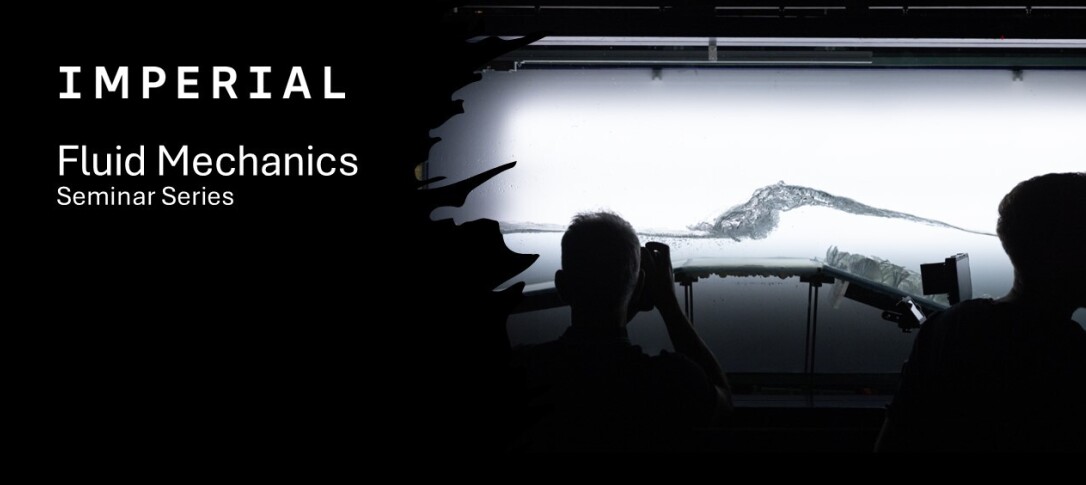
Abstract: Many environmental fluid flows fall under the broad category of gravity currents, where a density difference between the current and its surrounding ambient drives predominantly horizontal fluid motion. Examples include the spreading of toxic gas, oil spillages, cold fronts, katabatic winds, powder snow avalanches, pyroclastic flows, salinity currents, and turbidity currents. It is important to understand these fluid motions, especially for hazardous environmental currents, in order to ameliorate their effects on people, the environment and infrastructure. Due to the huge variation of scales within the currents between the small scale turbulence and particles to the large scales of the overall currents, it is crucial to have efficient system scale models that accurately capture to dynamics.
I will outline the issues and challenges surrounding depth-average system scale models of these currents. In particular, it is crucial in particulate currents to capture the turbulent kinetic energy of the flow, because it is the turbulence that uplifts particles against gravity. Additionally, we must model the variations in the flow over their depth to ensure accuracy. I will show how both can be captured in a single model. Doing so allows flow prediction over the enormous length scales (>100km) of turbidity currents. I will also discuss why the notion of ‘depth’ is inappropriate, and give some thoughts on what could replace it in more sophisticated models.
The front of gravity currents, where the dense fluid pushes the ambient fluid out of the way, will also be discussed. The front is a region of intense turbulent mixing, but classical models treat the current and fluid as immiscible. I will outline why such models are not only unphysical, but also mathematically ill-posed when combined with accurate models of the body. I will show some work-in-progress simulations by my PhD student to inform the model development.
Bio: Edward completed his PhD at the University of Bristol, after which he moved onto a PostDoc position at the University of Hull. He is now a National Fellow in Fluid Dynamics at Loughborough University, where he is developing a model of the front of the current which incorporates critical mixing processes.