Radiobiology is central to the development of the LhARA initiative, guiding the design of proton and ion beams to investigate how radiation interacts with biological tissue. The collaboration aims to explore novel irradiation techniques, including ultra-high dose rate (FLASH) and spatially fractionated radiotherapy (SFRT), to better understand their potential to improve tumour control while reducing damage to healthy tissue.
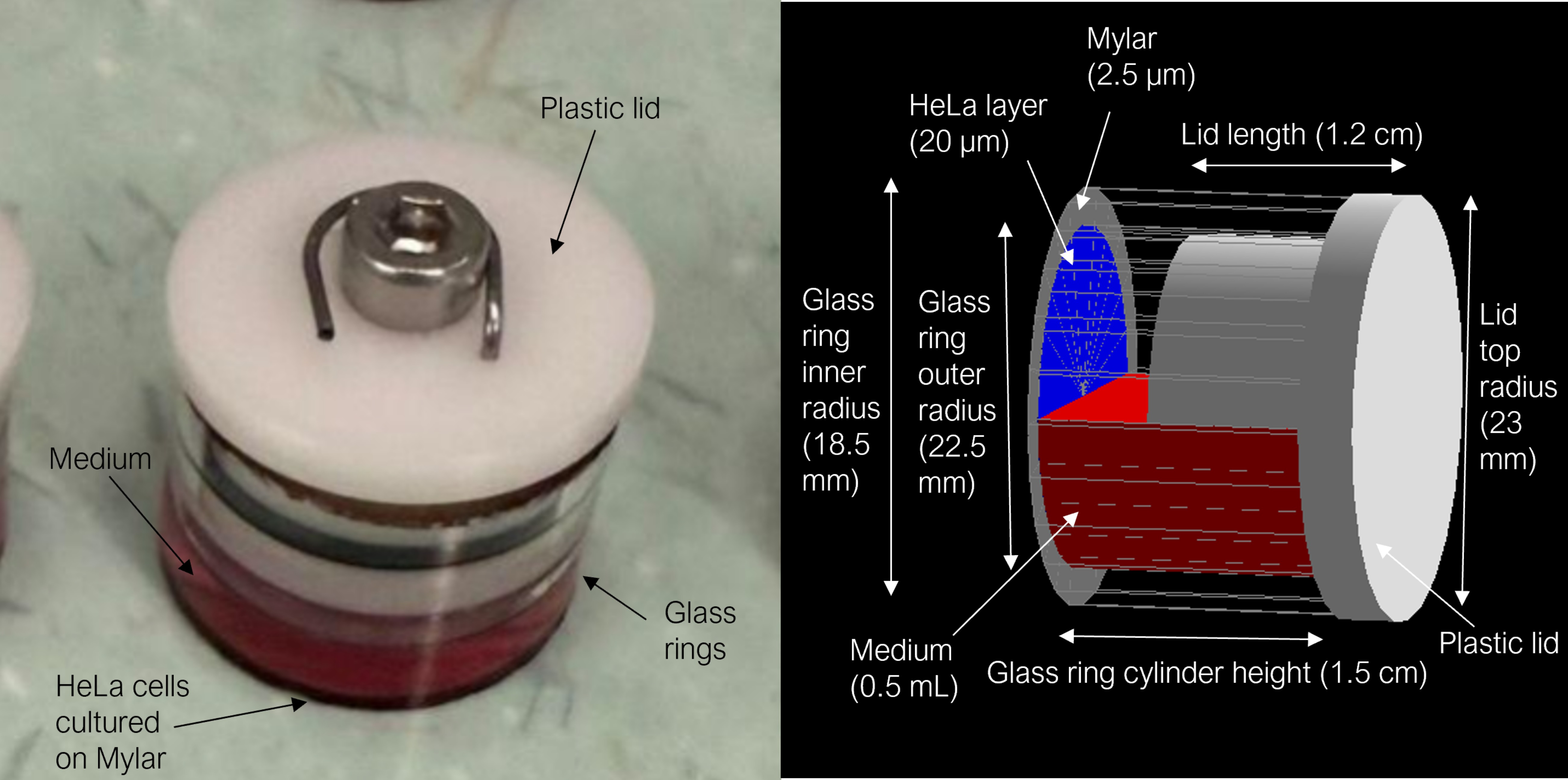
At Imperial, research focuses on the planning, simulation and development of radiobiological experiments, ensuring that beam delivery systems and experimental end stations meet the requirements of biological studies. This includes using Monte Carlo software, such as TOPAS, to model dose deposition, designing irradiation-compatible cell holders that minimise beam degradation while maintaining cell viability, and developing experimental setups for implementation at particle beamlines. Working with collaborating institutions, these developments support experimental validation using laser-driven proton and ion beams.
Looking ahead, LhARA aims to establish a progressive radiobiology programme, beginning with in vitro cell studies and extending to in vivo models. These studies will investigate biological responses to novel beam structures and delivery techniques, helping to establish the potential benefits of FLASH and SFRT for future cancer treatments.