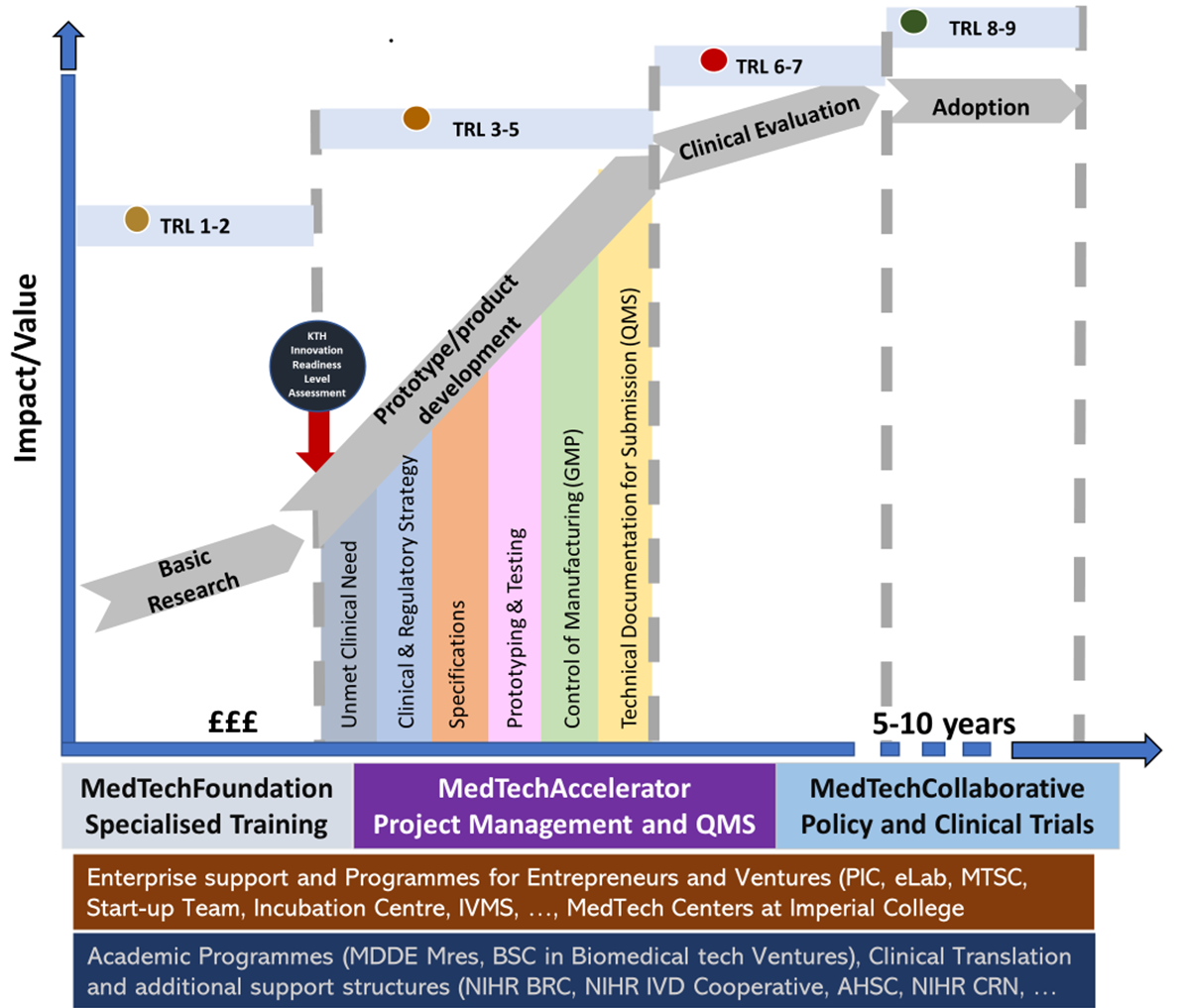
MedTech Accelerator
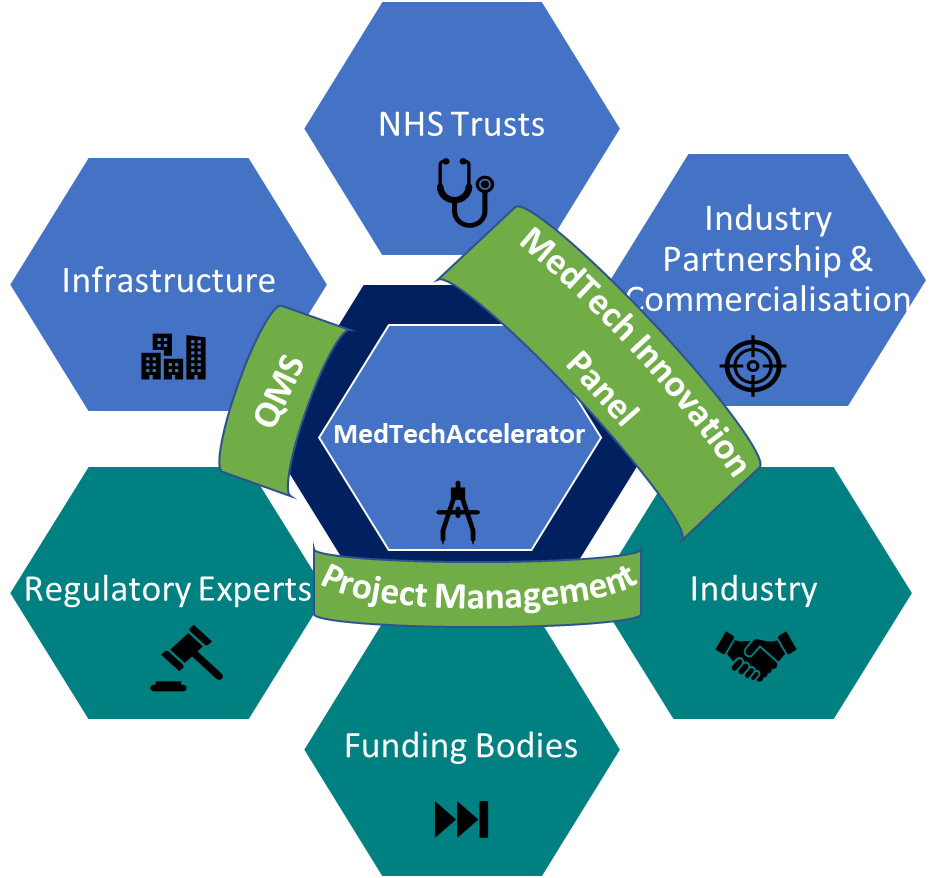
Key actors within the ecosystem are illustrated below (Figure 1). We align with and complement other programme and services, for the benefit of the projects we support. We are integrated to the Enterprise division (at the Enterprise Lab) and share resources with colleagues at the MedTech Superconnector. Under the Academic Leadership of Prof Jeffers and Prof AMJ Bull, we also benefit from our complementary with Wellcome funded MedTechOne programmes, greatly leveraging the academic leadership and expertise in the MedTech Foundation (focused on training and resource development for ECRs) and MedTech Collaborative (focusing on supporting clinical adoption) streams through MedTechONE Executive Management Board.
The Accelerator programme is closely aligned with the DTPrime programme, focusing on commercialisation of Imperial Deep Technology research for medical technologies. In addition, Imperial College hosts the NIHR BRC Biomedical Engineering Theme and the NIHR London IVD Cooperative, with whom we partner with the aim of fostering collaborations between the Trust clinicians and the academic engineers and scientists.
Translational Project Management
Translational Project Management (TPM) is a core function of the MedTech Accelerator, supporting teams to progress their medical technologies through structured, TRL-aligned development pathways.
MedTech innovations face interconnected technical, regulatory, clinical, and commercial challenges. TPM provides the coordinated, strategic support required to navigate this complexity and drive projects toward clinical validation and adoption.
A Structured Approach to MedTech Development
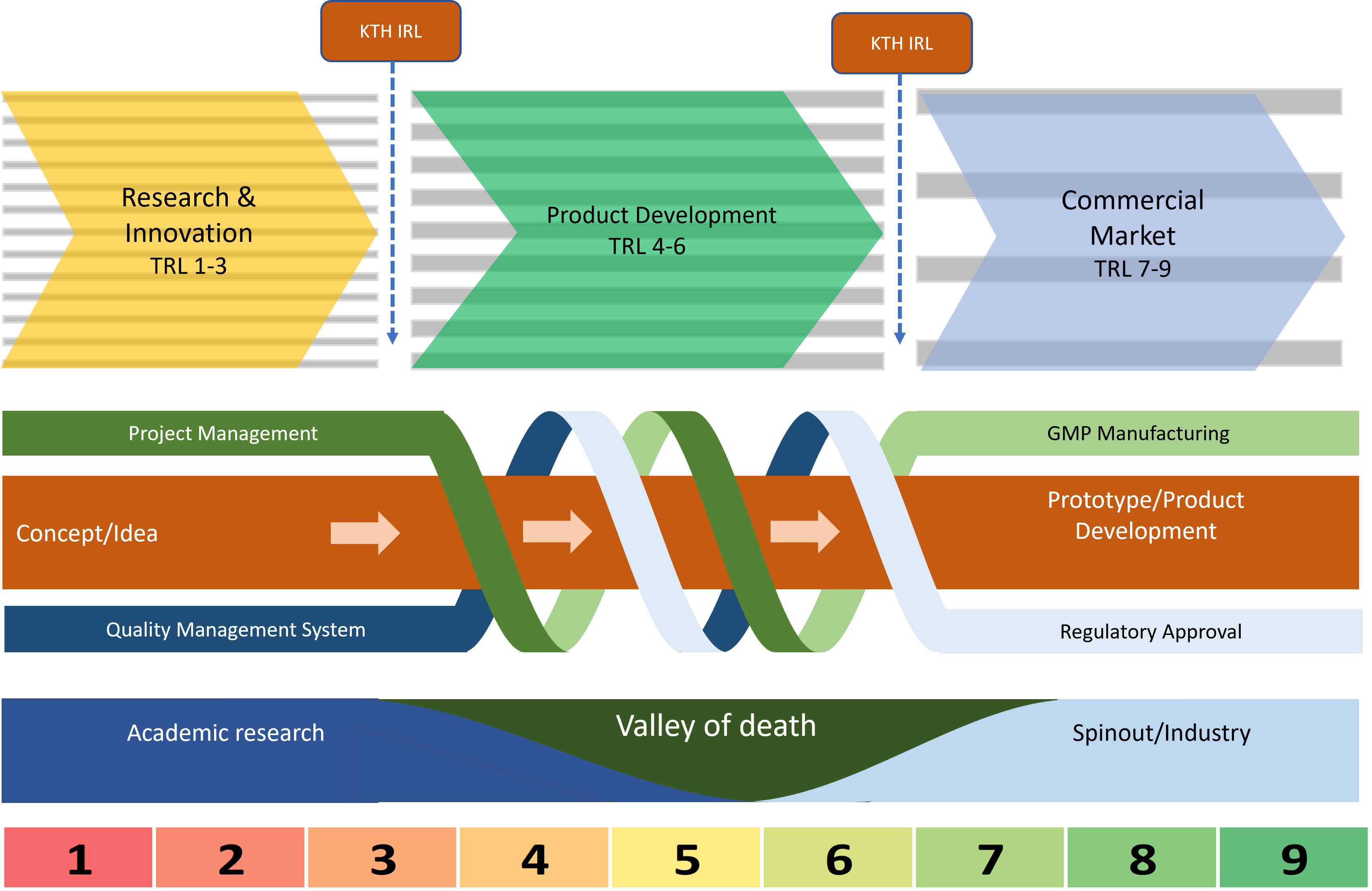
Every selected project undergoes a two-week Innovation Readiness Level (IRL) assessment using the KTH framework. This evaluation identifies gaps across technology, customer understanding, regulatory readiness, funding strategy, IP, and team capability.
From this, we co-develop a Development Action Plan that:
-
defines TRL-aligned milestones
-
clarifies technical, clinical, and regulatory requirements
-
strengthens the project’s value proposition
-
identifies critical risks and dependencies
-
aligns the development route with market and NHS needs
-
supports planning for follow-on funding, investment, and commercialisation
The TPM function ensures that each project follows a realistic and evidence-based translation pathway.
Guiding Projects Through the Translation Journey
Our project managers work closely with teams throughout the programme to:
-
coordinate technical, regulatory, clinical, and commercial activities
-
track progress using the MedTechONE Readiness Scoring system
-
maintain detailed development logs through the Project Passport
-
prepare teams for engagement with IPC, investors, and partners
-
connect teams with relevant internal and external expertise
-
support preparation for clinical evaluation and NHS engagement
This structured oversight keeps teams focused, accountable, and progressing efficiently.
Tailored Support Based on Project Maturity
We adapt support according to each project’s Technology Readiness Level (TRL) and Regulatory Readiness Level (RRL):
Early-stage projects (TRL 1–3)
-
validating unmet clinical need
-
early prototyping strategy
-
defining regulatory classification and design controls
-
customer and market exploration
Mid-stage projects (TRL 3–6)
-
prototype refinement and verification
-
regulatory pathway mapping
-
early quality processes
-
user engagement and feasibility planning
-
preparation for clinical studies
Later-stage projects (TRL 6–7)
-
documentation for regulatory submission
-
clinical investigation planning
-
manufacturing pathway preparation
-
investment readiness and commercial positioning
TPM ensures the right level of support is provided at the right time.
Integrated Support Across Imperial
TPM collaborates closely with:
-
Industry Partnerships & Commercialisation (IPC) – IP, licensing, commercial strategy
-
MedTech SuperConnector – entrepreneurship and venture development
-
NIHR BRC and NIHR London IVD Cooperative – clinical and diagnostic input
-
MedTechONE Foundation & Collaborative streams – training and clinical adoption support
This integrated ecosystem ensures that projects are strategically guided from concept toward clinical impact.
Driving Real Impacts
Imperial’s Translational Project Management model has already supported projects that have:
-
progressed to clinical evaluation
-
secured translational and commercial funding
-
formed spinouts
-
engaged with NHS partners
-
strengthened regulatory and commercial readiness
Quality Assurance and Regulatory Affairs (QARA) Support
Quality Assurance and Regulatory Affairs (QARA) support is a central pillar of the MedTech Accelerator, ensuring that Imperial’s medical technology innovations are developed safely, systematically, and in alignment with UK, EU, and US regulatory expectations.
Medical device development is heavily regulated, and early compliance significantly reduces the risk of delays, redesign, or failed submissions later in the translation pathway. Our QARA function equips teams with the expertise, systems, and guidance needed to navigate this complexity with confidence.
Regulatory Pathway Guidance from the Start
Every MedTech project must meet regulatory requirements tailored to its risk classification, intended use, and clinical pathway. We help teams:
-
determine medical device classification
-
understand MHRA, FDA, and CE marking requirements
-
identify applicable standards (e.g., ISO 13485, ISO 14971, IEC 62366)
-
plan early design controls and verification strategies
-
map regulatory milestones to TRL and development stages
This ensures regulatory considerations inform technical decisions from the outset—not at the end of development when changes are costly.
Access to an ISO 13485-aligned Quality Management System (QMS)
The MedTech Accelerator provides teams with access to our embedded ISO 13485-aligned Quality Management System, enabling:
-
structured documentation practices
-
design and development planning
-
risk management according to ISO 14971
-
usability engineering under IEC 62366
-
change control and traceability
-
preparation of technical documentation for submission
Using a QMS early ensures teams generate the right evidence, avoid compliance gaps, and build strong foundations for regulatory approval.
Regulatory Readiness Level (RRL) Framework
To provide tailored support, we use the Regulatory Readiness Level (RRL) framework developed by MedTechONE.
This tool assesses a project’s regulatory maturity, identifies gaps, and guides teams through:
-
early regulatory strategy formulation
-
evidence planning
-
documentation generation
-
quality process implementation
-
readiness for clinical investigation
Support is adapted to the project’s TRL and RRL, ensuring the right expertise at each stage.
Practical Support for Key Regulatory Activities
Our QARA specialists provide hands-on guidance in:
-
defining intended purpose and indications for use
-
mapping essential performance and safety requirements
-
developing regulatory documentation (GSPR/ESR, design files, technical files)
-
preparing for MHRA, FDA, or Notified Body engagement
-
planning clinical evaluation and post-market requirements
-
integrating risk management throughout development
This reduces uncertainty and equips teams with the knowledge needed to progress toward approval or clinical investigation.
Enabling Safe and Compliant Innovation
Through close collaboration with the Translational Project Management function, IPC, the NIHR London IVD Cooperative, and the NIHR BRC Bioengineering Theme, QARA support ensures:
-
regulatory strategy informs project planning
-
quality processes align with commercialisation goals
-
teams are prepared for investor and industry scrutiny
-
documentation is robust enough for future submissions
By embedding regulatory and quality expertise early, we help teams avoid common pitfalls and position their innovations for successful adoption, licensing, or spinout.