Fully-funded PhD studentships now available
Applications are open for PhD studentships at SABER Lab, funded by Thailand’s Ministry of Higher Education, Science and Research and Innovation, through Mahanakorn University of Technology.
Who should apply?
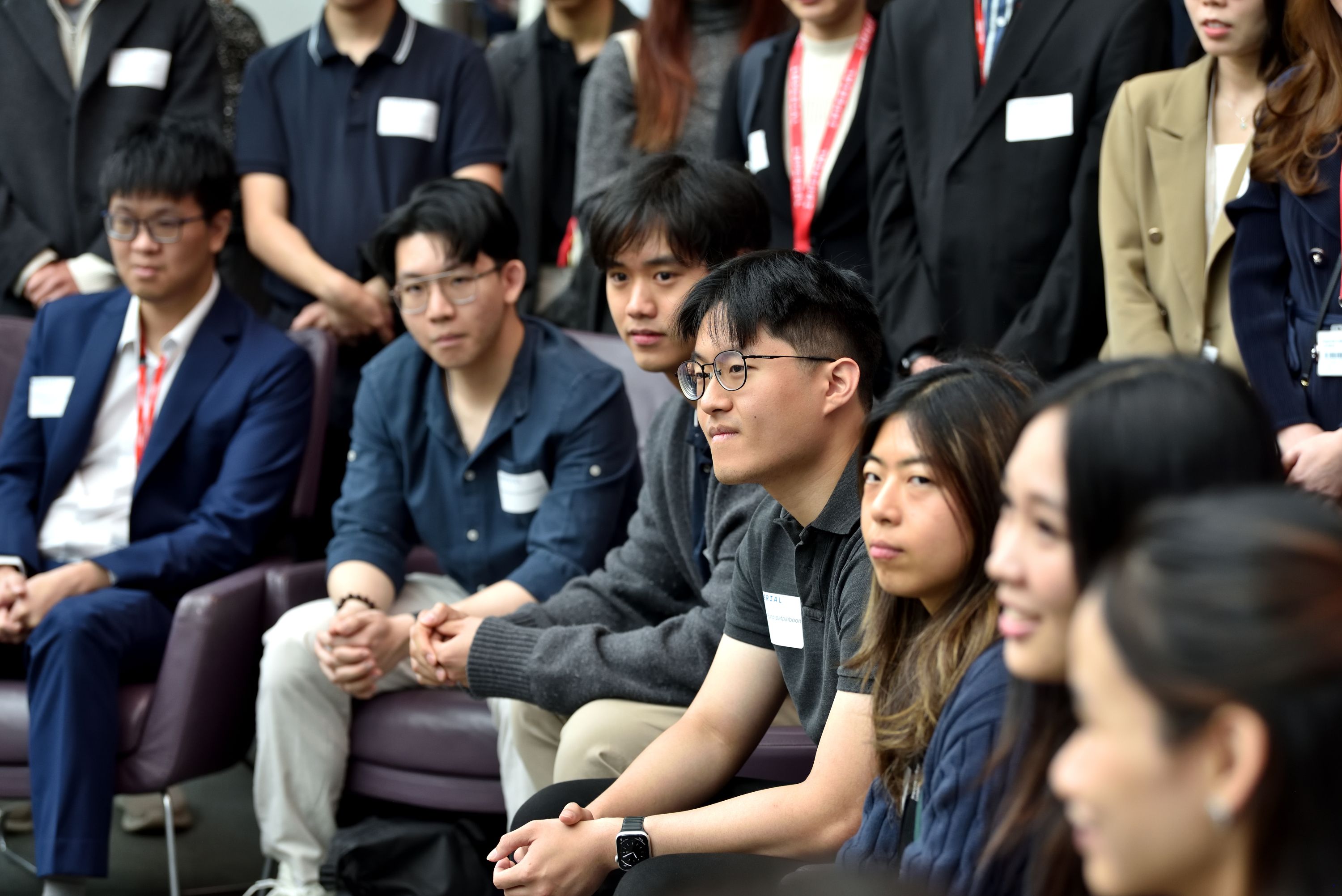
Our fully-funded studentships are open to Thai PhD scholars who will be based in SABER Lab at the Department of Electrical and Electronic Engineering at Imperial.
We are looking for excellent candidates, including IC designers, AI architects, and biomedical engineers, to work on a range of topics that will contribute to the overall vision of SABER Lab.
Why SABER Lab?
SABER Lab brings together multidisciplinary teams to create a world-class centre of academic excellence to train a new generation of Thai PhD scholars in semiconductor integrated circuit design, AI systems, biosensing, and biomedical engineering. The lab will conduct cutting-edge research with direct impact, and become a global focal point for innovation and entrepreneurship.

An electrochemical sensor developed by SABER lab with applications in disease detection

SABER Lab researcher working on chip design

Researchers working in the SABER Lab

Chip design in the SABER Lab

A SABER Lab researcher gives a live demo of a Lab-on-Chip platform for dynamic biochemical sensing

Some of the technologies for personalised healthcare developed by SABER Lab researchers at Imperial
SABER Lab students will benefit from:
- Access to a full ecosystem dedicated to semiconductor integrated circuit (IC) design and fabrication
- Lectures and hands-on experience for designing analogue and digital ICs using industrial standard electronic design automation tools (Cadence). This includes schematic entry, simulation, layout, verification, sign-off and testing
- Printed circuit board (PCB) design, layout, testing and its application for embedded systems
- Training for wire bonding, chip assembly and fabrication in a clean room
- Experience in molecular lab techniques to evaluate biosensor performance, use of electrochemical labs to set up testbenches for chip measurements and carry on validation of biosensors
- Collaborations with other research groups in Imperial
- Opportunities to attend international conferences, including an annual UK-Thai workshop in IC design, and to publish in top-tier journals
- Engagement with relevant industry partners
The full PhD programme will be based at Imperial, and upon successful completion of the PhD examination, students will be awarded an Imperial College London PhD degree in Electrical and Electronic Engineering.
Application information
Get in touchEligibility and funding
Applications are open to Thai nationals who meet the minimum entry requirements for both the Department of Electrical and Electronic Engineering at Imperial, and Mahanakorn University of Technology.
Studentships cover full international tuition fees and a tax-free stipend.
Entry requirements
Applicants should have a degree in Electrical/Electronic Engineering, Computing, Physics, Biomedical Engineering, or a related discipline, and we expect applicants to have a strong background or interest in semiconductor IC design, embedded systems, AI hardware, biosensor electronics, or PCB engineering.
Start date & deadlines
Start date is flexible, with four entry dates throughout the year. There is no fixed deadline to apply but early applications are encouraged as places will be filled as high-quality candidates are identified.
/prod01/channel_3/media/images/landscape-3000X2000/lei-in-the-lab-testing-a-circuit.jpg)
EMPOWER YOUR CAREER
Apply now!
Join the SABER Lab to pioneer next-generation semiconductor systems, embedded AI, and life-changing biosensor technologies. Apply now and become part of a dynamic global research initiative.
Email us now to express your interest