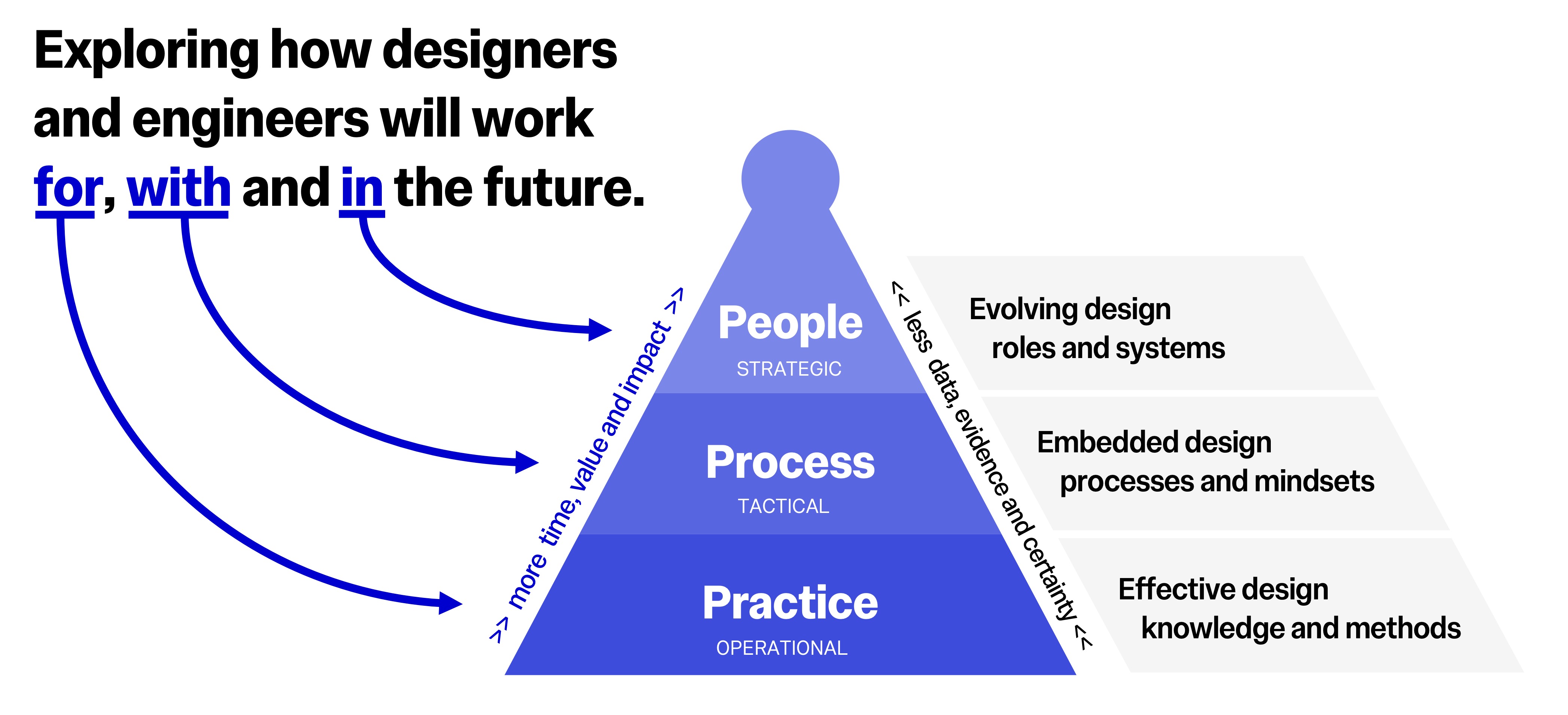
Our lab explores how designers and engineers can work for, with, and in the future. We use this multi-scope approach to understand, imagine, and realise sustainable and equitable futures. Our work brings together systems thinking, transdisplinary working, and futures literacy to help organisations make sense of uncertainty and act with purpose.
Future thinking
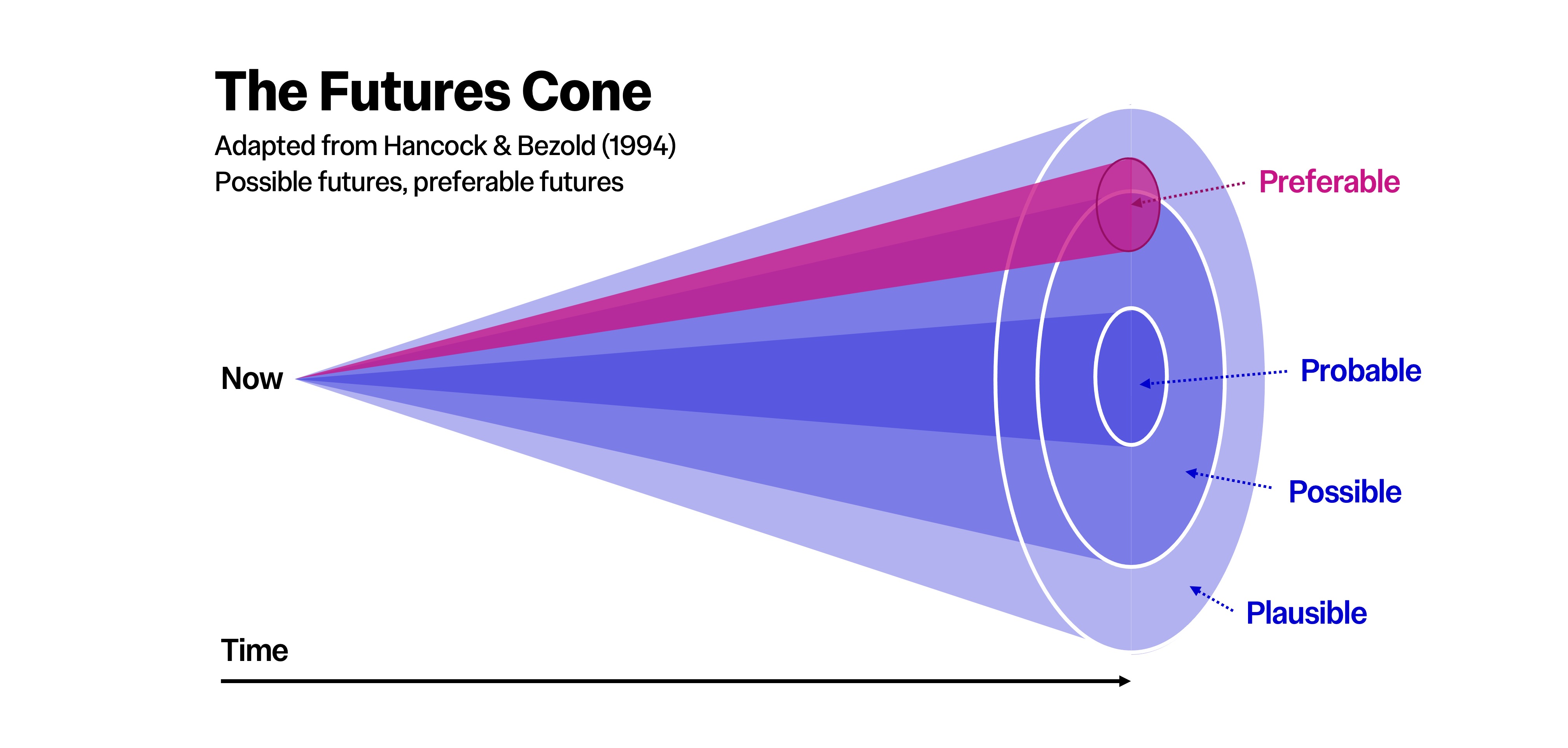
Strategic futures is the practice of exploring possible, probable, and preferable futures to guide better decisions today. In our lab, we use strategic futures to expand design horizons - helping individuals and organisations look beyond short-term targets and engage with long-term change. This might mean exploring alternative paths through emerging technologies, identifying systemic risks, or imagining how products, services, and systems could evolve over time. Futures thinking isn’t about prediction - it’s about preparation, imagination, and agency. It helps us ask better questions, challenge assumptions, and build solutions that are more resilient, inclusive, and future-facing.
Multi-scope approach
Realising better futures demands more than a single lens. Our work takes a multi-scope approach that investigates people, processes, and practice as interlinked areas of transformation. We use sustainable design tools to respond to immediate challenges, while also developing broader strategies to reshape the systems we design within. This layered approach allows us to tackle complex problems from multiple angles - working across timeframes, disciplines, and scales to generate both grounded and visionary design outcomes.
People
We explore how designers and engineers will work in the future: what roles they will play, the systems they’ll operate within, and the values that will shape their decisions. As technologies and societal expectations evolve, so too will the identities and responsibilities of design professionals.
Our work investigates emerging professional archetypes, new models of collaboration, and the social and organisational contexts in which future innovators will operate. This includes asking: Who will design the future? What kinds of leadership, ethics, and capabilities will they need? And how can we support them?
Process
We investigate how designers and engineers can consider the future in their approaches and day-to-day decision-making. This supports long-term strategy, expands innovation capacity, and guides transitions to sustainability. Making proactive, sustainable design feel concrete, not overwhelming.
Our work includes embedding specialist knowledge and practices into engineering frameworks, processes and mindsets. This includes asking: How can we make sense of futures, and uncertainty in design? How can companies widen their horizons, empower their teams and create space for exploratory and systemic thinking?
Practice
We explore how design can actively shape more sustainable and equitable futures - through what is made, how it's made, and why it matters. This includes emerging areas of design application, from future consumption and circular innovation to speculative tools, novel materials, and intergenerational legacies.
Our research looks at the tools, materials, and methods used by practitioners and how these can evolve to better serve both people and planet. This includes asking: How can we design sustainable products and processes? What new forms of practice are needed to build futures worth inheriting?
Multi scope levels
People
Exploring and facilitating the role of the designer in future organisations. Who they are, how they work, and the systems they operate within.
Example Projects:
- Embedding sustainability into corporate design processes.
- Bridging knowledge implementation gaps for urban resilience.
- Foresighting work exploring engineering businesses of the future.
Process
Shaping how designers work on future projects. Their approaches, the frameworks they use, and how they interact with stakeholders.
Example Projects:
- Exploring AI enabled approaches for identifying future lifestyles.
- Designing systems for mapping sustainable process opportunities.
- Mapping data driven and data inspired design futures.
Practice
Equipping the designers of the future. What they work on, how they make decisions and what will be the tools of their trade.
Example Projects:
- Designing hybrid electric vehicles to maximise precious material recovery.
- Understanding online personalisation to promote better ownership of custom products.
- Designing closed loop packaging that ages well and lasts a lifetime.
Our interest areas
Our work responds to three core areas - essential directions for enabling more responsible, resilient, and future-fit design engineering practice.
Taking a Longer View
Design must move beyond short-term lifecycles to engage with longer horizons of impact. This means embedding foresight, embracing uncertainty, and designing for legacy, adaptation, and change. The challenges we face demand that we consider not just what a product does now, but how it will evolve, persist, or affect systems in the future. Long-term thinking is no longer optional; it is foundational to sustainable innovation.
Harnessing Information Systems
Data and information systems are now central to how we design, evaluate, and adapt. The ability to gather, interpret, and act on information is key to addressing complexity and unlocking innovation. Emerging technologies, including AI, offer powerful new ways to augment creativity and insight. Designers must engage critically and creatively with these tools to shape meaningful and informed outcomes.
Extending Responsibility
The boundaries of design responsibility are expanding. As designers shape systems as well as objects, they must navigate complex questions of equity, ecology, and agency. This includes designing with a wider range of voices, redrawing liability, and considering impacts across networks. Future design practice must actively tackle questions of justice, collaboration, and systemic accountability.