We have one panel discussion for each day of the conference focusing on different themes. Read on to find out more about the themes and meet the panellists.
Healthcare Cybersecurity from Risk to Resilience
(Day 1, 23 September 2026)
As healthcare becomes increasingly dependent on artificial intelligence, connected medical devices, and data-driven systems, the cyber threat landscape is evolving rapidly. This session will explore how advances in AI are creating both transformative opportunities and new security challenges for health systems. From AI-assisted clinical decision support to the growing sophistication of cyberattacks enabled by frontier AI models, the discussion will examine what healthcare organisations need to do to remain resilient.
Bringing together experts from healthcare, cybersecurity, policy, and technology, the session will focus on practical strategies for protecting critical infrastructure, securing patient data, and ensuring that innovation is implemented safely and responsibly.
Chaired by Dr Saira Ghafur, Director of Digital Health Policy at the Institute of Global Health Innovation, Imperial College London, this session will provide a strategic overview of one of the most important emerging challenges facing health systems: how to harness the benefits of AI while protecting healthcare infrastructure, patient safety, and public trust in an increasingly complex cyber environment.
Dr Saira Ghafur
 Dr Saira Ghafur is the Director of Digital Health at the Institute of Global Health Innovation, Imperial College London, where her work focuses on healthcare cybersecurity, health data governance, and digital health policy. She leads interdisciplinary research at the intersection of technology, clinical care, and policy, with a particular emphasis on strengthening the resilience of healthcare systems against cyber threats and enabling the safe adoption of digital technologies. She established one of the first global academic collaborations in healthcare cybersecurity and has worked extensively with government, regulators, the NHS, and industry to translate research into national and international policy.
Saira is the co-founder of two start-ups: Psyma Mental Health Technologies and Prova Health. She is also an Honorary Consultant in Respiratory Medicine at Imperial College Healthcare NHS Trust and has previously served as Clinical Fellow to the National Medical Director at NHS England and as a Commonwealth Fund Harkness Fellow in Healthcare Policy and Practice in New York.
Dr Ganesh Kathiresan
 Dr Ganesh Kathiresan is a health tech and business leader experienced in digital healthcare and medical devices. He has founded, grown and commercialised several startups as well as business units within large corporates and currently advises companies in digital healthcare and medical technology with a focus on innovation.
Previously he was VP of Digital Healthcare at Reliance, one of India’s largest private sector conglomerates. At Reliance he started the digital healthcare business unit which developed from ground up a large scale digital healthcare platform that caters to hundreds of millions of users. Prior to heading the digital healthcare team at Reliance, Ganesh worked in medical technology in the UK and the US. He was part of the team that founded Sensium, a spin out company from Imperial College London, and developed SensiumVitals, the world’s first fully disposable wireless medical monitor.
Ganesh specialises in healthcare innovation taking new products from ideation through to development, commercialisation and scale and holds a Masters degree and Doctorate from Imperial College London.
Professor Jeremy Lim
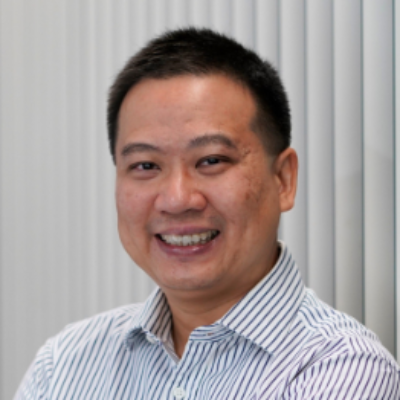
Associate Professor Jeremy Lim’s primary role is as CEO and Co-Founder of AMILI, a microbiome insights company based in Singapore serving the region. Beyond this, he also undertakes academic and practice-focused work in health financing. In previous roles, Jeremy has spent substantial time in public and private healthcare across Asia as well as in policy advisory with Singapore and other regional governments, the Asian Development Bank, the World Bank and the World Health Organization. He was founding Partner in NYSE-listed Oliver Wyman’s Asia healthcare consulting practice. He is also adjunct faculty in the National University of Singapore and Monash University Malaysia.
Outside academia, Jeremy serves on the boards of various for-profit and not-for-profit organisations in different aspects of healthcare including hospitals, migrant worker health, healthy longevity and digital health interventions. He maintains an active interest in health advisory, supporting former clients, focusing mainly on healthcare acquisitions and health insurance. He trained in surgery and public health, attaining post-graduate qualifications from the UK and US.
Dr Tan Min On
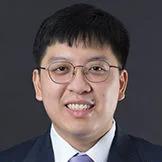 Dr Tan Min On is a Consultant Radiologist at Sengkang General Hospital (SKH) under the SingHealth cluster, specialising in chest, cardiac, and advanced body imaging. He earned his medical degree (MBBS/BMedSc) from the University of Melbourne before obtaining his Master of Medicine (Diagnostic Radiology) from the National University of Singapore, becoming a Fellow of the Royal College of Radiologists (FRCR) in the UK, and later completing an Executive MBA from the Quantic School of Business and Technology. Beyond his clinical practice, Min On is a prominent figure in digital health and academic medicine, serving as the Medical Informatics Lead at SKH, the Director of Artificial Intelligence Research for the Radiological Sciences Academic Clinical Programme (ACP), and a Clinical Assistant Professor at Duke-NUS Medical School. He is also a deeply committed educator and professional leader, functioning as a Core Faculty member for the SingHealth Diagnostic Radiology Residency Programme and serving as the elected Council Member and Honorary Treasurer for the College of Radiologists under the Academy of Medicine, Singapore.
Ensuring Impact: Bringing Academic Research and Industry Innovation to the Bedside
(Day 2, 24 September 2026)
This session will explore the challenges and opportunities in translating research to impact at scale for the benefit of patients and clinicians. Featuring perspectives spanning academia, healthcare delivery, and industry, this conversation will focus on strategies for ensuring that innovative research does not "wither and die on the academic vine" but instead results in sustained benefit to society.
Chaired by Dr Jeff Tully, co-director of the Center for Healthcare Cybersecurity (CHC) at UC San Diego.
Dr Jeff Tully
 Dr Jeff Tully is a security researcher specialising in the intersection of medical technology and patient safety. His work has explored vulnerabilities in 911 infrastructure, the exploitation of HL7 protocols, and simulations of compromised medical devices, with his findings showcased at RSA-C, DEF CON, and Black Hat. He is the co-director of the Center for Healthcare Cybersecurity (CHC) at UC San Diego, where he also holds the Sheldon Furst Endowed Chair in Anesthesiology.
Mr Lee Chee Chong
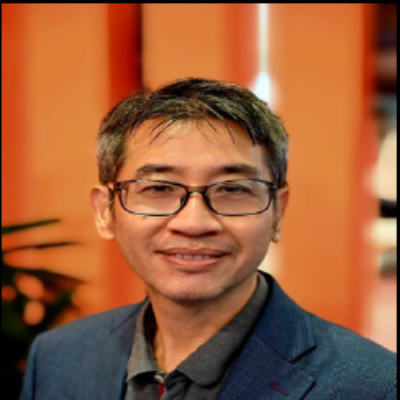 Mr Lee Chee Chong is the Group Chief Information Security Officer (GCISO) at SingHealth, where he leads the organisation's cybersecurity strategy and works closely with business and technology leaders to strengthen cyber resilience across SingHealth. A strong advocate for secure digital transformation, he focuses on shaping the strategic direction of cybersecurity to further strengthen the cluster’s security posture, safeguard our digital assets, and advance the cluster’s digital transformation initiatives in support of SingHealth’s strategic priorities. Prior to joining SingHealth, he held senior cybersecurity leadership positions in both the public and private sectors.
Mr Stefan Gentsch
 Mr Stefan Gentsch is the Cybersecurity Officer for Asia Pacific at Siemens Healthineers. Based in Singapore, he is responsible for cybersecurity across the region, helping protect both Siemens Healthineers' operations and customers using its healthcare technologies. With a background in penetration testing and secure coding, Stefan brings a hands-on practical perspective on today's cybersecurity challenges.
Mr Billy Leung
 Mr Billy Leung, Medical Device Technology | SingHealth Biomedical Engineering (BME), has been leading the Internet of Medical Things (IoMT) security initiatives within the BME domain across SingHealth. With over 20 years of experience spanning healthcare technology, cybersecurity, critical infrastructure systems, and programme delivery, he has been instrumental in developing and implementing cybersecurity frameworks, risk and vulnerability management strategies for the secured use and operation of medical devices. His experience spans healthcare, government, and private sectors.