[21/11/25] Dr. Toby Kay led the Chemical Engineering FC team to the final, all the way to penalties, in the Imperial Movember 5-aside tournament. Bravo again, Toby!

[23/09/25] Data-driven prediction of blood glucose dynamics from vagus nerve recordings using neural controlled differential equations. Accurately predicting blood glucose dynamics is crucial for understanding metabolic regulation and advancing bioelectronic medicine. The vagus nerve (VN) plays a key role in glucose homeostasis, yet its real-time relationship with blood glucose fluctuations remains underexplored. We introduce neural controlled differential equations (NCDEs) as a novel data-driven approach for modelling the complex interaction between VN activity and blood glucose levels in rats. We utilise data collected from 12 rats including high-frequency neural recordings from single-channel microwire electrodes implanted around the left cervical VN, alongside capillary blood glucose measurements taken every 5 min. We compare the performance of the NCDE against traditional machine learning models–feed-forward neural networks (FFNNs), convolutional neural networks (CNNs) and gated recurrent units (GRUs)— for forecasting future blood glucose levels. The input features comprised the frequency and mean amplitude of detected VN spikes, combined with initial glucose concentration over the prediction window. Results demonstrate that NCDE significantly outperforms FFNNs, CNNs, and GRUs achieving a mean squared error (MSE) below 10%, compared to over 15% for the baseline models. Furthermore, replacing the real neural recordings with random noise led to a sharp increase in MSE (over 20%), confirming the ability of the NCDE in extracting meaningful neural signal information. These findings underscore the potential of NCDEs to enhance physiological time-series modelling, particularly for applications in bioelectronic medicine and precision neural signal decoding.
Our study has been published in the Machine Learning: Science and Technology journal.
[18/09/25] A trip to visit collaborators in Cambridge. On Thursday September 18, we visited the Bioelectronics Laboratory, Department of Engineering, University of Cambridge. We were invited by our collaborators, Dr. Amparo Güemes and Professor George Malliaras. We had the opportunity to learn more about the research carried out in their laboratories, ranging from neuroengineering and the design and manufacture of biohybrid implants to advanced biological signal processing. Following the visit, Mr. Antonio Malpica-Morales gave a talk entitled "Decoding the vagus nerve: predicting blood glucose with neural differential equations," as part of the collaboration between the Bioelectronics Laboratory and our Complex Systems Multiscale group that led to the publication of a scientific article.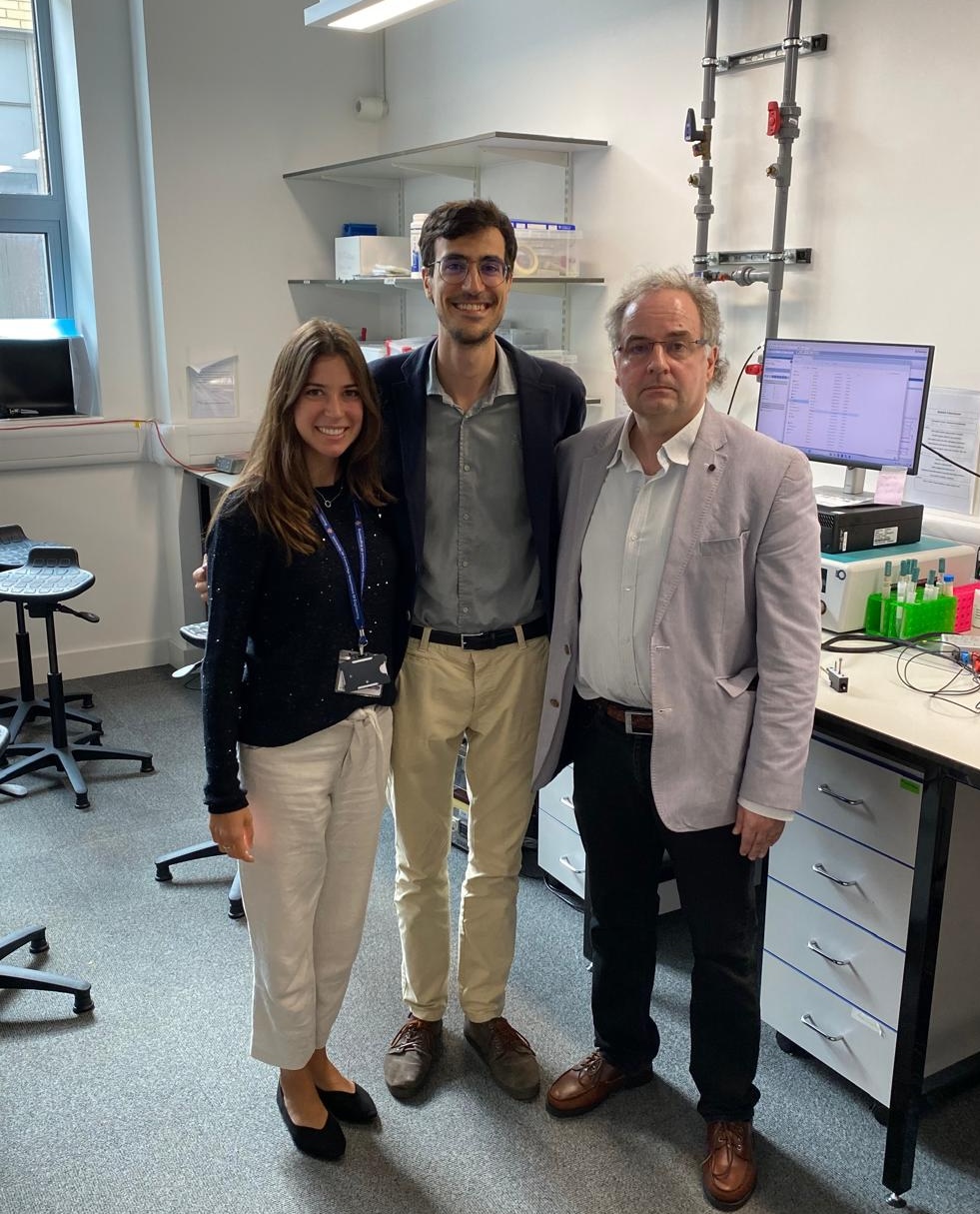
[11/08/25] Data-driven reconstruction of a multivariate Langevin equation to model complex systems. Complex systems are ubiquitous, ranging from natural phenomena, like climate and ecosystems, to human-created entities such as financial markets and social networks. Because complex systems typically consist of many interacting parts, understanding their collective behaviour is exceptionally challenging, and traditional methods often depend on detailed knowledge of every interaction or simplifying assumptions that can distort the results. Here we introduce a novel framework that blends statistical physics with state-of-the-art data‑driven techniques to infer the fundamental dynamics directly from observations, in an agnostic and unbiased manner. We demonstrate the framework’s efficiency, robustness and versatility with two distinctly different examples: the electricity day-ahead market and the foreign‑exchange market. For each case, the framework establishes the governing model directly from the data, without any preset parameters and domain-specific knowledge, capturing the intricate interplay amongst system variables, and revealing the prevailing trends and subtle hidden interactions. For instance, it demonstrates distinct equilibrium prices at different hours of the day in the power market and uncovers subtle couplings between currency pairs. The framework’s success across seemingly unrelated domains highlights its applicability and relevance as a generic powerful tool for disentangling and understanding the intricate dynamics of complex systems, with wide-ranging potential applications in science and engineering.
Our study has been published in the Physical Review E journal.
[09/07/25] Coherent Structure Interactions in Spatially Extended Systems Driven by Excited Hidden Modes. Coherent structures are localized, long-lived identifiable patterns that emerge in many dissipative, externally driven, spatially extended nonlinear systems. These structures are ubiquitous in a wide spectrum of scientific fields, including astrophysics, solid-state physics, chemistry, and biology—manifesting in phenomena as diverse as microbial colonies, crystal formation, and galaxies. Despite the considerable attention and decades of research, key questions remain about how coherent structures interact, particularly in strong interactions where detailed characterization is still lacking. Our work aims to develop a mathematical framework to describe these interactions using spectral theory.
We apply our approach to a classical fluid dynamics problem: a falling liquid film. We uncover a novel mechanism for transition to self-sustained dynamics, driven by an unusual and previously unreported bifurcation. The mathematical object responsible for this transition remains hidden within the spectrum of the system's linearized operator and is revealed only through advanced mathematical techniques.
Because these spectral properties appear in a wide variety of dissipative nonlinear systems, from interfacial flows to reaction-diffusion systems, our findings could have broad implications across multiple disciplines, providing new insights into the dynamics of coherent structures in diverse physical settings.

Our study has been published in the Physical Review X journal.
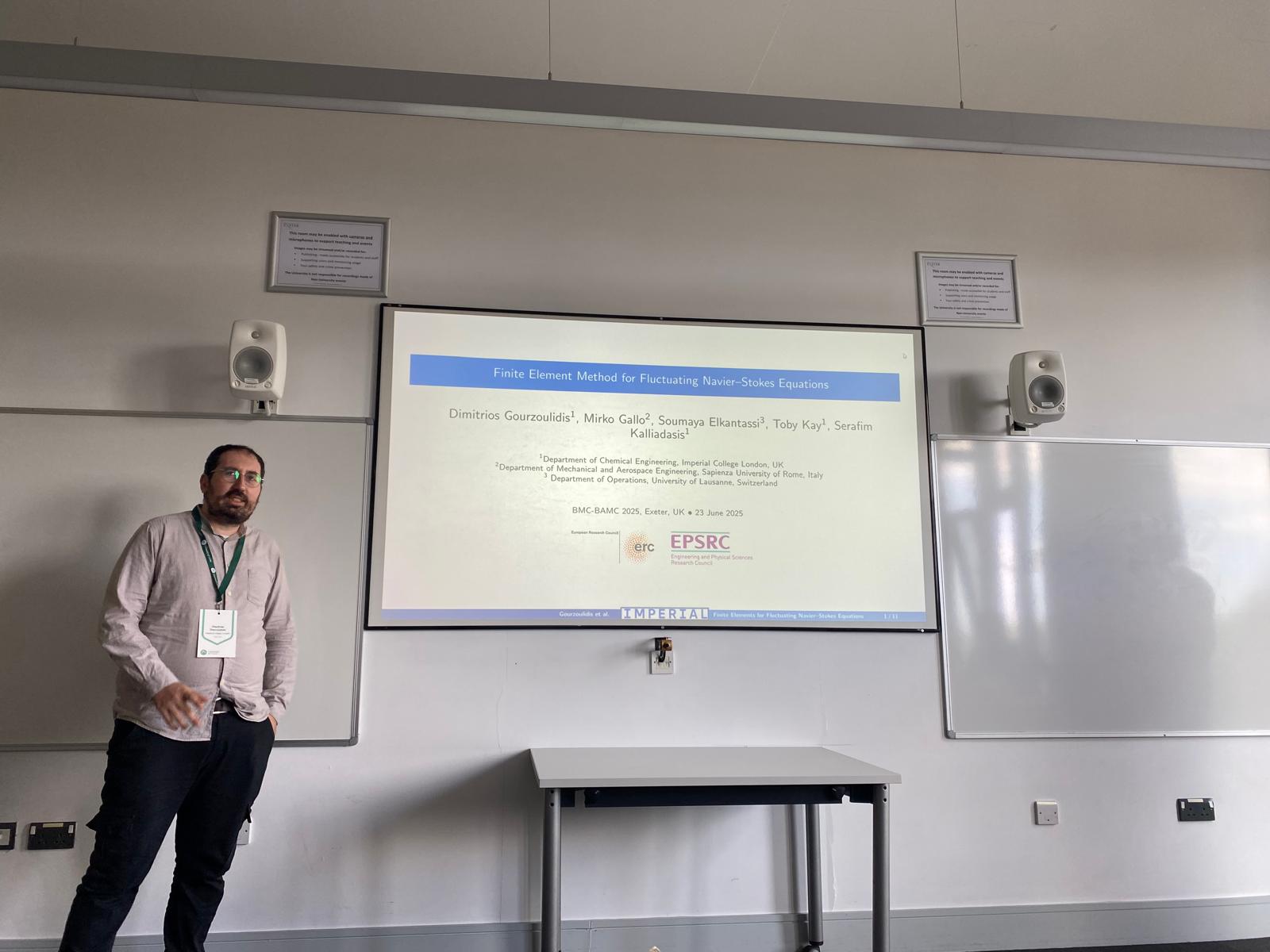
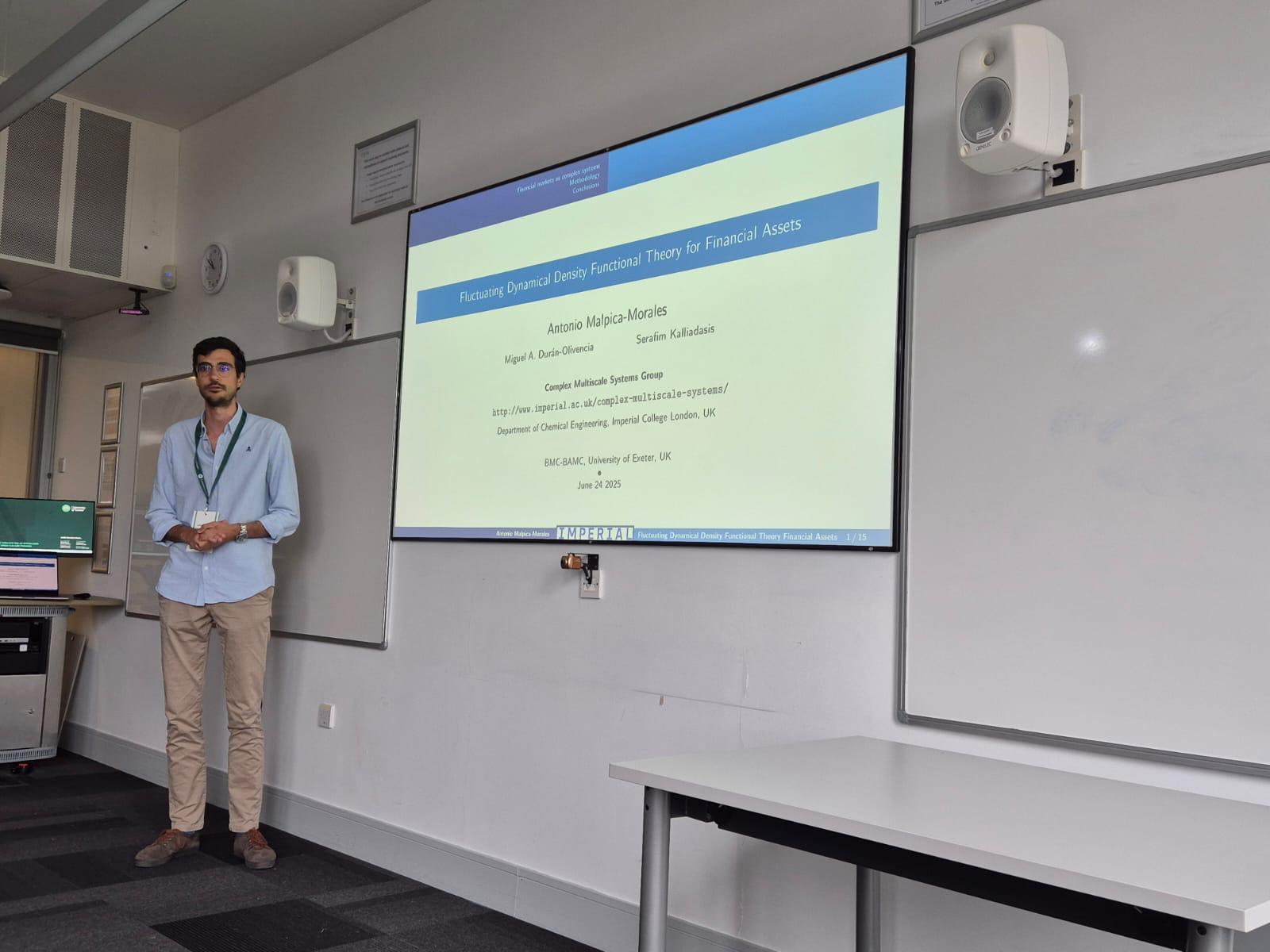
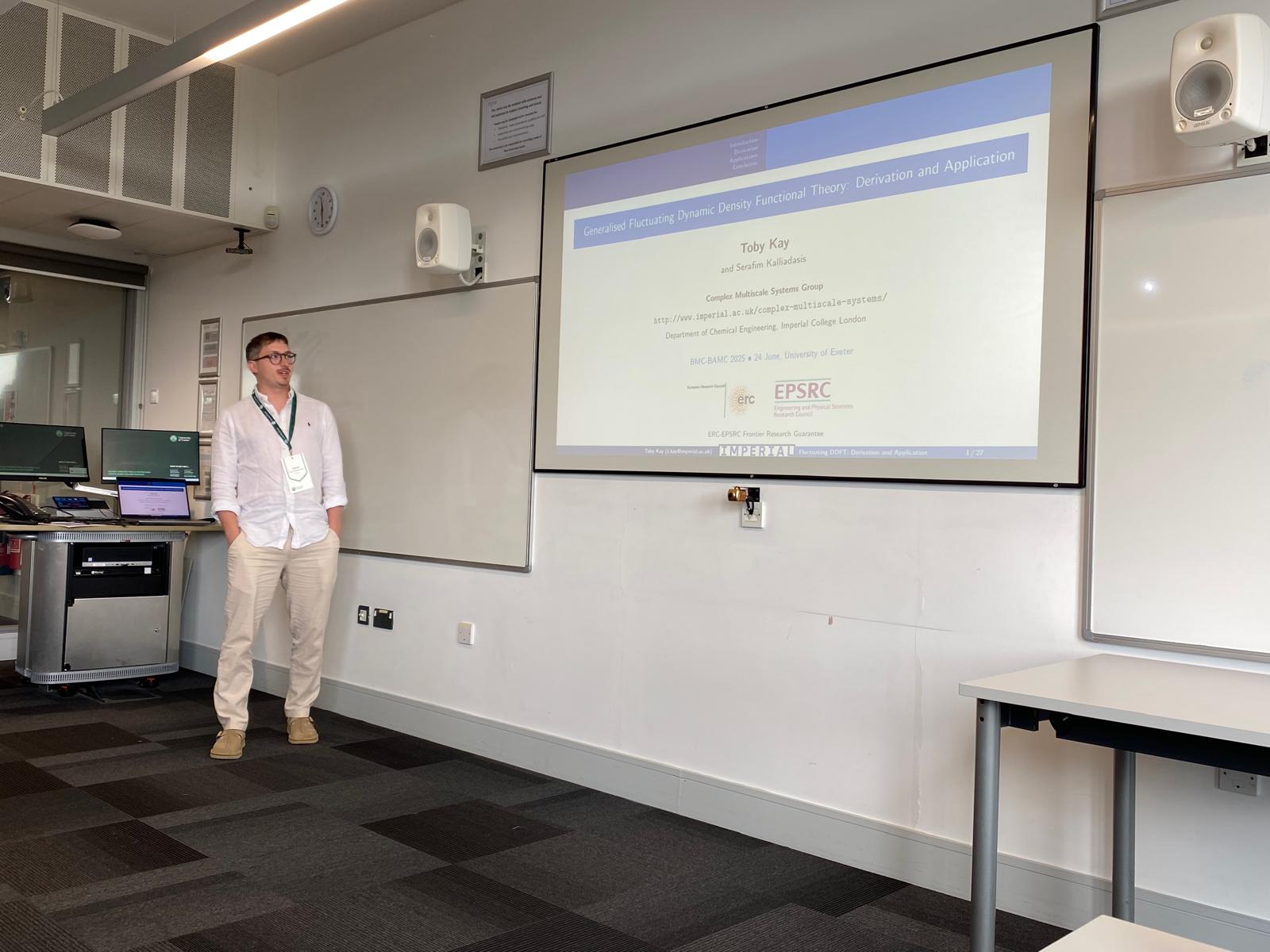
[25/06/25] Trio of contributed talks at the British Applied Mathematics Colloquium (BAMC). Dimitrios, Antonio, and Toby gave contributed talks at the BMC-BAMC, Exeter, UK, 23rd June - 26th June 2025 showcasing our work in progress. The title of the presentations were:
- Dimitrios: "Finite-Element Methods for Isothermal Fluctuating Hydrodynamics".
- Antonio: "Fluctuating Dynamical Density Functional Theory for Financial Assets".
- Toby: "Generalized Fluctuating Dynamic Density Functional Theory: Derivation and Applications".
[20/06/25] The first of what we hope will be many visits from a good collaborator. Professor Mirko Gallo from Sapienza University of Rome, Italy, joined us from Thursday June 19 to Friday June 20, to discuss about fluctuating hydrodynamics and ongoing projects. He gave us a talk entitled "Fluctuating hydrodynamics description of phase change in fluids". We concluded the visit by enjoying a social gathering at the local restaurant.
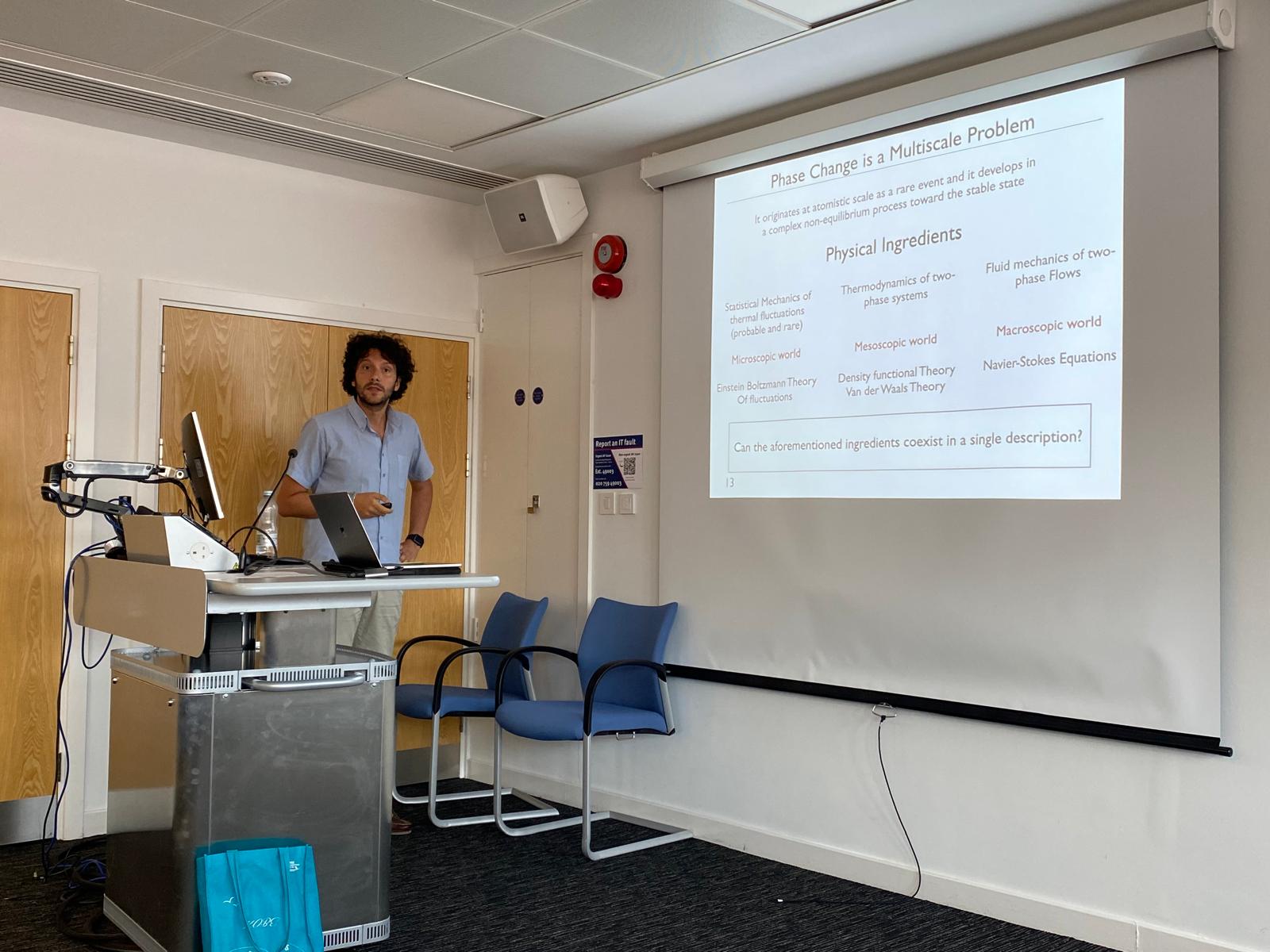

[11/04/25] A lively yet productive week for our group, enriched by visits from friends and collaborators. Dr. Miguel A. Duran-Olivencia joined us from Tuesday April 8, to Friday April 11, engaging our team in insightful discussions on Fluctuating Dynamic Density Functional Theory. Additionally, on Friday April 11, Mr. Frank Ioannis Papadakis Wood gave us a talk on Neural Ordinary Differential Equations. We concluded the week by enjoying a social gathering.

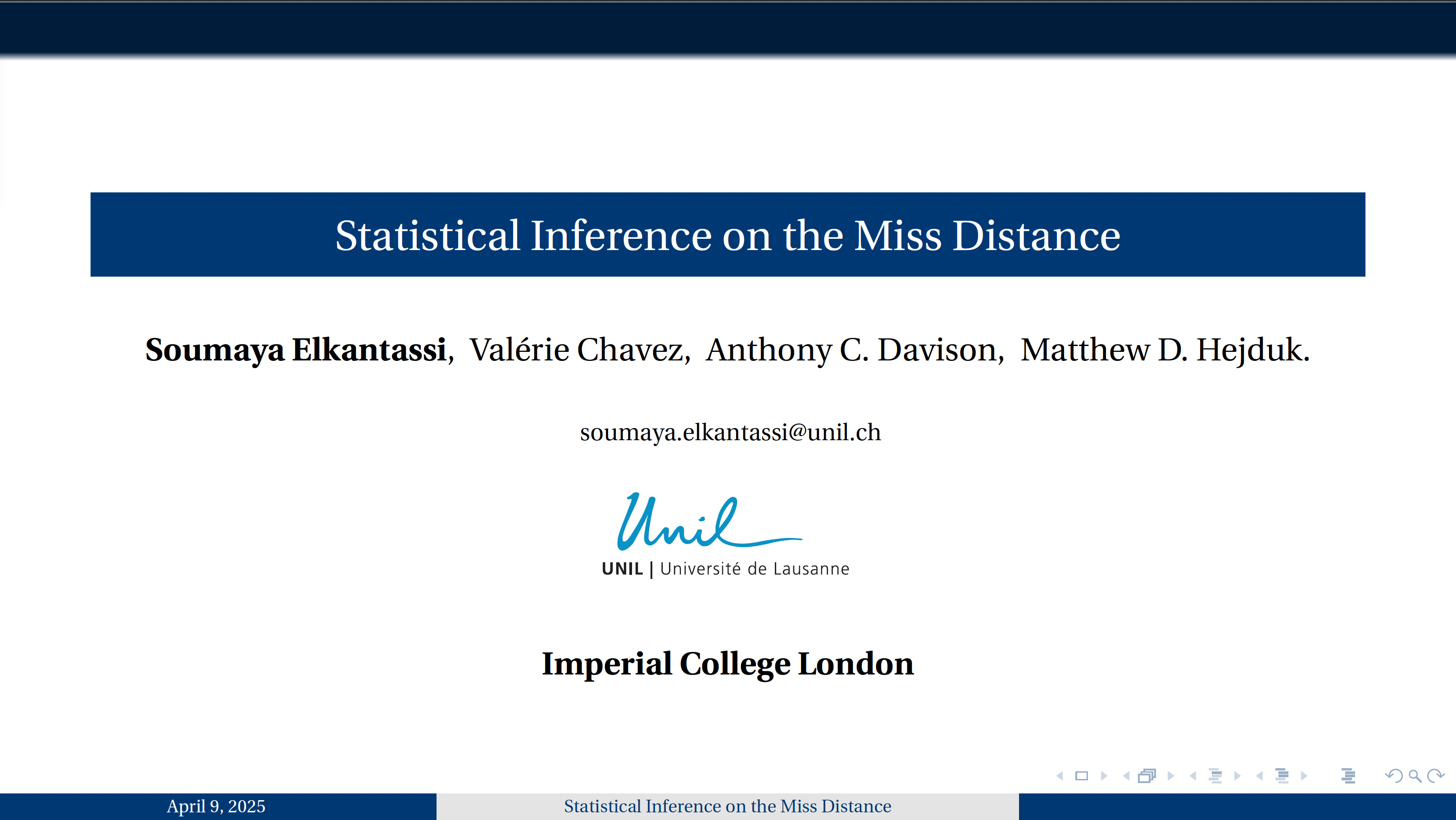
[11/04/25] Dr. Soumaya Elkantassi from the Department of Operation of the University of Lausanne in Switzerland visited our group over Tuesday April 8-Friday April 11 for discussions in the general areas of probability, statistics and stochastic processes.
During her visit, she also delivered a research presentation entitled:
Inference on the missed distance for collision assessment
[08/04/25] Mr. Antonio Malpica-Morales gave a contributed talk at the Mathematics and Health conference, "Mathematical Models that Help Understand and Treat Diseases", University of Almería, Spain, 2025. The talk was entitled "Decoding the Vagus Nerve: Predicting Blood Glucose with Neural Differential Equations".