Important terms
Biomarker – a chemical made by the body that shows that a cancer is present
Endoscopy – a camera test to look at the inside of the stomach
Pre-cancerous change – a change that, if not treated, can turn into cancer
Overview
The Gastric Hormone Biomarkers of Preneoplastic Lesions (GEM) study is investigating a potential new way to detect stomach cancer early.
Why is this study needed?
Stomach cancer is the fifth most common cancer worldwide. This cancer is usually discovered, or diagnosed, very late. Because of late diagnosis, only 1 in 5 patients will survive longer than 5 years after the cancer is found.
Diagnosing stomach cancer earlier would help to improve patient survival. Stomach cancer is usually diagnosed with the help of an endoscopy test. During an endoscopy, a doctor passes a camera on a long flexible tube down the throat into the stomach. The doctor then looks for anything unusual inside the stomach. However, early signs of stomach cancer are easily missed by endoscopy. So, we are looking for other ways to detect the disease sooner. One possible way is to find new signs or ‘biomarkers’ for this cancer.
What is a biomarker?
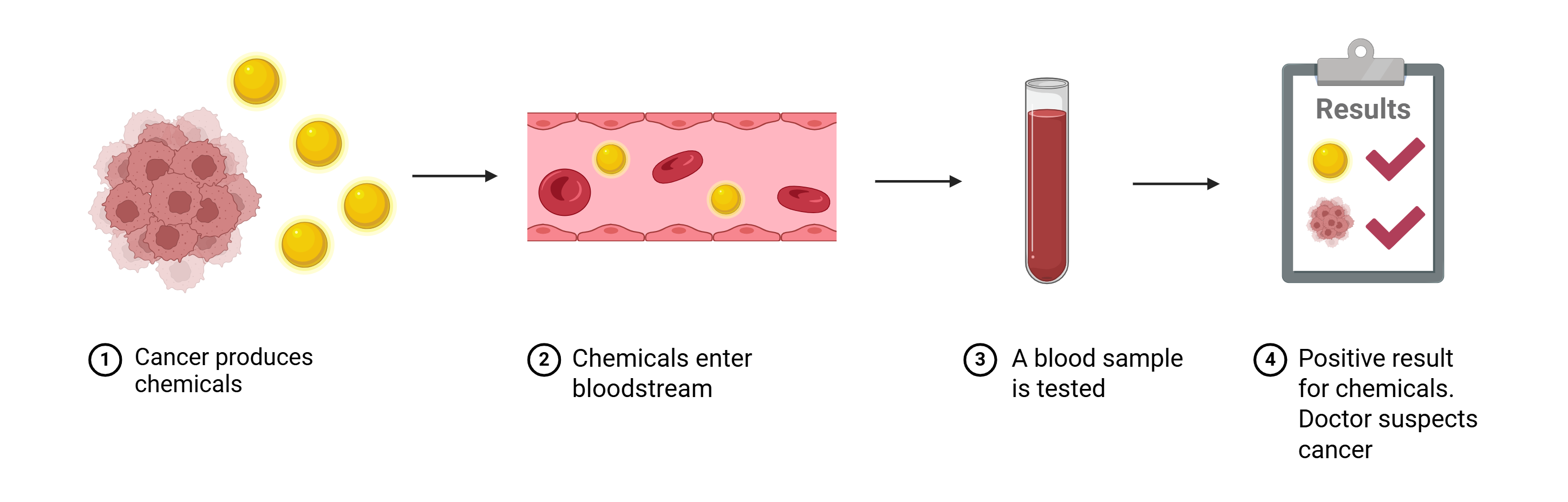
A biomarker is a chemical usually found in the blood that can be a warning sign to doctors that a cancer is present. Biomarkers are usually chemicals created in some way by a cancer. There are already several biomarkers that help doctors detect cancers, such as prostate cancer and ovarian cancer.
How can stomach cancer develop?
Stomach cancer takes a long time to develop. It usually starts with what doctors refer to as 'pre-cancerous changes', or changes to the stomach lining. A pre-cancerous change is a change that, if not treated, can sometimes turn into cancer.
These changes can be caused by long-lasting irritation and inflammation in the stomach that damages the stomach lining. If this damage continues, it can eventually cause stomach cancer..png)
What are the aims of the GEM study?
We are looking for possible new biomarkers of early stomach cancer. If we are successful, there may be potential to develop a blood test for these biomarkers. This blood test could help to find stomach cancer early or even before it develops.
How is the GEM study being carried out?
We are testing whether changes to the stomach lining can affect the levels of some stomach hormones.
We will take blood samples from consenting people who are having endoscopy tests. These samples will be tested for four different stomach hormones:
- Ghrelin
- Vitamin B12
- Gastrin
- Pepsinogen.
We will also see if the patients have changes to their stomach lining, or even stomach cancer, during their endoscopy tests..png)
The patients will then be split into three groups:
- People with normal stomachs.
- People with mild changes to their stomach lining.
- People who are close to developing stomach cancer.
We will compare the three groups to see if their hormone levels are different. This will show us if the hormone levels can identify changes in the stomach including cancer..png)
The GEM study is a case-control study. This means that we will compare the hormone levels in people who have changes in their stomach lining to people who have a normal stomach lining.
Around 30 male and female patients have consented to take part in the study. We are also using stored blood samples taken previously from patients. These patients consented for their sample to be used in medical research.
When and where does the study take place?
The study is taking place at John Radcliffe Hospital in Oxford.
Who is funding this study?
The GEM study is funded by Cancer Research UK.
What do we hope to find with the study?
We expect that the levels of at least one of the stomach hormones will be linked to stomach lining changes or cancer. We also think that each hormone could give specific details about the health of the stomach.
What do we hope to achieve with the study results?
We may find a link between one or more of the hormones and changes to the stomach lining. If so, future work could focus on developing a blood test for these hormones. This test could be used to detect stomach cancer early or before it develops.