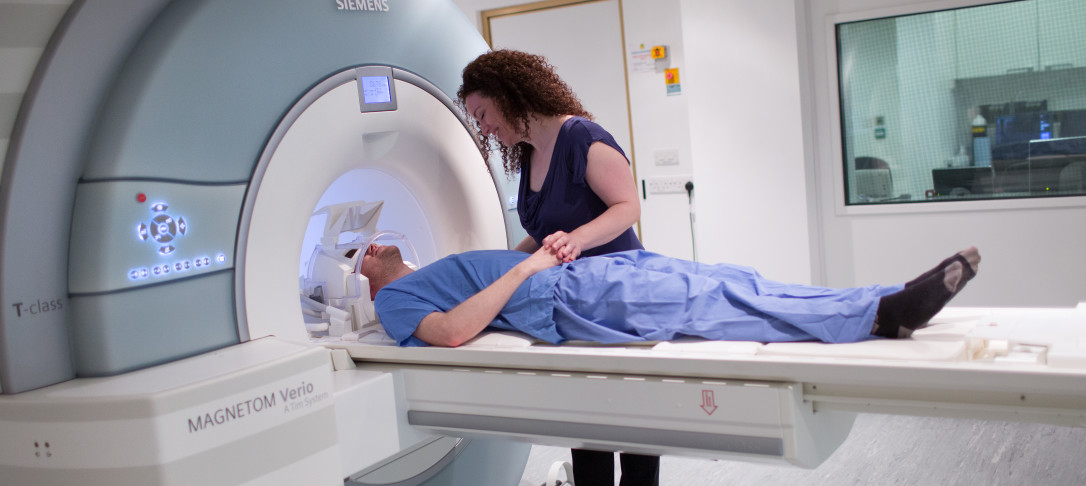
Since its original development in the 1970s, Magnetic Resonance Imaging has become increasingly common both as a clinical diagnostic tool and as a research tool. Modern MRI machines can not only produce exquisite images of human anatomy, but can now produce maps of brain activity, temperature, and even the mechanical properties of tissues. MRI images are advancing our understanding of the way our brains function, helping us understand the underlying processes of disease, enabling sophisticated biomechanical modelling of our joints, and aiding in the development of thousands of new therapies for hundreds of diseases.
In this lecture, we will explore some of the fundamental maths and physics that make MRI possible. We’ll also discuss a broad range of exciting new applications of this technology, both in hospital and research settings. At the end of the lecture, you will have a basic understanding of both the mathematical and technological underpinnings of MRI, and will see just one of the many examples of how maths (and physics!) saves lives.
Suitable for UK, EU and international students who are interested in learning more about Bioengineering.