Abstract
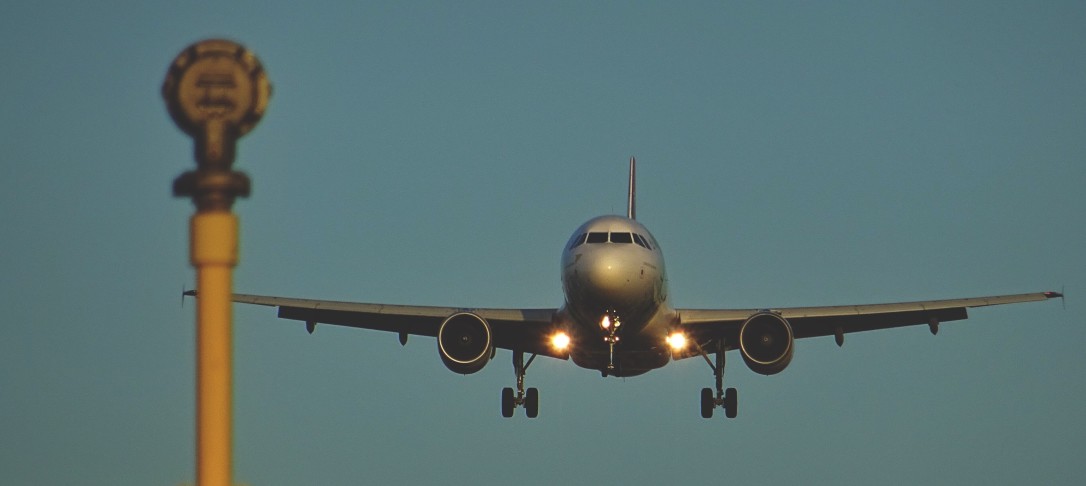
Aircraft noise is a key environmental concern for communities in the proximity of airports. While the engine remains the major source of noise in an aircraft, at low altitude and low speeds a significant role is played by aerodynamic noise generated by airflow over the fuselage.
During landing, when the engines operate at reduced power, a prominent source of aerodynamic noise is located at the landing gear bay, due to the occurrence of self-sustained oscillations in a resonant cavity. Suppressions of these oscillations may result in a significant reduction of overall aircraft noise during landing.
In this talk, Professor Andrea Serrani will summarise the research activity of the Gas Dynamics and Turbulence Lab at The Ohio State University that has been devoted to the design and experimental evaluation of model-based feedback controllers for suppressing subsonic cavity resonance.
Proper orthogonal decomposition and Galerkin projection techniques were used to obtain a reduced-order model of the flow dynamics from experimental data. The model was made amenable to control design by means of an optimisation-based control separation technique, which makes the control input appear explicitly in the equations. An adaptive feedback controller was then employed to suppress the cavity tones from pressure measurements.
Experimental results, in qualitative agreement with the theoretical analysis, showed that the controller achieves a significant attenuation of the resonant tone with a redistribution of the energy into other frequencies. The benefits of parameter adaptation over controllers of fixed structure under varying or uncertain flow conditions were also demonstrated experimentally.
Finally, an outlook into application of closed-loop strategies for jet noise mitigation is offered.
About the Aerodynamics & Control Seminar Series
The Aerodynamics & Control Seminars, hosted by the Department of Aeronautics, are a series of talks by internationally renowned academics covering a broad range of topics in fluid mechanics, control, and the intersection of these two areas.