Abstract
In most materials, electrons move around and scatter essentially independently of one another. In quantum materials, in contrast, electrons engage in highly correlated motions that resemble a complex dance. This gives rise to a wide range of astonishing electronic and magnetic properties that evoke the most profound questions challenging the field of condensed matter physics.
Research at the Quantum Matter Institute (QMI) at UBC seeks to unravel and exploit the complex phenomena that emerge in novel engineered materials — not only as a result of these strong electronic correlations, but also from other sources of extraordinary behavior, such as topological states or physical structures created artificially at the atomic scale.
In this talk, I will provide an overview of the ongoing Quantum Materials by Design effort at QMI, ranging from designing novel quantum phases in graphene via adatom decoration and strain engineering [1-3], to the possible realization of high-temperature topological superconductivity in twisted monolayer-thin layers of d-wave copper oxides [4].
[1] B.M. Ludbrook et al., Evidence for superconductivity in Li-decorated monolayer graphene, PNAS 112, 11795 (2015).
[2] A.C. Qu et al., Ubiquitous defect-induced density wave instability in monolayer graphene, Science Advances 8, eabm5180 (2022).
[3] P. Nigge et al., Room temperature strain-induced Landau levels in graphene on a wafer-scale platform, Science Advances 5, eaaw5593 (2019).
[4] O. Can et al., High-temperature topological superconductivity in twisted double layer copper oxides, Nature Physics 17, 519 (2021).
Biography
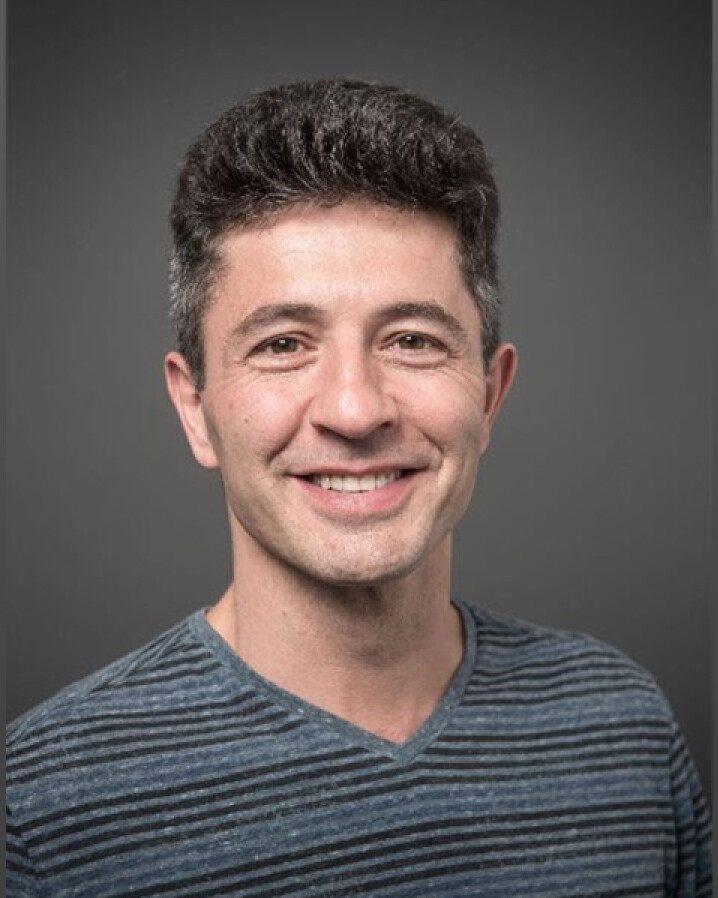
Professor Andrea Damascelli is the Scientific Director of the University of British Columbia’s Stewart Blusson Quantum Matter Institute (QMI), a Professor at UBC’s Department of Physics and Astronomy, and the co-Director of the Max Planck-UBC-UTokyo Centre for Quantum Materials. As QMI’s Scientific Director, Andrea led UBC’s effort resulting in the $66.5 million award from the Canada First Research Excellence Fund for Quantum Materials and Future Technologies. Andrea develops and utilizes angle-resolved photoemission spectroscopy (ARPES) and its time- and spin-resolved variants, as well as resonant x-ray scattering (RXS), to push the limits of these techniques and gain a deeper understanding of quantum materials and new phases of matter, with emphasis on superconducting cuprates, ruthenates, and other correlated oxides. Andrea’s work on quantum materials has gained global recognition and helped position Canada as a leader in the field of photoelectron spectroscopy. His work has been recognized with the prestigious Sloan, Killam, and NSERC’s Steacie Memorial Fellowships, the Bessel Research Award from the Humboldt Foundation, and the Canadian Association of Physicists’ DCMMP Brockhouse Medal. Andrea is also a Fellow of the Royal Society of Canada, the American Physics Society, the Max Planck Graduate Center for Quantum Materials, a Kavli Fellow of the US National Academy of Sciences, and a Senior Fellow of the CIFAR Quantum Materials Program.