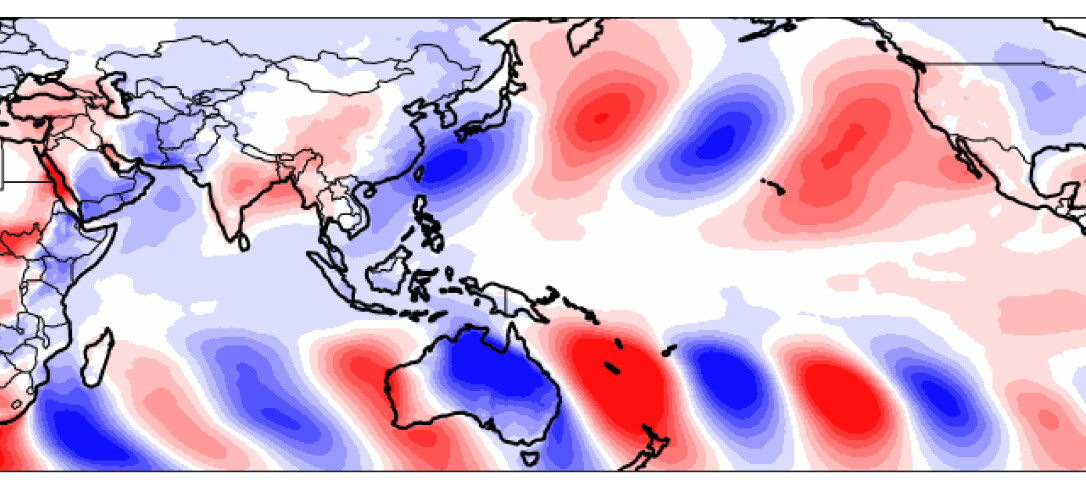
The world is currently grappling with how to transition to a lower carbon economy. There is, therefore, a need to assess climate risk for a broad range of future economic and technological scenarios. These scenarios set the carbon emissions, and hence the radiative forcing applied to the Earth system. However, due to computational expense, only a small selection of the possible scenarios can be numerically simulated using traditional climate models. Over the past several years we have been developing a hierarchy of machine learning approaches, which rapidly reconstructs the climate for arbitrary emissions scenarios (https://www.nature.com/articles/s43247-023-01011-0). Our more recent work includes additional physics constraints applied to the global three-dimensional oceans (https://doi.org/10.1007/s00162-024-00719-9) and atmosphere. These emulators not only enable the assessment of the physical climate response across a much broader range of emissions scenarios, but has also enabled a broader assessment of the downstream human impacts. This seminar will present the latest developments in our reduced-order models of the physical climate. A series of brief case studies will follow, demonstrating our data-driven quantification of the impact climate has upon extreme weather, agriculture, finance, healthcare and social unrest.
The seminar will be held in-person in CAGB 640, but will also be livestreamed. Registration is necessary.