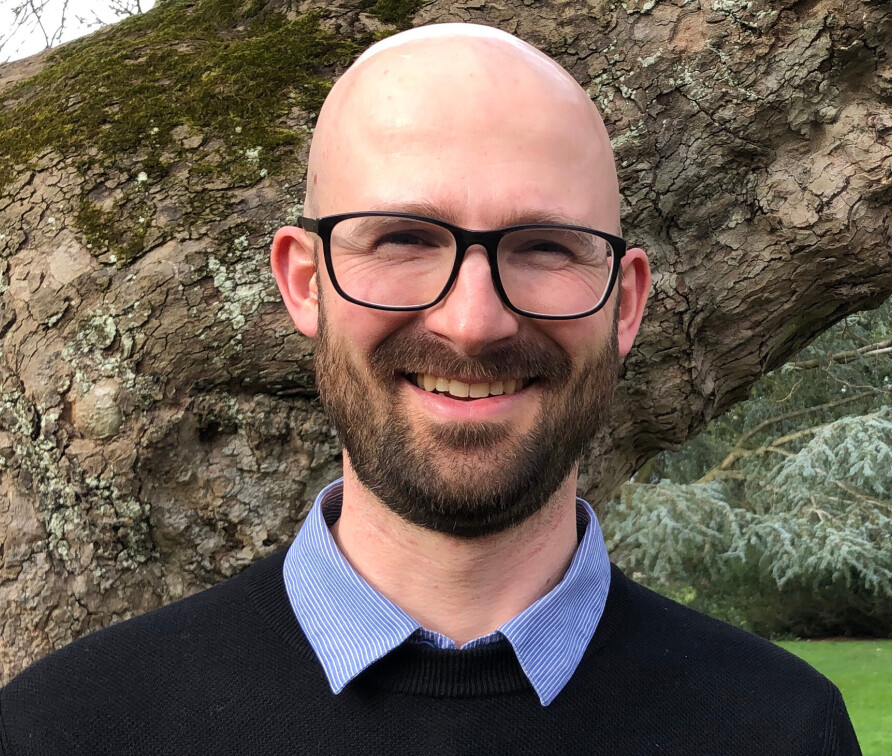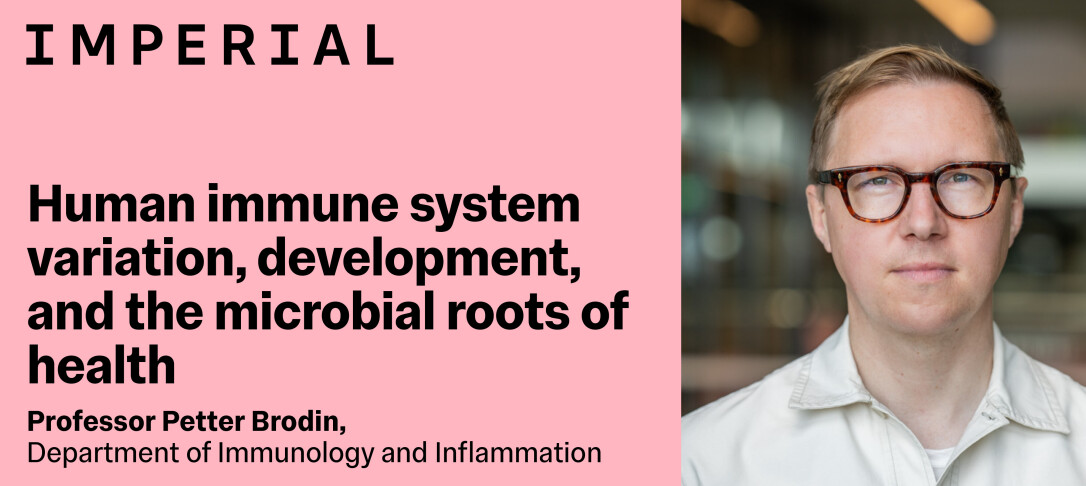
Professor Petter Brodin, Garfield Weston Chair of Neonatology, and Professor of Paediatric Immunology, explores how microbes in early life shape the developing immune system.
Please register to attend in person. A live stream link for online attendance is available on this page.
We look forward to seeing you on Wednesday 27 May!
Imperial Inaugurals are term-time lectures that celebrate our newest Professors, recognising their academic journey and showcasing their research.
Abstract
Why does the same vaccine produce lifelong protection in some children and barely a trace in others? And why, despite millions of years of evolution honing our immune defences, are allergies, asthma, and autoimmune diseases rising steeply in modern societies? These questions animate the work of my laboratory, which applies systems immunology approaches to longitudinal human cohorts to understand the forces that shape immune systems across the life course.
We have shown that the vast majority of immune variation between individuals is driven not by genetics, but by environmental exposures ‚and that the most consequential of these occur in the first weeks and months of life. The microbes that colonise the newborn intestine, and the metabolites they produce, act as critical calibrators of the developing immune system, setting immunological trajectories for health and disease that can persist for years. Using bifidobacteria as a paradigm, we have demonstrated direct causal links between early microbial colonisation and immunological imprinting, and identified specific molecular mechanisms mediating these effects.
At Imperial College London, we now apply a unique miniaturized screening platform to test thousands of microbial metabolites for immunomodulatory activity, with the aim of developing preventive interventions for children. By combining state of the art technologies with rare and unique samples from young children, in this lecture I will present a vision for precision paediatric immunology, one in which we learn from evolution to protect all children from infections and immune-mediated disease from the very beginning of life.
Biography
The Brodin lab develop and applies system immunology approaches to study human immune system variation in health and disease and human immune system development early in life. The work of the group involves the elucidation of heritable and non-heritable factors that shape human immunity, immune system development and adaptation to microbial factors early in life as well as a research program in clinical application of systems immunology in children to diagnose and describe immune system dysregulation and enable precision medicine. To enable these activities the group develops novel experimental and computational methods to more comprehensively and accurately monitoring immune systems in humans