Throughout many historical periods, conspiracy theories have exerted an influence in societies and been manipulated for their own purposes by those in power. Recent controversies over climate change, vaccines, telecommunications, media and more, have given rise to concepts such as the ‘deep state’, ‘the establishment’, and ‘globalists’.
Often fuelled by social media, these newer claims are often so shallow and impulsive that they’ve been branded as ‘conspiracism’; that is, ‘conspiracy without the theory’. As Muirhead and Rosenblum (2019) explain, ‘conspiracy without the theory dispenses with the burden of explanation. We see no insistent demand for proof, no exhaustive amassing of evidence, no dots revealed to form a pattern, no close examination of the operators plotting in the shadows. Instead, we get innuendo’.
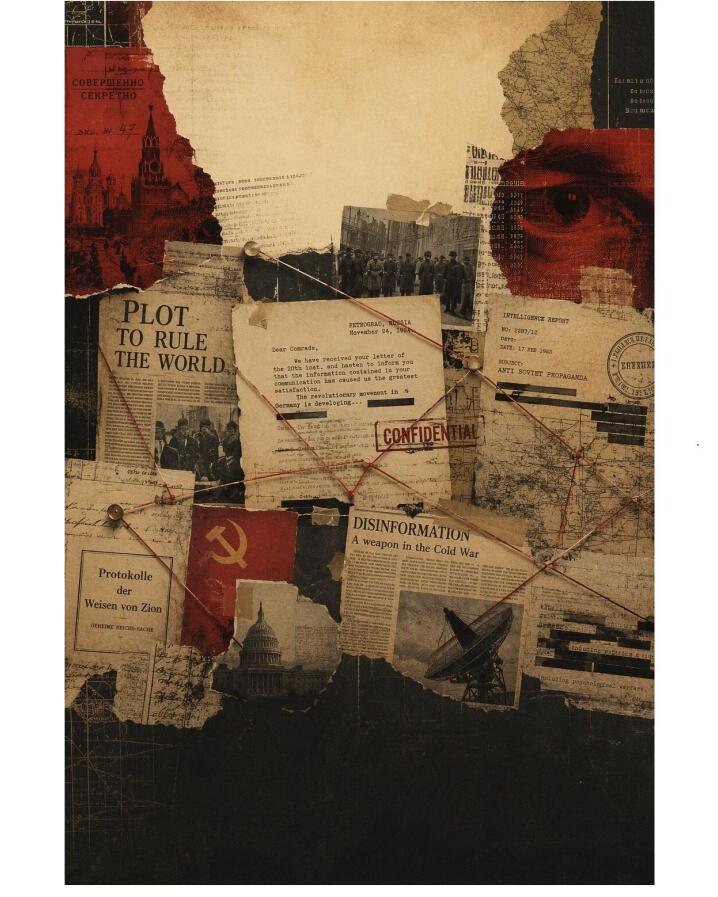
So what does a real conspiracy theory, developed over decades, look like? Drawing on three far-reaching conspiracy theories which emerged across the twentieth century, this seminar will aim to examine their dynamics, such as how they morph and adapt over time.
Speakers: Gill Bennett (former FCO official historian and author of The Zinoviev Letter: The Conspiracy that Never Dies), Izabella Tabarovsky (fellow at the Wilson Center and historian of Soviet propaganda), and Phil Tinline (journalist and author of Ghosts of Iron Mountain: The Hoax That Duped America and Its Sinister Legacy). Chair: Michael Weatherburn (Imperial College).