Abstract: Short-baseline neutrino anomalies have held the community’s attention for more than two decades, with the persistent 4.8σ MiniBooNE excess standing as a tantalizing hint of physics beyond the Standard Model. Recent MicroBooNE results have substantially redrawn this picture: comprehensive searches strongly disfavour the traditional light sterile neutrino explanation, yet the anomalies themselves remain unexplained. That tension has driven an exciting shift toward richer theoretical frameworks. Dark-sector models with new mediators, enhanced couplings, and novel production mechanisms now provide compelling alternatives that speak both to the anomalies and to broader questions of neutrino mass generation and dark matter. I will review the MicroBooNE experimental results, discuss where the theoretical landscape currently stands, and preview how the next round of searches at MicroBooNE and SBND is poised to either discover or definitively exclude these new physics scenarios. The simplest sterile neutrino interpretations may be fading, but the hunt for new physics at short baselines has never been more alive.
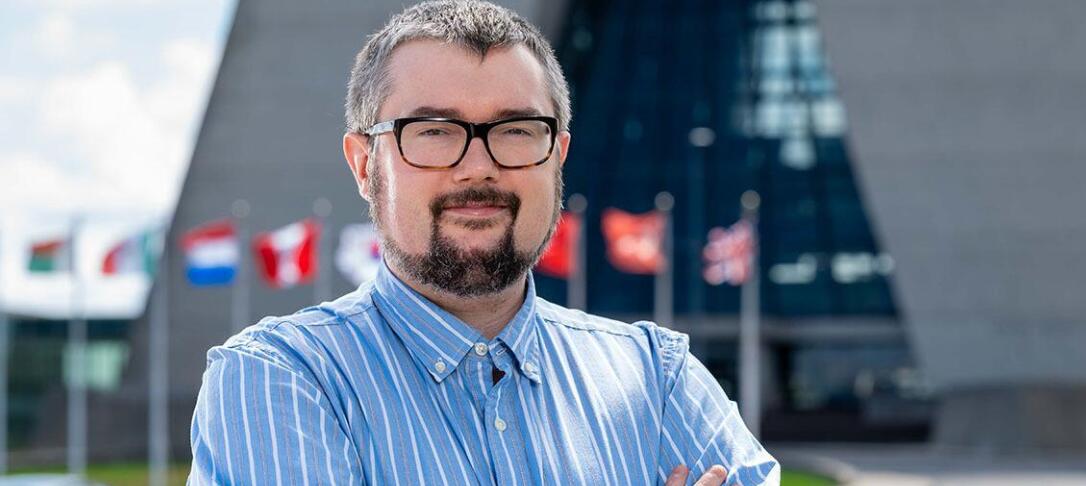
Speaker bio: Mark Ross-Lonergan is an Assistant Professor of Physics at Columbia University, where he joined the department in January 2025. He is an experimental particle physicist working on the Fermilab-based liquid argon experiments MicroBooNE, SBND, and DUNE, where he leverages modern neutrino detectors to search for signatures that may reveal connections between neutrinos and a hidden “dark sector,” including heavy sterile neutrinos and dark photons. He currently serves as Co-Spokesperson of MicroBooNE, having previously led both the first search for anomalous single photons and the first dark-sector electron-positron pair search on the experiment. Prior to his current role, he was an Oppenheimer Distinguished Fellow at Los Alamos National Laboratory and a postdoctoral researcher at Columbia. Ross-Lonergan made the transition from theory to experiment over the course of his training: he holds a BSc (Hons) in Theoretical Physics from University College Dublin, a Master of Advanced Study in Mathematics (Part III) from the University of Cambridge, and a PhD in Neutrino Phenomenology from the Institute for Particle Physics Phenomenology at Durham University.