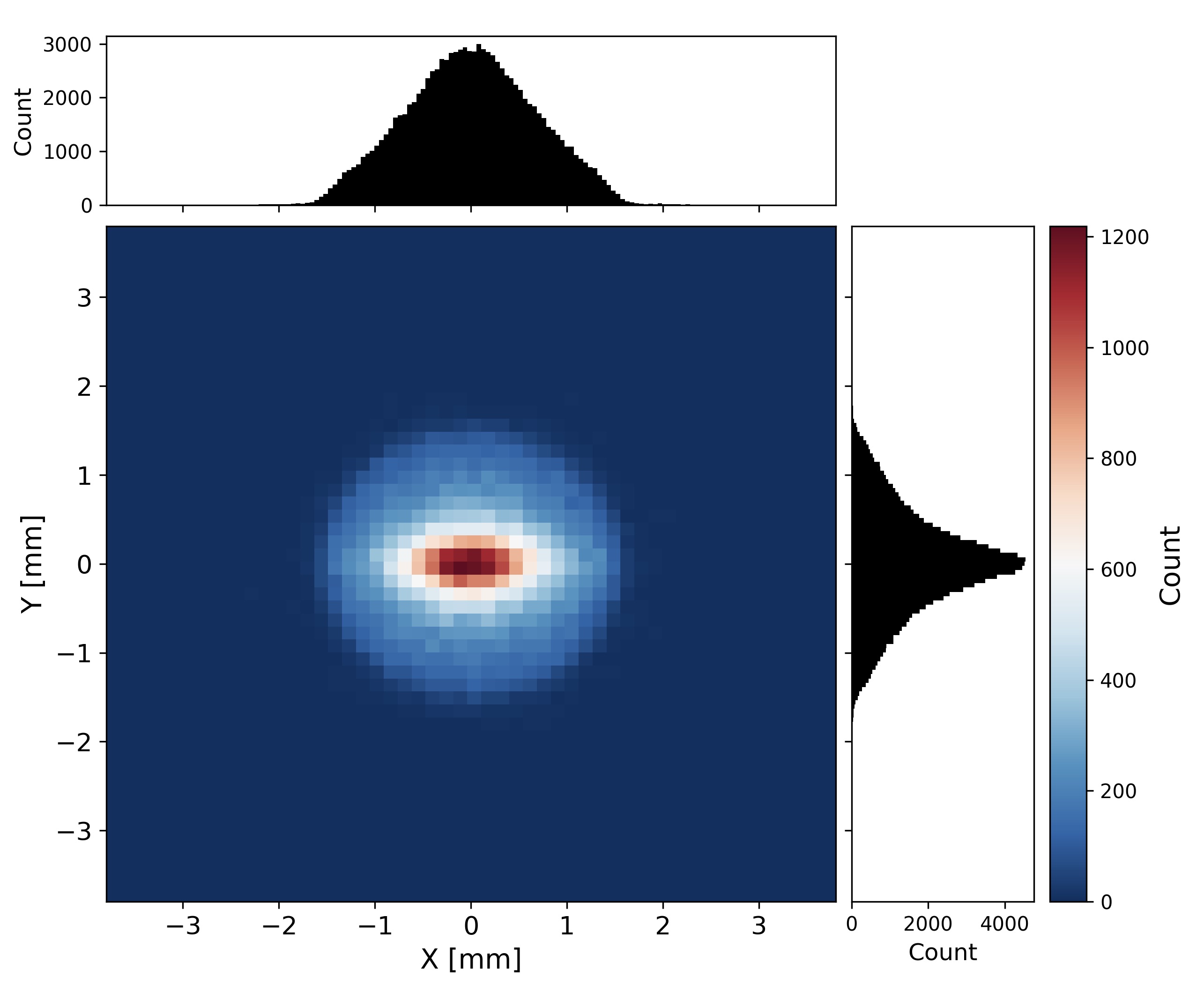
Computational techniques play a central role in the design, optimisation and future operation of LhARA. The flexibility of laser-driven proton and ion beams presents unique challenges, requiring advanced simulation and optimisation tools to ensure efficient beam transport and precise dose delivery. The team is also beginning to explore modern computing techniques to develop new tools to simulate the interaction of radiation with biological samples and tissues.
The LhARA collaboration at Imperial use particle-tracking and Monte Carlo simulation software, including BDSIM, Geant4 and TOPAS to model beam transport, particle interactions and radiation dose deposition. Developing these models and applying machine learning techniques with linear optic modelling to optimise beamline performance are important areas of research, helping to improve beam quality and explore new irradiation configurations.
Computing will also be essential to the future automation of LhARA's experimental end stations. Developing software for automated sample handling, beam monitoring and feedback control will help enable reproducible, high-throughput radiobiological experiments, bringing together accelerator physics, software development and experimental biology.