
Explore the concept of happiness and design and test a variety of measures to improve happiness in your own life
Module details
- Offered to Year 2 students
- Mondays, 16.00-18.00
- Planned delivery: On campus (South Kensington)
- Two-term module, worth 5 ECTS
- Available to eligible students as part of I-Explore
- Extra Credit, or Degree Credit where your department allows
Got any questions?
Contact the lecturer:
Dr Daisy Pataki
0207 594 8922
Room S311, Sherfield Level 3
Centre for Languages, Culture and Communication
This module offers you the opportunity to study a range of ‘theories’ of happiness and think about what happiness means to you in your life and community. You will develop your own theory of happiness and evaluate your personal happiness. Can ‘happier’ living be promoted? How does your personal sustainability impact your happiness? What about the use of smart tech? You will develop a range of ideas to increase happiness and test your favourite in your own life.

My World: Be Happy
Explore the concept of happiness and design and test a variety of measures to improve happiness in your own life
Published on May 23, 2022
Listen to Dr Daisy Pataki talking about the My World: Be Happy module
Please note: The information on this module description is indicative. The module may undergo minor modifications before the start of the coming academic year.
Information blocks
- Learning outcomes
- Indicative core content
- What happens in this module?
- Learning and teaching approach
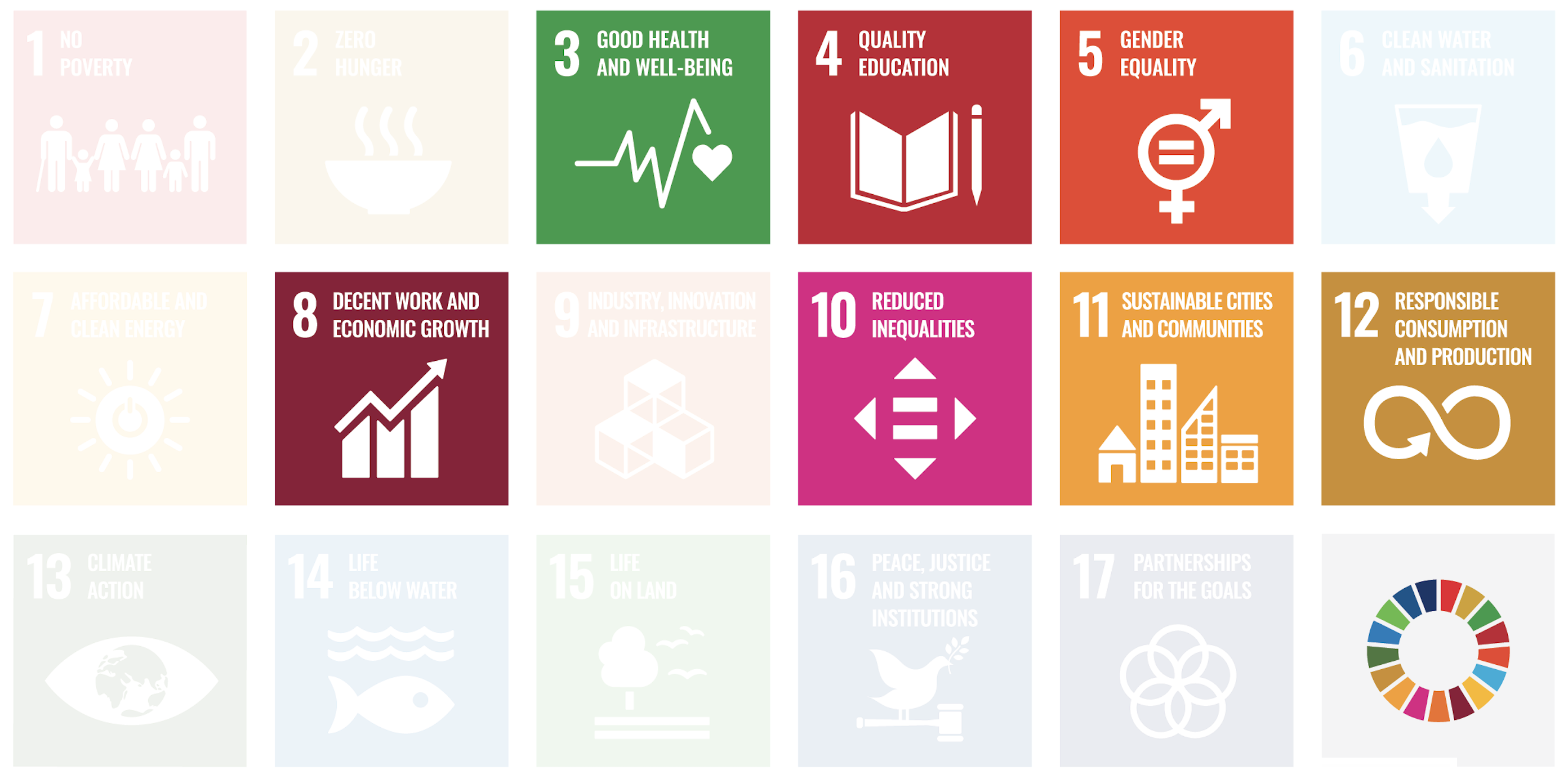
- Mapping the Sustainable Development Goals (SDGs) in this module
- Assessment
- Key information
On successful completion of the module, you will be better able to:
- examine key theories relating to ‘happiness’ in the world;
- define how ‘happiness’ can be promoted, supported and measured, including considerations of sustainability and the impact of smart tech;
- create a personal definition or theory of happiness;
- create a personalised brief – analysing your own life to identify opportunities to increase happiness;
- develop a rationale for assessing the needs, benefits and successes of implementing such a change;
- design and test a targeted happiness initiative in your own life;
- evaluate the impact of the initiative.
This module will create an overarching critique of the concept of happiness and how it applies to you. You will begin by examining a range of theories of happiness and develop you own theoretical understanding of the concept. You will be encouraged to think about happiness in a holistic way, including personal sustainability and the impact of smart tech on your life. You will then create your own design briefs using video or photo diaries and rotate through a series of creativity and design exercises before picking one idea to develop, test and evaluate.
In this module, you will learn:
- about your own concept of happiness;
- about others’ ideas related to happiness;
- methods to enhance creativity and promote ideation;
- about how to plan and execute a project.
In this module, you will do:
- Brainstorming sessions and discussions exploring happiness with the class.
- Personal reflection on what happiness means to you.
- Create a personal day-in-the-life video/diary, to explore what impacts happiness in your life.
- Choose something to try or change in your life and explore the impact this has on your happiness.
- Something creative, of your own choosing, as a part of your personal project.
You will be guided by your lecturer through an exploration of happiness. An active learning approach is achieved with the use of workshop sessions and practical activities to help you unpack complex theoretical ideas. There is individual work, and small group work, with team work evaluation and support. You will conduct library and empirical research to support your understanding of happiness. The module progresses with opportunities for self, peer and lecturer formative and summative evaluation and all feedback is provided within seven days and is dialogic in nature.
You will be offered opportunities to reflect on the skills that you are developing and to consider how they might be transferable to your core studies.
You will be encouraged to incorporate your personal experience and interests into your work, and will be supported to ensure that this is inclusive.
Extensive use is made of a virtual classroom, to facilitate learning.
You will receive ongoing formative feedback on your progress and written feedback and provisional marks for your submitted assessments within two term-time weeks of submission. Dialogic written feedback is provided for each assignment. As part of the feedback process, you will be asked to write a response to the feedback which is reviewed by the lecturer. In addition, you can sign up for further individual support, if required.
We recognise the interrelated nature of the UN Sustainable Development Goals (SDGs) and do not consider individual SDGs in isolation. We adopt a systems-based approach that recognises their cross-cutting nature.
The focus of this module is on SDG 3 – good health and wellbeing. However, in order to fully understand our own ideas and experiences of happiness and wellbeing, we will be considering the intersection between this and other SDGs, such as sustainability (SDGs 11 and 12), identity and respect (SDGs 5 and 10) and personal growth and opportunity (SDGs 4 and 8).
- Practical (10%): Personal happiness footprint poster (max. 400 words).
- Coursework (30%): Video/photo diary brief and analysis (3-minute video; max. 500-word analysis).
- Practical (10%): Design process assessment (3 reflective activities totalling no more than 600 words).
- Practical (50%): Final design portfolio (one piece of media exploring your project and one questionnaire of min. 1,000 words).
This module follows an authentic assessment protocol. You will be supported to work through a design project, and each step of the project is individually formatively and then summatively assessed. You will be given time in class to complete all the components of the assessments.
The assessment is staggered to reduce the impact on you and reduce the end-of-module burden. You will have the opportunity for formative peer feedback for each assessment element. The first assessment is a personal happiness footprint poster. You will create a hand-crafted poster to describe the theory of happiness that you have developed over the first five weeks of the module, while mapping that theory against your life experience. To improve the inclusivity of this assessment, you are encouraged to choose from a range of poster types - including traditional academic style/ information poster, collage, tableau vivant and assemblage. You can include up to 400 words of text on the poster or in an accompanying commentary.
The second assessment is a video/photo diary brief and analysis. Utilising the analysis you have performed to create your poster, you create a 3-minute video of a typical day in your life identifying things that impact your happiness. The video could be filmed or created with timed PowerPoint slides. You then create a narrative analysis (maximum of 500 words) identifying areas for change in your own life. You are supported through the process by peer discussions and lecturer support.
In the second term, you will complete a series of ideation exercises, to be completed in class (maximum 600 words).
The final assessment will be your personal happiness design portfolio. You will spend the final seven weeks of the module creating an individual project, presented as a final design portfolio. Building on your previous work throughout the module, you will investigate happiness within your own life.
You are provided with peer feedback sessions along the way. To improve inclusivity of this assignment, you are encouraged to choose from a range of media to represent your work including art, video, poster, presentation, narrative, website or another idea of your own. As part of the portfolio, you will submit answers to a questionnaire to demonstrate your project planning, implementation and insights. The questionnaire answers are a minimum of 1000 words with no maximum limit.
- Requirements: You are expected to attend all classes and undertake approximately 85 hours of independent study in total during the module. Independent study includes reading and preparation for classes, researching and writing coursework assignments and preparing for other assessments.
- This module is designed as an undergraduate Level 5 module. For an explanation of levels, view the Imperial Horizons Level Descriptors page.
My Journey
You can focus your project on any area of happiness that you want to explore, but to give you some ideas of what students have tackled previously, take a look at these topics:
- The impact of social interactions on happiness
- Creating balance between academic success, helping others and doing things just because they are fun
- Trying to identify the optimistic view of every situation and acting upon that perspective
- Finding out how many different ways there are to think about happiness
Project submissions can be really creative and can include any component you feel expresses your experience of completing the project. So far students have submitted:
- Project reports and narratives
- Video diaries
- Short films
- Podcasts
- Websites
- Newsletters
- Posters
- Handwritten journals
- Hand made and digital artwork
- Apps
"On this module, I’ve had the most interesting conversations I’ve ever had"
"My final project was made for enjoyment, not just for work"
"This module has inspired me to consider a different career – I’ve found something that I’m really good at."
"I enjoyed this course more than I ever thought possible"