Important terms
Bowel polyp – a small growth inside the bowel that can sometimes develop into cancer
Flexible sigmoidoscopy – a camera test to look inside the bowel
Screening test – healthy people are tested for early signs of a disease
Overview
The UK Flexible Sigmoidoscopy Screening Trial (UKFSST) is a major research study. It is testing whether the risk of developing or dying from bowel cancer can be reduced by a single medical test. This test is called a flexible sigmoidoscopy.
The UKFSST involves over 170,000 patients across the UK.
Why was this study needed?
Bowel cancer is the 4th most common cancer in the UK and the 2nd most common cause of cancer deaths. Preventing bowel cancer or finding it early is the best way to improve patient survival. One way to do this is with screening tests for the population.
A screening test is a test done on a healthy person to look for the early stages of a disease. Screening tests usually look for early cancer as it is much easier to treat if caught early. Screening for bowel cancer could lower the chance of developing or dying from bowel cancer. However, screening tests can only be offered on the NHS once there is good evidence that they are safe and effective. This requires research studies like the UKFSST.
What is flexible sigmoidoscopy?
A flexible sigmoidoscopy is a type of camera test. A doctor passes a camera on the end of a thin tube into a patient’s bottom and up into the digestive tract. The doctor looks inside the bowel for anything unusual. A benefit of flexible sigmoidoscopy is that it can be used to find and remove early bowel cancer. It can also find and remove bowel polyps. This makes it a good option for a screening test.
What is a bowel polyp?
A bowel polyp is a small growth inside the bowel. Polyps are common and are not cancer but if left in the bowel, they can sometimes develop into cancer. For this reason, they are usually removed if found. As flexible sigmoidoscopy can remove polyps, this test helps to prevent bowel cancer from developing.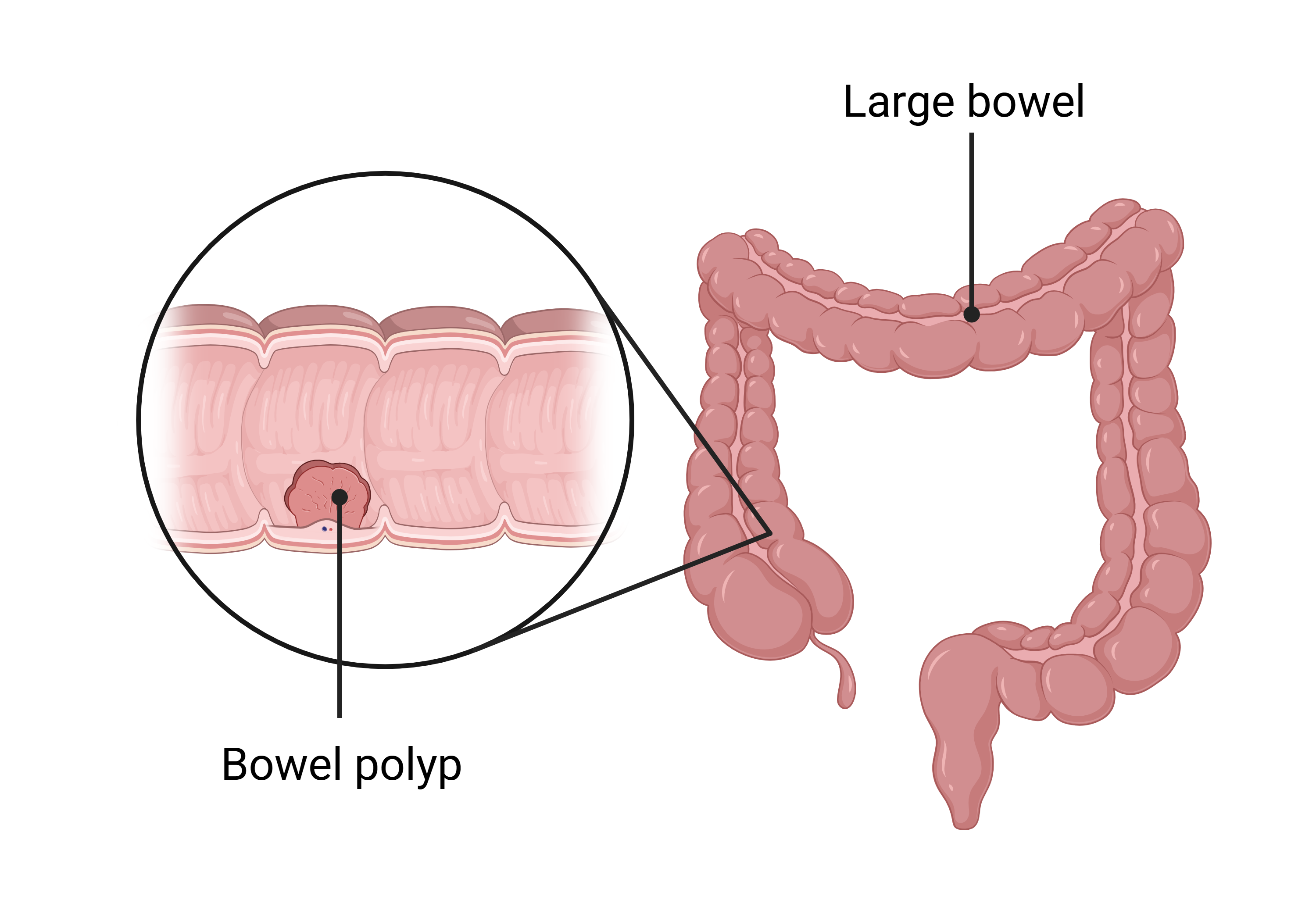
What are the aims of the UKFSST?
Our study aims to discover whether having one flexible sigmoidoscopy screening test could reduce a person’s chances of developing or dying from bowel cancer. The trial also looks at how long the benefit of the test lasts, and at what age it is best to have the test.
How was the study carried out?
The UKFSST was a randomised controlled trial (RCT). In an RCT, people are randomly split between the treatment and no-treatment groups. This lets scientists directly compare the two groups. Well-designed RCTs, such as the UKFSST, are thought to give the best evidence for whether a new test is effective or not.
Around 376,000 men and women aged 55-64 years old were assessed to see if they could take part in the study. They were registered at participating GP practices between November 1994 and March 1999.
Of these people, around 170,000 said that they would attend a flexible sigmoidoscopy test if they were invited. They were randomly divided into two groups. 41,000 people had a flexible sigmoidoscopy screening test, and the rest did not.
The medical records of all 170,000 people were then monitored to see who developed cancer over time. We compared the number of cancers in the group who had the test with the number of cancers in the no-test group. This showed us if flexible sigmoidoscopy was preventing bowel cancer cases and/or reducing the deaths from bowel cancer.
When and where did the study take place?
The UKFSST recruited people from 506 GPs throughout the UK. The flexible sigmoidoscopy tests were carried out at 14 hospitals across the UK. See ‘Protecting your data – UKFSST’ for the full list of hospitals.
The study began in November 1994 and recruitment was completed by March 1999. Since 1999, we have continued to track the health records of the people who took part in the study to determine if they developed cancer or not.
Who is funding the UKFSST?
The Medical Research Council, National Institute for Health and Care Research, and Cancer Research UK have all helped fund the UKFSST.
What are the results of the study?
We published our first set of results in 2010, which analysed the data for the first 11 years after the flexible sigmoidoscopy was completed. The results revealed that people who had one screening with flexible sigmoidoscopy were:
- Less likely to get bowel cancer – the test prevented around 1 in 3 new cases of bowel cancer.
- Less likely to die from bowel cancer – it prevented 4 in every 10 deaths from bowel cancer.
- The protective effects of the test appeared to be long-lasting.
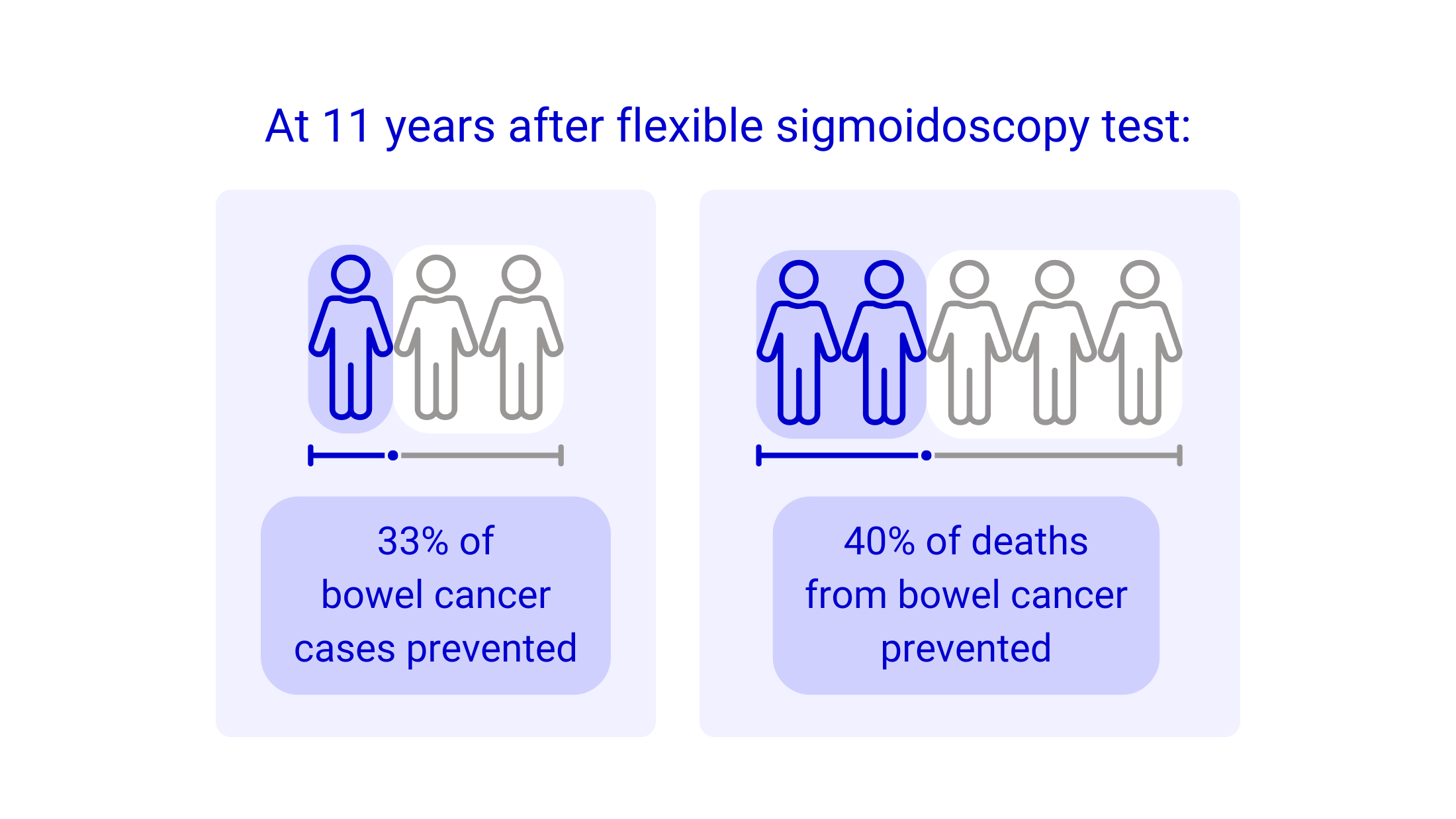
This result was published in The Lancet in 2010.
In 2017, we had data on the cancers and deaths over 17 years after the flexible sigmoidoscopy. We showed that a single flexible sigmoidoscopy reduced the risk of developing or dying from bowel cancer for at least 17 years. The 2017 results were also published in The Lancet.
In 2020, we showed that a better-quality flexible sigmoidoscopy would give stronger protection against developing or dying from bowel cancer. This was published in the journal of Clinical Gastroenterology and Hepatology.
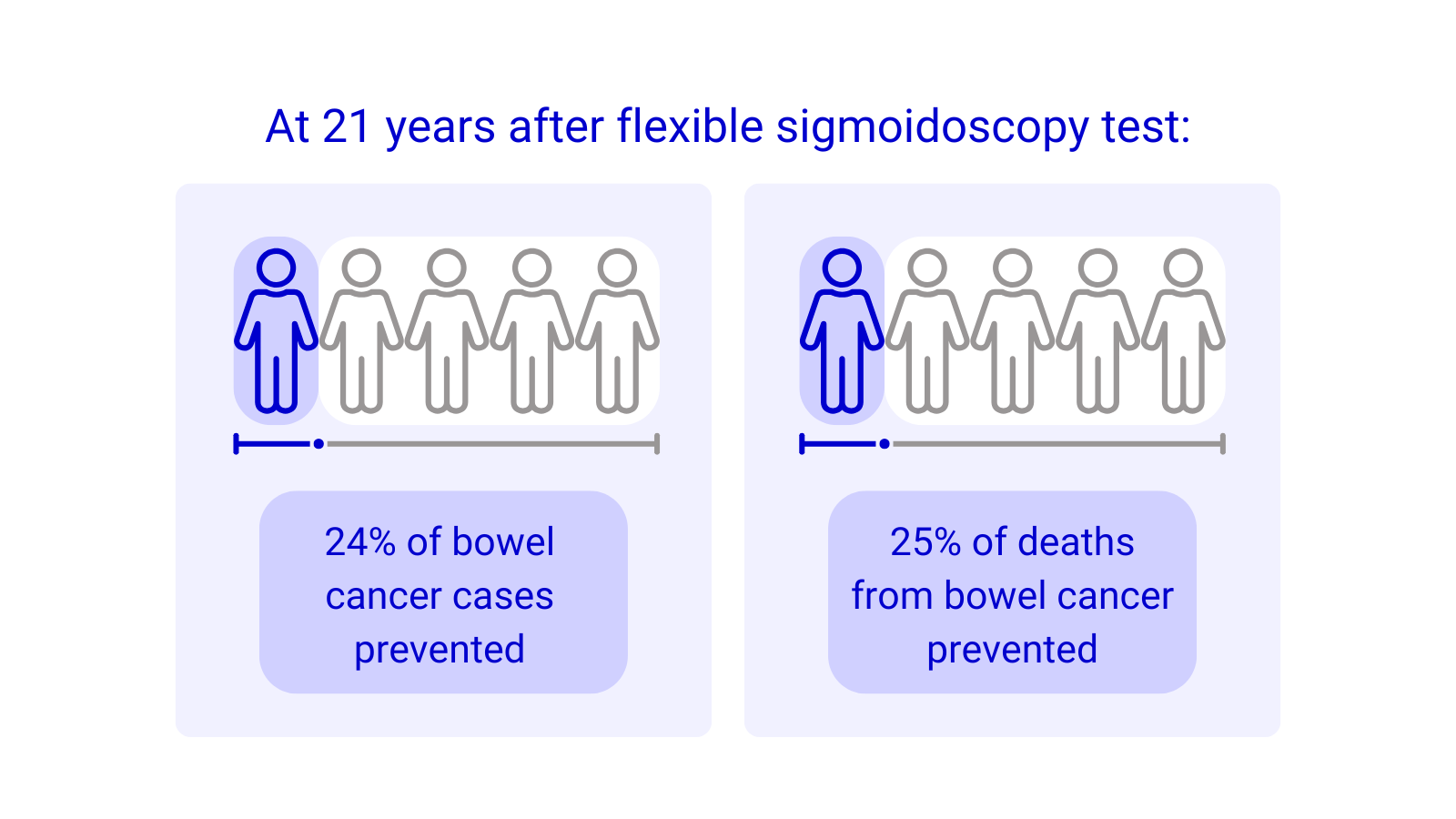
By 2024, the trial had been running for 21 years. At this point, we were able to show that flexible sigmoidoscopy protects people against developing or dying from bowel cancer for at least 21 years. The study revealed that 1 in 5 cases of bowel cancer and 1 in 5 deaths from bowel cancer are prevented by flexible sigmoidoscopy during 21 years of data collection. These latest results were published again in The Lancet. Imperial College London also published a news report.
What impact have these results had?
Our results published in 2010 clearly showed that flexible sigmoidoscopy screening can reduce bowel cancer cases and deaths. These results directly led to the UK government adding flexible sigmoidoscopy to the NHS Bowel Cancer Screening Programme. Roll-out of this screening test began in 2013.
Speaking at the introduction of flexible sigmoidoscopy to the screening programme, Harpal Kumar, Chief Executive of Cancer Research UK at the time said of the UKFSST:
“Cancer Research UK does not often use the word ‘breakthrough’ but this is one of those rare occasions when I am going to. It is extremely rare to see the results of a clinical trial which are quite as compelling as this. [flexible sigmoidoscopy] needs to be brought in as soon as possible. Every week of delay will risk scores of lives.”
However, in January 2021, the test was removed from the NHS Bowel Cancer Screening Programme in England. There were several reasons for this:
- It had never been fully rolled out across England due to a shortage of staff trained to carry out the test.
- Significant disruption to the NHS during the COVID-19 epidemic.
Why are we doing further work with the UKFSST?
We continue to analyse data from the UKFSST. We have identified more important research questions including:
- How safe is a once-only flexible sigmoidoscopy?
- Do any medicines affect the risk of developing polyps and bowel cancer?
- Does having a family history of bowel cancer affect the risk of developing bowel cancer after a flexible sigmoidoscopy?
The answers to these questions will be published in scientific journals and made available on our website.