Contact
020 75947505
10N.4 Commonwealth Building Hammersmith Hospital
What we do
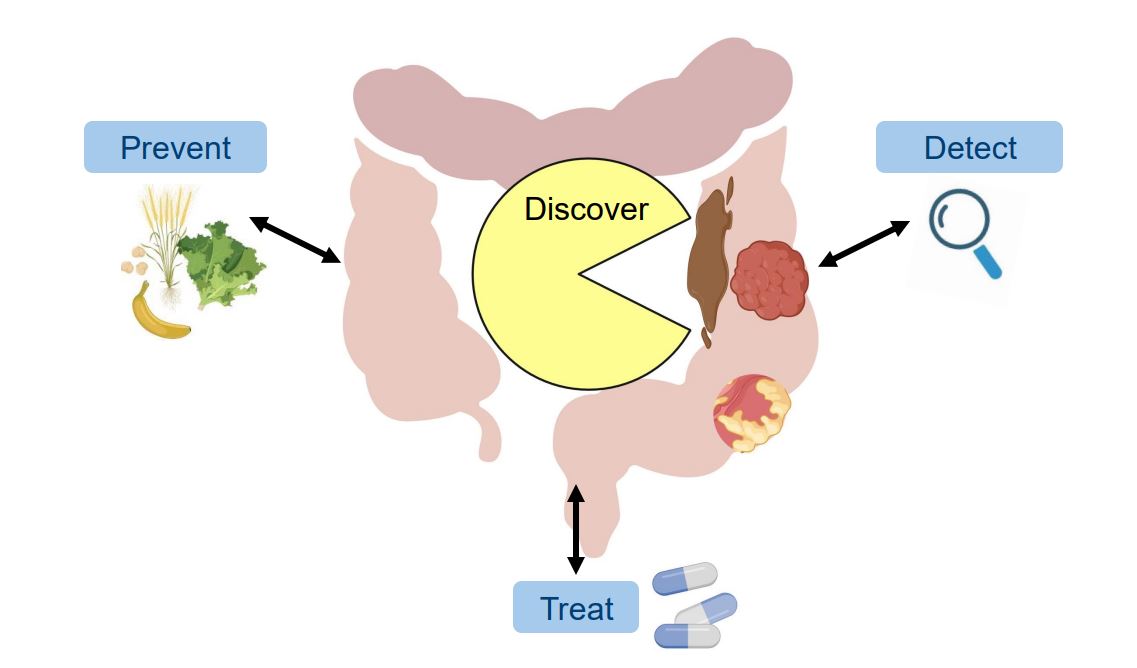
The team studies hydrolytic enzymes (hydrolases) that are active in an inflamed and cancerous gut. Our research integrates approaches from chemistry (activity-based probes, chemical proteomics), cell biology (gut culture models e.g. organoids and gut-on-chip) and medical research (patient samples and animal models) to understand the role of hydrolases in driving colonic diseases and to explore their potential as biomarkers and therapeutic targets.
Why it is important
Gastrointestinal conditions account for approximately 10% of general practitioner (GP) visits in the United Kingdom. Our gastrointestinal tract (gut) is a monolayer of epithelial cells coated with mucus, which performs digestion, absorption, and secretion, as well as acting as a physical barrier between our mucosal immune system and the 100 trillion microscopic organisms residing in the gut lumen.
Damage to the gut barrier exposes our immune system to the gut microbes, which leads to an immune response. If the barrier is not fixed, the constant immune response causes more damage that favours disease development.
Proteins that damage gut barrier integrity are ideal candidates as drug targets and markers of gastrointestinal diseases. Hydrolytic enzymes (hydrolases) are proteins abundant in the gut and work by breaking down other molecules into smaller fragments. In a healthy gut, sources of hydrolases include proteins which digest food such as trypsin and enzymes from microbes. However, in a damaged gut, immune cells are a major source. An uncontrolled immune response results in excessive hydrolase activity that attacks the gut barrier and contribute to disease, thus making these enzymes ideal candidates for markers and targets to prevent and treat gastrointestinal diseases.
How it can benefit patients
To prevent, treat and manage gastrointestinal diseases a better understanding of the biology of disease is required. The earlier we can intervene the better the outcome. For example, the five-year survival rate for colorectal cancer decreases from 90% to 10% with a late-stage diagnosis, hence new methods to detect colorectal cancer early are required. Our goal is to identify hydrolytic enzymes that are biologically active in clinical samples from various gastrointestinal conditions and functionally characterise their role in disease. We will then apply these fundamental research findings to clinic, for example, target hydrolase activity through dietary intervention and the development of activity-based biomarker assays.
Summary of current research
- Targeting hydrolytic enzyme activities to understand, treat and prevent colorectal cancer (UKRI Future Leaders Fellowship awarded to Dr Rachael Barry)
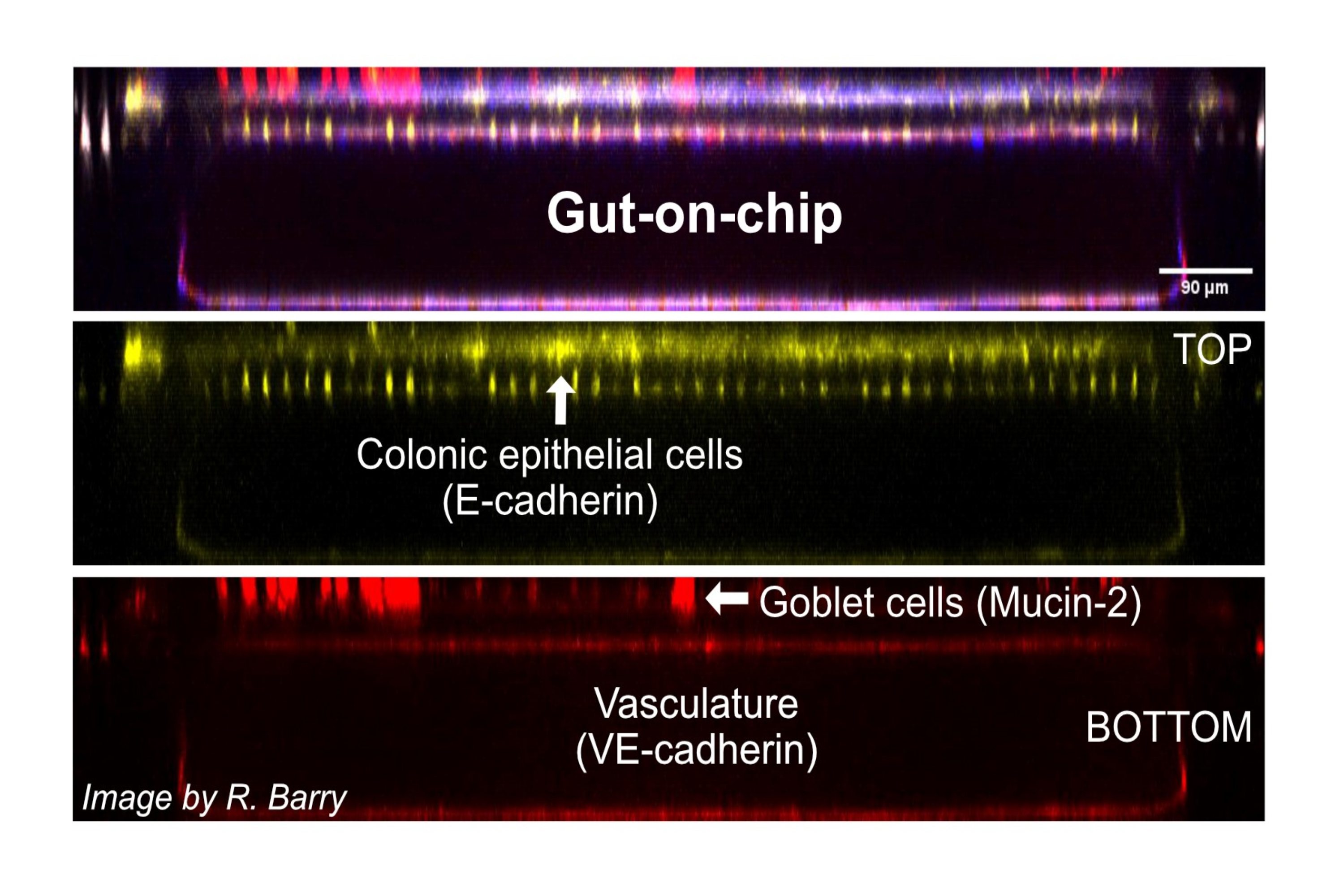
- Developing novel gut-culture models using patient-derived material e.g. gut-on-chip
- Discovery of key enzymes active in gastrointestinal disorders, including Irritable Bowel Syndrome and Inflammatory Bowel Disease
- Establishing a core infrastructure for enhancing gut health, disease and microbiome research using advanced non-animal models (with Dr Tamás Korcsmáros and Prof Gary Frost)
Information
- Funders and Related Centres
- Collaborators
- Useful links for patients
- Publications
- Related education courses
Our researchers
Dr Rachael Barry
/prod01/channel_3/media/images/people-list/r.barry.jpg)
Dr Rachael Barry
Principle Investigator
Clara Finnigan
/prod01/channel_3/media/images/people-list/Clara_image.jpg)
Clara Finnigan
Research Postgraduate
Sara Fontalva
/prod01/channel_3/media/images/people-list/Sara-Fontalva.jpg)
Sara Fontalva
Research Assistant