 |
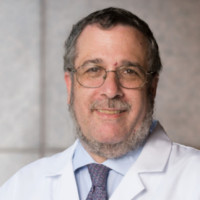
Dr Steven Abrams Vitamin D and bone minerals in neonates |
Dr Abrams is a neonatologist with expertise in children’s mineral requirements. He has been active in public policy development related to nutritional requirements of children, serving as a member of the US 2015 Dietary Guidelines Advisory Committee, and for 10 years on the Committee on Nutrition of the American Academy of Pediatrics (committee chair 2017-2021). His current research focuses on nutritional needs of high risk infants and food insecurity during the COVID pandemic |
 |
Professor James Boardman Preterm birth and neurodevelopment: not just a matter of brain injury |
Professor Boardman's goal is to develop and evaluate neuroprotective strategies for fetuses and neonates at risk of brain injury and poor neurodevelopmental outcome. He researches the role of neonatal quantitative magnetic resonance imaging to investigate causal pathways of brain injury, factors that confer risk or resilience to injury, and the relationship between quantitative magnetic resonance features and long-term functional outcome. He is scientific director of the Jennifer Brown Research Laboratory at the University of Edinburgh/MRC Centre for Reproductive Health. |
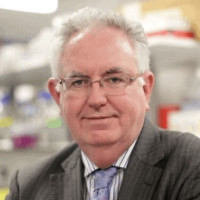 |
Professor Sir Mark Caulfield Whole genome sequencing for newborn screening |
Professor Sir Mark Caulfield trained in Clinical Pharmacology at St Bartholomew’s Hospital where he developed a research programme in the molecular genetics of hypertension. He was Director of the William Harvey Research Institute (2002-2020), and elected a Fellow of the Academy of Medical Sciences (2008), since when he has directed the National Institute for Health Research Cardiovascular Biomedical Research Unit and Centre at Barts. He was Chief Scientist for Genomics England leading the 100,000 Genomes Project (2013-2021) for which he aas awarded a Knighthood in the June 2019 Queen’s Birthday Honours List. He co-created the National Genomic Test Directory and the Genomic Medicine Service bringing equity of access to genomic testing across 56 million people. Sir Mark is now Chief Executive of Barts Life Sciences, a £600 million life science expansion of Queen Mary University of London, Barts Health, and industry partnerships. |
 |
Dr Victoria Cornelius Considerations when designing impactful clinical trials |
Victoria Cornelius is Reader in Medical Statistics and Head of Statistics and Trial Methodology at the Imperial Clinical Trials Unit. She has extensive experience in the design and analysis of late phase randomised controlled trials, harm-related outcomes, trials with restricted sample sizes, Bayesian methods, digital health interventions, and developing and evaluating statistical methods to estimate treatment effects that matter to patients. Her work supports the translation of best statistical practice into applied research. Victoria obtained a degree in mathematics and completed a PhD in Statistics before joining the Centre for Statistics in Medicine in Oxford. She worked at Drug Safety Research Unit, Southampton University, and King’s College London before joining Imperial College London. |
 |
Professor Peter Dargaville Understanding automated systems for controlling oxygen therapy in the preterm infant |
Peter Dargaville is Staff Specialist, Neonatal and Paediatric Intensive Care Unit, Royal Hobart Hospital, Hobart, Tasmania and Professorial Research Fellow in Neonatology, Menzies Institute for Medical Research, University of Tasmania. He trained in neonatology at the Royal Children’s Hospital, Melbourne, and at the University of California, San Francisco. This included a two year research project on abnormalities of pulmonary surfactant in ventilated infants, for which he was awarded an MD from the University of Melbourne in 2000. The major focus of his research is the development and implementation of new therapies for neonatal lung disease. He is co-inventor of an algorithm for automated control of oxygen therapy in infants receiving supplemental oxygen, which is now patented and commercialised. Other projects include the NHMRC-funded OPTIMIST-A trial (a multinational RCT of minimally invasive surfactant therapy in preterm infants with RDS), and the prediction, detection and mitigation of apnoea in preterm infants on non-invasive respiratory support. |
 |
Professor Andrew Ewer Newborn pulse oximetry screening: a global perspective |
Andrew Ewer is Professor of Neonatal Medicine at the University of Birmingham and Honorary Consultant Neonatologist at Birmingham Women’s Hospital. He trained in the UK and Australia. He led the National Institute of Health Research funded PulseOx study and has published widely on pulse oximetry screening. He advised the US Secretary's Advisory Committee on Heritable Disorders in Newborns prior to the introduction of pulse oximetry screening for critical congenital heart defects, is a senior member of a European Workgroup on Pulse Oximetry Screening, and has advised numerous other organisations around the world on the introduction of screening. He is Director of Research and Development at Birmingham Women’s Hospital, Associate Editor for Archives of Disease in Childhood Fetal and Neonatal Edition and President Elect of the Neonatal Society. |
 |
Dr Roger Highfield How we become human |
Roger Highfield studied chemistry at the University of Oxford and is a best-selling author, science journalist, broadcaster and Science Director at the Science Museum Group, comprising some of the world’s most iconic museums and collections. His books include “The Dance of Life”,”After Dolly”, “The Science of Harry Potter” and “Can Reindeer Fly?”. Roger was the Science Editor of The Daily Telegraph for two decades, and the Editor of New Scientist 2008-2011. He is a member of the Medical Research Council, a Fellow of the Academy of Medical Sciences and a visiting Professor at University College London and Oxford. |
 |
Professor Nina Jablonski The science of skin colour |
Nina Jablonski is a biological anthropologist, recognised for her contributions to the understanding of primate and human evolution. She has held academic positions at the University of Hong Kong, University of Western Australia, California Academy of Sciences, and Pennsylvania State University. She is an elected Member of the National Academy of Sciences and the American Philosophical Society, an elected Fellow of the American Academy of Arts and Sciences and the American Association for the Advancement of Science. In addition to a large body of scholarly papers, she has written two popular books for adults: “Skin: A Natural History” and “Living Color: The Biological and Social Meaning of Skin Color”, and a book for children, “Skin We Are In”. She received an honorary doctorate from the University of Stellenbosch in South Africa in 2010 for her contribution to the worldwide fight against racism. |
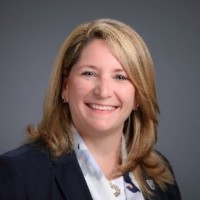 |
Dr Michelle Kelly Were you born preterm? Recommendations to optimise life-long health and wellbeing for people born preterm |
Michelle Kelly is an Associate Professor at Villanova University M. Louise Fitzpatrick College of Nursing and a Research Fellow at the University of Rhode Island College of Nursing. At the University of Rhode Island, she is working on a longitudinal study of those born preterm, currently in its 10th wave, with participants in their 30’s. She is an advocate for promoting the health of those born preterm across the life course, particularly related to educational and neurodevelopmental outcomes. Dr Kelly is certified as both a paediatric and neonatal nurse practitioner. |
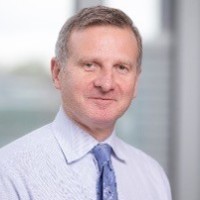 |
Professor Christopher Lees COVID-19 and pregnancy: lessons from 2020 |
Christoph Lees is Professor of Obstetrics as Imperial College London; Head of Fetal Medicine at the Centre for Fetal Care, Queen Charlotte’s and Chelsea Hospital, and Visiting Professor KU Leuven (Belgium). His research is in fetal assessment, in particular the use of Doppler ultrasound to assess fetal health, and non-invasive fetal surgery. He is the Chief Investigator of the multicentre European trial of umbilical andfFetal flow (TRUFFLE), co-founder of the International Working Group of Maternal Haemodynamics, Board member of the International Society of Ultrasound in Obstetrics and Gynaecology, chair of their Doppler and vascular imaging group and member of their Safety Committee Christoph leads the PANCOVID project, a global registry of women affected by COVID-19 during pregnancy. He has published widely in scientific journals and has authored textbooks on fetal growth restriction, maternal haemodynamics and the widely read Dewhurst’s Textbook of Obstetrics & Gynaecology. |
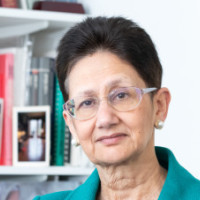 |
Professor Neena Modi The development, use and abuse of neonatal growth charts |
Neena Modi is Professor of Neonatal Medicine at Imperial College London and Consultant at Chelsea and Westminster NHS Foundation Trust Hospital. She has directed the Neonatal Update since 2000, taking over from Professor David Harvey who founded the meeting almost 50 years ago. Neena heads a multidisciplinary neonatal research group studying nutritional and other determinants of life-long health. She leads the UK National Neonatal Research Database, a globally unique, award-winning resource. Neena has held a number of senior professional positions. She is the current president of the British Medical Association, and past-president of the UK Medical Women’s Federation, Neonatal Society, and Royal College of Paediatrics and Child Health. She is a Fellow, and Member of Council of the Academy of Medical Sciences. |
 |
Professor Arjan B Te Pas Supporting preterm breathing at birth in the 21st century |
Arjan B te Pas is a neonatologist and neonatal researcher working in a tertiary neonatal intensive care unit in Leiden University Medical Centre. His research in perinatal transition and neonatal resuscitation aims to expand knowledge of pathophysiological processes during perinatal transition and develop the best strategies for neonatal resuscitation. A third pillar of his research programme, is in developing new technologies for clinical translation. Arjan is a Veni (2012) and Vidi (2016) laureate of the Veni-Vidi-Vici Innovational Research Incentives Scheme for talented researchers of the Dutch Research Council. His research has influenced international neonatal resuscitation guidelines. |
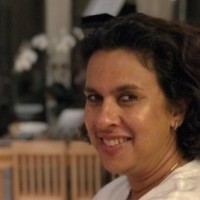 |
Professor Jugnoo Rahi The early life origins of visual impairment in children |
Jugnoo Rahi is an ophthalmologist at Great Ormond Street Hospital NHS Foundation Trust and an epidemiologist with a joint appointment at the GOS Institute of Child Health and the Institute of Ophthalmology, University College London. She also provides independent scientific advice on visual health, vision impairment and blindness, in particular relating to children and young people, to external organisations such as the World Health Organisation and various UK governmental bodies. She leads the Vision and Eyes Group based at Great Ormond Street Institute of Child Health, a unique multi-disciplinary population health sciences research group with particular interests in visual health, eye disease, visual impairment in childhood, and the early life origins and lifecourse influences on chronic complex eye conditions. Through her research she aims to enhance understanding, improve prevention, diagnosis and treatment, and inform service and policy decisions nationally and internationally. |
 |
Professor Richard Riley Individual participant data meta-analysis: rationale and key steps |
Richard Riley is Professor of Biostatistics at Keele University, a statistics editor for the British Medical Journal and co-convenor of the Cochrane Prognosis Methods Group. Richard is an expert on methods for meta-analysis, risk prediction and prognosis research. In meta-analysis, he specialises in methods for dealing with multiple correlated outcomes, and for synthesising individual participant data. In prognosis, Richard co-leads the PROGRESS (PROGnosis RESearch Strategy) initiative that seeks to improve the standards of prognosis research, including the development and validation of risk prediction models. He is the lead editor of “Prognosis Research in Healthcare: Concepts, Methods and Impact” (Oxford University Press) and “Individual Participant Data Meta-Analysis: A Handbook for Healthcare Research” (Wiley). He leads training courses at Keele, and maintains the websites www.prognosisresearch.com and www.ipdma.co.uk. |
 |
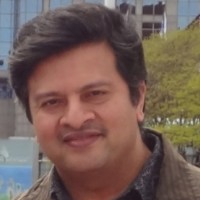
Dr Erik Skarsgard The medical and surgical management of gastroschisis |
Dr Erik Skarsgard is Surgeon in Chief and professor of surgery at the University of British Columbia, Vancouver, Canada. He is a graduate of the UBC School of Medicine and received training in general surgery at UBC, paediatric surgery at the Toronto Hospital for Sick Children and fetal surgery at the University of California San Francisco. Dr Skarsgard is past-chair of the Advisory Board for the Institute of Human Development, Child and Youth Health at Canadian Institutes of Health Research, and Past-President of the Canadian Association of Paediatric Surgeons. He is the founding Principal Investigator of the CIHR-funded Canadian Pediatric Surgery Network (CAPSNet), which targets best practices for gastroschisis and congenital diaphragmatic hernia. |
 |
Professor Sudhin Thayyil Should we provide therapeutic hypothermia to babies with mild neonatal encephalopathy? |
Sudhin Thayyil is a Professor of Perinatal Neuroscience and Director of the Centre for Perinatal Neuroscience at Imperial College London. His group leads one of the largest clinical research programmes in neonatal encephalopathy in the world, involving over 40 tertiary neonatal units in six countries. His research is focussed on disease stratification using transcriptomic signatures and evaluation of novel neuroprotective therapies using advanced magnetic resonance biomarkers. He is the chief investigator of several early and late phase multi-country studies including MARBLE (Magnetic Resonance Imaging in Neonatal Encephalopathy), GENIE (Genomic Imaging in Neonatal Encephalopathy), COMET (Cooling in Mild Neonatal Encephalopathy), EDEN (Erythropoietin and Darbepoetin in Neonatal Encephalopathy), HELIX (Hypothermia for Encephalopathy in low and middle-income countries), PREVENT (Prevention of Epilepsy by reducing neonatal encephalopathy) and EMBRACE (Erythropoietin Monotherapy for Brain Regeneration in Neonatal Encephalopathy in Low and Middle-Income Countries). |
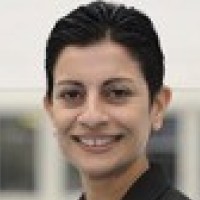 |
Dr Sabita Uthaya Better preterm parenteral nutrition practice |
Sabita is a consultant in neonatal medicine at Chelsea and Westminster NHS Foundation Trust and Honorary Senior Lecturer. Her research interests include neonatal nutrition, long term metabolic outcomes of preterm infants, and assessment of body composition using magnetic resonance imaging. She was Chief Investigator of the National Institute for Health Research funded NEON trial Trial of preterm parenteral nutrition. |
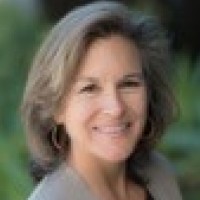 |
Professor Tracey Woodruff The effects of environmental toxins on mothers and babies |
Tracey Woodruff is a Professor in the University of Califormia San Francisco Department of Obstetrics, Gynecology and Reproductive Sciences and the Philip R. Lee Institute for Health Policy Studies. She is also the Director of the Environmental Research and Translation for Health Centre. She is an expert on environmental pollution exposures and impacts on health, with a focus on pregnancy, infancy and childhood, and innovations in translating and communicating scientific findings for clinical and policy audiences. She has authored numerous scientific publications and book chapters, and has been quoted widely in the press. Dr Woodruff was previously a senior scientist and policy advisor appointed by the governor of California in 2012 to the Science Advisory Board of the Developmental and Reproductive Toxicant Identification Committee. |
Contact
To register your interest or for any other enquiries please contact Georgina Holmes