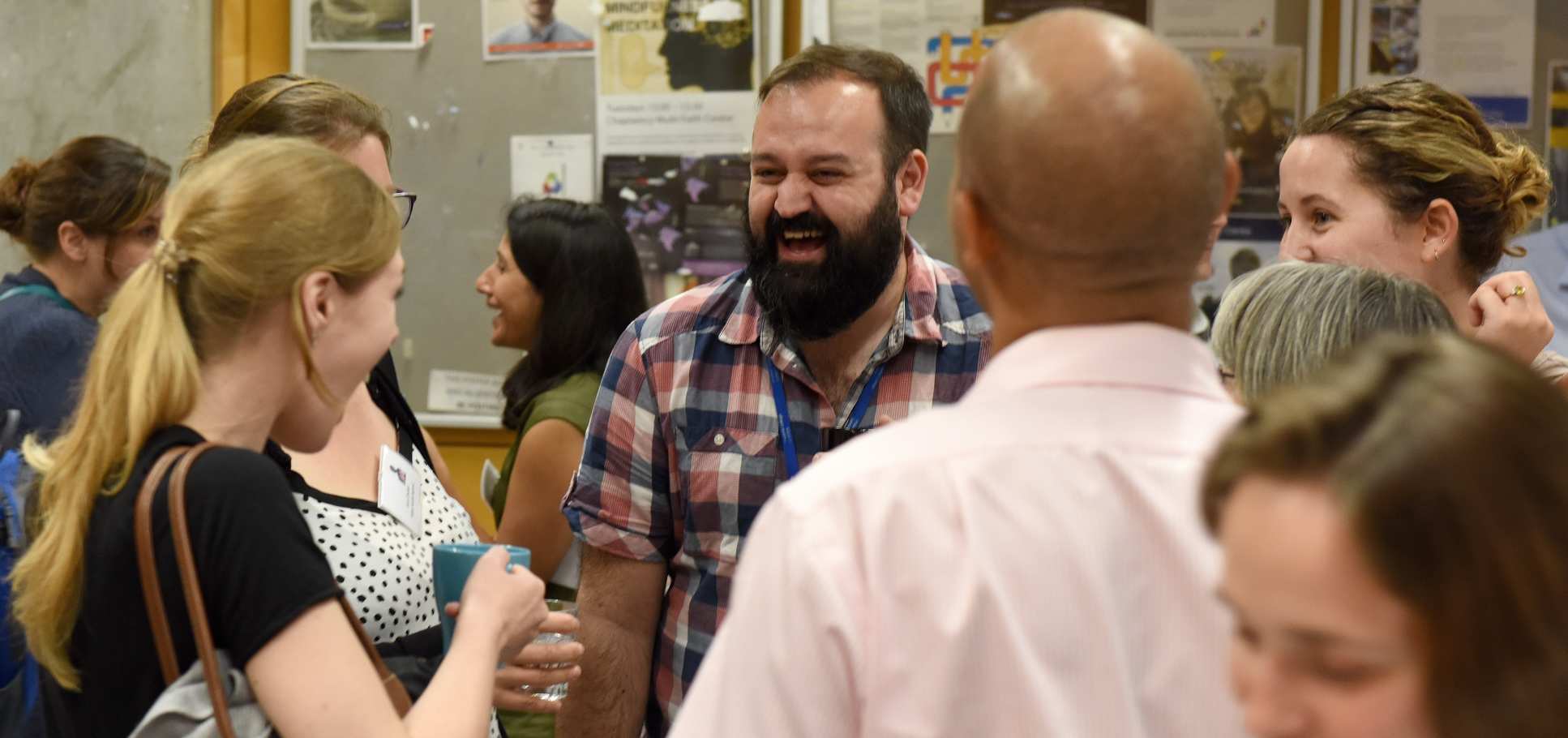
Providing and disseminating information and knowledge about our research to the public is a key factor of our HPRU unit. We are involved in various public engagement events annually showcasing our research projects and increasing professional, public and patient awareness of HPRU through media. An important aspect of our HPRU is to ensure that patient and public voice can impact on our research strategies, projects and function as well as making our research themes accountable and relevant to the public. We have embedded Patient and Public Involvement, Engagement and Participation (PPIEP) and across all research themes of the HPRU.
If you would like to know more about our PPIEP programme please contact our PPIEP lead, Sejal Varsani s.varsani15@imperial.ac.uk
Examples of our PPIEP work:
New Scientist Live Exhibition 2025: Between 18–20 October 2025, our team exhibited the Preparing for Pandemics stand at New Scientist Live, ExCeL London, which had over 21,000 in-person attendees. Our showstopping Stop the Spread simulation game invited attendees to step into the role of Chief Medical Officer, sparking lively discussions about global viral transmission and containment. Alongside this, our Touch and Trace activity encouraged conversations about how viruses spread via surfaces, creating memorable, hands-on learning moments for all ages. Across the three days, we connected with a wide range of audiences, from primary school students and postdoctoral researchers to the wider public, answering insightful questions and encouraging dialogue about pandemic preparedness and our research. We are delighted by the response, with 99% of feedback received being positive, underscoring the impact of interactive engagement in building public understanding of infectious disease research.
Bromley-by-Bow Centre: is recognised by UKHSA as a model for improving health and wellbeing cost-effectively through non-medical means, i.e. by addressing the social determinants of health and reversing health inequalities. The centre is the pioneer a social prescribing, now being rolled-out in a £500 million NHS programme. Our work will be embedded in the DIY Health programme, a community-based learning model co-designed with local parents, GPs and children’s centres to empower parents to manage their children’s health at home. A group of these parents will consider the barriers and enablers to flu vaccine uptake in children based on lived-experience and co-design a way to improve uptake. The same approach will be used to test and optimise acceptability of home-based parent-administered nasal detection of respiratory viruses in young children and to identify any barriers to uptake of new interventions for RSV. Due to the COVID-19 pandemic, this strategy has recently been updated to consider what are the barriers in gaining a COVID-19 test and vaccination, and how we can help overcome with barriers.
Doctors of the World (DOTW) UK is a humanitarian NGO empowering excluded people, including refugees and the homeless to access healthcare. Building on our existing collaboration, we engage with their new service-user HPRU part-funded advisory panel to continue to learn how best to deliver health protection to underserved populations. This advisory panels recent achievement include:
- Informing the media about challenges to access healthcare
- Developing and delivering training modules on the right to healthcare for migrant groups
- Speaking at NHS England-led webinar about effective communication between health professionals and migrant patients
- Joining a focus group with Public Health England to shape COVID-19 guidance
- Joining recruitment panel of DOTW and supporting inclusive employment of new staff
- Steering the Hands Up for Our Health coalition campaign to promote access to healthcare for migrants
- Contributing to research reports:
Left Behind: Voices of people excluded from universal healthcare coverage in Europe
A Rapid Needs Assessment of Excluded People in England During the 2020 COVID-19 Pandemic
We are working with DOTW to help UKHSA reach sufferers of TB that are not registered on any healthcare system and identify what are the barriers in doing so; aiming to inform and influence UKHSA methods of communication and healthcare recruitment in these minority groups.
Science Museum Group (>5 million visits annually): We advised on the content of the new £24 million Medicine Galleries opening in November 2019. Professors Lalvani and Kon and TB patients were interviewed and filmed, alongside our HPRU researchers. The film, which emphasises how health inequalities affect TB patients and how research could help to eliminate TB, will be a permanent exhibit in an interactive display-pod.
More recently, our HPRU technicians have been interviewed by the Science Museum Group discussing their careers as a technician. This information will help inform and sculpt an up-and-coming 7-year exhibition examining the intrinsic value of technicians in science.
Our HPRU patient/public network: We utilise existing networks within Imperial e.g. VOICE and the Imperial Young People’s advisory network, to form an HPRU network of patients and public who have lived-experience of serious respiratory infections. The NIHR BRC-funded Imperial Patient Experience Research Centre will continue to provide valuable expertise and training for staff. Additionally, we continue to participate in the annual Imperial Science Festival which attracts 20,000 people.
PPIEP plans ahead
Over the next five years (2025–2030), each theme will deliver targeted PPIEP activities shaped by the communities most affected by respiratory infections.
Pandemic Preparedness
- Pilot and refine the R3PERP protocol through co-designed workshops in care homes and households
- Engage families in high-deprivation areas to explore barriers to outbreak participation and trust
- Use community insights to improve future pandemic recruitment strategies and consent processes
Surveillance & Analytics
- Deliver community workshops in London, the Midlands, and Greater Manchester to shape recruitment and data access
- Partner with organisations like Doctors of the World and Mosaic Trust to co-develop culturally sensitive engagement
- Use feedback to enhance modelling tools that reflect real-world barriers and lived experience
Interventions
- Collaborate with community groups and parents to co-design RSV vaccination messaging and access
- Run participatory activities during parent–child sessions to inform delivery of flu and RSV tools
- Explore vaccine hesitancy through listening sessions with ethnic minority communities in deprived areas
Tuberculosis (TB)
- Hold focus groups with people affected by TB, including asylum seekers and adult social care workers
- Engage prison health charities to guide outreach and intervention co-design
- Use patient and provider input to validate findings from healthcare records and shape new TB care pathways

Important links
General enquiries
NIHR HPRU in Respiratory Infections
Dr Victor Phillip Dahdaleh (VPD) Building
Level 5, Office 586
Imperial College London
Hammersmith Campus
Du Cane Road
London, W12 0NN