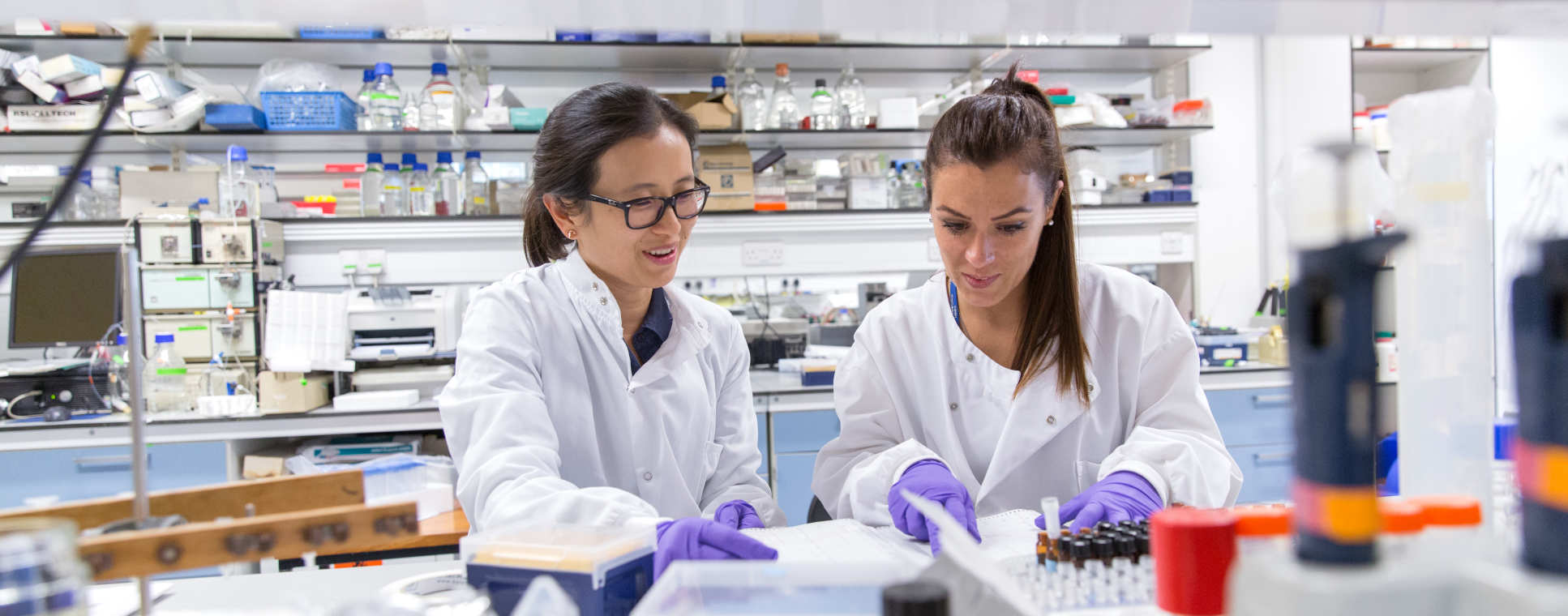
Collaborative glycoscience: connecting expertise to answer complex biological questions
A distinctive strength of the Glycosciences Laboratory is our highly interactive model of multidisciplinary and collaborative research, with carbohydrate and glycan microarray technologies playing a central role. By bringing together our expertise in glycan recognition and analysis with complementary capabilities in chemistry, virology, parasitology, immunology, structural biology, therapeutics, recombinant protein expression and crystallography, we are able to address biological and biomedical questions that would be difficult to tackle using any single discipline or technology alone.
Our continuously expanding glycan microarray platform and carbohydrate library provide collaborators with direct access to specialised glycoscience expertise and technologies that may not otherwise be readily available within their own laboratories. This creates a genuinely reciprocal and efficient research model: our collaborators bring new biological systems, molecules and scientific questions, while we contribute the tools and expertise required to uncover the glycan–protein interactions and carbohydrate-recognition mechanisms underlying them. These partnerships frequently generate new research directions, mechanistic insights and opportunities for therapeutic, diagnostic and vaccine development.
A powerful example is our collaborative work with Steve Matthews (Imperial College London), Dominique Soldati (University of Geneva) and Fiona Tomley (Royal Veterinary School), which has helped establish new avenues of research into the host-cell carbohydrate ligands recognised by adhesive micronemal proteins of Toxoplasma gondii and other intracellular apicomplexan parasites. These organisms are responsible for infections of major medical, veterinary and economic importance. By defining their interactions with host glycans, these studies are providing insights into host and tissue tropism, mechanisms of infection and pathobiology, while also informing the development of new vaccine strategies.
Our collaborative studies with Thilo Stehle (Tübingen) have similarly combined glycan microarray analysis with structural biology to identify host-cell attachment receptors for several human polyomaviruses. Defining these molecular interactions provides important insights into viral tropism and infection and creates opportunities for the development of new antiviral and therapeutic strategies.
Another major pillar of our collaborative network is our long-standing partnership with synthetic and medicinal carbohydrate chemists, whose contributions continually expand the structural diversity of our glycan collections. Our libraries include an exceptional collection of chemically synthesised glycolipids derived from the Akira Hasegawa, Makoto Kiso and Hideharu Ishida collection. These unique materials substantially enhance the scope of our carbohydrate microarrays and enable the investigation of glycan-recognition systems that would otherwise remain inaccessible.
We actively welcome new collaborations from researchers in academia, medicine, biotechnology and industry, both within Imperial College London and internationally. Whether the question involves host–pathogen interactions, immunity, cancer, microbial recognition, therapeutic antibodies or an unexplored glycan-binding protein, our aim is to combine complementary expertise and technologies to reveal the carbohydrate biology behind the system and turn those discoveries into new biological and biomedical insights.


General enquiries
Carbohydrate microarray analyses
Dr Yan Liu
yan.liu2@imperial.ac.uk
+44 (0) 20 7594 2598
Dr Antonio Di Maio
a.di-maio@imperial.ac.uk
Carbohydrate structural analyses
Dr Wengang Chai
w.chai@imperial.ac.uk
+44 (0) 20 7594 2596
