Exploring the health inequalities experienced by children and young people with long term health conditions
By line: A Research Café Case Study by Ellen Fletcher McHugh
Story editor: Lizzie Blunt - MSc Science Communication work placement student
Public Health Research · Patient & Public Involvement · Children & Young People
"The experience showed the importance of capturing lived experiences within public health research”
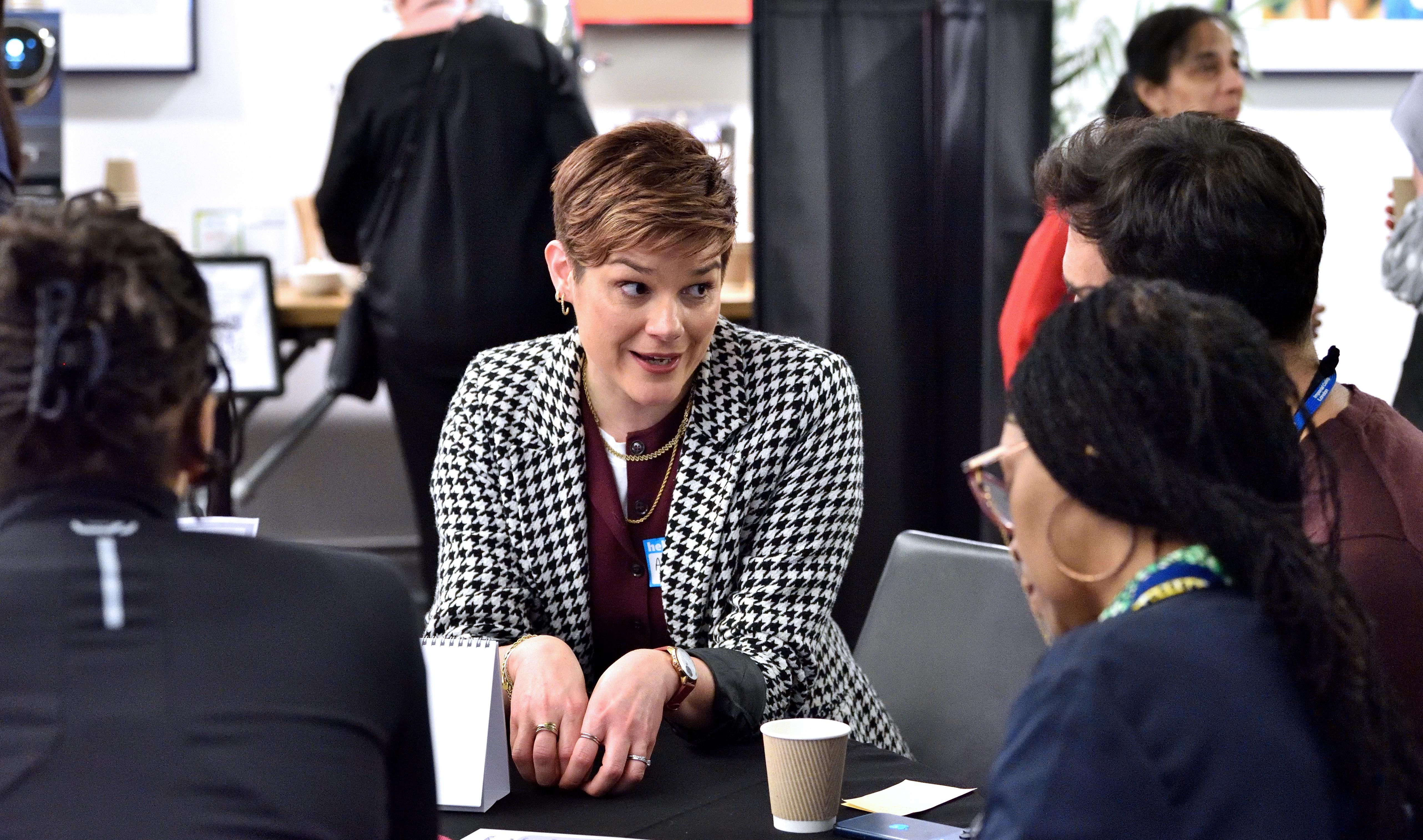
Ellen’s project
Despite long term health conditions such as Asthma being common among children and young people in England, some of these individuals still have unmet health needs. Ellen’s study aims to understand how health inequalities could be impacting them, with a goal of identifying gaps in care and improve understandings of how we can target interventions to tackle these gaps.
Why Ellen was at the Research Café
For Ellen, this was the first time she had the opportunity to discuss her research plan in a public engagement setting, and she attended the café to hear more about people’s experiences, and what was most important to them:
“it was a fantastic opportunity to learn about what aspects of health inequalities in children and young people with long term conditions ( CLTCs) are most important to young people and parents who have experience with CLTCs”
As she was at the early development stage of her research project, this event was a great opportunity to begin engaging with the public about her research and establish how this can be continued throughout her PhD to help guide her project towards meaningful results for the people she wanted to impact/help most.
What did she ask the public?
Ellen prompted discussion with visitors to the café with three questions:
- What experiences have you had with seeking health care for a child or young person with a long term condition?
2. Where do you or your child go for help with managing their long-term health condition? What can make it easy or difficult to get this help?
3. How could the NHS better support children and young people with long term conditions?
What Ellen heard
The conversations Ellen had with the parents and young people were deeply insightful and revealed key areas for her to consider:
- Better education and understanding
When talking to young people, Ellen heard how they wanted to better understand their conditions and, from that, how both the NHS and they themselves could help manage CLTCsto improve their quality of life.
Conversations with parents revealed that they already had good understandings of the conditions and primary treatment options, but finding personalised guidance for their specific child proved more of a challenge.
- Barriers to Timely Care
Both parents and young people discussed how accessing care quickly, and while symptoms are still present, can be difficult. They also felt that annual check-ups can miss the full range of symptoms experienced throughout the year.
- The Limits of Health Records
Because of this, Ellen heard that the experiences of those living with long term conditions aren’t always fully captured in electronic health records.
Together, these themes gave Ellen a lot to consider for her project and an aim to capture to variety of experiences.
Impact
“I was excited to implement my learnings from the Research Café into our study design”
Thanks to the Research Café, Ellen was able to hear the perspectives of young people and parents experiencing long term health conditions and incorporate their advice and feedback into her project.
Discussions about issues of accessibility, service design, and becoming involved in research gave Ellen ideas for changes she could make. For example, considering these topics during the qualitative interviews, designing her study to capture information on different types of inequalities, and developing an outreach strategy involving various patient groups and types of representatives.
Ellen concluded with: “I left the event feeling very grateful for everyone who was involved and participated”
Read our blog
All postsContact us
PERC Director and Co-Founder
Prof. Helen Ward
h.ward@imperial.ac.uk
For enquiries about public involvement in research and research more generally, please email:
publicinvolvement@imperial.ac.uk