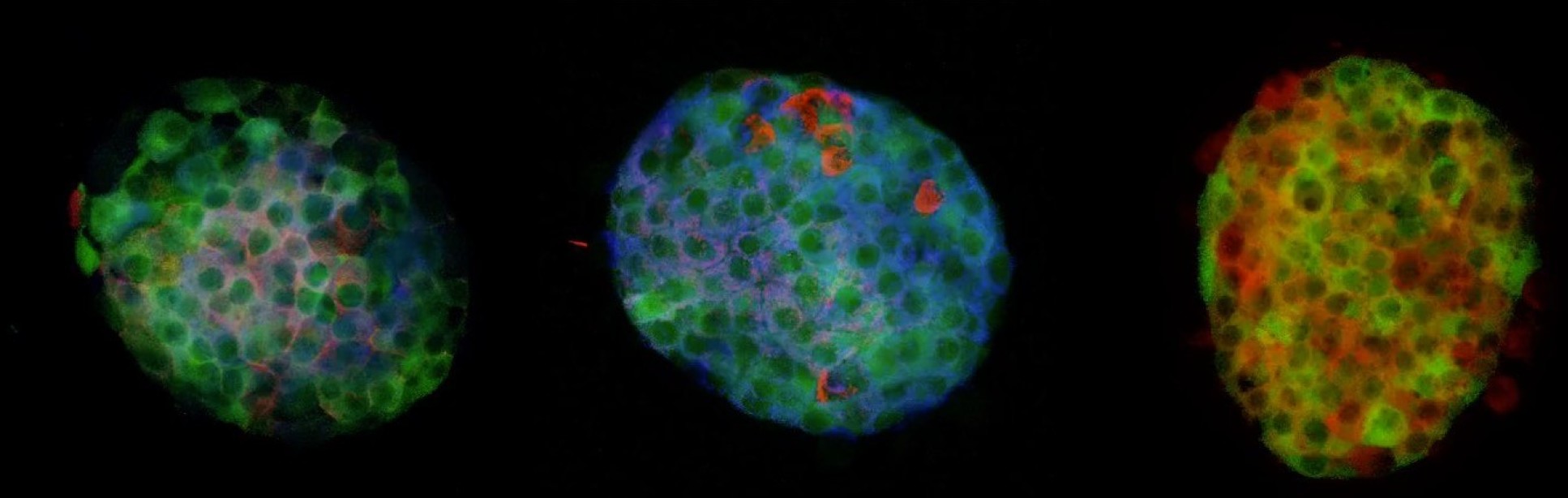
We are pursuing a number of projects designed to understand the key pathways that regulate glucagon receptor family signal compartmentalisation at the molecular level.
Some of our current projects include:
- Identification of the main endocytic trafficking pathways that control subcellular GLP-1 receptor signalling in pancreatic beta cells
- Control of GLP-1 receptor trafficking and signalling by modified (including biased) agonists
- The role of β arrestin-2 in the spatiotemporal control of incretin receptor signalling in vivo
- Mechanisms of GLP-1 receptor plasma membrane diffusion, clustering and segregation to lipid nanodomains
- Study of GLP-1 receptor post-translational modifications, including agonist-induced receptor palmitoylation, phosphorylation, ubiquitination and sumoylation
- Regulation of beta cell GLP-1 receptor responses by the lipid microenvironment, including identification of cholesterol and other lipid binding sites
- Differences in spatiotemporal regulation of signalling of GLP-1 receptor versus GIP receptor
- GLP-1 receptor signalling at ER-mitochondria membrane contact sites
- Tissue selectivity of GLP-1 receptor agonist responses in neurons versus pancreas
- Analysis of changes in spatiotemporal signalling and agonist responses associated with GLP-1 receptor and GIP receptor genetic variants
- Mass spectrometry-based analysis of interactomes for the glucagon receptor family
- Analysis of GIP receptor function in adipocytes
- Mechanisms of lipid handling by the GLP-1 receptor in beta cells and the glucagon receptor in hepatocytes
General enquiries
Signalling and Trafficking of Receptors in Metabolism (STRiM) Laboratory
ICTEM Building, 3rd floor
Hammersmith Campus
Du Cane Road
London
W12 0NN
Enquiries
Prof Alejandra Tomas Catala or
Ms Shazi Singh