Contact
Dr Benjamin Mullish
b.mullish@imperial.ac.uk
What we do
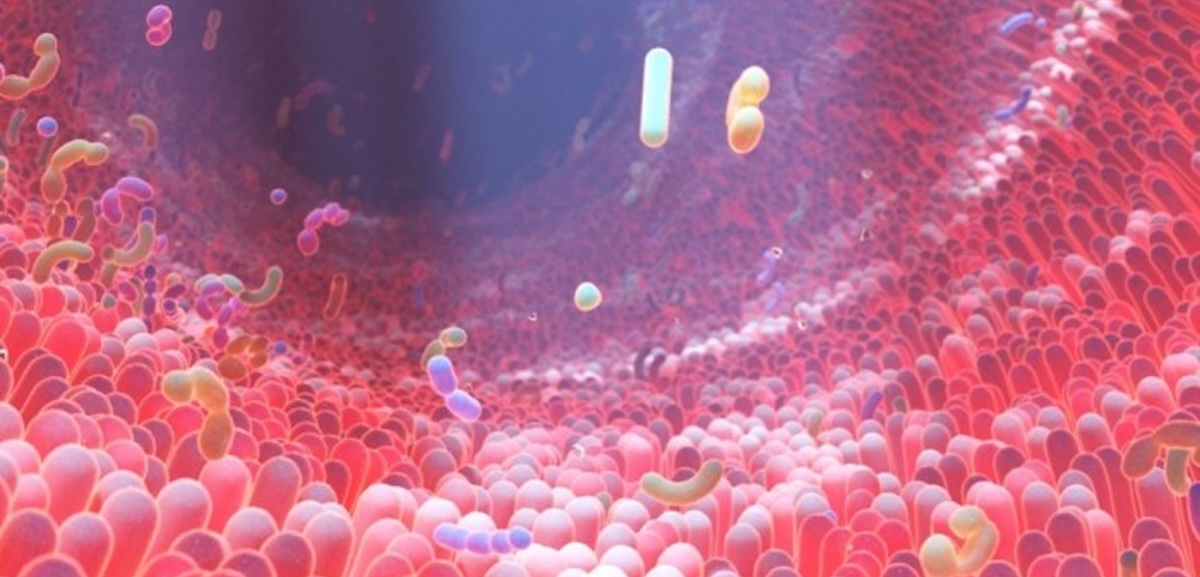
Over the past decade, there has been increasing recognition of the contribution of the gut microbiome (and the microbiome of other mucosal surfaces) towards health and disease. I am particularly interested in this from two related aspects:
- Using a range of systems biology (‘omics’) techniques to better understand the mechanisms how perturbation of gut microbiome and composition may contribute to a range of human diseases; this includes microbiome sequencing, metabolomics, and other techniques. While my focus of interest is around gut and liver diseases, it extends far beyond, including haematological conditions, infective disorders, rheumatological problems, and the impact of the gut microbiome on the efficacy or side effect profile of certain therapeutics (e.g. immunotherapy).
- Looking at different approaches to manipulate the gut microbiome as a novel treatment modality for a range of diseases. Some of this employs more conventional modalities (including diet and probiotics), while my major area of expertise is the use of intestinal (faecal) microbiota transplant (IMT/ FMT) as a ‘whole ecosystem’ approach to altering the gut microbiome.
Why it is important
Despite a large body of evidence that has characterised disturbance of the gut microbiome in a range of different medical disorders, the specific mechanisms by which it does so are relatively poorly-explained, limiting the potential clinical exploitability of this knowledge to date. Likewise, while IMT/ FMT is a highly-effective treatment in people with the recurrent form of a particular gut bacterial infection called Clostridioides difficile infection (CDI), we do not know if restoring the gut microbiome by this route may have promise in helping a broader range of people with other microbiome-related conditions. In addition, IMT/ FMT is not without drawbacks, and understanding more about mechanisms of efficacy may translate through into novel, targeted ‘microbiome therapeutics’ that present a new paradigm of treatment for a wide range of patients.
How it can benefit patients
As described, IMT/ FMT is an overall safe and highly-effective treatment for patients with recurrent CDI, and is recommended in guidelines by NICE and from national bodies (both of which I was a contributor to). I undertake trials of IMT/ FMT (and other microbiome-focused therapeutics) to look at how effective it is for different conditions, and analyse samples from these trials as part of undertaking mechanisms of how we might move on from IMT/ FMT to even more effective, targeted therapeutic options.
Current Research
- Characterisation of host-phenome-immune interactions in health and disease through integrative analysis of microbiome, metabonome and other omic datasets.
- Exploring the potential role and mechanisms of efficacy of IMT in a range of clinical settings, including:
- Infective diseases: C. difficile infection, intestinal colonisation with antibiotic-resistant bacteria, urinary tract infections.
- Metabolic and liver disorders: including obesity, MASLD, PSC, alcohol-related hepatitis, and cirrhosis.
- Haematological disorders: including blood cancer patients receiving stem cell transplants.
- Rheumatological disorders: including psoriatic arthritis
- Understanding how the gut microbiota influences drug responses. One aspect of this in a variety of oncological settings, and how it can be harnessed to treat drug induced events, e.g. immune checkpoint inhibitor colitis; a further aspect is how the gut microbiota influences immune responses to a range of vaccinations. An additional area of focus relates to how the gut microbiome may influence response to biologic medications being used to treat inflammatory bowel disease.
Information
- Funders and related centres
- Useful links for patients
- Collaborators and PhD students
- Clinical trials
- Industry
- Publications
Internal
- Professor Julian Marchesi
- Professor Pinelopi Manousou
- Professor Mark Thursz
- Professor Zoltan Takats
- Professor Marc Dumas
- Dr Horace Williams
- Dr Julie McDonald
- Dr Tom Clarke
- Dr Yan Liu
- Dr James Alexander
External
- Professor Christian Hvas, Aarhus University
- Professor Gianluca Ianiro, Universita Cattolica del Sacro Cuore, Rome
- Dr Tanya Monaghan, University of Nottingham
- Professor Dina Kao, University of Alberta
- Dr Jessica Allegretti, Brigham and Women’s Hospital / Harvard Medical School
- Professor Palak Trivedi, University of Birmingham
- Professor Tariq Iqbal, University of Birmingham
PhD students
- Michael Carbonell
- Porcari S., Mullish B.H., Asnicar F., Ng S.C., Zhao L., Hansen R., O’Toole P.W., Raes J., Hold G., Putignani L. Hvas C.L., Zeller G., Koren O., Tun H.M., Valles-Colomer M., Carmen Collado M., Fischer M., Allegretti J., Iqbal T., Chassaing B., Keller J., Baunwall S.M., Abreu M., Barbara G., Zhang F., Romana Ponziani F., Costello S.P., Paramsothy S., Kao D., Kelly C., Kupcinskas J., Youngster I., Franceschi F., Khanna S., Vehreschild M., Link A., De Maio F., Pasolli E., Blanco Miguez A., Brigidi P., Posteraro B., Scaldaferri F., Rajilic Stojanovic M., Megraud F., Malfertheiner P., Masucci L., Arumugam M., Kaakoush N., Segal E., Bajaj J., Leong R., Cryan J., Weersma R.K., Knight R., Guarner F., Shanahan F., Cani P.D., Elinav E., Sanguinetti M., De Vos W.M., El-Omar E., Dore J., Marchesi J., Tilg H., Sokol H., Segata N., Cammarota G., Gasbarrini A., Ianiro G. International consensus statement on microbiome testing in clinical practice. Lancet Gastroenterol Hepatol (2025);10(2):154-167, doi: https://doi.org/10.1016/S2468-1253(24)00311-X.
- King O.G., Yip A.Y.G., Horrocks V., Miguens Blanco J., Marchesi J.R., Mullish B.H., Clarke T.B., McDonald J.A.K. Vancomycin-resistant enterococci utilise antibiotic-enriched nutrients for intestinal colonisation. Nature Commun (2025);16(1):6376, doi: 10.1038/s41467-025-61731-z
- Mullish B.H.*, Merrick B.*, Quraishi M.N.*, Bak A., Green C.A., Moore D.J., Porter R.J., Elumogo N.T., Segal J.P., Sharma N., Marsh B.L., Kontkowski G., Manzoor S.E., Hart A.L., Settle C., Keller J.J., Hawkey P., Iqbal T.H., Goldenberg S.D., Williams H.R.T. The use of faecal microbiota transplant as treatment for recurrent or refractory Clostridioides difficile infection and other potential indications: second edition of joint British Society of Gastroenterology (BSG) and Healthcare Infection Society (HIS) guidelines. Gut (2024);73(7):1052-1075
- Yip A.Y.G., King O.G., Omelchenko O., Kurkimat S., Horrocks V., Mostyn P., Danckert N., Ghani R., Satta G., Jauneikaite E., Davies F.J., Clarke T.B., Mullish B.H., Marchesi J.R., McDonald J.A.K. Antibiotics promote intestinal growth of carbapenem-resistant Enterobacteriaceae by enriching nutrients and depleting microbial metabolites. Nat Commun (2023);14:5094, doi: 10.1038/s41467-023-40872-z
- Routy B., Lenehan J.G., Miller J W.H., Jamal R., Messaoudene M., Daisley B.A., Hes C., Al K.F., Martinez-Gili L., Punčochář M., Ernst S., Logan D., Belanger K., Esfahani K., Richard C., Ninkov M., Piccinno G., Armanin F., Pinto F., Krishnamoorthy M., Figuerdo R., Thebault P., Takis P., Magrill J., Ramsay L., Derosa L., Marchesi J.R., Parvathy S.N., Elkrief A., Watson I.R., Lapointe R., Segata N., Haeryfar S.M.M., Mullish B.H., Silverman M.S., Burton J.P., Maleki Vareki S. Author Correction: Fecal microbiota transplantation plus anti-PD-1 immunotherapy in advanced melanoma: a phase I trial. Nat Med (2023);29(8):2121-2132, doi: 10.1038/s41591-023—2650-8.
- Ghani R.*, Mullish B.H.*, McDonald J.A.K., Ghazy A., Williams H.R.T., Brannigan E.T., Mookerjee S., Satta G., Gilchrist M., Duncan N., Corbett R., Innes A.J., Pavlu J., Thursz M.R., Davies F., Marchesi J.R. Disease prevention not decolonization – a model for fecal microbiota transplantation in patients colonized with multidrug-resistant organisms. Clin Infect Dis (2021);72(8):1444-1447. doi: 10.1093/cid/ciaa948.
- Allegretti J.R., Mullish B.H., Fischer M., Kelly C. The evolution of the use of faecal microbiota transplantation and emerging clinical indications. Lancet (2019); 394(10196):420-431. doi: 10.1016/S0140-6736(19)31266-8.
- Mullish B.H., McDonald J.A.K., Pechlivanis A., Allegretti J.R., Kao D., Barker G.B., Kapila D., Petrof D., Joyce S.A., Gahan G.M., Glegola-Madesjska I., Williams H.R.T., Holmes E., Clarke T.B., Thursz M.R, Marchesi J.R. Microbial bile salt hydrolases mediate the efficacy of faecal microbiota transplant in the treatment of recurrent Clostridioides difficile infection. Gut (2019); 68(10):1791-1800. doi: 10.1136/gutjnl-2018-317842.
- McDonald J.A.K., Mullish B.H., Pechlivanis A., Liu Z., Brignardello J., Kao D., Holmes E., Li J.V., Clarke T.B., Thursz M.R., Marchesi J.R. Inhibiting growth of Clostridioides difficile by restoring valerate, produced by the intestinal microbiota. Gastroenterology (2018); 155(5):1495-1507.e15.
Our researchers
Dr Benjamin Mullish
/prod01/channel_3/media/images/people-list/b.mullish.jpg)
Dr Benjamin Mullish
IPPRF Research Fellow