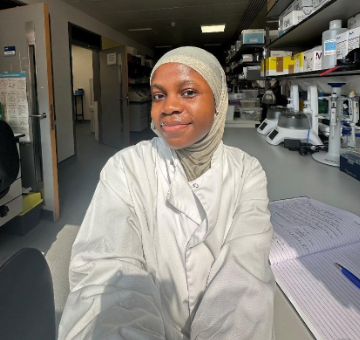
 I am a Medical Biosciences student at Imperial College London and, will be going into my final year following the completion of my UROP.
Studying Medical Biosciences at Imperial has immersed me in the world of academic research from the very beginning, through exposure to a wide range of laboratory techniques and research-focused projects in Years 1 and 2. Alongside learning about health and disease, I have been encouraged to generate my own research questions and design experiments, which sparked my interest in academic research beyond the classroom. Through my course and various events, I have also had the opportunity to interact with researchers at Imperial, which motivated me to pursue a UROP. I saw this placement as a chance to experience academic research in a real-world laboratory setting, develop independence in performing techniques, and contribute meaningfully to ongoing research.
My placement focused on cytomegalovirus and Hofbauer cells (placental macrophages), where I developed a range of laboratory skills. I independently maintained Human Foreskin Fibroblast (HFF) cells using aseptic cell culture techniques, performed and optimised western blot experiments to confirm antigen presence, infected the cultured HFF cells with cytomegalovirus and prepared samples for flow cytometry. I also gained experience operating a flow cytometer and analysing the resulting data. These skills strengthened my ability to work independently at the bench, troubleshoot experiments, and apply core molecular and cellular biology techniques in a research setting. These skills will be very useful and transferable for my research project in year 3.
I have really enjoyed learning new techniques and developing the ability to use reliable resources to understand experimental methods and analyse results. Equally, I valued being part of a welcoming and supportive research environment, which made it easier to adapt to the lab setting. This encouraged me to grow more confident in understanding and performing experiments independently, while still benefiting from my supervisor’s guidance.
The biggest insight I have gained is how central independence and problem-solving are to academic research. I was quickly trusted to carry out experiments on my own, which helped me build confidence and take responsibility for my work. I also learned that troubleshooting is an integral part of the research process, and developing this skill has been invaluable for building resilience and adaptability at the bench. These experiences have shown me how the technical and analytical skills I developed can be directly applied to future research roles and will be essential for pursuing a career in science.
I don’t have a fixed plan after graduating yet, but I am currently considering applying for MRes courses for postgraduate study. Ideally, I would like to pursue a programme that combines immunology, which I explored during my placement, with cancer biology, an area I am also very interested in. At the same time, I am also interested in exploring research-focused roles in industry, as I believe gaining experience in different settings will help me build a well-rounded perspective on how scientific research can be applied to real-world challenges.
I was fortunate to be awarded funding via Imperial’s Presidential Award for Black Heritage students, which provided essential funding to support my placement. This financial support allowed me to fully engage with the research experience without the concern of living costs, making the opportunity far more accessible. The UROP has given me a deeper understanding of academic research and has been invaluable for both personal and professional development. I believe that initiatives like this are important for ensuring equity of access to research experiences, and I would strongly encourage other students to take advantage of the opportunities available at Imperial, where the strong research culture provides an excellent environment to develop technical expertise and critical thinking skills.